People searching for vishnu shastra gujarati are almost always looking for the Vishnu Sahasranamam in Gujarati: a hymn of one thousand names of Lord Vishnu, printed in Gujarati script and used for daily recitation. The word shastra is used loosely in this search. The Gujarati texts that appear in the sources reviewed for this guide are better described as a stotra (hymn) or namavali (list of names). This article explains what the text is, where it comes from, how Gujarati editions present it, how devotees recite it, and where the claims about its effects come from. It also separates textual facts from devotional belief.
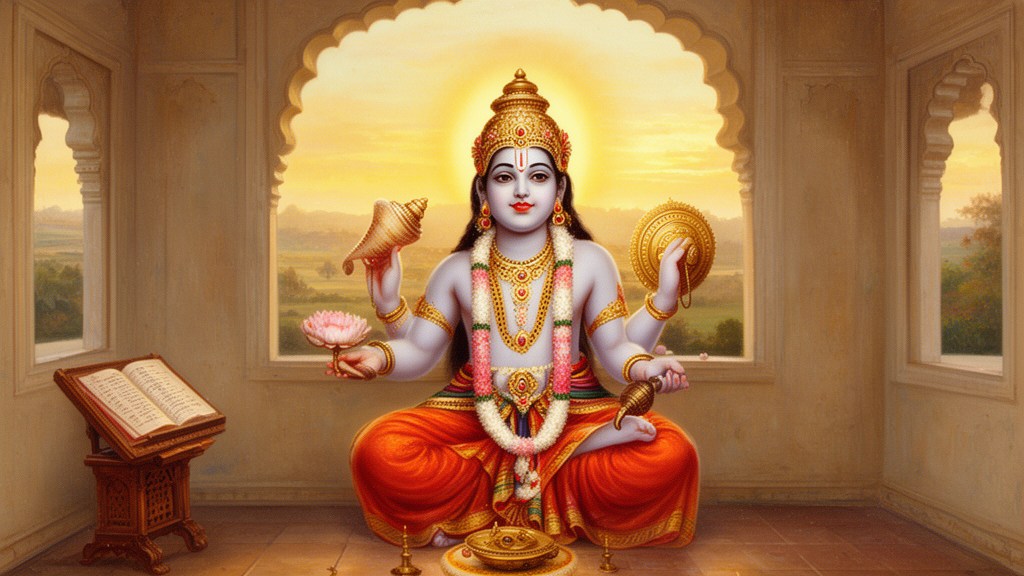
Quick answer: what Vishnu Shastra Gujarati usually means
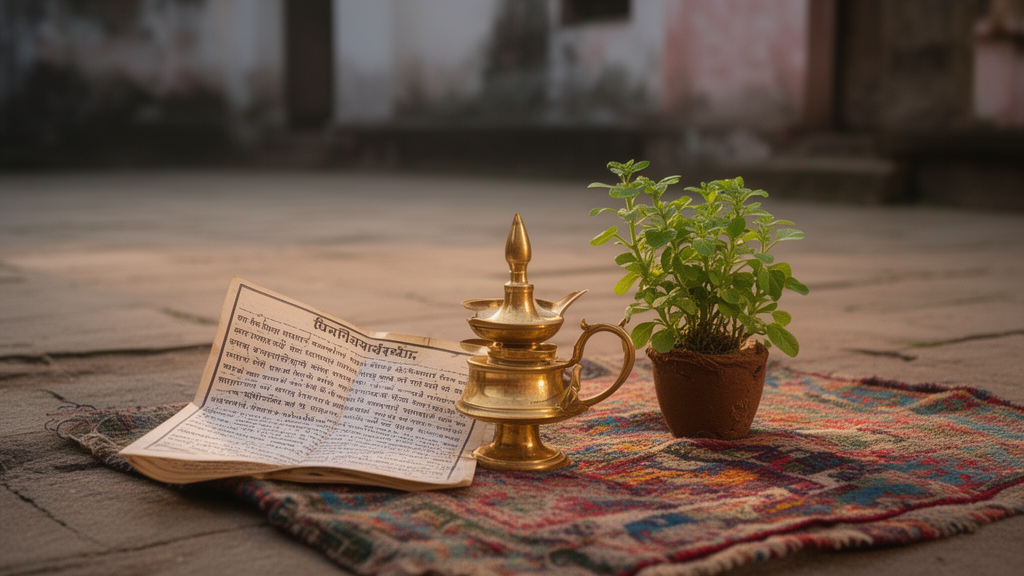
In practice, the phrase points to a Gujarati-language edition of the Vishnu Sahasranama, also called the Vishnu Sahasranamam, Vishnu Sahasra Nama Stotram, or Shri Vishnu Sahasranamavali. The source texts describe it as a set of one thousand names of Vishnu, traditionally recited as a prayer, and linked to the Anushasana Parva of the Mahabharata (sources 1, 4, 6).
Three points help readers avoid confusion:
- It is a hymn, not a legal or manual-style scripture. The word shastra in the search phrase does not indicate a separate body of rules.
- The Gujarati is a script and language edition. The Sanskrit names are printed in Gujarati letters, with Gujarati-language introductions or notes on some sites.
- Editions vary in spelling and layout. The same name can appear with slightly different transliteration or diacritics across websites.
For most readers, the practical need is simple: find a reliable Gujarati text, understand the structure, and recite in a way that fits their own tradition or family practice.
What the Vishnu Sahasranamam is
Name and variant spellings
The hymn appears under several names in the sources reviewed. Source 1 calls it the Vishnu Sahasranamam and also gives Vishnu Sahasra Nama Stotram and Vishnu Sahasranama Stotra. Source 6 uses Shri Vishnu Sahasranamavali and gives Om visvasmai namah as an alternate name, referring to its opening name. Source 4 uses Vishnu Sahasranama Stotram and Vishnu Sahasranam.
Readers may also see Sahasra, Sahasranama, and Sahasranamavali used interchangeably. In this guide, Vishnu Sahasranamam is used for the hymn as a whole, and namavali is used when describing the list format used in several Gujarati editions.
Origin in the Mahabharata
Several sources state that the hymn appears in the Mahabharata’s Anushasana Parva. They say that after the great war, Bhishma (Bhishma Pitamaha) teaches the names to Yudhishthira (sources 4, 6). Source 6 adds that the setting is the Anushasana Parva of the epic and that the text was imparted by Bhishma to the Pandava prince.
This is the textual tradition as reported by these sites. A scholar checking the Mahabharata itself would need to compare critical-edition passages and Sanskrit manuscripts. This guide does not claim a specific chapter or verse number for the hymn because none was verified from a critical edition during this research.
Structure of the hymn
The hymn opens with introductory verses, including a dhyana verse that describes Vishnu’s appearance. Source 1 shows the opening verse beginning Om shuklambaradharam Vishnum shashivarnam chaturbhujam, followed by a verse about the one who is peaceful of face and to be meditated upon for the calming of all obstacles. A general English rendering of the sense is that Vishnu is pictured in white garments, moon-hued, four-armed, and serene-faced, and that devotees meditate on this form to quiet obstacles. This is a paraphrase, not a quotation from a named translation.
After the opening verses, the text includes a dialogue frame in which Yudhishthira asks Bhishma about the highest deity, the highest refuge, and the path to liberation. Bhishma’s answer is the Sahasranama itself. Source 4 also notes the widely quoted opening phrase Om Vishvam Vishnur Vashatkaro, which appears at the start of the names.
How the Gujarati text is laid out
The name format
Most Gujarati editions follow a repeated pattern. Each name appears as Om [name] namah, printed in Gujarati script with the Om symbol at the start. The sources show this pattern clearly. The first names are shown as Om Vishvasmai namah, Om Vishnave namah, and Om Vashatkaraya namah (sources 2, 3, 6).
Editions often mark groups of ten names with a number and a double danda, as in the text where a numbered marker appears after the tenth name. This numbering makes it easier to follow a daily recitation or to count a set of names.
Spelling and transliteration differences
Gujarati editions do not always spell Sanskrit names identically. For example, the name for the one who is auspicious appears as મંગળાય in one source and મઙ્ગલાય in another (sources 2 and 3). The difference is in how the nasal consonant is written, not in the meaning of the name. Readers comparing two PDFs or pages should expect such variation and should check their chosen edition for consistency.
Another variant appears in the form વિશ્વસ્મૈ compared with વિશ્વસ્મૈ with minor orthographic differences between sites. Where a reader needs a precise text for study, a printed edition from a recognised publisher, or a scripture-focused digital library, is more reliable than a single devotional page.
Editions and bilingual layouts
Some pages present the Gujarati alongside Devanagari, English (IAST), and other Indian scripts. Source 6 shows a script selector with Devanagari, Gujarati, Bengali, Assamese, Odia, Telugu, Tamil, Kannada, Malayalam, and English options. Source 3 offers a similar script switcher. Such layouts are helpful for comparing spelling, but the readers should note that they are web-page features and not evidence of a single authoritative edition.
Where to find a Gujarati text
The sources reviewed for this article include several Gujarati text pages and PDF downloads:
- Vishnu Sahasranamam Gujarati Lyrics and PDF (source 1), which provides lyrics and a PDF download.
- ShlokMantra’s Gujarati namavali (source 2), which presents the names in Gujarati with a PDF option.
- Vedic Tithi’s Gujarati namavali (source 3), which offers script switching and a Gujarati presentation.
- Bhaktinidhi’s Gujarati stotra page (source 4), which includes a Gujarati introduction and the opening verses.
- Stotrams.com’s Gujarati page (source 6), which presents the text by verse-range sections.
These pages are devotional websites. They are useful for finding the text, but they do not themselves prove a critical edition. The Internet Archive item found during research (source 5) returned only site navigation and was not used as evidence for the hymn’s content.
Before printing or relying on a PDF for study, readers should compare a few names across at least two editions and check whether the edition states its source text and translation notes.
How devotees recite the Vishnu Sahasranamam
Common practices
Devotional practice varies widely. Some people recite the whole hymn once a day, some recite it on specific days associated with Vishnu worship, and others read it silently, meditate on the names, or chant only selected names. The sources describe daily chanting, offline use through PDF downloads, and meditation on the names (sources 1, 6). No single method is required by the texts reviewed.
- Recitation with a text: Many readers use a Gujarati PDF or printed booklet and follow the verses in order.
- Listening or repeating: Some people learn the pronunciation by listening to recordings before reciting.
- Meditation on the names: Source 6 describes meditating upon the names as a practice, which some readers combine with focus on one name at a time.
- Family or group recitation: In many households, the hymn is recited together, but customs differ by family and community.
Belief and reported benefits
Devotional websites make strong statements about the effects of chanting. Source 1 says regular chanting brings peace, keeps the devotee connected with divine energy, and gives blessings. Source 4 states that devotees believe it brings mental tranquility, protection, good fortune, and spiritual growth. Source 6 says chanting is believed to purify the mind, foster clarity, alleviate worldly anxieties, and grant liberation.
These are devotional beliefs reported by the sites. They are not measurable outcomes that the texts themselves guarantee, and this article does not present them as proven results. A reader who recites out of devotion, study, or family custom can do so for those reasons without relying on any promised material outcome.
Tradition-specific variations
Recitation rules, times of day, and the use of mala or ritual items are shaped by sampradaya, family custom, temple tradition, and regional practice. The sources reviewed do not establish a single required procedure. Readers should follow the guidance of a teacher, temple, or family tradition they trust, and should treat any specific instruction on timing, purity, or count as tradition-specific unless a named source supports it.
Scholarly and textual perspective
What the sources establish
Across the sources reviewed, there is consistent agreement on the basic facts: the hymn has one thousand names of Vishnu; it is associated with the Mahabharata’s Anushasana Parva; Bhishma is the teacher and Yudhishthira the student; and the Gujarati editions present the names in the form Om [name] namah. These points are repeated across multiple independent devotional sites, which supports them as the common textual tradition, although they do not replace checking a critical Sanskrit edition.
What remains uncertain
Several questions need specialist or primary-source checking before this article could make stronger claims:
- The exact Mahabharata chapter and verse location of the hymn in a critical edition.
- The historical date of the text as it now circulates, which the sources do not establish.
- The full range of regional recensions and the reasons for differences in name order or spelling.
- The precise meaning of each name in a scholarly commentary, as opposed to devotional glosses.
Where these questions are not answered by the sources, this article does not supply dates, chapter numbers, or scholarly conclusions.
Devotional, textual, and scholarly layers
It helps to keep four layers distinct. The text is the Sanskrit hymn and its names. The tradition is how Hindus have recited, transmitted, and valued it. The devotional belief is what a person hopes or believes the recitation will do for them. The scholarly interpretation is what academic work says about its composition, transmission, and meaning. The websites reviewed mix these layers, so readers should read claims about benefits as devotional belief rather than as textual findings.
Practical tips for beginners
- Choose one edition. Pick a Gujarati text and use it consistently, because spellings differ between pages.
- Read the opening verses first. The dhyana verses set the context before the names begin.
- Learn a small portion at a time. Many readers start with the first ten or twenty names before attempting longer sessions.
- Check pronunciation with a teacher or reliable recording. Gujarati script can be read phonetically, but Sanskrit pronunciation has its own traditions.
- Keep notes on variations. If you find two spellings, record which edition you used.
Related reading on HindusGod.com
Readers who want broader context may find these related drafts useful once they are published. At the time of drafting, they are WordPress drafts and may not be public:
- For a general introduction to the deity, see the Vishnu overview.
- For another hymn-focused article on the same deity, see Vishnu Sahasranama Shastra.
- For Puranic background on Vishnu worship, see Vishnu Puran in Gujarati and Vishnu Puran Shastra.
- For Vishnu-related texts in other languages, see Vishnu Shastra in Hindi, Vishnu Shastra in Telugu, Vishnu Shastra in Kannada, Vishnu Shastra in Marathi, and Vishnu Shastra in Tamil.
- For other Vishnu-related hymn and shastra topics, see Bhagwan Vishnu Shastra, Maha Vishnu Shastra, and Vishnu Shastra Shastra.
These links are to target drafts that may not yet be public. Their content should be checked before publishing this article.
Frequently asked questions
Is Vishnu Shastra Gujarati the same as the Vishnu Sahasranamam?
In most search results, yes. The sources reviewed present Gujarati pages for the Vishnu Sahasranamam, Vishnu Sahasranama Stotram, and Shri Vishnu Sahasranamavali. The word shastra is used broadly in the search phrase and does not name a separate text.
Why do Gujarati versions look different from each other?
Websites may use different transliteration habits, punctuation, numbering, and script conventions. Some spelling differences are visible between sources 2 and 3 for the same name. Comparing two editions is the simplest way to identify differences.
Is there a single correct way to recite it?
The sources do not establish a single required method. Practices depend on tradition, family custom, and personal guidance. Readers should treat any fixed count, timing, or ritual step as tradition-specific.
Summary
The phrase vishnu shastra gujarati most often refers to the Gujarati text of the Vishnu Sahasranamam, a hymn of one thousand names of Vishnu traditionally linked to the Mahabharata’s Anushasana Parva. Gujarati editions present the names in a repeated format, and spellings can differ between sites. Devotional websites describe benefits such as peace, protection, and liberation, but these are beliefs reported by the sources rather than guaranteed outcomes. For a reliable study text, compare editions and, where possible, consult a critical or scholarly source.
Sources and further reading
- Vishnu Sahasranamam Gujarati Lyrics and PDF: Gujarati lyrics and PDF page; used for the hymn’s names, opening verses, and devotional descriptions.
- ShlokMantra, Sree Vishnu Sahasra Namavali in Gujarati: Gujarati namavali; used for the name format and spelling comparison.
- Vedic Tithi, Sree Vishnu Sahasra Namavali in Gujarati: Gujarati namavali with script options; used for the name format and spelling comparison.
- Bhaktinidhi, Vishnu Sahasranama Stotram in Gujarati: Gujarati stotra page; used for the Mahabharata context and the opening phrase.
- Stotrams, Shri Vishnu Sahasranamavali in Gujarati: Gujarati page with verse-range navigation; used for the alternate name and devotional summary.
Further reading: consult a critical Sanskrit edition of the Mahabharata’s Anushasana Parva and a scholarly study of Vishnu Sahasranama transmission before making textual or dating claims.