Shiv Tantra Shastra is a phrase used to refer to tantric scriptures and teachings centred on Lord Shiva. It is not the title of a single, universally recognised book. The term is best understood as a category: a body of Shaiva tantric literature, including works that present Shiva as the supreme reality, along with the practices and philosophies that grew around them. The main Shaiva texts come from different schools, regions and centuries, so readers should not treat any one summary as the whole picture.
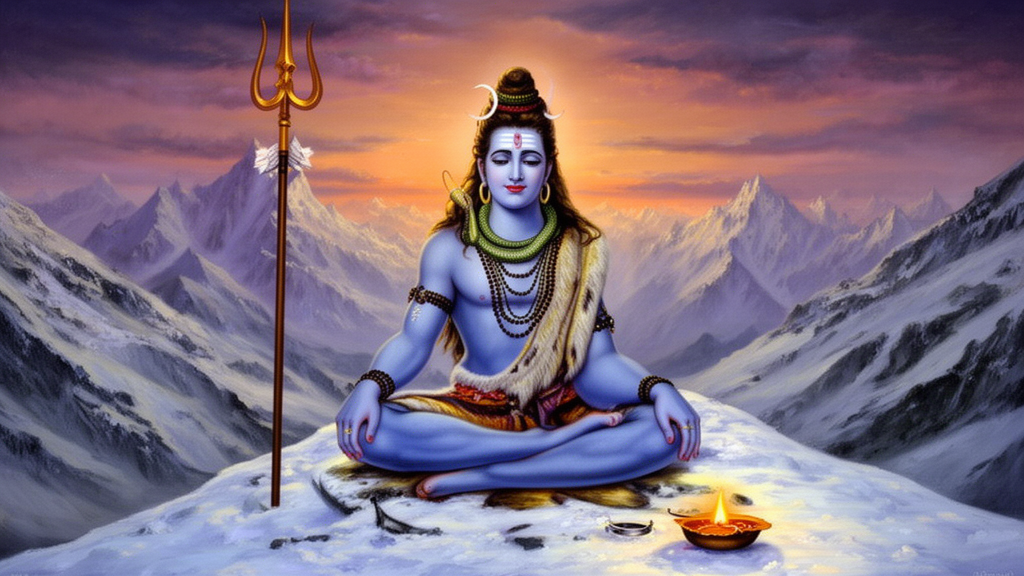
This article explains what the term usually refers to, where the major Shiva-centred tantric texts sit within the wider Agama and Tantra traditions, which teachings are commonly attributed to them, and where claims need careful qualification. It separates what the texts and traditions say, what devotional sources add, and what scholars have discussed.
What the term Shiv Tantra Shastra usually refers to
The phrase combines three words. Shiv (or Shiva) is the deity at the centre of Shaiva worship. Tantra refers to a broad family of esoteric scriptures, rituals and yogic practices. Shastra means a treatise or authoritative teaching. Together, the phrase points to tantric teaching in which Shiva is the principal deity or the main speaker.
Readers often encounter the phrase in three ways:
- As a general label for Shaiva tantric scriptures, often without naming a specific text.
- As a reference to a particular Shiva tantra, such as the Vijnana Bhairava Tantra, which is described in encyclopedic sources as a Shiva Tantra of the Kaula Trika tradition of Kashmir Shaivism.
- As a devotional or commercial heading for books, lessons or articles on tantric Shiva worship.
Because these uses overlap, the first step for any serious study is to ask which text, school or teacher is being discussed.
Shastra, Tantra and Agama: how the terms relate
Shastra as an authoritative teaching
In Hindu usage, a shastra is a treatise or body of teaching regarded as authoritative within a tradition. Shastras cover many subjects, from law and grammar to ritual and philosophy. The word does not, by itself, indicate whether a text is Vedic, Puranic or tantric.
Tantra as a family of traditions
Tantra is a broad term. In many Hindu and Buddhist contexts it refers to esoteric scriptures and practices that use mantra, yantra, ritual, visualisation and yoga to pursue spiritual goals. Within Hinduism, Tantric literature is often grouped under Shaiva, Shakta and Vaishnava headings.
Agama as tradition
The Agamas are a collection of tantric literature and scriptures of several Hindu schools. According to the Wikipedia article on Agama (Hinduism), the word literally means tradition or ‘that which has come down’, and the Agama texts describe cosmology, epistemology, philosophical doctrines and ritual. The same article groups the Agamas into Shaiva and Shakta Agamas, Vaishnava Agamas, Saura Agamas and Ganapatya Agamas, and lists within the Shaiva group the Shaiva Siddhanta and Kashmir Shaivism traditions.
This classification matters. A text called a Shiva tantra may belong to the Shaiva Agama corpus, to a regional school such as Kashmir Shaivism, or to a later devotional compilation. Each category has its own history and authority within the tradition.
Major Shiva-centred tantric texts
Vijnana Bhairava Tantra
The Vijnana Bhairava Tantra (VBT) is one of the most frequently cited Shiva tantras in English-language sources. The Wikipedia article describes it as a Shiva Tantra of the Kaula Trika tradition of Kashmir Shaivism, and notes that it is sometimes spelled in a Hindicised way as Vigyan Bhairav Tantra. The text is presented as a dialogue in which Bhairava, a fierce form of Shiva, answers Devi, the goddess, and it is widely studied for its meditation techniques.
Readers should note the limits of this summary. The article used for this post confirms the text’s classification and alternative spelling. Detailed claims about its verses, number of teachings or meditation methods should be checked against a critical edition or a scholarly translation before being repeated.
Shaiva Agamas and related literature
The Shaiva Agamas and Shaiva Siddhanta texts form another major strand. Their teachings include temple worship, initiation, mantra use and the rules of ritual. Some traditions treat them as revealed scripture, while others study them as historical documents. For readers, the important point is that ‘Shiva tantra’ is not a single category with one agreed list of texts.
The Mahanirvana Tantra
A devotional summary published by the Siddhaguru organisation names the Mahanirvana Tantra as a comprehensive text that Shiva is said to have taught Parvati. This is a devotional claim presented in the source, not a scholarly dating or a verified account of the text’s origins. Readers who want to study the Mahanirvana Tantra should consult a published translation and a scholarly introduction, and should check which edition their translator used.
Teachings commonly attributed to Shiva tantras
Shiva and Shakti as complementary principles
Many Shaiva tantric texts describe Shiva as pure consciousness and Shakti as the dynamic power through which the universe is manifested. The Kaalchakra article on Shaiva Tantras presents Shiva as the ultimate reality and Shakti as the creative force, whose union with Shiva expresses the interplay of masculine and feminine principles. This is a useful way to understand the theology, but it is a modern explanation by that author, not a direct quotation from any single scripture.
In a tradition that emphasises the non-dual relationship between Shiva and Shakti, the goddess is not a secondary figure. She is the energy through which Shiva’s consciousness acts in the world.
Anushtana and disciplined practice
The Siddhaguru summary contrasts conventional Shastras, which it says centre on the Vedas, Upanishads and mythology, with tantric Shastras, which it says place greater emphasis on observance, or anushtana. In this view, anushtana is disciplined practice carried out until the practitioner’s ego is diminished and realisation of Shiva is approached. The same source describes Tantra as spiritual ‘execution’ and as the path of expanding awareness toward Shiva.
This emphasis on practice is one of the most consistent themes in Tantric literature. Practice in these traditions typically includes mantra repetition, meditation, visualisation, yogic breath work and worship in a guru-led lineage. Traditions differ about which practices are essential and which are reserved for qualified initiates.
Kundalini and yogic practice
Some modern presentations of Shaiva tantra describe kundalini awakening and passage through chakras. The Kaalchakra article presents these as central Shaiva Tantra themes. Historically, kundalini and chakra ideas appear in many later yogic and tantric texts, and their details vary widely. Readers should treat them as one strand within a broader tradition, and should be cautious about explanations that promise specific experiences.
Dakshin and Vama approaches
The Siddhaguru summary states that Tantric Shastras distinguish between two approaches: Dakshin Achara and Vam Achara. In its description, Dakshin Achara addresses traditional forms of worship, while Vam Achara outlines what the source calls the five Ms of Tantra, which it lists as mudra, madhya, maithuna, mamsa and matsya. It also describes the five makaras of Tantricism as madhya, mamsa, maithuna and mudra.
Because this part of Tantric literature is sensitive and often misunderstood, it needs careful framing. Scholars and practitioners disagree about how these practices were understood historically, whether they were ever carried out literally, and whether they were intended as symbolic or ritual substitutes. Many contemporary Hindu traditions do not practise them at all, and some reject literal readings. This post does not recommend or describe any such practice as a method for readers. The owner should verify the historical and scholarly sources before expanding this section.
The same source also says that Shastra does not advocate practices that harm other people. Readers should treat that statement as a claim made in that source, and check it against the texts and academic discussion rather than assuming it applies to every tradition.
Common misunderstandings
Misunderstanding one: Shiv Tantra Shastra is one book
There is no single, universally accepted text with this exact title in the sources used for this post. Many Shiva-centred tantras exist under different names, and some modern books use the phrase as a title. Always check the author, edition and tradition.
Misunderstanding two: Tantra always means secret or forbidden practice
Popular media often equates Tantra with sexual or occult practice. The sources consulted for this post describe a far broader literature. Many Tantric texts are primarily concerned with ritual worship, mantra, meditation and philosophy, and many practitioners never engage with the controversial elements described in some summaries.
Misunderstanding three: tantric practice guarantees powers
The Siddhaguru summary says tantric practitioners are endowed with vashikarana and uchatana powers as a result of their upasana. This is a claim within that devotional source. HindusGod.com does not endorse promises of control over others, material gain or supernatural outcomes. Devotional practice is best described as a spiritual discipline, not a guaranteed route to any result.
Misunderstanding four: one lineage speaks for all Hindus
Shaiva Tantra is one part of Hinduism. Vaishnava, Shakta and Smarta communities have their own scriptures, rituals and teachers. Even within Shaivism, Kashmir Shaivism, Shaiva Siddhanta and other regional lineages differ in philosophy and practice.
How to study Shiva tantric texts with care
- Identify the exact text. Record its title, language, author or compiler, and tradition. Be wary of titles that appear in several versions.
- Choose a reliable translation. Prefer a scholarly edition or translation that states its source manuscripts and translation method. Note that a summary on a devotional website is not a translation.
- Read the introduction first. Scholarly introductions usually explain the text’s date, school, and relationship to other works.
- Separate scripture from commentary. Commentaries by later teachers explain the text but are not the text itself.
- Ask a qualified teacher where practice is involved. Many traditions require initiation before certain mantras or rituals are taught.
- Keep belief, history and scholarship distinct. A tradition’s claim about a text’s divine origin is a belief, not a dated historical fact.
Related HindusGod.com posts
The following HindusGod.com posts cover related Shastra, Tantra and Shiva topics. They are currently WordPress drafts, so they may not be publicly visible until the owner publishes them. Readers should check their status before relying on these links.
- For a broader overview of Tantra in Hindu practice, see Tantra Shastra (draft).
- For a Kali-centred tantric text, see Kali Tantra Shastra (draft).
- For another goddess-centred tantric topic, see Tara Tantra Shastra (draft).
- For a related Shastra on tantric practice, see Shabar Tantra Shastra (draft).
- For a Shiva-related Shastra on breath and time, see Shiv Swarodaya Shastra (draft), and its Hindi edition (draft).
- For a broader Agama overview, see Agama Shastra (draft).
- For a Shaiva ascetic tradition that readers often confuse with tantric practice, see Aghor Shastra (draft).
- For devotional background on Shiva as a deity, see Bhagvan Shiv (draft).
Language editions of the general Tantra Shastra topic are also in draft, including Tantra Shastra in English (draft) and Tantra Shastra in Hindi (draft). Readers who prefer Hindi-language material may find the Hindi version useful, but should confirm its content against the English summary.
Frequently asked questions
Is Shiv Tantra Shastra a specific book?
Not necessarily. The phrase is usually a broad label. Specific Shiva tantras include the Vijnana Bhairava Tantra and the Mahanirvana Tantra, but each has its own title, tradition and edition.
Are Shiva tantras only about secret rituals?
No. Many Shaiva tantric texts discuss philosophy, meditation, mantra, temple worship and devotion. Ritual content varies widely, and many traditions focus on inner discipline rather than outward practice.
Do Shiva tantras belong to one school?
No. Shaiva tantric literature includes Kashmir Shaivism, Shaiva Siddhanta and other traditions. Their philosophies and practices differ, so a claim about one school should not be applied to all.
Can I practise tantric meditation from a book alone?
Many traditions advise learning under a qualified teacher, especially where initiation is involved. Readers should treat any written instructions as tradition-specific and seek guidance from a teacher within a recognised lineage.
Sources and further reading
- Agama (Hinduism) – Wikipedia: supports the definition of Agama, its classification into Shaiva, Shakta, Vaishnava, Saura and Ganapatya strands, and the listing of Shaiva Siddhanta and Kashmir Shaivism as Shaiva Agama traditions.
- Vijnana Bhairava Tantra – Wikipedia: supports the classification of the VBT as a Shiva Tantra of the Kaula Trika tradition of Kashmir Shaivism and its alternative spelling.
- Tantra Shastra | Execution of Lord’s wisdom | Siddhaguru: a devotional summary. Supports the descriptions of anushtana, Dakshin and Vam Achara, the makara list, and the Mahanirvana Tantra attribution as the source presents them. Not a scholarly source.
- Shaiva Tantras: Exploring the Mystical Path of Lord Shiva Worship – Kaalchakra: an article presenting Shaiva Tantra themes, including Shiva and Shakti, secrecy and oral transmission, and kundalini. Dating and interpretive claims should be verified against academic sources.
- Shiva Tantra Rahasya, Dr Rachna Shekavat – Internet Archive: a catalogue listing for a modern book. The page was accessed, but its book contents were not verified, so this post does not draw claims from it.
- 2013 Shiv Tantra Rahshya: Dr Rachna Shekawat – Internet Archive: a second catalogue listing for a modern work. Contents not verified; listed for owner review only.
Before publication, the owner should add critical editions and scholarly translations of the Vijnana Bhairava Tantra and Mahanirvana Tantra, together with an academic work on Kashmir Shaivism or Shaiva Agamas, and verify each claim against them.
Closing takeaway
Shiv Tantra Shastra points to a broad family of Shiva-centred tantric teachings rather than one fixed book. The most useful way to study it is to name the specific text, learn its tradition, read reliable translations, and keep devotional belief, textual content and scholarly interpretation separate. Claims about powers, outcomes or secret practices should be treated with caution, and readers should seek qualified guidance where a tradition requires it.