Tantra Shastra refers to the body of tantric scriptures and teachings, the shastra (a term for a treatise or authoritative body of teaching) that focuses on tantra, a family of ritual, yogic, and philosophical traditions. Tantra Shastra is not one single book or one single practice. It is a broad category used for many texts and lineages, some Hindu, some Buddhist, with very different emphases. This guide explains what the term means, how tantric texts differ from conventional shastras, how the traditions developed, and where popular myths often go wrong.
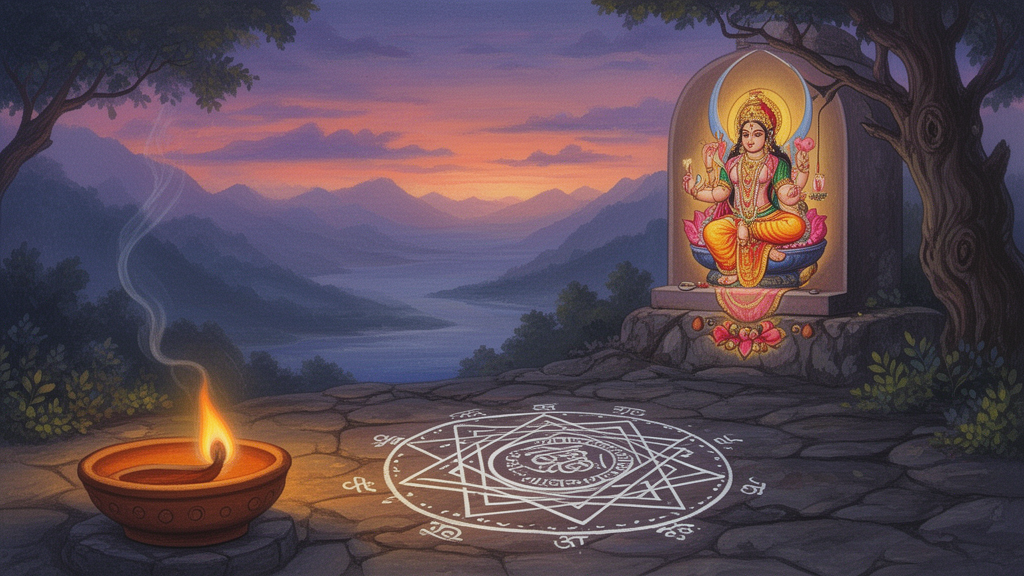
Quick answer: what is Tantra Shastra?
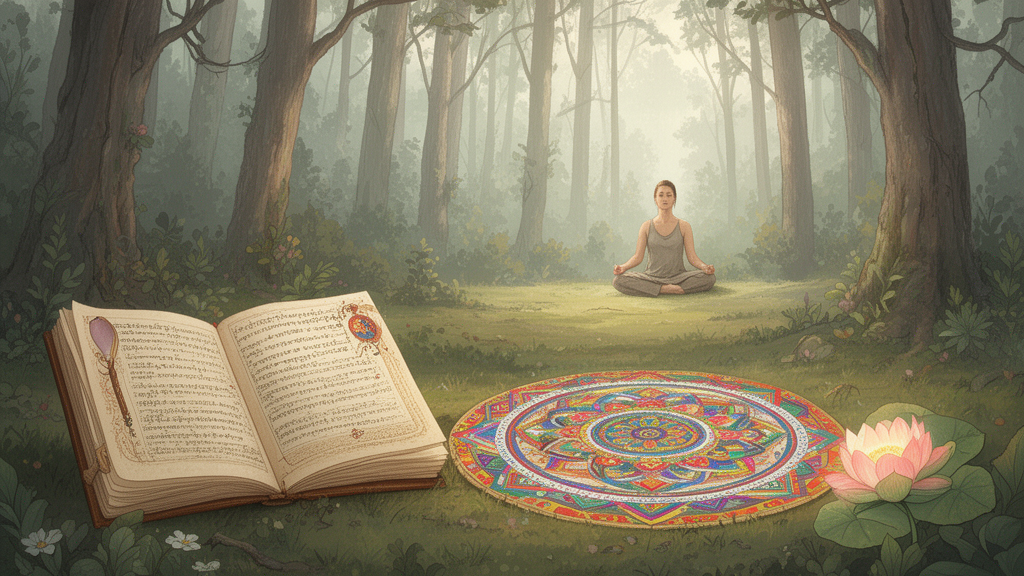
In short, Tantra Shastra is the teaching literature associated with tantra. Encyclopedic sources describe tantra as esoteric traditions of Hinduism and Buddhism, with practices involving ritual, mantra, meditation, yoga, and symbolic diagrams. Devotional sources within the Hindu tradition describe tantric shastras as texts that centre on the goddess Shakti, in contrast with conventional shastras that centre on Shiva. Both descriptions are useful, but they come from different angles: one is an academic overview, the other a devotional presentation from one organization.
If you are new to the subject, keep three points in mind:
- The term covers many texts, not one canon that all Hindus accept in the same way.
- Tantric practice is tradition-specific. A teacher, lineage, or sampradaya shapes what is practised and how.
- Scholarship, devotional belief, and popular rumour about tantra are separate things, and this article keeps them apart.
The meaning of the words Tantra and Shastra
Shastra as a teaching text
The Sanskrit word shastra generally means a teaching or authoritative treatise. Many Indian traditions use it for works on law, grammar, medicine, ritual, or philosophy. When paired with tantra, it signals a body of teachings that the tradition regards as authoritative for its practice. A reader should therefore ask two questions about any text called a Tantra Shastra: which tradition treats it as authoritative, and what practices does it describe?
Tantra as a term with several meanings
The word tantra has several senses in Sanskrit and in later usage, including the sense of a loom, a system, or a framework. The Wikipedia article on tantra has a separate etymology section, and readers who want the scholarly discussion should consult it directly. The Siddhaguru website, a devotional organization, gives a different reading: it explains tantra as a combination of tam (expansion) and tra (going beyond), and describes tantra as the expansion of Lord Shiva’s awareness that leads the seeker back to him. That is a devotional interpretation presented by one group. It is not a universal etymology, and it should not be treated as the only meaning.
Tantric shastras and conventional shastras
The Siddhaguru page draws a contrast that many devotional and academic writers also discuss. It says shastras are commonly divided into two types: conventional and tantric. Conventional shastras, which include the Vedas and Upanishads, are presented as centred on Shiva. Tantric shastras are presented as centred on the goddess Shakti, and as containing teaching connected with the Dasa Mahavidya goddesses.
The same source says tantric shastras place greater emphasis on anushtana, meaning disciplined observance or practice, than on theory alone. This is a useful way to understand why tantra is often described as a practical path. It is important to note that the claim about Shiva and Shakti as the centres of different texts is a classification used by particular traditions. Scholars recognise that Hindu textual categories are complex and that many texts overlap.
How to read the contrast fairly
The conventional and tantric categories are helpful for orientation, but they are not rigid boundaries. Many texts mix ritual instruction, philosophy, mythology, and devotional teaching. When a reader meets a claim that a particular tantric text does something specific, the best check is to find the text itself or a reliable edition and read the passage in context.
Hindu tantra and Buddhist tantra
Wikipedia’s overview of tantra presents it as esoteric traditions of Hinduism and Buddhism, and its article structure includes separate discussions of Hindu tantra, including Shaiva and Shakta tantra and Vaishnava tantra, and of Buddhist tantra. This matters because readers often assume tantra is only a Hindu subject. It has deep ties to Buddhist traditions as well, and Buddhist tantric texts and practices have their own histories, vocabulary, and lineages.
Shaiva and Shakta streams
Within Hinduism, tantric teachings are closely associated with Shaivism and Shaktism. Shaivism centres on Shiva, and Shaktism centres on the Goddess understood as Shakti. Tantric Shastras linked to Shakta traditions emphasise the goddess and her many forms. Wikipedia’s article lists related sampradayas such as Kapalika and Pashupata, and Pratyabhijna, among the denominations that appear in the wider Hindu landscape. A reader should not assume that every tantric text belongs to one of these groups.
Vaishnava tantra
Wikipedia’s table of contents includes a subsection on Vaishnava tantra, showing that tantric influence is not limited to Shakta and Shaiva streams. Discussion of Vaishnava tantra is a specialist topic, and readers should look for scholarly treatments before drawing conclusions about its content or practice.
Buddhist tantra
Buddhist tantra is a separate tradition with its own texts, teachers, and ritual systems. Practices such as mandala visualisation and mantra recitation appear in both Hindu and Buddhist contexts, but their meanings differ according to each tradition’s doctrines. This is why it is wise to specify the tradition whenever a practice is described.
Historical development: what can and cannot be said
Dating tantric literature and practices is difficult, and many claims about exact dates are unreliable. Wikipedia’s article organises the history in stages: proto-tantric elements in Indian religions, the rise and development of tantra, a period it calls the tantric age, and later developments. Its history section discusses proto-tantric elements in Vedic religion, in texts such as the Rig Veda, the Upanishads, the Atharvaveda, and yogini cults, as well as in Buddhism and in Shaktism and Shaivism.
The phrase proto-tantric is used by scholars to describe earlier features that later became part of tantric traditions. It does not mean that a fully formed tantra existed in those early texts. This is an interpretive category, and readers should treat it as a scholarly framework rather than as settled fact.
Why exact dates vary
Many tantric works were transmitted orally or in manuscripts before they were printed. Some were revised, expanded, or attributed to famous teachers. Because of this, a single date for a text can be misleading. Where a source gives a date, readers should ask whether it refers to composition, the earliest manuscript, or a modern edition.
Two broad currents in later practice
Wikipedia’s history section discusses the terms Vamachara and Dakshinachara, which describe two broad approaches within tantric practice. These are discussed in the next section because they are often misunderstood.
Dakshin Achara and Vam Achara
The Siddhaguru page states that tantric shastras distinguish two traditions: Dakshin Achara and Vam Achara. In its account, Dakshin Achara addresses traditional forms of worship, while Vam Achara outlines what it calls the five Ms of tantra. The page lists these as mudra, madhya, maithuna, mamsa, and matsya.
Wikipedia also discusses Vamachara and Dakshinachara as historical currents in tantric practice. The two sources agree that these terms exist and describe different emphases, but descriptions of the practices vary, and some of the most sensational versions are not historically accurate for every group. Readers should be cautious about any account that presents one current as the whole of tantra.
What the five Ms refer to
Traditional accounts that use the five Ms often explain them symbolically or ritually, and the explanations differ among lineages. The Siddhaguru page names the five makaras as madya (wine or a sacred drink), mamsa (meat), maithuna (sexual union, understood by some teachers in a symbolic or ritual sense), mudra, and matsya. Wikipedia’s section on sex and eroticism discusses how these elements have been interpreted, including symbolic readings. For a balanced reading, it is important to note that many Hindu communities, especially those following vegetarian or purity-oriented traditions, do not practise these elements, and many tantric teachers emphasise symbolic or inner interpretations.
The Siddhaguru page also says that tantric shastra does not advocate practices harmful to other people. Readers should evaluate such statements in context, because no single source speaks for every tantric lineage.
Core practices in Tantra Shastra
Wikipedia’s article describes practices in several groups: worship and ritual, yoga, mantra and meditation, mandalas and yantras, sex and eroticism, and diksha, or initiation. The following sections summarise these areas. Each practice should be understood as tradition-specific, and many require a teacher’s guidance.
Worship and ritual
Tantric worship often includes ritual steps, offerings, and recitation directed to a chosen deity, commonly a form of Shiva or Shakti. The specific steps depend on lineage and local custom. The Siddhaguru page mentions the Dasa Mahavidya goddesses as a group of deities central to its tantric teaching, and readers interested in these goddesses can explore related HindusGod.com content on Kali and Tara, linked below.
Mantra and meditation
Mantra, a sacred syllable or formula used in recitation, is a recurring feature of tantra. Wikipedia lists mantra and meditation among tantric practices and connects them with yoga. In many lineages, a mantra is received from a teacher and practised with instructions about posture, timing, and recitation. Readers should not assume that a mantra can be used safely without that guidance, and this article does not provide mantras for practice.
Mandalas and yantras
Yantras are geometric diagrams used as aids to worship and meditation, and mandalas are circular or symbolic diagrams with similar functions. Wikipedia illustrates tantric art with the Sri Yantra and a Kalachakra mandala, among other examples. These diagrams are symbolic and devotional. Their meaning is explained differently in Hindu and Buddhist settings, so a reader should not assume that a diagram carries one universal interpretation.
Yoga and inner discipline
Tantric yoga includes postures, breath practices, and subtle-body concepts in some traditions. Wikipedia places yoga beside mantra and meditation in its discussion of practice. Many modern presentations describe tantric yoga as a path to energy awakening, but these descriptions are interpretive. Reliable sources treat such ideas as belief frameworks found in particular texts and schools, not as scientifically established claims.
Diksha and initiation
Diksha, or initiation, is a central concept in many tantric lineages. In tradition-specific settings, a qualified guru may give initiation that authorises a practitioner to receive a mantra or undertake a form of sadhana. The requirements for diksha vary widely. Some lineages are open to many people, while others restrict initiation by caste, gender, or training. Anyone seeking initiation should ask a teacher about lineage, expectations, and costs, and should be wary of anyone who promises results.
Sex and eroticism in tantric texts
Wikipedia has a subsection on sex and eroticism in tantra, and the Siddhaguru page refers to maithuna as one of the five Ms. These references are often the focus of popular interest in tantra, and they are also often misrepresented. A careful reader should distinguish three things: what a text says, how a tradition interprets it, and what modern publishers or practitioners claim.
In many traditional and scholarly accounts, sexual imagery in tantric texts is discussed symbolically, with meanings relating to union of consciousness and divine principles such as Shiva and Shakti. Other lineages have practised literal ritual forms in specific historical contexts. Many Hindu communities reject these practices, and mainstream Hindu worship does not include them. A reader should avoid treating any single interpretation as the only valid one.
Common misunderstandings about tantra
Popular culture often presents tantra as a shortcut to power, sexual mastery, or supernatural control. Devotional and commercial sites sometimes repeat such claims. Academic sources do not support the idea that tantra gives guaranteed outcomes of this kind. Some devotional texts describe tantric practitioners as having special powers, such as the power to subjugate others, but these are claims within the belief system of particular texts or organizations, and they are not verified facts.
Three cautions are especially useful:
- Be sceptical of promises of wealth, health, protection, or control over other people. Devotional claims are not measurable outcomes.
- Be careful with teachers who sell initiations, mantras, or products with guaranteed results. Ask about lineage, training, and transparency.
- Separate sensational popular writing from the actual content of the texts and from the traditions that preserve them.
Western scholarship and John Woodroffe
Wikipedia’s article includes a section on Western scholarly research, with a subsection on John Woodroffe. Woodroffe, a British judge who worked in Bengal and wrote under the name Arthur Avalon, is known for translations and studies of tantric texts. An Internet Archive record lists a book titled Introduction To Tantra Sastra, published in 1956 by Ganesh and Co. and attributed to Sir John Woodroffe. The record confirms the title and attribution, but readers should consult a full edition to evaluate the book’s arguments and translations.
Woodroffe’s work helped introduce tantric texts to English readers, and later scholars have critically reviewed his interpretations. That is a normal part of scholarship, and it is one reason to compare several sources when studying tantra.
Regional and language differences
Tantric teaching has spread across India and beyond, and it is expressed in many languages. HindusGod.com has related draft posts on Tantra Shastra in several languages, including Bengali, Hindi, Kannada, and Telugu, as well as an English version. Readers who prefer one language may find these useful once they are published. Terms such as Shakti, Shiva, and mantra may be spelled differently across languages and transliteration systems, and this article uses the transliterations shown in the cited sources.
Regional practices also differ. A Shakta temple in one region may follow ritual customs that are different from a Shaiva or Vaishnava tradition elsewhere. Tantric practices associated with specific goddesses, such as Kali, may be devotional in one community and esoteric in another. When a custom belongs to a particular place or community, it should be described as such.
Related HindusGod.com guides
The following guides cover related deities, shastras, and tantric topics. These pages are currently WordPress drafts, so their links may not yet be public. Readers should check whether each page is live before relying on it.
- For the goddess Kali and her place in tantric devotion, see Kali Tantra Shastra.
- For a guide to Shabar traditions, see Shabar Tantra Shastra.
- For Shiva-centred tantric teachings, see Shiv Tantra Shastra.
- For the goddess Tara and her tantric context, see Tara Tantra Shastra.
- For an English overview of the topic, see Tantra Shastra in English.
- For a Hindi-language overview, see Tantra Shastra in Hindi.
- For Bengali-language coverage, see Tantra Shastra in Bengali.
- For Kannada-language coverage, see Tantra Shastra Kannada.
- For Telugu-language coverage, see Tantra Shastra Telugu.
- For the broader category of Hindu scriptural treatises, see Agama Shastra.
- For a Bhairava-focused guide, see Bhairav Shastra.
- For devotional teaching related to Aghor traditions, see Aghor Shastra.
Frequently asked questions
Is Tantra Shastra a single book?
No. The term refers to a category of tantric teachings and texts, which vary by tradition, region, and period. Readers should identify the specific text, edition, and lineage they are studying.
Is tantra only a Hindu tradition?
No. Wikipedia describes tantra as esoteric traditions of both Hinduism and Buddhism. Hindu and Buddhist tantric traditions have related but distinct texts and practices.
Does tantra guarantee power or results?
Academic and textual sources do not support guaranteed material or supernatural outcomes. Some devotional texts make such claims within their own belief systems, but these should be presented as beliefs, not verified facts.
Should beginners attempt tantric practices on their own?
Many tantric practices are taught within a lineage and require guidance. Beginners should learn the tradition’s context from reliable sources and, where relevant, from a qualified teacher. This article does not give step-by-step instructions for ritual or mantra practice.
Summary and takeaway
Tantra Shastra is best understood as a broad category of tantric teachings, spanning Hindu and Buddhist traditions, with texts that emphasise Shakti in some contexts and Shiva in others, and with practices including mantra, yantra, mandala, yoga, and initiation. Terms such as Dakshin Achara and Vam Achara describe different currents, but descriptions of them vary, and sensational claims often go beyond the sources. The most reliable approach is to read texts in context, distinguish scripture from commentary and devotion from scholarship, and ask any teacher about lineage and tradition.
Sources and further reading
- Tantra – Wikipedia: an overview of tantra as esoteric traditions of Hinduism and Buddhism, with sections on history, Hindu and Buddhist tantra, practices, and Western scholarship. Used for the general overview, historical structure, and practice categories.
- Tantra Shastra | Siddhaguru: a devotional presentation of tantric shastras, including the contrast with conventional shastras, the Dakshin and Vam Achara distinction, and the five Ms. Used as a tradition-specific devotional viewpoint, not as a neutral academic source.
- Introduction To Tantra Sastra, 1956 Ganesh Co, Sir John Woodroffe | Internet Archive: catalogue record confirming the book title and attribution. Readers should consult the full text for its arguments.
- What is Tantra Shastra? The Hidden Spiritual Science of India | Nabatara Institute: a commercial institute’s blog post. Used only to illustrate how some modern presentations frame tantra; its claims are not treated as verified.
Further reading should begin with scholarly editions and academic treatments of specific tantric texts, which are the most reliable way to check the claims discussed here.