The Tara Tantra Shastra is a name used for tantric ritual literature centred on the goddess Tara, but the name does not refer to one single book. The best-documented example in the sources reviewed for this article is the Tara-mula-kalpa (also written Tārā-mūla-kalpa), a Buddhist tantric scripture-ritual compendium associated with the female Buddha Tara. Other texts and manuscripts in Hindu and Shakta contexts also carry Tara-related tantric titles, and those are not covered in depth here because the sources available for this draft do not document them adequately.
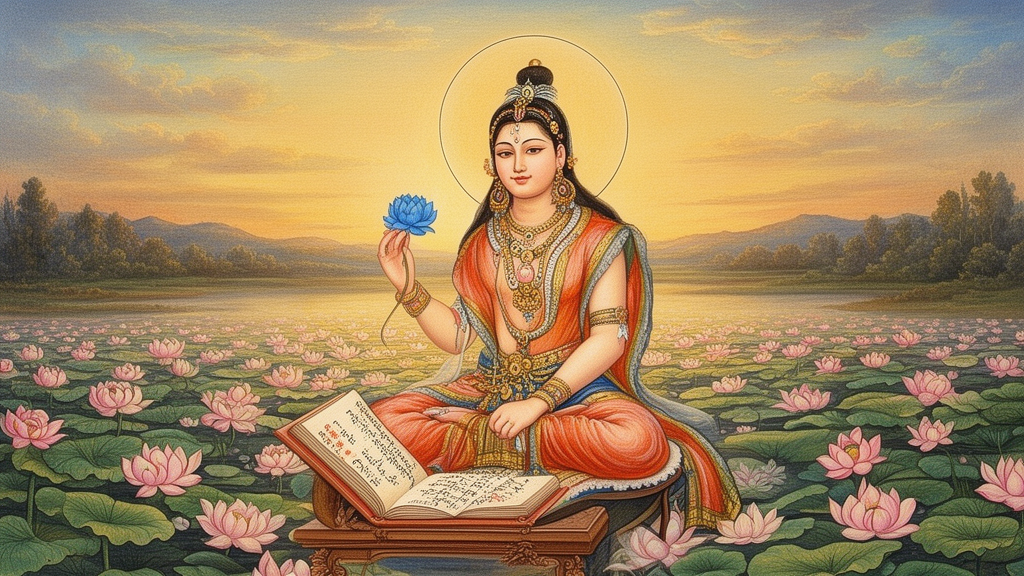
This article explains what the phrase commonly refers to, how the main text is known, which traditions use Tara-centred tantric material, and how a reader can approach these texts with care. It separates what a named text says, what practitioners believe, and what scholars have established about dates and transmission.
The short answer
When readers search for the Tara Tantra Shastra, they are usually looking for one of three things: the scripture itself, the goddess Tara in tantric worship, or a Hindi or Sanskrit book with this title. The most useful starting point is the Buddhist tantric root text, the Tara-mula-kalpa, which has been translated into English by the scholar Susan Landesman. According to the publisher’s description of that translation, the text documents the emergence of Tara in seventh-century India, and her cult later spread through Southeast Asia and Tibet. The publisher’s description is a secondary summary, so the date should be treated as the publisher’s framing rather than settled fact until checked against a fuller scholarly treatment.
Second, the title is used in devotional and commercial publishing for Hindi and Sanskrit-language books on Tara sadhana. These works may reflect later devotional or practical traditions. They are not the same kind of evidence as a critical edition or a scholarly translation, and readers should check the publisher, editor, and content before relying on them.
Names, spellings and related titles
Readers will meet several spellings. The goddess is written Tara in common English usage and Tārā in scholarly transliteration with the long vowel marked. The Devanagari form, तारा तन्त्र शास्त्र, appears on at least one commercial listing that uses the English title Tara Tantra Shastra beside it. The root text is usually identified as Tārā-mūla-kalpa, meaning roughly a fundamental ritual text or root-ritual manual on Tara. A scholarly English title for the same work is The Tārā Tantra, which appears in the Wisdom Experience listing for Landesman’s translation.
Because spellings vary, this article uses Tara for the goddess in general English text and Tārā when citing a scholarly title with diacritics. The word shastra means a treatise or teaching, and tantra refers to a body of ritual and esoteric literature that developed across several religious traditions. The phrase Tara Tantra Shastra therefore combines a deity’s name with two general terms.
Where the Tara texts come from
The Buddhist tantric root text
The most clearly documented Tara scripture in the sources reviewed is the Tārā-mūla-kalpa. The Wisdom Experience listing describes it as Tārā’s fundamental ritual text and as a scripture-ritual compendium that captures a Buddhist tantric tradition in mid-formation. That description, which comes from the publisher, places the text within Buddhist tantra rather than within a Hindu scriptural category.
The same listing says Tara is worshipped for a range of reasons, including health and long life, wealth, protection from enemies, and ultimately the mind of enlightenment. These are presented as motives recorded in the tradition and described by the publisher. They are not promises of outcomes, and a reader should not treat them as guarantees of any material result.
The listing also describes Tara’s influence in Tibet, where she is revered as a mother figure of the Tibetan people, and notes her role as a guide to many Buddhist scholars and lineage holders. These claims describe the cult’s reception in Tibetan Buddhism. They should be attributed to Tibetan Buddhist tradition and to the publisher’s summary unless confirmed in a specialist study.
Tara in Hindu and Shakta contexts
Tara also has a place in Hindu tantric and Shakta devotion. In some Hindu contexts she is counted among the Mahavidyas, a group of goddesses associated with Shakta tantric worship. A Hindi file title in a document-sharing listing reviewed for this article refers to a Tara Mahavidya hymn and armour text, but that listing is not a reliable source for the content of the hymn. Readers should not assume that Buddhist Tara texts and Hindu Mahavidya Tara texts are the same work or share one ritual system.
This distinction matters. Tara is a goddess in Hindu devotion and a female Buddha in Tibetan and other Buddhist contexts. Many practitioners in both traditions revere her, but the scriptures, lineages, iconography and ritual instructions are not interchangeable. This article does not present a single Hindu account of Tara, because the sources reviewed here do not supply the verified textual base needed for one.
Manuscripts, editions and transliteration
Readers encountering Tara texts in print or online should look at the edition history. One scanned text reviewed for this article is described as the Tara Tantra prepared by the Muktabodha Indological Research Institute under the supervision of Mark S.G. Dyczkowski. The file notes that the original edition was published before 1940, that a 1983 reprint was issued by Bani Prakashan, and that the text is encoded in Velthius transliteration. These notes indicate that the file is a machine-readable transcription of an earlier printed edition. They do not by themselves establish the accuracy of every line.
Muktabodha is a recognised institute for research on Indian tantric texts, and a transcription prepared under scholarly supervision is more useful than an unattributed upload. However, a user-uploaded copy on a document-sharing site should still be compared with a published edition before it is quoted. The sources reviewed did not include a full collation of this file against a critical edition, so no line-level claims are drawn from it here.
Landesman’s English translation is also presented as the root text of the Tara-mula-kalpa. The publisher’s page lists a second volume, described as The Tārā Tantra: Part II: The Uttara-tantra, as forthcoming at the time of that listing. Readers should check the publisher for current availability.
Why transliteration choices matter
Sanskrit and Tibetan names can appear in several forms. A reader may see Tārā, Tara, Dolma, or Sgrol ma in Tibetan contexts, depending on the source. Even when the same deity is meant, the spelling can signal a different scholarly or devotional tradition. Good editions state their transliteration system so that readers can match names, terms and references across books.
What the texts teach, as described by sources
Tantric scriptures often combine ritual instruction, mantra, iconography, and philosophical teaching. The sources reviewed for this article describe the Tara material in a few broad ways, and each claim below is tied to its source type.
An archive.org text titled Six Texts on Tara Tantra describes the Tara tantric system as pacifying, meaning that it is said to remove disharmonious conditions, material grasping, laziness, attachment, aversion, mental wandering, and distorted views. This is a description of the system’s intended effect within that text’s framework. It is not a measurable claim, and it should be read as a teaching about the practitioner’s mind rather than as a promise about life circumstances.
The Wisdom Experience listing describes the Tara root text as a ritual compendium. This suggests that a reader approaching the scripture should expect ritual instructions, sequences, and invocations, not only doctrine. Those instructions belong to the tradition that produced the text and should be read in context. They are not general advice for every reader.
Devotional aims and cautions
The devotional aims mentioned in the sources are health, long life, wealth, protection and enlightenment. These aims appear as motives for worship within a tradition. HindusGod.com does not endorse any claim that a ritual will produce a particular health, financial, or protective result. Where a text describes such aims, this article presents them as the tradition’s own description of why people worship Tara.
Practitioners who face illness, debt, conflict, or other serious problems should seek qualified medical, legal, or financial help. Devotional practice can be a meaningful part of a person’s life, but it does not replace these services.
Belief, text, tradition and scholarship
Discussions of tantric scriptures often mix separate kinds of knowledge. A clear reading separates them.
- Text: what the scripture or manuscript actually contains, verified against a published edition or translation.
- Tradition: how a lineage, temple, community, or teacher uses and interprets the text in worship.
- Belief: what devotees hold about Tara, her powers, and the effects of worship.
- Scholarship: historical dating, manuscript history, comparison with other texts, and academic interpretation.
For example, the claim that the Tara-mula-kalpa documents a cult emerging in seventh-century India is a scholarly and publisher-level claim. The claim that Tara protects devotees from enemies is a devotional or traditional claim. Neither should be presented as the other.
How to read a Tara Tantra Shastra today
Choose a clear edition
Begin with a text that identifies its editor or translator, its source manuscripts, and its transliteration system. A scholarly translation with an introduction is better for understanding the text’s historical setting. A devotional Hindi edition may be more useful for practice, but readers should understand that its instructions reflect a particular lineage or author.
Be cautious with commercial listings
A commercial listing reviewed for this article presents a Hindi Tara Tantra Shastra book in the Religion and Spirituality category, with a subcategory for astrology. The listing describes it as a Tantra Shastra and Mahavidya Tara sadhana guide. The page content reviewed did not include a table of contents, editor credit, or source manuscript information. Readers should check those details before treating the book as a reliable source for ritual practice.
Avoid treating uploaded PDFs as verified editions
Document-sharing sites often host scanned or retyped texts of uncertain origin. A title match does not confirm that a file is complete, accurate, or from a legitimate edition. Compare any file against a published edition before quoting it. If the file does not name its editor, source, and date, treat it as unverified.
Related Tantra Shastra topics on HindusGod
Readers interested in the broader category of tantric shastra may find these HindusGod draft pages useful once they are published. At present, the owner should confirm that each destination is public before linking readers to it. The links below are draft targets and may not yet be live.
- For a general overview of the category, see Tantra Shastra (URL to confirm publication status).
- For English-language material on the same category, see Tantra Shastra in English (URL to confirm publication status).
- For Hindi-language material, see Tantra Shastra in Hindi (URL to confirm publication status).
- For a Shiva-centred treatment of the genre, see Shiv Tantra Shastra (URL to confirm publication status).
- For a Kali-centred treatment, see Kali Tantra Shastra (URL to confirm publication status).
- For a Shabar-tradition treatment, see Shabar Tantra Shastra (URL to confirm publication status).
- For a related term that often appears in Shakta and tantric texts, see Agama Shastra (URL to confirm publication status).
- For Bhairav-centred tantric material, see Bhairav Shastra (URL to confirm publication status).
Frequently asked questions
Is the Tara Tantra Shastra a Hindu or Buddhist text?
It depends on which text is meant. The Tara-mula-kalpa, as described by the Wisdom Experience listing and the Landesman translation, is a Buddhist tantric root text. Hindu and Shakta Tara material, including Mahavidya-related works, belongs to a different body of literature. Readers should identify the specific edition before deciding which tradition applies.
Is there one authoritative Tara Tantra Shastra?
No single text should be treated as the only authoritative version. Scholarly editions, translations, devotional manuals and oral lineage practices can differ. The most reliable starting point is an edition that names its sources and editor.
Does worship of Tara guarantee a particular result?
No source reviewed here supports a guaranteed outcome. The texts and commentaries describe aims such as health, protection, wealth or enlightenment as motives within a tradition. Readers should not treat these as promises and should seek appropriate help for practical, medical, or legal needs.
Summary
The Tara Tantra Shastra is best understood as a family of tantric texts and devotional titles centred on Tara. The most clearly sourced example is the Buddhist Tārā-mūla-kalpa, whose English translation by Susan Landesman is described by the publisher as a root ritual text from seventh-century India. Hindu and Shakta Tara material, and many commercial Hindi books, belong to other contexts and must be assessed separately.
A careful reader should identify the text, the edition, the tradition, and the type of claim being made. Devotional aims should be described as aims of the tradition, not as guaranteed results. When the owner publishes this article, the next step is to verify each internal link, confirm the Scribd and Amazon listings before citing them as evidence, and check any future scholarly edition for line-level accuracy.
Sources and further reading
- The Tārā Tantra, Wisdom Experience: publisher listing for Susan Landesman’s English translation of the Tārā-mūla-kalpa. Used for the description of the text as a Buddhist tantric root ritual text, its dating as described by the publisher, its spread to Southeast Asia and Tibet, and the listed devotional aims.
- Six Texts on Tara Tantra, archive.org PDF: used for the description of the Tara tantric system as pacifying. The full text was not inspected for this draft, so the claim is attributed to the excerpt as reviewed.
- Tara Tantra Shastra, Exotic India Art: commercial listing used only to confirm the Devanagari and English title form. The page content did not establish the book’s scholarly content.
- Tara Tantra, Scribd document: used for the edition notes stating the Muktabodha data-entry credit, the Dyczkowski supervision note, the pre-1940 original edition, the 1983 Bani Prakashan reprint, and Velthius transliteration. This is a user-uploaded copy and should be checked against a published edition before any line-level quotation.
- Tara Tantra Shastra Hindi Book, Amazon.in: commercial listing used only to describe the book as a Hindi Tara sadhana guide in the Religion and Spirituality category. Not used as evidence of tradition or ritual accuracy.