The Sama Veda Upanishad texts are the philosophical treatises attached to the Samaveda, one of the four Vedas of Hinduism. The Samaveda is a liturgical collection of chants, and its Upanishads take up questions about Brahman, the Atman (the inner self), meditation, renunciation, and liberation. This guide explains what these texts are, how many are usually counted, where they sit within the Samaveda, and how to read two of them, the Chandogya and the Aruni, with care.
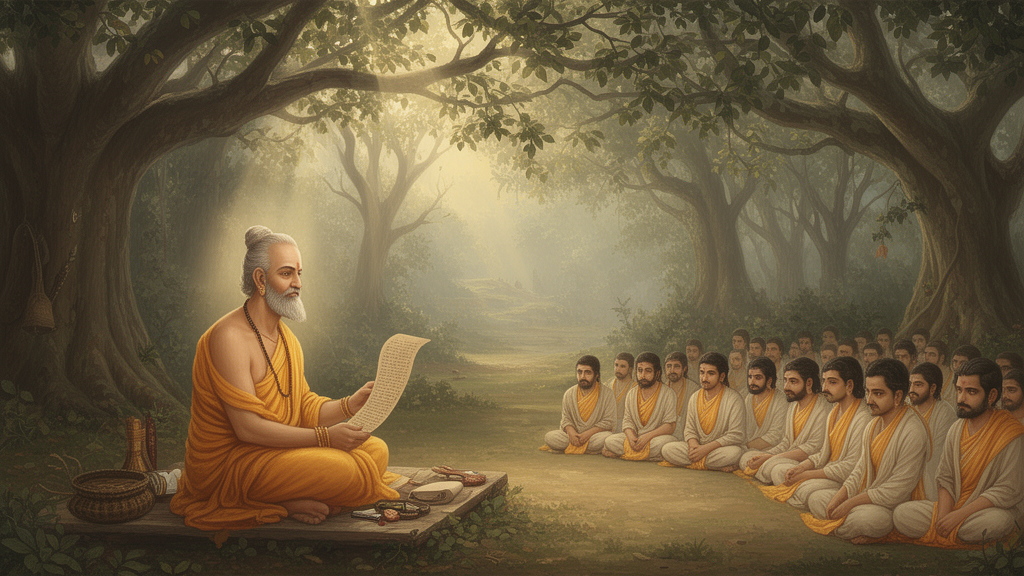
The short answer: the Sama Veda Upanishads are a group of later Upanishads associated with the Samaveda’s Talavakara (Jaiminiya-related) and Kauthuma traditions, which are commonly listed as sixteen in English-language online collections, though one widely read essay describes fifteen. The exact count depends on which texts are included, so readers should check the edition they use.
Because “Upanishad” can refer to very different texts, it helps to separate three things from the start: the scripture itself, the tradition that preserves and recites it, and the scholarly work that dates and interprets it. Each is discussed below.
Quick answer: what the Sama Veda Upanishads are
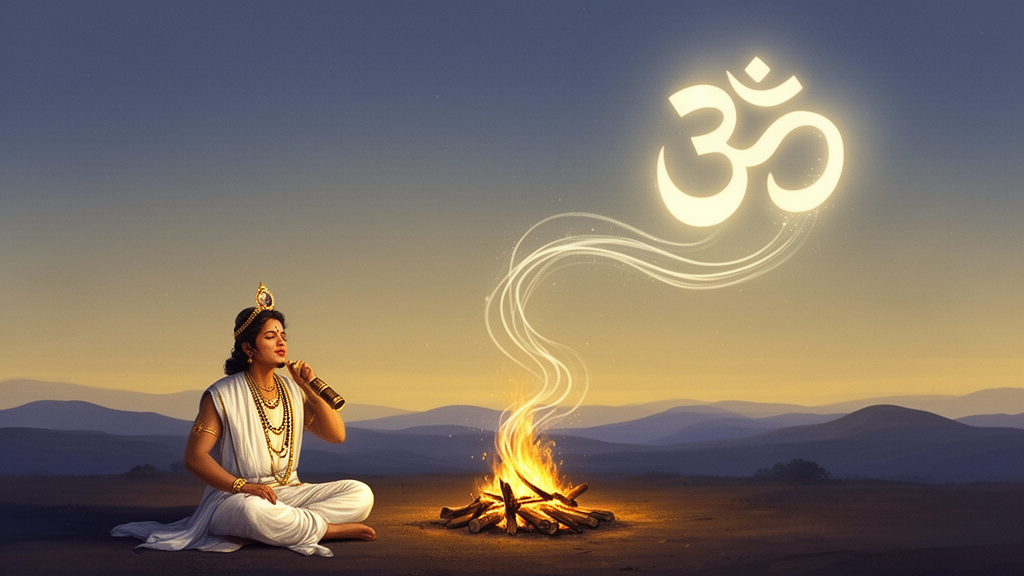
The Samaveda is traditionally associated with melody and chant. Its Upanishads are short prose or mixed prose and verse texts that were attached to the Samaveda and are read as part of Vedic and Vedanta literature. Some are early and philosophically central, such as the Chandogya Upanishad. Others are later and cover renunciation, yoga, or sectarian devotion.
Two points are especially useful for readers:
- Not all Samaveda Upanishads are equally old. The Chandogya belongs to the early philosophical Upanishads, while several texts in the group are generally regarded as much later.
- Counts vary by source. Some collections list sixteen titles, and at least one popular essay on hinduwebsite.com refers to fifteen in its title.
What the Samaveda is
Name and meaning
The Samaveda, or Sama-Veda, takes its name from the Sanskrit word sāman, usually rendered as “song,” and veda, meaning “knowledge.” Wikipedia describes it as the Veda of melodies and chants. The Samans are melodies set to verses, and they are sung during Vedic sacrifices at three stages: the beginning (Prastava), the middle (Udgitha), and the end (Pratihara), according to the Hindu Website essay summarizing the Samaveda’s ritual role.
Text and verse count
Wikipedia states that the Samaveda is a liturgical text of 1,875 verses, and that all but 75 of them come from the Rigveda. Wikipedia also notes that three recensions have survived, and that variant manuscripts have been found in various parts of India. The Hindu Website essay gives the same total of 1,875 verses and observes that the prevailing view is that the shared verses belong to the Rigveda, while some scholars and traditions hold the opposite.
This point matters for understanding the Upanishads. The Samaveda is not only a collection of new material. Much of it is a musical arrangement of verses drawn from another Veda, which is one reason the tradition treats it as a distinct liturgical body.
Dating the layers
Wikipedia summarizes the scholarly view that the existing samhita (the verse collection) dates from the post-Rigvedic Mantra period of Vedic Sanskrit, roughly between c. 1200 and 1000 BCE, or “slightly rather later.” The same article states that the Brahmana texts and the Upanishad layer date from the same broad period, likely around the 6th century BCE. These are scholarly estimates rather than fixed dates, and the page explicitly presents them as a range. Readers should treat them as approximate.
Hindu tradition often describes the Vedas as sruti, meaning “that which is heard.” The Hindu Website essay notes that some explain the term as a reference to the oral transmission of the Vedas across generations, rather than to a claim about origin. This is a traditional and interpretive point, not a historical finding, and it is best kept separate from the dating discussion.
Where the Upanishads fit in the Samaveda
Three layers of the compilation
Wikipedia describes the Samaveda as having three layers: the samhita of verses, the Brahmana texts that explain ritual, and a final layer of philosophical speculation, which is the Upanishads. This layering helps explain why the Upanishads read differently from the chants. They do not describe how to sing a hymn. They ask what the hymn, the sacrifice, the syllable Om, and the self ultimately are.
Why the Upanishads are called philosophical
The word “Upanishad” is commonly linked to sitting near a teacher to receive instruction, though this etymology is also a traditional and scholarly reading rather than a settled fact. In practice, Upanishads present dialogues, meditations, and short teachings. The Samaveda Upanishads follow this pattern, though their content ranges widely, from the early Chandogya’s cosmic meditations to later texts on monastic renunciation.
How many Sama Veda Upanishads are there?
The number varies by source, and this is one of the most common points of confusion.
- Sixteen titles appear in the Vedanta Spiritual Library’s Sama Veda Upanishads index on celextel.org and in the Scribd overview document, which lists them in the same order.
- Fifteen is the figure in the title of the Hindu Website essay “The Fifteen Upanishads of Samaveda Explained,” by Jayaram V, which surveys the group from Chandogya and Kena to texts on renunciation, yoga, and sectarian practice.
The difference is likely a matter of which titles are counted, and this guide does not resolve it. When you read or cite a list, note which edition or essay you are using. For a fuller treatment of how Upanishad numbering works across the Vedas, see our guide on the meaning of Upanishad (URL to confirm before linking as live).
The Sama Veda Upanishad list
The following titles appear in the celextel index and the Scribd overview. Each is commonly described as belonging to the Samaveda group. Their dates, content, and relative antiquity vary, and this list does not assign dates to individual texts.
- Aruni Upanishad
- Avyakta Upanishad
- Chandogya Upanishad
- Darsana Upanishad
- Jabali Upanishad
- Kena Upanishad
- Kundika Upanishad
- Maha Upanishad
- Maitrayani Upanishad
- Maitreya Upanishad
- Rudraksha Jabala Upanishad
- Sannyasa Upanishad
- Savitri Upanishad
- Vajrasuchika Upanishad
- Vasudeva Upanishad
- Yoga Chudamani Upanishad
The Hindu Website essay describes the group as ranging from ancient ritual philosophy to medieval devotional teaching. That range is a useful reminder: “Sama Veda Upanishad” is a category of texts, not a single book with one message.
Chandogya Upanishad: Om, Udgitha, and the sacred song
The Chandogya Upanishad is the best-known Samaveda Upanishad, and it is the one most often cited when readers ask what the Sama Veda Upanishads teach. Wikipedia lists it among the Samaveda’s Upanishads, and the Vedanta Spiritual Library hosts an English translation by Swami Swahananda, published by Sri Ramakrishna Math, Chennai.
The opening meditation on Om
The first section begins with meditation on the syllable Om, which the text calls the Udgitha, the sung part of the sacrifice. In the translation hosted by celextel.org, the opening sections teach that the Udgitha should be meditated upon as the essence of the sacred song. The text then links speech with Rik (the verse) and Prana (life breath) with Saman (the melody), and says that Om is the joining point of these pairs.
A reader does not need to accept every ritual or cosmological connection to see the structure of the argument. The text moves from sound to ritual to inner meaning. It presents the sacred syllable as a focus for meditation, and it says that the one who meditates on it understands its quality. The translation also says that this knowledge makes action more effective, though the wording should be read in context as a statement within the text’s own framework, not as a promise of material results.
The story of the gods and demons
The Chandogya’s second part includes a narrative in which gods and demons, both descended from Prajapati, struggle. The gods meditate on different faculties, such as breath and speech, as Udgitha. In the text’s account, the demons pierce some of these faculties with evil, which the text uses to explain why the senses can perceive both pleasant and unpleasant things, or both truth and falsehood. This is a symbolic teaching within the text, and it is not a historical account.
Why readers encounter this text first
The Chandogya is a useful starting point because it shows how the Samaveda Upanishads connect liturgy, sound, and philosophy. Its concerns are not only ritual but also knowledge, meditation, and the inner self. Later Upanishads in the group often narrow this focus toward renunciation or devotion.
Aruni Upanishad: renunciation and the monk’s path
The Aruni Upanishad is the first text in the celextel and Scribd lists, and its content is quite different from the Chandogya. The Scribd overview describes it as having five sections on renunciation, the duties of monks, realizing the truth of the Vedas, injunctions for liberation, and a concluding mantra. The page reproduces a translation by Swami Madhavananda, published by Advaita Ashram, Kolkata.
The central dialogue
In the text, Aruna’s son approaches Brahma, the Creator, and asks how he can give up work altogether. Brahma’s reply, as rendered in the translation, instructs him to relinquish family ties, ritual tokens such as the sacred thread, and the sacrifices and scriptures that regulate ritual life, and to take up the staff and simple clothing of a sannyasin, or renouncer. The text’s listing of cosmic realms is part of this renunciation, which is presented as a total detachment from ordinary worlds and duties.
This is a scriptural statement about the renunciant path. It is not a general instruction for lay Hindus, and traditions differ on how far renunciation should be taken and whether it is for every person. Most Hindu families observe duties of householder life, and many traditions treat renunciation as a stage or vocation for particular people.
How tradition reads it
Within Vedanta and sannyasa traditions, the Aruni is read as a teaching on relinquishment and on the seriousness of the monastic commitment. Modern readers often approach it as a text on inner detachment. Both readings are interpretations. The text itself describes an external renunciation of ritual and social duties, so readers should keep the scriptural description and later spiritual interpretation separate.
Kena Upanishad: a note on a major text
Wikipedia names the Kena Upanishad alongside the Chandogya as one of the Samaveda’s Upanishads, and the celextel index places it in the same group. The Hindu Website essay also describes the Kena as one of the major texts in the collection. This guide does not summarize the Kena in detail because the source material available for this draft does not include its full text or a verified translation. Readers who want to study it should consult a complete edition from a recognized publisher or institution and compare at least two translations.
Translations and editions
Many English versions of Upanishads circulate online, often as public-domain or devotional editions, and their wording can differ considerably. The celextel pages credit Swami Swahananda for the Chandogya and Swami Madhavananda for the Aruni. The Scribd document is a user-uploaded overview and reproduces text that the page credits to the Vedanta Spiritual Library, so it should be treated as a secondary aggregator rather than an authoritative edition.
When you read or quote any Upanishad, consider these practical checks:
- Identify the translator, publisher, and year of your edition.
- Compare key verses with a second translation, especially where the Sanskrit term is central, such as Brahman, Atman, Udgitha, or sannyasa.
- Distinguish the Sanskrit text from the translator’s interpretation.
- Check section and verse numbering against the edition, since numbering varies between editions.
Transliteration also varies. Titles may appear as “Sama Veda,” “Samaveda,” or “Sāmaveda,” and Upanishad titles may appear as “Chandogya” or “Chandogya” with different diacritics. These are spelling variants of the same name.
Scripture, tradition, and scholarship
Discussion of the Sama Veda Upanishads involves three kinds of claim that should not be merged:
- What the text says. For example, the Chandogya teaches meditation on Om as Udgitha, and the Aruni describes a renunciation dialogue with Brahma.
- What traditions believe and teach. Vedanta schools, sannyasa lineages, and devotional communities read these texts in different ways, and some regard them as sruti. Their interpretations are sincere and important, but they are not the same as academic findings.
- What scholars estimate. Dates for the Samaveda’s layers and the relative age of individual Upanishads are scholarly estimates. Wikipedia presents a range of dates, and scholars continue to debate the chronology.
Readers should also be aware that Hinduism has many regional and community traditions. Some families and communities recite Samaveda chants in specific ways, and the recitation traditions associated with particular schools (such as Kauthuma and Ranayaniya) may differ in melody and pronunciation. The sources available for this draft do not describe these recitation differences in verified detail, so this guide does not explain them further.
How to start reading the Samaveda Upanishads
A practical approach for readers new to this group:
- Begin with the Chandogya. Read the opening sections on Om and the Udgitha slowly, and note how the text moves between sound, ritual, and inner meaning.
- Read the Aruni next. Its short dialogue on renunciation shows a very different emphasis and helps you see the range of the group.
- Compare two translations. Use a second edition for the same passage and note where the translators differ.
- Look at the surrounding Vedic literature. The Samaveda’s Brahmana texts and the wider Upanishad tradition give context for the ritual references. Our pages on the Aranyaka Upanishad and the Brahmana and Aranyaka Upanishad (both draft targets; URL to confirm before linking as live) discuss related texts.
- Keep a notes file. Record the translator, edition, section number, and whether a claim comes from the text, a commentary, or a modern essay.
Related Upanishad topics on HindusGod.com
Readers who want to compare the Samaveda group with other Vedic branches can explore these related topics. Each link points to a WordPress draft that may not yet be public; the owner should confirm publication before these become live links.
- Atharva Veda Upanishad, for the Atharvaveda’s Upanishad group.
- Yajur Veda Upanishad, for the Yajurveda’s Upanishads and their different ritual setting.
- Veda Vedanta Upanishad, for the connection between Vedic texts and Vedanta philosophy.
- Veda Upanishad in Kannada, for readers looking for Upanishad teachings in a regional language.
- Aitareya Upanishad, for another Upanishad that appears in a different Veda tradition.
- Adhyatma Upanishad, for a text that deals with inner spiritual teaching.
- Ashtavakra Upanishad, for a short teaching on self-knowledge read in several traditions.
- Ancient Upanishad, for a broader overview of early Upanishadic thought.
- 10 Upanishad, for readers comparing numbered groupings of Upanishads.
- 108 Upanishad, for the traditional list of 108 Upanishads, which is a different category from the Vedic groupings discussed here.
Frequently asked questions
Are the Sama Veda Upanishads the same as the Samaveda?
No. The Samaveda is the Veda of chants, with 1,875 verses according to Wikipedia. Its Upanishads are philosophical texts that were attached to it, and they form a separate layer of the compilation.
Which Sama Veda Upanishad should I read first?
Many readers begin with the Chandogya, because it is the best-known text in the group and has widely available translations. The Aruni is a shorter starting point for readers interested in renunciation.
Why do some lists say fifteen and others sixteen?
The difference appears to be in which titles are counted. The Hindu Website essay uses fifteen in its title, while the celextel index and Scribd overview list sixteen. Check the edition or essay you are using.
Do these texts give instructions for daily worship?
Not in the sense of a fixed household routine. The Chandogya discusses meditation on Om and the Udgitha, and the Aruni describes renunciation. Practices in later traditions vary, and readers should consult a teacher or community within their own tradition for devotional guidance.
Takeaway
The Sama Veda Upanishads are a group of philosophical and renunciation texts attached to the Samaveda, the Veda of chants. Their number is usually given as sixteen in online collections, though one essay counts fifteen. The Chandogya and the Aruni show two very different sides of the group: meditation on sacred sound and the path of renunciation. When you study them, keep the text, the tradition, and modern scholarship distinct, compare translations, and verify each citation against the edition you are using.
Sources and further reading
- Samaveda, Wikipedia: used for the Samaveda’s name, verse count (1,875), Rigveda overlap, three recensions, the three-layer structure, and the scholarly dating range.
- The Fifteen Upanishads of Samaveda Explained, Hindu Website (Jayaram V): used for the fifteen-Upanishad count, the Samans’ ritual stages, the sruti discussion, and the description of the group’s range. This is an essay, not a critical edition.
- Sama Veda Upanishads, Vedanta Spiritual Library: used for the list of sixteen titles in the group.
- Chandogya Upanishad, Vedanta Spiritual Library (translation by Swami Swahananda, Sri Ramakrishna Math, Chennai): used for the opening Om and Udgitha sections and the gods-and-demons narrative. Translation wording is paraphrased here.
- Sama Veda Upanishads Overview, Scribd (user-uploaded document): used for the sixteen-title index and the summary of the Aruni Upanishad, including the Madhavananda translation credit. This is a secondary, user-uploaded copy; check the original edition before relying on it.
A thoughtful post about the role of faith and spiritual values in shaping our lives and communities.