The phrase the most holy rosary thursday usually refers to praying the Rosary on Thursday with the Luminous Mysteries, also called the Mysteries of Light. In Catholic practice, Thursday is the day most often associated with these five meditations on Christ’s public ministry, from his baptism in the Jordan to the institution of the Eucharist at the Last Supper.
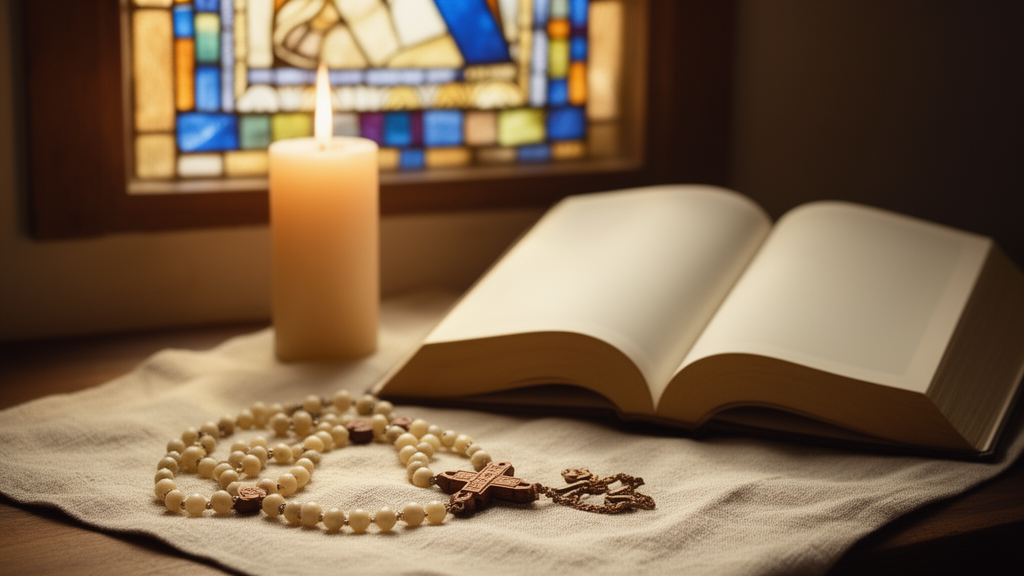
This guide explains what the Thursday Rosary is, where the custom comes from, how the prayer is ordered, and what each mystery asks the one praying to consider. It is written for readers who want to understand this Catholic devotion, including those comparing it with other prayer traditions. HindusGod.com focuses on Hindu deities, scriptures, and practices, so this article describes Christian devotion for informational purposes only.
Quick answer: what is the Most Holy Rosary Thursday?
The Most Holy Rosary Thursday is a common name for the Thursday recitation of the Rosary using the Luminous Mysteries. The Rosary is a Catholic prayer built around repeated prayers (the Our Father, the Hail Mary, and the Glory Be) while meditating on events in the lives of Jesus and Mary. Pope St. John Paul II proposed the Luminous Mysteries in his 2002 apostolic letter Rosarium Virginis Mariae, and he suggested Thursday as the day for them. Catholic sources that publish daily schedules follow this suggestion, and it is widely practiced, but it is a pastoral recommendation rather than a rule that binds every believer at all times.
What the Most Holy Rosary Thursday refers to
The word “Thursday” in this context is a day-of-the-week assignment within a weekly pattern of Rosary mysteries. A typical pattern assigns a set of mysteries to each day. Many Catholic publishers list the Luminous Mysteries on Thursdays, and several online guides name the Thursday mysteries as the Luminous set.
The phrase “most holy” is a devotional title used by many writers and websites to describe the Rosary as a whole. It is not a separate official title for a distinct prayer. Readers searching for this phrase are usually looking for three things: which mysteries to pray, the order of the prayers, and the meaning of the day’s meditations. The sections below address those needs in that order.
Why Thursday is linked to the Luminous Mysteries
According to the Catholic Church Times Rosary guide for Thursday, the traditional schedule assigns the Luminous Mysteries to Thursday, citing Pope St. John Paul II’s Rosarium Virginis Mariae §38 (2002). The same guide states that John Paul II proposed the Luminous Mysteries in §21 of that letter. Those are two distinct points: the proposal of the mysteries and the suggestion of a day for praying them.
The Thursday link also has a devotional connection. The fifth Luminous Mystery is the Institution of the Eucharist at the Last Supper, which the Church commemorates each Holy Thursday. Several Catholic guides note this connection, but the day assignment itself comes from the papal suggestion rather than from a biblical command about the day of the week.
It helps to separate three kinds of statements:
- Papal teaching: Rosarium Virginis Mariae proposes the Luminous Mysteries and suggests Thursday for them.
- Devotional practice: Many Catholics, parishes, and prayer guides follow the Thursday schedule, and some use other arrangements.
- Scriptural basis: Each mystery draws on events described in the Gospels, while the day of the week is not stated in those scriptural accounts.
How to pray the Luminous Mysteries on Thursday
Catholic prayer guides generally follow the same sequence for the Rosary. The steps below describe the common pattern used in the Thursday prayer guides reviewed for this article. Parishes, religious communities, and families may add or change details, as discussed later.
- Make the Sign of the Cross while holding the crucifix.
- Pray the Apostles’ Creed.
- Pray the Our Father on the first large bead.
- Pray three Hail Marys on the next three small beads, usually for an increase in faith, hope, and charity.
- Pray the Glory Be.
- Announce the first mystery, reflect on it, and pray the Our Father on the large bead.
- Pray ten Hail Marys on the ten small beads, followed by the Glory Be and the Fatima Prayer.
- Repeat steps 6 and 7 for the second through fifth mysteries.
- Conclude with the closing prayers used in your tradition.
The opening prayers
The opening prayers are the same in most Rosary traditions. The Apostles’ Creed states the core beliefs of the Catholic faith about God the Father, Jesus Christ, the Holy Spirit, the Church, and the resurrection of the body. Praying it at the beginning gives the Rosary a clear statement of belief before the meditations begin.
The three Hail Marys after the first Our Father are often prayed for the virtues of faith, hope, and charity. The guides consulted describe this intention as a traditional one. Its purpose is devotional: to ask for growth in these virtues, not to guarantee a specific result.
The decade structure
Each decade consists of one Our Father, ten Hail Marys, and one Glory Be. Many guides add the Fatima Prayer, “O my Jesus, forgive us our sins, save us from the fires of hell, and lead all souls to heaven,” after the Glory Be. Some traditions include different closing or intercessory prayers, and some communities pray the Rosary in a group with a leader announcing each mystery.
A practical way to pray is to keep the announcement short. Name the mystery, read the scripture passage or a brief reflection, and then pray the decade. This keeps attention on the meditation without making the prayer longer than necessary.
The five Luminous Mysteries
The Luminous Mysteries are typically listed in the following order: the Baptism of Jesus, the Wedding at Cana, the Proclamation of the Kingdom, the Transfiguration, and the Institution of the Eucharist. The guides reviewed use the same five titles, although wording varies slightly from site to site.
First Luminous Mystery: The Baptism of Jesus in the River Jordan
The first mystery recalls the baptism of Jesus by John the Baptist. Dynamic Catholic’s guide cites Matthew 3:13-17, which describes John hesitating to baptize Jesus and Jesus replying that it is fitting to fulfill all righteousness. The passage also describes the heavens opening, the Spirit descending like a dove, and a voice from heaven.
Many guides use this mystery to reflect on identity and obedience. A simple way to pray it is to consider how Jesus, who is presented in the Gospel as the Son of God, chooses to enter the water with others. Reflection is a personal practice here; the text itself describes events, and interpretations of its meaning are part of Christian reflection and teaching.
Second Luminous Mystery: The Wedding Feast at Cana
The second mystery recalls the wedding at Cana, described in John’s Gospel, where Jesus’s mother Mary draws attention to a need at the feast and Jesus performs the first of the signs recorded in that Gospel. Catholic devotional guides often connect this mystery to Mary’s role as an intercessor who brings a need to her Son’s attention.
For readers who want a practical reflection, this mystery can prompt questions about attentiveness to the needs of others. It is also one of the mysteries that many Catholic readers link to devotion to Mary, although the Gospel account itself focuses on the event and its meaning within John’s narrative.
Third Luminous Mystery: The Proclamation of the Kingdom
The third mystery concerns Jesus’s preaching that the kingdom of God is near and his call to conversion. Catholic guides typically summarize it as an invitation to repentance and trust in the Good News. The Catholic Church Times guide and the Dynamic Catholic guide both list this mystery in the Luminous set, although the scriptural references used for it vary between sites.
Because the wording of this mystery differs across sources, readers who want to pray it precisely may wish to consult the Gospel passages used in their own parish prayer book or catechism.
Fourth Luminous Mystery: The Transfiguration
The Transfiguration is the event in which Jesus is seen in glory with Moses and Elijah on a high mountain, and a voice speaks from the cloud. The Synoptic Gospels describe this event. Many Catholic prayer guides use it to reflect on the divinity of Christ and the call to listen to him.
In the Luminous Mysteries, the Transfiguration is one of the mysteries that focuses most directly on Christ’s glory. Readers may find it helpful to read the Gospel account in full before praying it, since summaries can omit details that different traditions emphasize.
Fifth Luminous Mystery: The Institution of the Eucharist
The fifth mystery is the Last Supper, at which Jesus instituted the Eucharist. Catholic teaching holds that the Eucharist is the sacrament in which Christ is really present in the bread and wine. The Catholic Church Times guide notes that the Church also commemorates this event each Holy Thursday, which is why the Luminous Mysteries and the Thursday schedule are often discussed together.
This mystery is especially connected to the Mass and to Eucharistic devotion. Readers outside the Catholic tradition should note that Eucharistic belief is a central doctrine for Catholics, and different Christian communities hold differing understandings of the Lord’s Supper.
Thursday and Holy Thursday
Holy Thursday, the day before Good Friday in the Christian liturgical calendar, commemorates the Last Supper. Because the fifth Luminous Mystery is the Institution of the Eucharist, some Catholics pray the Luminous Mysteries on Thursday with that observance in mind. This is a devotional connection, not a rule that all Thursday Rosaries must be linked to Holy Thursday.
The Thursday Rosary and the liturgical Holy Thursday are distinct. The Rosary is a private or communal prayer that can be said at any time. The liturgical observance is part of the Church’s Holy Week and follows the official Church calendar, which should be consulted for the current year’s dates.
Variations among communities and traditions
Rosary practice is not uniform across all Catholic communities, and it is certainly not shared by all Christians or all religious traditions. Several differences are worth knowing:
- Weekly patterns: Some schedules assign the Joyful Mysteries on Monday and Saturday, the Sorrowful on Tuesday and Friday, the Glorious on Wednesday and Sunday, and the Luminous on Thursday. Other publishers present the same pattern but describe the Luminous Mysteries differently.
- Closing prayers: Guides list different closing prayers, such as Hail Holy Queen, the Fatima Pardon Prayer, or a Marian antiphon, depending on the tradition or publisher.
- Scripture references: Guides cite different passages for the same mystery. When a reference is quoted, it should be checked against the translation the reader uses.
- Communal and private prayer: Some groups pray aloud with a leader; others pray silently or in a family setting.
Readers should treat any single guide, including this one, as a description of common practice rather than the only authorized form.
Practical examples for praying on a Thursday
Here are three ways people commonly adapt the Thursday Rosary to their situation. These are examples, not requirements.
- Individual morning prayer: A person might pray one or two decades before work, choosing the Baptism of Jesus and reflecting briefly on the Gospel passage before the decade.
- Family evening prayer: A family might rotate the leader for each mystery, with each person reading the scripture passage for the decade they lead.
- Parish or group prayer: A parish group might pray the full set of five mysteries in about twenty to thirty minutes, depending on the pace and the length of reflections.
The time required depends on pace, the number of reflections, and whether the Rosary is prayed aloud. No source reviewed for this article gives a fixed duration that applies to all groups.
Related devotions on HindusGod.com
HindusGod.com also publishes content on other Christian devotions, scriptures, and prayer resources. The links below point to draft posts currently in the site’s WordPress queue. Their URLs are listed as internal targets for this article, but they may not be public until the owner publishes those posts.
- For a broader introduction to the Rosary as a book and devotional resource, see Holy Rosary Book.
- For background on how the Rosary developed, see The History of the Holy Rosary.
- For a version that links prayers with Scripture passages, see The Holy Rosary with Scripture.
- For a guide prepared by Lawrence Lovasik, see The Holy Rosary Lawrence Lovasik.
- For another set of mysteries and their structure, see Light Mysteries of the Holy Rosary.
- For readers comparing mystery sets, see 20 Mysteries of the Holy Rosary and Four Mysteries of the Holy Rosary.
- For a devotion that prays for souls in purgatory, see Holy Souls in Purgatory Rosary.
- For a separate Rosary devotion focused on the Holy Wounds, see Rosary to the Holy Wounds and Rosary of the Holy Wounds Promises.
Frequently asked questions
Do all Catholics have to pray the Luminous Mysteries on Thursdays?
No source reviewed for this article presents the Thursday assignment as an absolute obligation for every Catholic. The assignment comes from the papal suggestion in Rosarium Virginis Mariae §38, and it is widely followed in published prayer guides. Individuals and communities may choose a different order or pray the mysteries on another day.
Why are the Luminous Mysteries sometimes called the Mysteries of Light?
Dynamic Catholic’s guide uses the name “Mysteries of Light” and explains that these mysteries highlight moments that reveal Jesus’s divinity. This is a devotional interpretation of the set, and other guides may describe the same mysteries in different terms.
Is there one official text for the closing prayers?
The guides reviewed differ on closing prayers. Readers should use the prayer book, parish resource, or community guidance they normally follow.
Closing thought
The Most Holy Rosary Thursday is a Catholic practice of praying the Luminous Mysteries on Thursday, grounded in papal teaching and in the Gospel events each mystery recalls. Its structure is simple: opening prayers, five mysteries, decades of Hail Marys, and closing prayers. Its meaning depends on the reader’s own prayer and on the teaching of the Catholic Church.
For readers who want to go further, the next step is to read the Gospel passages connected to each mystery and to compare several guides, noting where their scripture references or prayer forms differ.
Sources and further reading
- Rosary for Thursday — Luminous Mysteries, Catholic Church Times: used for the Rosary structure, the Rosarium Virginis Mariae §21 and §38 references, and the Holy Thursday connection.
- Thursday – Pray the Rosary Everyday: used for the Thursday prayer structure, the opening and decade prayers, and the Fatima Prayer.
- Thursday Rosary Mysteries | Pray the Luminous Mysteries: used for the list of Luminous Mysteries and the Thursday assignment in a separate guide.
- The Luminous Mysteries of the Rosary | Pray on Thursdays, Dynamic Catholic: used for the five mystery titles, the Matthew 3:13-17 reference for the Baptism, and the “Mysteries of Light” description.