The term sutra Tripitaka usually refers to the Buddhist scriptural collections known as the Tripitaka, or Tipitaka in Pali. The word Tripitaka means “three baskets,” and the sutras (discourses attributed to the Buddha) form one of those baskets. This post explains what the Tripitaka is, how its main divisions work, and how different Buddhist traditions have preserved different canons. It also clarifies a point that matters for readers of HindusGod.com: the Tripitaka is a Buddhist canon, not a Hindu scripture, even though Sanskrit words such as sutra and Tripitaka are shared across South Asian religious vocabulary.
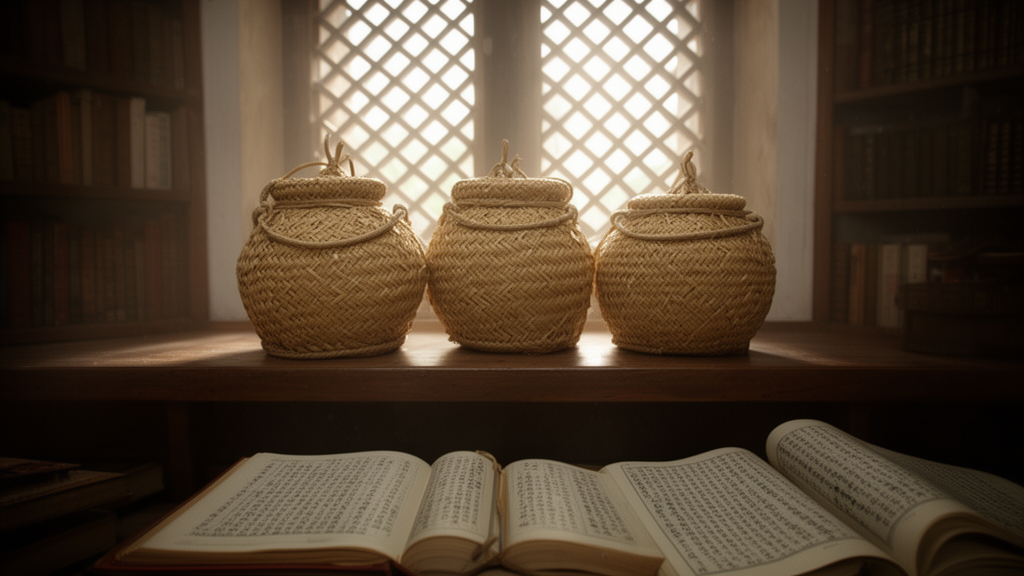
Quick answer: what is the sutra Tripitaka?

The Tripitaka is the body of scripture that Buddhist communities regard as their canonical collection. In its most familiar form, the Pali Tipitaka of Theravada Buddhism, it has three divisions. The second division, the Sutta Pitaka, is the collection of discourses, and it is also called the Sutra Pitaka or Suttanta Pitaka in various sources. So when people search for “sutra Tripitaka,” they are usually asking about the discourse portion of a Buddhist canon rather than a single text.
Two points are important from the start. First, there is not one Tripitaka used by all Buddhists. Several canons exist, each with its own languages, text selection and arrangement. Second, the word sutra carries different shades of meaning depending on the tradition and language. Scholars and translators commonly connect it with the discourse of the Buddha, but the exact scope of the category varies between canons.
What "Tripitaka" means
The Sanskrit form Tripiṭaka and the Pali form Tipiṭaka are both translated in general references as “Three Baskets.” The Wikipedia article on Buddhist canons lists the English rendering as “Three Baskets” and gives the Sanskrit and Pali forms side by side. The “baskets” image refers to the collections of texts that were traditionally kept and recited in separate groups, though the exact physical or oral history of this arrangement is discussed by scholars rather than settled by a single source.
The term also appears in translated names across languages. The Chinese term 三藏 (Pinyin: Sānzàng), for example, is commonly rendered as “three storehouses” or “three collections” in various references, and the Japanese form 三蔵 (sanzō) is linked to the same idea. Readers who see these variant forms in different books are usually looking at the same concept expressed in different languages.
The three baskets in general terms
In the Theravada Pali tradition, the Tipitaka is conventionally described as three divisions. The Sutta Pitaka holds the discourses, which are the subject of this post. Other divisions in that tradition deal with monastic discipline and with systematic philosophical analysis. Because the exact contents and boundaries differ in other canons, it is best to treat the three-part description as the classic Theravada framing rather than a universal map of all Buddhist scripture.
Sutra and Sutta: two related terms
Readers often meet two spellings: sutra, from Sanskrit, and sutta, from Pali. The Sutta Pitaka article on Wikipedia notes that this division is also referred to as Sūtra Piṭaka or Suttanta Piṭaka, and describes it as the second of the three divisions of the Pali Tripitaka. In this usage, sutra and sutta point to the same broad category: discourses ascribed to the Buddha and sometimes to his close disciples.
The spelling difference reflects language history rather than a difference in religious meaning. Pali and Sanskrit are closely related Indic languages, and Buddhist texts were transmitted in both. When an English reader sees “sutra Tripitaka,” the most useful interpretation is “the sutra (discourse) division within a Buddhist three-basket canon.”
Why the word matters in Hindu contexts
The word sutra is also used in Hindu literature, but that usage should not be confused with the Buddhist Tripitaka. Hindu sutra literature includes concise aphoristic texts in several domains, and HindusGod.com has separate posts on some of these topics. Those Hindu works are not organized as the Tripitaka is organized, and they belong to different textual traditions. Keeping the two categories apart avoids a common confusion in search results.
The major Buddhist canons
The Wikipedia article on Buddhist canons identifies several canonical collections. Among the living traditions it lists the Theravada Pali Canon, the Chinese Buddhist Canon, the Tibetan Buddhist Canon, the Mongolian Canon, and the Nepalese Sanskrit Buddhist Canon, with a related Digital Sanskrit Buddhist Canon listed under the Nepalese heading. The same article also discusses early canons associated with several historical schools. This variety is one reason the single phrase “the Tripitaka” can be misleading.
The Theravada Pali Canon
The Pali Tipitaka is the canon of the Theravada tradition. The Sutta Pitaka article describes the Pali Tripitaka as the definitive canonical collection of scripture for Theravada Buddhism. For many readers, the Pali canon is the most familiar form because it is widely studied, translated and used in Theravada monastic and lay education. Note that “definitive” here describes the canon’s authority within Theravada, not a claim that other Buddhist communities accept the same list.
The Chinese canon and the Taishō arrangement
The Chinese Buddhist Canon is much larger and has a different organization. The site of enlightenment Tripitaka resource presents the Taishō Tripiṭaka with numbered volumes and categories, including sections labeled Sutra Accumulation, Sutra Explanations, Sutra Commentary, Discipline, Abhidharma, and Treatise Accumulation. Its listings are organized by T-numbers, which are catalogue identifiers used by scholars and readers to locate texts. The resource also includes items grouped under other collections, showing that Chinese Buddhist literature has been assembled across many periods and sources.
Because the Chinese canon includes many works translated from Indian languages and also texts composed in China, it is wise to check the specific catalogue and edition before quoting a text. A title alone does not identify whether a work is an early discourse, a later commentary or a regional composition.
Tibetan, Mongolian and Nepalese canons
The Tibetan Buddhist Canon has its own selection and arrangement, shaped by Tibetan translation projects and monastic scholarship. The Mongolian Canon and the Nepalese Sanskrit Buddhist Canon are also listed as separate canons by the Wikipedia article. Each has a distinct textual history. Readers researching a specific sutra should identify which canon, edition and translation they are using, because the same discourse may appear with different titles, numbers or divisions in different collections.
How the Sutta Pitaka works
The Sutta Pitaka, as described in the Pali tradition, is the division that gathers the Buddha’s discourses. These discourses are often short, dialogue-based or teaching-based, and they cover ethics, meditation, the path to liberation, monastic life and lay conduct. For a general reader, the practical value of the Sutta Pitaka is that it is the division where many of the best-known Buddhist teachings are presented in narrative and conversational form.
This does not mean every discourse in every canon follows the same format. The Chinese canon, for example, includes large collections of discourses in several categories, and the Sutra Accumulation and Sutra Explanations sections are arranged differently from the Pali division. When comparing canons, look at the category and catalogue number rather than assuming equivalence by title.
Practical steps for locating a sutra
Readers who want to find a specific discourse can follow a simple sequence:
- Identify the canon: Pali, Chinese, Tibetan, Mongolian or another collection.
- Identify the division: for Pali, check whether the text belongs to the Sutta Pitaka; for Chinese, check the T-number and category.
- Check the translation: note the translator, publisher and edition year.
- Confirm the title in at least one additional source before citing it in your own writing.
Translation and access
Many Buddhist canonical works are now available in English, but coverage differs by canon. The BDK America page describes its work translating texts from the Chinese canon into an English Buddhist canon that grows as new volumes are published. This means that the availability of a particular Chinese text in English depends on whether a translation has been published, and readers should check the current list rather than assume completeness.
Translation is also an interpretive act. A translator must choose words for technical terms, decide how to render cultural references, and sometimes reconstruct meaning from multiple manuscripts. Readers should treat a translated title or phrase as one rendering among possible renderings, especially for terms that have no exact English equivalent.
Scripture, commentary and modern explanation
A useful habit for any reader is to distinguish three layers. The first is the canonical text itself. The second is commentary, which may be part of a canon or written later by teachers and scholars. The third is modern explanation, including blog posts, lectures and popular books. The Taishō arrangement above illustrates why this matters: commentary categories sit alongside sutra categories, and each has a different role. Quoting a commentary as if it were the Buddha’s words is a common error.
Where Hindu readers may encounter Buddhist and Hindu sutras
HindusGod.com readers come from many backgrounds, and some search for sutra material because they encounter the word in devotional, academic or comparative settings. The Tripitaka belongs to Buddhist canonical history, and this site is oriented toward Hindu deities, scriptures, festivals and devotional practice. For that reason, this post explains the Tripitaka as a Buddhist collection rather than presenting it as part of Hindu scripture.
Readers who want to explore sutra literature from a Hindu perspective can look at HindusGod.com posts on devotional and philosophical sutra texts, such as the Bhakti Sutra, which is a separate topic with its own textual context. Note that this link points to a WordPress draft that may not yet be public, so it should be checked before publication.
Related Buddhist sutra topics on HindusGod.com
Because several Buddhist sutra titles are also draft topics on this site, readers interested in specific discourses may find these related pages helpful once they are published. Examples include the Agama Sutra, which relates to the broader Agama collections discussed in Chinese Buddhist scholarship, and the Diamond Sutra Meaning page for a well-known Mahayana text. Each is a separate topic, and each should be read on its own terms rather than as a substitute for the Tripitaka overview.
Other draft topics that readers may find relevant include the Avatamsaka Sutra, the Amida Sutra, the Dhyana Sutra, the Dharani Sutra, the Akasagarbha Sutra, the Devi Sutra, and the general Meaning Sutra explainer. These links are included only as possible future reading; they are not evidence for claims made in this post.
Common confusions to avoid
Several misunderstandings appear often in searches about the sutra Tripitaka. The first is treating the Tripitaka as a single fixed book. The second is assuming that every Buddhist school accepts the same texts. The third is mixing up Hindu and Buddhist sutra literature because both use the Sanskrit word. The fourth is treating a modern summary as if it were the canonical wording.
A fifth confusion concerns authority. Canonical status is a claim made within a tradition and a historical process, not a universal verdict. A scholar may study a text as historically important even if it is not canonical in a given community, and a community may treat a text as authoritative even if scholars debate its origins. Describing these positions accurately requires saying who holds them.
Reading responsibly: belief, text and scholarship
When writing or reading about the Tripitaka, it helps to separate four kinds of statement. A statement of faith says what a community believes about the Buddha or the scriptures. A textual statement says what a particular canonical text contains. A historical statement describes evidence about when and where texts were composed, transmitted or translated. An interpretive statement offers a reading of meaning. Each kind has different evidence and different limits.
For example, saying that the Pali Sutta Pitaka is the second division of the Pali Tipitaka is a textual and classificatory statement. Saying that a particular discourse was spoken on a specific occasion is a traditional narrative that may or may not be historically verifiable. Saying that a discourse expresses a central teaching of the path is an interpretation. Responsible reading keeps these categories apart.
Practical takeaway for readers
If you are researching the sutra Tripitaka, start by identifying the canon you are reading, then locate the sutra or Sutta Pitaka division within that canon. Check translation details and catalogue numbers, and distinguish scripture from commentary. If your interest is Hindu sutra literature, treat the Tripitaka as a separate Buddhist tradition and explore Hindu texts on their own terms. This approach respects the diversity of South Asian religious traditions and helps avoid the most common errors in sutra searches.
Frequently asked questions
Is the Tripitaka a Hindu scripture?
No. The Tripitaka is a Buddhist canonical collection. The Wikipedia article on Buddhist canons describes several Buddhist canons, and the term refers to Buddhist scriptural collections. Hindu and Buddhist traditions share some Sanskrit vocabulary, but their scriptures are distinct.
Does every Buddhist tradition have the same Tripitaka?
No. The article on Buddhist canons lists several canons, including Theravada, Chinese, Tibetan, Mongolian and Nepalese Sanskrit collections. Their contents, languages and organization differ.
What is the difference between sutra and sutta?
Both terms refer to discourses in the Buddhist sutra category. Sutta is the Pali form and sutra is the Sanskrit form. The Sutta Pitaka article notes that the division is also called Sūtra Piṭaka or Suttanta Piṭaka.
Where should I start reading?
Start with a translation from a reputable publisher or university press, and check the canon and edition. Then compare with a second source before quoting. For Chinese canon texts, the Taishō catalogue arrangement can help with locating works.
Sources and further reading
- Buddhist canons, Wikipedia: supports the description of several Buddhist canons, the Sanskrit and Pali forms Tripiṭaka and Tipiṭaka, the English rendering “Three Baskets,” and the list of living canonical traditions.
- Sutta Piṭaka, Wikipedia: supports the description of the Sutta Piṭaka as the second division of the Pali Tripitaka, the Theravada canon, and the alternate names Sūtra Piṭaka and Suttanta Piṭaka.
- The Tripitaka: Buddhism’s Three Baskets of Scripture, e-Buddhism: an introductory overview of the Tripitaka as Buddhism’s three-basket scripture collection, useful for general orientation.
- Tripitaka, Site of Enlightenment: supports the description of the Taishō Tripiṭaka catalogue, its T-number system and its categories such as Sutra Accumulation and Sutra Commentary.
- The English Tripitaka, BDK America: supports the statement that BDK translates texts from the Chinese canon into English and that the English collection grows as new volumes are published.
Note for editors: the Tripitaka is a Buddhist canon. Claims about the Hindu usage of the word sutra are general context and should be sourced with a Hindu-specific reference before publication. Keyword search volume and competition were not verified in this run.