The phrase sutra tantra usually refers to two categories of religious teaching, not to a single text, deity, or ritual. In the Buddhist sources reviewed for this article, sutra refers to the discourses attributed to the Buddha and the wider body of teaching based on them, while tantra refers to a more specialized system of practice. Hindu traditions also use the word tantra for a large body of ritual and yogic literature, but the sources checked here focus mainly on Tibetan Buddhism. This post explains the terms, shows how the sources describe their relationship, and marks where the evidence is limited.
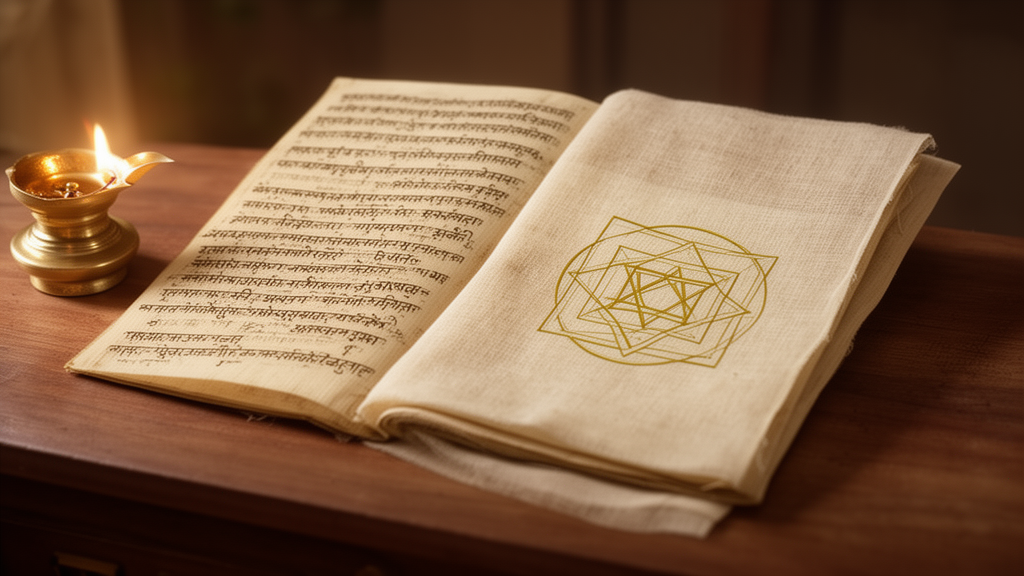
Direct answer: what sutra and tantra mean in this context

In a Buddhist framework, a Tibetan teacher writing in the Luminous Wisdom publication on sutra and tantra describes tantra as ‘a very complete system of thought and practice specifically directed at people of different capacities.’ The same source notes that some practitioners of sutra think they cannot practice tantra without understanding it, and some tantric practitioners do not accept sutra. The article is written to reduce that misunderstanding by identifying what the two share and what is distinctive to tantra [3].
In Hindu usage, the word tantra is connected with the Shaiva, Shakta, and Vaishnava traditions. The English Wikipedia article on Tantra lists sections on Hindu tantra, including Shaiva and Shakta tantra and Vaishnava tantra, alongside Buddhist tantra [1]. The word sutra in Hindu contexts is a separate topic, and it is best approached through the specific text being discussed. Readers searching for this phrase should first identify whether they are reading about Buddhist teaching, Hindu tantric literature, or a modern book that uses both terms.
Why the phrase causes confusion
The phrase combines two words that appear in many religious traditions and that can refer to different things. Sutra can mean a discourse, a teaching, or a short aphoristic text, depending on the tradition. Tantra can refer to an esoteric teaching, a body of ritual literature, or a continuum of practice. Without context, the phrase may be read as a single system, which the sources do not support.
Scholarly and practitioner sources also differ in how they present these categories. Some present sutra and tantra as complementary stages of one path. Others emphasize that they have different methods, scriptural bases, and ritual requirements. A careful reader should therefore treat any single definition as a view from one tradition rather than a universal statement.
Sutra and tantra as two categories of teaching
Sutra: discourse and the shared foundation
In Buddhist usage recorded in the Study Buddhism collection, the Tibetan Buddhist scholar Tsongkhapa’s letter appears in the Sutra Texts section, which indicates how the Tibetan tradition itself files that text [4]. The Luminous Wisdom article describes the preliminary practices common to both sutra and tantra, including renunciation and bodhicitta, the aspiration to attain awakening for the benefit of all beings [3].
The Luminous Wisdom article states that in the first and second stages of the path, ‘there is no difference between sutra and tantra,’ and that in both, the outer and inner preliminaries must be practiced in Mahayana Buddhism [3]. This is a sectarian Tibetan Buddhist view presented by a teacher, and it should be read as tradition-specific guidance.
Tantra: a specialized system for specific capacities
The Wisdom Experience course on Sutra and Tantra, taught by Robert A.F. Thurman, describes the subject as the ‘exoteric and esoteric techniques and philosophies’ of Indo-Tibetan Buddhism, following the systematization of Tsongkhapa [5]. The course description links tantric and sutric methods and treats them as parts of one picture of the path to enlightenment [5].
The same course description refers specifically to the ‘creation and perfection stages’ of Unexcelled Yoga Tantra, known in Tibetan as anuttarayoga [5]. These two stages are central to the highest class of tantra in the Tibetan classification. The course does not present them as universal to all Hindu or Buddhist tantra.
Similarities that the sources describe
The sources agree that sutra and tantra share a common ethical and mental foundation in Mahayana Buddhism. The Luminous Wisdom article names renunciation of worldly pleasures and the development of bodhicitta as shared stages, and it argues that sutra and tantra are not in contradiction on these points [3].
A second shared element is the role of a qualified teacher. Thurman’s course presents Tsongkhapa’s biography and works as the basis for understanding tantric methods, which indicates that the transmission and explanation of tantric teachings are closely tied to instruction [5]. The Luminous Wisdom article similarly frames its discussion as a guide to avoid misconceptions while practicing the preliminaries [3].
Practical example: the preliminaries
Consider a student who reads a sutra on compassion and then starts a tantric meditation. According to the Luminous Wisdom article, the student is not moving to a different ethical foundation. The preliminaries of renunciation and bodhicitta remain the base for both practices [3]. This example comes from the source’s framework, not from a universal rule, and it is one teacher’s account.
Features that the sources say belong to tantra
The Luminous Wisdom article states that its discussion has two parts: first, the similarities between sutra and tantra, and second, features that are unique to tantra [3]. The cached text reviewed for this post does not include the full second section, so this article does not list specific tantric features from that source. Readers who need those details should read the full article or the Tsongkhapa letter directly.
The Study Buddhism edition of Tsongkhapa’s letter is presented as advice on applying oneself to the two stages of anuttarayoga [4]. The letter is an advice text, not a complete manual, and its translation should be consulted for exact wording. Its opening identifies the recipient as a spiritual friend who asked for practical advice on these stages, and it frames the practice as an application of the teachings already studied [4].
The place of Hindu tantra in the broader picture
Hindu tantra is a major part of the wider tantric world. Wikipedia’s outline of the subject places Hindu tantra under the sections Shaiva and Shakta tantra and Vaishnava tantra, and it separately treats Buddhist tantra [1]. The article also includes sections on worship and ritual, yoga, mantra and meditation, mandalas and yantras, and initiation (diksha) [1]. These headings show that the subject covers ritual, meditative, and symbolic practice, but the cached text available for this post does not provide the body content of those sections. Specific claims about Hindu tantric ritual should therefore be checked against the full article and the relevant primary texts.
The Wikipedia introduction describes Tantra as an esoteric tradition of Hinduism and Buddhism [1]. It also notes Tantric art such as the Sri Yantra and the Kalachakra Mandala, which are illustrated in the article’s caption [1]. For a Hindu reader, the most important point is that the word tantra does not mean the same thing across all traditions. Shaiva, Shakta, and Vaishnava tantric literatures have their own histories, scriptural bases, and ritual structures.
Who should read which source
- General readers: start with the Wikipedia article on Tantra for the overall map of traditions [1].
- Readers interested in Tibetan Buddhist sutra and tantra: read the Luminous Wisdom article and the Study Buddhism edition of Tsongkhapa’s letter [3][4].
- Readers seeking a structured course: the Wisdom Experience course on Tsongkhapa’s teachings provides a teacher-led overview, though it is a paid course and its content is not reproduced here [5].
Common misunderstandings to avoid
The first misunderstanding is that sutra and tantra are opposing systems. The Luminous Wisdom article specifically argues against this view, noting that sutra practitioners and tantra practitioners sometimes doubt each other, but that their shared foundations are important [3].
The second misunderstanding is that tantra is a shortcut that skips the ethical foundation. The same article frames renunciation and bodhicitta as required in Mahayana practice, including tantra [3]. The sources do not support any claim that tantric practice removes the need for ethics or discipline.
The third misunderstanding is that a single text represents all sutra and tantra. The sources reviewed include Tibetan Buddhist works, a Wikipedia article covering several traditions, and a modern publication with an interpretive summary. Each has a different purpose and authority. Reading across them helps readers see where traditions agree and where they differ.
How to study sutra and tantra responsibly
- Identify the tradition first: Buddhist, Hindu, or a modern author who uses both.
- Read a foundational text or a reliable overview before a commentary.
- Distinguish between the text’s own statements, the teacher’s interpretation, and modern explanation.
- Consult a qualified teacher or community for ritual or initiatory practices, since many tantric practices are tradition-specific and are often taught in an initiatory setting.
These steps reflect the emphasis in the sources on transmission and instruction. The Luminous Wisdom article and the Wisdom Experience course both present tantric practice as connected to teaching and preparation [3][5].
Related reading on HindusGod.com
The following HindusGod.com pages are currently WordPress drafts listed in the site inventory. They may not be public yet, so treat each link as a target to confirm before publication. Each is included because it addresses a related sutra topic or a related devotional or meditative theme.
- Meaning Sutra, for a general discussion of what the word sutra conveys.
- Bhakti Sutra, for devotional teachings and their scriptural framing.
- Devi Sutra, for goddess-centered texts.
- Dhyana Sutra, for meditation terminology in sutra literature.
- Dharani Sutra, for mantra-related texts that connect with tantric themes.
- Avalokiteshvara Sutra, for a Buddhist compassion figure discussed in sutra literature.
- Avatamsaka Sutra, for a major Mahayana sutra.
- Diamond Sutra Meaning, for a Mahayana text on emptiness.
- Amida Sutra, for a Pure Land scripture.
- Brahmajala Sutra, for a Mahayana discourse on ethics.
Frequently asked questions
Is sutra tantra one specific scripture?
No. The phrase is usually used to describe two categories of teaching, sutra and tantra. The Luminous Wisdom article presents them as related parts of the same path, not as a single text [3].
Do Hindus and Buddhists use the word tantra in the same way?
Not always. The Wikipedia article on Tantra covers both Hindu and Buddhist tantra and lists separate sections for each [1]. The terminology, texts, and practices differ by tradition.
Can a beginner study tantra without a teacher?
The sources emphasize teaching and transmission. Reading can provide orientation, but initiatory and ritual practices are traditionally taught through a qualified teacher, as the Wisdom Experience course and Tsongkhapa’s letter both reflect in their framing [4][5]. This is a tradition-specific expectation rather than a universal rule.
Limits of this overview
The sources checked for this article are useful for orientation but do not allow a complete account. The Wikipedia text available for review consisted largely of the table of contents, and the full body sections on etymology, Hindu tantra, and practices were not available in the captured text [1]. The Luminous Wisdom article was also captured in part, and its second section on tantra-specific features was not available [3]. The Grokipedia page on Namkhai Norbu’s book was reviewed but not used for factual claims because it is a generated encyclopedia page with a fact-check label that does not identify its underlying sources in the captured text [2]. Readers who need detailed Hindu tantric ritual, etymology, or the content of specific Sanskrit texts should consult primary editions and scholarly works.
Summary
Sutra tantra refers to two categories of teaching that the Buddhist sources reviewed here describe as related and, in the early stages of practice, sharing the same foundations of renunciation and bodhicitta [3]. Tantra is presented as a specialized system directed at practitioners with particular capacities, and the anuttarayoga creation and perfection stages are central to its highest class in Tibetan teaching [3][5]. Hindu tantra is a separate, large body of literature with Shaiva, Shakta, and Vaishnava branches [1]. Readers should identify the tradition, consult primary sources, and seek qualified guidance for practices.
Sources and further reading
- Tantra, Wikipedia: overview of tantric traditions in Hinduism and Buddhism, with section headings used here to map the subject.
- Sutra and Tantra: Similarities and Differences, Khenpo Tsultrim Lodro Rinpoche, Luminous Wisdom: Tibetan Buddhist teaching on shared foundations and differences.
- A Letter of Practical Advice on Sutra and Tantra, Tsongkhapa, Study Buddhism: advice text on the two stages of anuttarayoga, with the Sutra Texts categorization.
- Sutra and Tantra: The Profound and Miraculous, Wisdom Experience: course description on Tsongkhapa’s systematization and the creation and perfection stages.
Publication note: these sources were reviewed through captured page text. Confirm each link and the full text before publication.