Sanskrit sahitya shastra refers to the traditional study of Sanskrit literature as a critical and theoretical discipline. It asks how a literary work is composed, what makes it aesthetically effective, and how it affects a reader or listener. This article gives a brief orientation to the term, its component words, and the kinds of questions the tradition addresses. It is an introduction, not a full survey of the field.
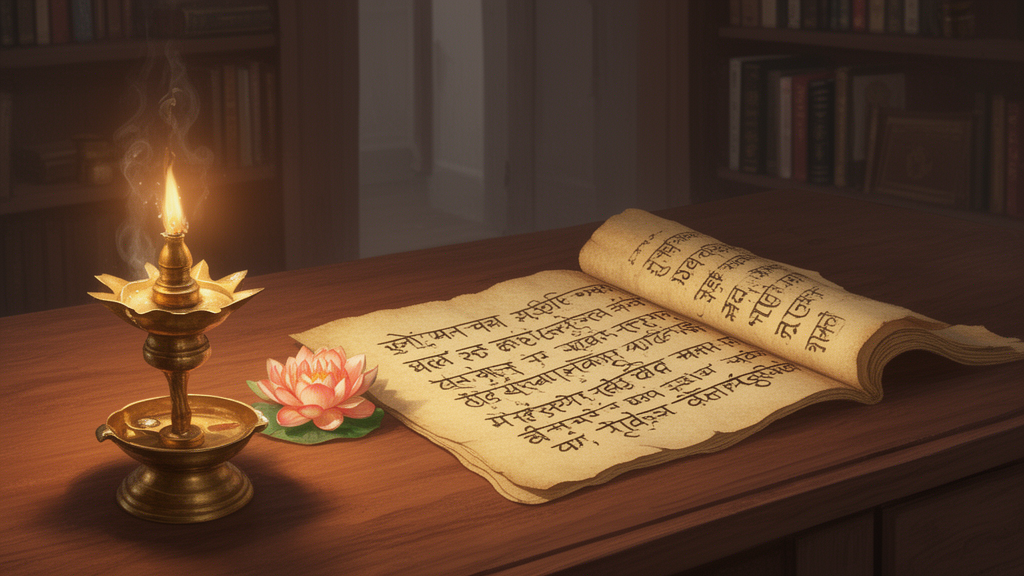
What the term means
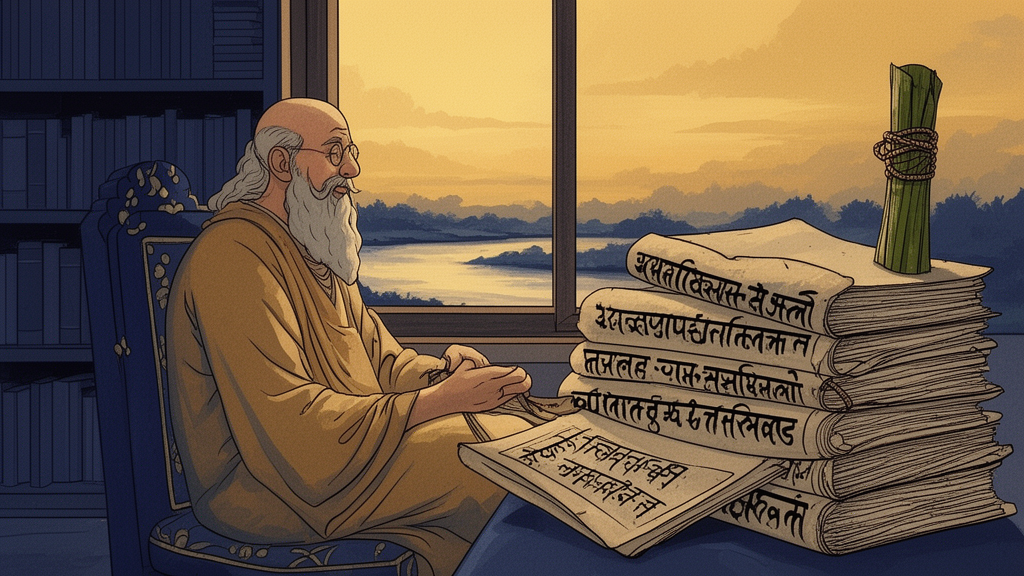
The phrase combines two Sanskrit words. Sahitya is commonly used for literature, and shastra means a systematic treatise or discipline. Together, the phrase points to a body of reasoned writing about literature rather than to the literary works themselves.
Readers may also encounter related terms such as kavya shastra (the science of poetry) and alankara shastra (the science of ornamentation). These terms overlap but are not identical, and different authors used them with different emphases. Where a particular author or period is discussed, the term used in the source should be checked before drawing conclusions.
Why the tradition matters to readers
For readers of Sanskrit texts, including devotional and narrative works, the theory of literature helps explain why a passage is structured as it is. A reader who knows the vocabulary of the tradition can follow how a poet builds mood, uses figures of speech, or selects a metre. This is useful whether one is studying a court poem, a philosophical verse, or a retelling of an epic.
The tradition is also distinct from religious devotion. A text may be sacred to some communities and studied as literature by others. The discipline of sahitya shastra concerns craft and aesthetic response, and should not be read as a statement about the doctrinal authority of any text.
Major concerns of the tradition
Classical Sanskrit writers on literature are usually described as discussing a set of recurring topics. The following are general outlines of concerns that appear across the tradition. Their precise definitions vary by author and school.
- Rasa: the aesthetic experience or flavour a work evokes in its audience, often discussed in relation to emotional states.
- Dhvani: suggestion, meaning conveyed beyond the literal words.
- Alankara: figures of speech and poetic ornamentation.
- Guna and riti: qualities and stylistic modes of composition.
Each of these terms has a long history of interpretation. A reader who wants to rely on one definition should consult a specific translated or scholarly source and note which author or school is being described.
Traditions and differences in interpretation
Sanskrit literary criticism was not a single unified system. Different thinkers emphasised different principles, and later writers often refined or disputed earlier positions. For this reason, statements that one concept is ‘the’ central principle of Sanskrit literature should be qualified by reference to a particular author and period.
Regional traditions of reading and teaching also differ. Some curricula have emphasised grammar and poetics together, while others have approached literature through commentary. Readers should treat any single account, including this one, as one orientation among several.
How to explore the subject further
A practical starting point is to read introductory scholarship alongside a primary text. Two kinds of resources are useful:
- Digital Sanskrit reading tools that allow text search, which can help readers locate passages and compare wording. The Sanskrit Sahitya app advertises literal and semantic search and search by metre, though its coverage and accuracy should be checked against printed editions.
- Published books on Sanskrit poetics, in Hindi, Bengali, or English, which may be available through libraries or archives. Editions and translations should be compared where possible.
Readers who want to see how the subject is presented in related categories on this site may find the existing draft pages on Sanskrit Shastra and Sanskrit Darshan Shastra useful. These are WordPress drafts and may not yet be publicly visible; the links should be rechecked before publication.
Sources and further reading
- Sanskrit Sahitya (sanskritsahitya.org): an online Sanskrit reading and search tool. Supports only the description of its search features.
- Sanskrit Bhasha O Sanskrit Sahitya Shastra Bishyak Prastab, Ishwarchandra Vidyasagar (Internet Archive): a catalogue record for a Bengali-language work with this title. Supports only the existence of the listing.
- Sanskrit – Sahitya – Shastra, Radheshyam Mishra (ePustakalay): a Hindi book listing. Supports only the existence of the listing and its page count.
- Sahitya Shastra Books (Boibipani): a bookseller category page. Supports only the listing of titles, not their content.
Summary
Sanskrit sahitya shastra is the Sanskrit tradition of reasoning about literature. Its core questions concern aesthetic effect, suggestion, ornament, and style. Because the tradition includes many authors and schools, precise claims should always name the source, author, and edition being discussed.