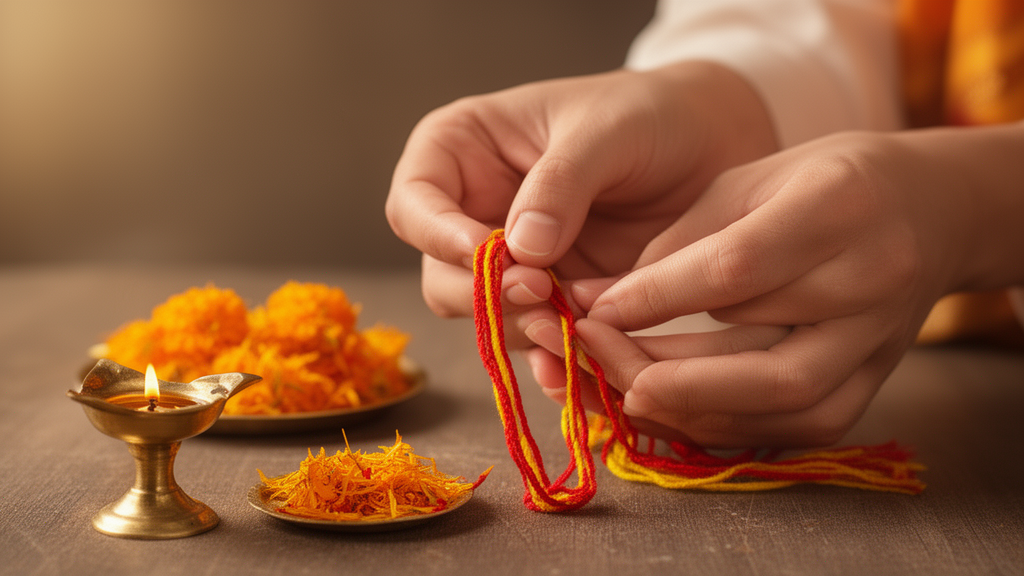
A raksha sutra is a sacred thread, usually of cotton, tied around the wrist as a symbol of protection and blessing. In Hindu practice it is often consecrated during a puja or ritual and worn as a reminder of divine protection. The thread is known by several names, and customs for tying, wearing, and removing it vary by region, family, and community.
This article explains the basic meaning, the names used, common materials and colors, and how the practice is understood in different settings. It also separates what a text or source claims from what is a tradition, a belief, or a modern custom. Where the available sources were limited, this is stated plainly.
What Is a Raksha Sutra?
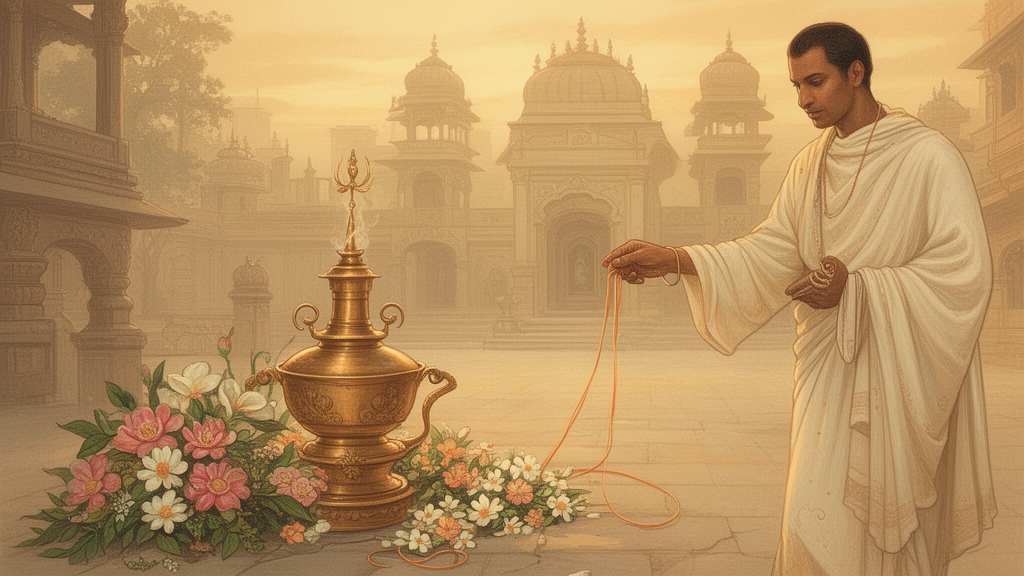
The phrase combines raksha, meaning protection, and sutra, meaning thread or cord. A raksha sutra is therefore a protective thread. An encyclopedic overview of the practice describes it as a sacred cotton thread, traditionally dyed red and yellow, tied around the wrist or used in rituals to symbolize protection from harm, blessings for well-being, and spiritual safeguarding (Grokipedia, “Mauli”). That source is a secondary, AI-assisted reference, so its details should be checked against scripture editions, academic studies, and community sources before they are treated as settled.
For readers who want the meaning of the phrase itself, a separate explainer on the term is available: Raksha Sutra Meaning (URL to confirm as live; currently a WordPress draft).
Names and Variant Spellings
Readers may encounter several names for the same kind of object. The most common are:
- Raksha sutra, the Sanskrit-derived term used in this article.
- Kalava, a name used in some regional and devotional contexts.
- Mauli, a name for the thread in some communities.
The word mauli has a second, separate meaning. One source notes that it can mean “crown” or “summit,” and that in texts such as the Shivapurana it describes the crest or crown of a deity, as in the phrase for Shiva’s moon-adorned crown. This is a different usage from the wrist thread, so context matters when reading older or scholarly texts. The spelling of Sanskrit-derived terms can also vary in English transliteration.
Materials and Colors
The thread is commonly described as cotton, often dyed red and yellow. These colors and materials are reported as typical in popular descriptions, but they are not uniform across every temple, family, or region. Some households and priests use other threads or colors for specific rites. Readers should follow the guidance of their own family or priest, and treat any general description as one common pattern.
How It Is Tied and Worn
Practice varies widely. In some traditions, a priest or elder consecrates the thread during a puja or yajna, often with mantras that invoke deities. Popular accounts commonly mention Vishnu or Shiva in this context, but the specific deity and mantra depend on the tradition and the occasion. Where a mantra is used, the text and its source should be identified before it is quoted.
One encyclopedic overview states that the thread is tied on the right wrist for men and the left for women, and that it is removed only after it wears out naturally (Grokipedia, “Mauli”). These gendered placements and the rule about removal are reported practices. Other families and communities may follow different customs, and some do not observe a gendered placement at all. Anyone who wants to follow a specific rule should confirm it with a knowledgeable teacher from their own tradition.
Practical Notes for Readers
- Ask a priest or family elder how the thread is customarily tied and removed in your community.
- Handle the thread respectfully, and avoid discarding it carelessly if your tradition treats it as sacred.
- Do not assume that wearing a thread guarantees a particular result. Its meaning is protective and devotional in tradition, not a guaranteed outcome.
Belief, Text, Tradition, and Scholarship
It helps to separate four kinds of statements about raksha sutras:
- Devotional belief: many devotees understand the thread as a channel of divine protection and blessing. This is a matter of faith.
- Textual reference: a claim should be linked to a named scripture, edition, and verse before it is presented as textual. The sources used for this draft do not provide verified scripture references for the thread, so none are given here.
- Living tradition: tying, consecrating, and removing the thread are shaped by family, region, and community custom.
- Scholarly interpretation: the history of the practice, its spread, and its links to other rites require academic study, which should be consulted for dating and origin.
Because this article does not yet cite verified primary texts or academic studies on the history of the thread, claims about origin and antiquity are intentionally omitted.
Related Terms and Deity-Specific Threads
Some readers search for threads linked to particular deities or texts. For example, Hanuman Raksha Sutra (URL to confirm as live; currently a WordPress draft) covers a devotional text and practice associated with Hanuman, and Sri Rama Raksha Sutra (URL to confirm as live; currently a WordPress draft) addresses a Rama-focused protective text. These are distinct devotional traditions and should not be treated as identical to the general wrist thread described above. Readers interested in the text itself should consult the scripture edition or teacher associated with that tradition.
A regional-language guide is also planned: Rama Raksha Sutra Kannada (URL to confirm as live; currently a WordPress draft). An English-language explainer on the broader term is available as Raksha Sutra in English (URL to confirm as live; currently a WordPress draft).
Frequently Asked Questions
Is a raksha sutra the same as a Rama or Hanuman protective text?
Not necessarily. The wrist thread is a ritual object. Protective texts such as those associated with Rama or Hanuman are devotional recitations or stotras with their own sources and practices. Traditions sometimes connect them, but they are not interchangeable.
Which wrist should the thread be tied on?
Popular practice described in one encyclopedic source places it on the right wrist for men and the left for women. Other communities differ, so check with your family or temple tradition.
What should I do when the thread wears out?
The traditional guidance in some sources is to let it wear out naturally and then remove it respectfully. Practice differs, so ask a knowledgeable priest or elder how your community handles removal and disposal.
Takeaway
A raksha sutra is a sacred protective thread whose meaning centers on devotion, blessing, and the bond between devotee and divine. Its names, colors, placement, and handling vary by tradition, so the most reliable guidance comes from a teacher within your own community. Use this article as an introduction, and consult scripture editions and academic sources for deeper study.
Sources and Further Reading
- Grokipedia, “Mauli”: secondary, AI-assisted overview used for the description of names, materials, and general practice. Verify against primary and academic sources before relying on specific claims.
Suggested sources to consult (URLs to confirm before linking): authoritative scripture editions of the relevant texts, university or academic studies of Hindu ritual, and community or temple guidance on local custom.