The holy book of the Parsis is the Avesta, often written as the Zend Avesta. The Parsis are a Zoroastrian community, and the Avesta is the central collection of Zoroastrian sacred literature. It contains hymns, prayers, liturgical texts, and ritual instructions composed in Avestan, an ancient Iranian language that is still used in Zoroastrian worship. This article explains what the Avesta is, how its parts are organized, how it is used in devotional life, and where scholars and community traditions differ in their accounts.

The short answer: the Avesta
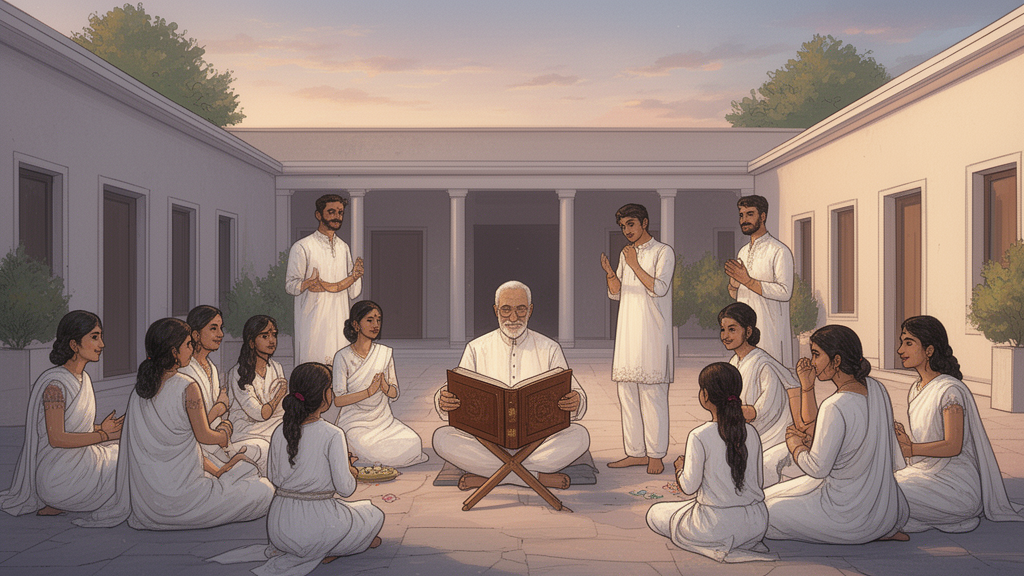
When people ask for the holy book of the Parsis, the accurate answer is the Avesta. Popular quiz and study materials often list the Zend Avesta as the correct choice among options such as the Torah, the Bible, and the Gita, and that answer matches the Zoroastrian tradition. The name is sometimes written as one word, Avesta, and sometimes as Zend Avesta. Both forms point to the same body of texts.
The name Parsi refers to the Zoroastrian community that settled in the Indian subcontinent, especially in western India. Its members trace their roots to Persia, and the Parsi page on Wikipedia describes them as a Zoroastrian community in the Indian subcontinent. Readers who see the phrase Holy Book of Parsi Religion will find the same answer: the Avesta is the scripture that Parsi Zoroastrians revere.
What the Avesta is
A collection, not a single book
The Avesta is best understood as a compendium rather than one book in the modern sense. The Wikipedia article on the Avesta describes it as a Zoroastrian compendium of sacred literature. It was preserved over centuries, and the texts that survive today are arranged into groups that serve different liturgical purposes. Some sections are recited in ritual settings, some contain hymns of praise, and others contain legal and ethical material.
The name and the language
The word Avesta is usually connected with the sacred texts themselves, and the language in which they are written is called Avestan. The Parsi article lists Avestan among the languages associated with the community, noting that it is used in liturgy. Many Parsi and other Zoroastrian worshippers recite Avestan prayers without understanding every word, which is common when a sacred language is used in ritual. For this reason, translations and commentaries have long played an important role in study and teaching.
Readers sometimes encounter the term Zend in connection with the book. In common usage, Zend Avesta is the familiar English phrase. Scholars and religious writers have discussed the meaning and history of the word Zend, including its association with commentary or translation traditions in later Zoroastrian literature. This article does not rest any claim on that etymology, because the sources reviewed for this draft did not settle the question in detail. Readers who need a precise explanation should consult a specialist source on Zoroastrian literature.
Dating the texts
Dating is one of the most debated subjects in Avestan studies. The Wikipedia Avesta article gives an Avestan period of roughly c. 1500 to 900 BCE for the Gathas and the Yasna Haptanghaiti, and roughly c. 900 to 400 BCE for the Vendidad, Visperad, and Yashts. These ranges reflect current scholarly discussion rather than a single fixed consensus, and the article presents them as approximations.
Popular sources sometimes give different dates. One educational article reviewed for this draft describes the Gathas as attributed to the prophet Zoroaster around the 6th to 7th century BCE. That is a traditional attribution found in many devotional and popular accounts. It is not the same as a firm historical date for when the verses were composed. Readers should keep the tradition, the text, and the scholarly dating separate when they compare sources.
Who the Parsis are and why their scripture matters
Zoroastrian faith and Parsi identity
The Parsis are identified with Zoroastrianism, one of the world’s oldest monotheistic religions by many accounts. Their identity is both religious and cultural. The Wikipedia Parsi article describes them as an ethnic community in the Indian subcontinent whose religion is Zoroastrianism, with languages including Gujarati, Marathi, Hindi-Urdu, and English, along with Avestan for liturgical use. This means that the Avesta is connected to both faith practice and community memory.
It is important not to treat every Parsi family or temple in the same way. Practices concerning purity, fasting, prayer, marriage, and funerals vary across communities, families, and generations. The Parsi article includes sections on these subjects, and readers who want detailed practice should read that article and consult community sources. A general description of the Avesta cannot capture every local custom.
Population and geography
The Wikipedia Parsi article gives a population figure of 57,264 for India, with smaller reported populations in Canada and Pakistan. Population figures can change, and sources use different reference years and methods, so these numbers should be read as a reported snapshot rather than a precise current count. The wider Zoroastrian world also includes communities in Iran and elsewhere. The Avesta is therefore a scripture shared across a larger tradition, even though this article focuses on the Parsi community in India.
Why the Parsi connection to Iran matters
The Avesta is rooted in ancient Iranian religious culture. The Parsi article discusses ties to modern-day Iran and the community’s origins in Persia. This historical background helps explain why the Avestan language and the older Iranian religious setting appear so strongly in the texts. Readers should note that Parsi identity is a community identity with its own history in India. It should not be reduced to a simple question of nationality or language.
How the Avesta is organized
The extant Avesta is usually described as containing several major parts. The exact number of divisions and the way texts are grouped depend on the edition and the scholarly presentation. The Wikipedia Avesta article lists the Sasanian Avesta, the extant Avesta, and sections such as the Yasna, Visperad, Khordeh Avesta, Vendidad, and fragments. Some popular articles describe the work as five sections, and others describe a larger number of texts within those sections. This difference often reflects how a writer groups the material.
The Gathas
The Gathas are among the most studied parts of the Avesta. They are hymn-like verses that Zoroastrian tradition associates with Zoroaster himself. Popular accounts describe them as the heart of the book, and they speak of Ahura Mazda, the wise creator, and of the struggle between good and evil. The Wikipedia Avesta article dates the Gathas to the earlier Avestan period in its table, and the Gathas are also central to scholarly discussion of Zoroaster’s teachings.
When reading the Gathas, it helps to distinguish three things. First, there is the text itself, preserved in Avestan. Second, there is the traditional belief that Zoroaster composed or transmitted these hymns. Third, there is modern scholarship that studies the language, date, and theology of the verses. A devotional reading may emphasize the figure of Zoroaster, while a scholarly reading may focus on linguistic evidence and manuscript history.
The Yasna
The Yasna is commonly described as a major liturgical section. Popular accounts connect it with ritual worship, prayers, and the veneration of fire, which is important in Zoroastrian practice. The Wikipedia Avesta article places the Yasna Haptanghaiti in the earlier Avestan period, while the wider Yasna is treated as part of the liturgical core of the extant text. Worship practices involving fire and ritual preparation are described in more detail in Zoroastrian sources than in general encyclopedias, so readers should use specialist sources for ritual instruction.
The Visperad and Khordeh Avesta
The Visperad is another liturgical section, and the Khordeh Avesta, sometimes called the Little Avesta, is a collection used for daily and occasional prayer. The Wikipedia Avesta article lists both among the parts of the extant Avesta. Their role in worship is best described in a community or scholarly source that explains the prayer order and the occasions for recitation, since those details vary by tradition.
The Vendidad
The Vendidad is often described as containing ethical, legal, and ritual guidance. One popular article reviewed for this draft says it details ethical and practical guidelines for daily life. Scholars also discuss the Vendidad’s relationship to purity rules and to questions of ritual pollution. Because the content is complex and sometimes technical, a general article can only summarize its character. Quotations or specific rules should be checked against a translation and commentary before use.
The Yashts and praise literature
The Yashts are hymns of praise addressed to divine beings and heroic figures in the Zoroastrian tradition. Popular accounts describe them as praising gods and mythical heroes. In a scholarly reading, the Yashts are important for understanding the wider religious world of the Avesta, including the names and roles of divine beings. Readers should not assume that every figure in these hymns has the same role as a figure in later Hindu or Persian literature.
The Sasanian Avesta and what survives
The Wikipedia Avesta article distinguishes the Sasanian Avesta from the extant Avesta. This distinction is important because the sacred literature of the Sasanian period was not identical in form to what survives today. Earlier collections were affected by transmission, loss, and reorganization. Some traditions also describe losses in antiquity, although the details are debated. For this reason, claims about how much of the original Avesta survives should be qualified and sourced carefully.
Oral transmission and written form
The Avesta was transmitted orally before it was written down in its surviving form. The Wikipedia Avesta article includes sections on oral transmission and written transmission, and the popular article on the Parsi holy book also notes that the text evolved across generations. Oral transmission matters because memorized liturgy can preserve sound patterns and ritual order over long periods, but it can also change through performance and teaching.
Written manuscripts came later. Manuscripts preserve many variant readings, and scholars compare them to reconstruct the text. The Wikipedia Avesta article also includes sections on manuscripts and editions, which show that the printed text a reader sees today depends on editorial choices. A reader who wants to study the Avesta closely should use a clear edition that identifies its manuscript base and translation method.
How the Avesta is used in devotional life
Recitation and liturgy
In Zoroastrian worship, the Avesta is primarily a liturgical text. Prayers are recited in Avestan, and the ritual setting gives the words their meaning. Many lay worshippers learn the prayers by heart or follow ritual manuals, while priests and trained specialists handle the more formal liturgy. This is a common pattern in religious traditions where sacred language is used in worship, but the exact arrangements vary across Parsi communities and other Zoroastrian groups.
Ritual life and community practice
The Parsi community has its own customs around religious life, including purity practices, fasting, initiation, marriage, and funerals. The Wikipedia Parsi article lists sections on these topics, and it notes that practices concerning the deceased have been subject to disputes within the community. Readers should be careful not to present any one custom as the only Parsi practice. Some observances are shared widely, while others are local, family-based, or disputed between groups.
Personal study and reading
Many readers come to the Avesta through translations, commentaries, and introductory books. Study works in this area often separate the translated text from the editor’s interpretation. A helpful habit is to ask three questions of every passage: what does the Avestan text say, what does the translator suggest, and what does the tradition teach? These are separate questions, and answers may differ.
Scripture, tradition, and scholarship: keeping categories separate
Discussions of the Avesta often mix devotional belief, historical evidence, and academic interpretation. A devotional statement may say that the Gathas were composed by Zoroaster. A historical statement may say that the language of the Gathas is older than certain later texts. An academic statement may discuss whether the dates given for these texts are secure. All three can be useful, but they should not be presented as if they carry the same kind of evidence.
The same caution applies to common claims about the number of texts, the number of sections, and the survival of the original scripture. Popular sources may use simplified counts. A scholarly edition may group the material differently. This article therefore describes the main parts without claiming one final numbering system for every edition.
Common questions about the Parsi holy book
Is the Avesta the same as the Zend Avesta?
In common usage, yes. Zend Avesta is the familiar English name that many readers encounter. Scholarly discussion often refers simply to the Avesta and to Avestan, the language of the texts. Readers may see either form in quizzes, websites, and books.
Is the Avesta only for Parsis?
The Avesta is the scripture of the Zoroastrian tradition, which includes Parsi communities and other Zoroastrian communities. It is not limited to one ethnic group in the way the word Parsi might suggest. The Parsi community is an important part of the Zoroastrian world, but the Avesta belongs to the wider religious tradition.
Does reading the Avesta require knowing Avestan?
Not for general understanding, although knowing Avestan helps with close study. Many readers rely on translations, but translations involve interpretation. Where possible, compare more than one translation and read a commentary that explains the translator’s choices.
Key takeaway
The holy book of the Parsis is the Avesta, often called the Zend Avesta. It is a collection of Zoroastrian sacred texts written in Avestan, including the Gathas, Yasna, Visperad, Vendidad, Khordeh Avesta, and Yashts, among other material. Its importance lies in liturgy, moral teaching, community memory, and scholarship. For accurate study, separate traditional belief, textual evidence, and modern interpretation, and check ritual practices with specific Parsi or Zoroastrian sources.
Sources and further reading
- Parsis, Wikipedia: used for the Parsi community’s religion, languages, population figures, and the list of religious practice topics.
- Avesta, Wikipedia: used for the description of the Avesta as a Zoroastrian compendium, Avestan dating ranges, and the list of structural sections.
Further reading should begin with a scholarly translation and an introduction to Zoroastrian literature. Check the edition, translator, and date before citing any passage in your own writing.
Related HindusGod.com guides
For a broader comparison of holy books, see Holy Book Name in English and Holy Book Name for All Religions. For another Iranian-origin scripture, read Avesta Holy Book. For the general meaning of the term, see Holy Book Meaning. Readers comparing other traditions can also explore Bahai Holy Book, Buddha Holy Book Name, Jain Holy Book Name, and Confucianism Holy Book Name. Links to HindusGod.com drafts become public only if those posts are published by the owner; URL status should be confirmed before publication.