The holy book of the Parsis is the Avesta, the collection of scriptures associated with Zoroastrianism, the religion that Parsis follow. The Avesta is not a single book with one author or one uniform text. It is a group of liturgical and devotional texts, most preserved in the Avestan language, and it is central to Parsi prayer, ritual, and identity. Parsis are a Zoroastrian community in India and Pakistan, so their scripture comes from the Zoroastrian tradition rather than from Hindu texts such as the Bhagavad Gita or the Ramayana.

This guide explains what the Avesta is, how it is organized, how it relates to the Parsi community, and where belief, historical evidence, and scholarly interpretation need to be kept apart. It also explains where sources disagree, because some details about the community’s history and population are not settled.
Who the Parsis are
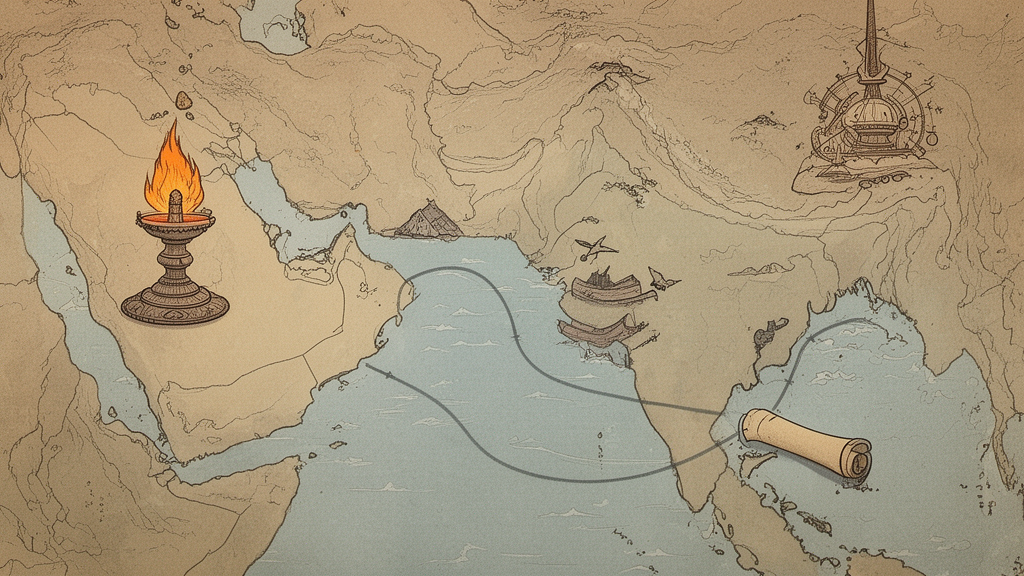
The Parsis are an ethnic and religious group in India and Pakistan who follow Zoroastrianism. According to the Simple English Wikipedia article on Parsis, they are descendants of Persians who moved to the region to escape religious persecution during the Arab conquest of the Persian Empire. The word Parsi comes from the Persian word for an inhabitant of Pars, the region known in English as Persia, and the term is often rendered as Parsee in older English usage.
Parsi communities are concentrated in a few urban centers. The Simple English article identifies Mumbai and Karachi as the two major urban population centers, in India and Pakistan respectively. The main Wikipedia article gives a different breakdown, listing 57,264 Parsis in India, 3,630 in Canada, and 2,348 in Pakistan, based on the census and other figures it cites. These numbers come from different dates and sources and should be read as approximate. The Simple English article gives a much broader estimate of around 60,000 to 70,000 Parsis in India and Pakistan combined. Readers who need current demographic figures should check the most recent census or community data.
The Parsis are not a Hindu community. Scrolldroll, a popular article on famous Parsis, states that although Parsis are not a caste in the strictest sense, they form a distinct community because they are not Hindus. This distinction matters for anyone searching for the Parsi holy book, because Parsi scripture and worship follow the Zoroastrian tradition.
What the Avesta is
The Avesta is the scripture of Zoroastrianism. The Wikipedia series box on Zoroastrianism lists the Avesta under scripture and worship, alongside the prayers Ashem Vohu and Ahuna Vairya. That placement reflects how Zoroastrian literature is organized, with the Avesta at the center and prayer formulas used in daily and ritual life. In Parsi usage, the Avesta is recited in worship and studied by priests, and its texts continue to shape prayer and ceremony.
It is important to distinguish between the tradition’s own account of its scripture and the historical evidence about how the texts developed. Within Zoroastrian belief, the Avesta is understood as revelation connected to the prophet Zoroaster, also called Zarathustra. Historians and philologists study the texts as ancient compositions that were preserved, transmitted, and organized over many centuries. These two perspectives can coexist, but they answer different questions. One concerns what the community holds sacred; the other concerns how and when the texts took their present form.
The Avestan language
The Avesta is associated with the Avestan language, which the Wikipedia article on Parsis lists among the community’s languages as Avestan, noted as liturgical. This means the language is used in religious recitation rather than as an everyday spoken language for most Parsis today. Most Parsis speak Gujarati, Marathi, Hindi-Urdu, or English in daily life, and many learn the sacred prayers by ear or through transliteration.
This creates a practical point for readers. Someone who reads the Avesta in English is reading a translation or an interpretation of texts originally composed in Avestan. Translations differ in vocabulary and emphasis, and specialist editions include notes on difficult words. When quoting the Avesta, readers should check which translation and edition is being used.
The main parts of the Avesta
The surviving Avesta is usually described as a collection of several parts. The names below are commonly used in scholarly and community sources, and they are listed here as an overview rather than a full inventory.
- Gathas: a group of hymns traditionally attributed to Zoroaster himself. Scholars generally treat the Gathas as the oldest part of the Avesta, though the exact dating is debated.
- Yasna: the main liturgical collection, which includes the Gathas within its structure and is used in ritual worship.
- Visperad: a supplementary liturgical text connected with the Yasna.
- Vendidad: a text dealing with purity laws, rules concerning ritual pollution, and related matters.
- Yashts: hymns addressed to yazatas, or divine beings who are venerated in Zoroastrian tradition.
- Khordeh Avesta: a shorter collection of prayers used in everyday devotion.
Note for editors: the descriptions of these parts are general background knowledge that was not verified against a fetched scholarly source in this research run. Before publication, confirm the part names, contents, and the Gathas count against a reputable academic edition or an Avesta reference work.
The Gathas and Zoroaster
The Gathas are the most discussed part of the Avesta in both devotional and academic contexts. Within Zoroastrian tradition, they are regarded as the words of Zoroaster. Many scholars also treat them as the earliest layer of the texts and read them closely to understand early Zoroastrian thought. Because the Gathas are composed in a poetic and compressed style, translators often disagree on individual phrases.
For readers, the useful takeaway is this: the Gathas are central for Zoroastrian belief about Zoroaster, but any claim about exactly what a Gatha says should be checked against a named translation. This guide does not quote Gatha verses, because the research run did not verify a specific translation and verse reference.
Belief, text, and tradition
Discussion of the Parsi holy book works best when it separates four things that are often mixed together.
- Scripture: what the Avesta texts contain, as preserved in Avestan and in translation.
- Tradition: how Parsi priests, families, and communities recite, interpret, and apply the texts.
- Historical evidence: what archaeology, manuscripts, and historical records can show about the texts and the communities that used them.
- Scholarly interpretation: how historians, linguists, and religious studies scholars read the texts and place them in context.
For example, the belief that Zoroaster composed the Gathas is part of the tradition and of many devotional explanations. A scholar may discuss the Gathas’ language, meter, and internal references as evidence for their age. Both can be presented respectfully, but they should not be merged into one claim.
How the Avesta shapes Parsi practice
The Avesta matters in daily religious life, but its role is expressed through specific practices. The Wikipedia article on Parsis includes sections on religious practices, including purity and pollution, fasting, the navjote, marriage, funerals, and temples. These topics show how scripture, ritual law, and community identity overlap.
The navjote and initiation
The navjote is one of the best-known Parsi ceremonies. The main Wikipedia article includes it among religious practices, so it is treated here as a tradition-specific initiation rite rather than a universal Zoroastrian custom. Details of the ceremony, including the age at which it is performed and the exact sequence of actions, can vary by family, priestly tradition, and location. Readers who want exact procedures should consult a Parsi priest or a community source for the relevant tradition.
Purity, pollution, and the Vendidad
Purity rules are another area where the scripture and practice connect. The Vendidad is commonly associated with purity laws and ritual pollution. The Wikipedia article on Parsis lists purity and pollution as a religious practice area, but the specific rules that apply in a given household or priestly setting may vary. Where a rule is described, it should be presented as part of Parsi tradition, not as a general rule for all Zoroastrians or all Hindus.
Fasting, prayer, and temples
The Wikipedia article on Parsis also lists fasting and temples as practice topics. Prayer is central to Zoroastrian devotion, and the Khordeh Avesta is commonly used for daily and occasional prayers. Parsi temples, often called fire temples in popular and scholarly writing, are places of worship where the sacred fire is kept. Any statement about the fire’s role, the ritual procedures, or access rules should be checked against a reliable community or academic source, because practice varies and some ritual spaces are restricted to priests or initiated members.
Differences within Zoroastrianism and the Parsi community
Readers should not assume that every Zoroastrian uses the Avesta in exactly the same way. The Wikipedia article on Parsis includes a section on factions within the community, including calendrical differences and a separate heading for Ilm-e-Khshnoom. The calendar disputes matter because religious dates, festival timing, and observances can depend on which calendar a community follows. Anyone planning to observe a festival or ritual date should check the current calendar and community guidance for that year.
The Wikipedia list of Parsis also notes that later Iranian Zoroastrian migrants are called Irani, which signals that Zoroastrian communities in South Asia have distinct histories. Parsi and Iranian Zoroastrian groups share a religious heritage, but their community histories, languages, and customs are not identical.
Regional differences also shape how scripture is encountered. A Parsi family in Mumbai, a family in Karachi, and a diaspora family in Canada may use different languages in daily life, different local institutions, and different translations of the Avesta. The same sacred text can therefore be encountered through different languages and practices.
Historical background and its limits
The history of the Parsis is often told through a migration story. Scrolldroll describes a legend that the Parsis first settled in Hormuz on the Persian Gulf and later sailed for India, arriving in the 8th century. It also notes that the migration may have occurred as late as the 10th century, or that there may have been more than one movement. It says the Parsis first settled in Diu, then moved to Gujarat, where they remained as a small agricultural community for about 800 years.
This account is useful, but it should be treated carefully. It is presented as a legend in a popular article, not as a settled historical chronology. Historical evidence for the exact dates, routes, and number of migrations is limited and debated. The Britannica entry on Parsis states more generally that the Parsis are descended from Persian Zoroastrians who emigrated to India to avoid religious persecution by Muslims. The Simple English Wikipedia article describes the same broad pattern as migration to escape persecution during the Arab conquest of Persia. These descriptions agree on the broad movement but differ in detail, and they should be presented with that uncertainty.
Readers searching for historical certainty should be cautious. A tradition can be important to a community even when historians cannot confirm every detail. Clear language helps: say that a story is part of community memory or legend when that is what the source describes, and say that a date is disputed when sources disagree.
Common confusion: Parsi scripture is not Hindu scripture
Some readers searching for a Parsi holy book already know Hindu scriptures and wonder whether Parsis use them. The answer is no. Parsi scripture is the Avesta, and Parsi worship follows Zoroastrianism. Hindu scriptures such as the Vedas, the Upanishads, the Bhagavad Gita, and the Ramayana belong to Hindu traditions. Parsis and Hindus have lived side by side in parts of western India for centuries, and some festivals, foods, or public customs may be shared in local settings. Shared place does not mean shared scripture.
Readers who are comparing scriptures across religions can also explore related HindusGod.com posts, such as the holy book of Parsi religion draft and the Avesta holy book draft. These pages are current WordPress drafts and may not be public until the owner publishes them.
A practical way to start reading the Avesta
Readers who want to explore the Avesta should begin with a clear reading plan. The goal is to understand the text, the tradition, and the scholarship without treating any one source as complete.
- Choose a named translation. Look for an edition that identifies its translator, date, and notes. Compare two translations when a passage matters.
- Read the introduction first. Scholarly introductions usually explain the text’s language, structure, dating, and textual history.
- Separate the Gathas from later parts. Note which parts are attributed to Zoroaster and which are liturgical or later collections.
- Check Parsi community sources. For ritual meaning and practice, consult Parsi priests, community centers, or published community guides, and note which tradition or priestly group they represent.
- Record your sources. If you share a passage, cite the translation and edition, not only the website that quoted it.
Frequently asked questions
Is the Avesta the only Parsi holy book?
The Avesta is the main scripture of the Parsi community because Parsis follow Zoroastrianism. Other Zoroastrian texts and commentaries also exist, and their authority and use can vary by tradition. For a standard answer, the Avesta is the central sacred collection.
Do Parsis read the Avesta in Gujarati or English?
Many Parsis use translations, transliterations, or prayer books in languages they know, while the liturgical recitation is associated with Avestan. The language used in a particular family, school, or temple may differ, so local practice should be checked.
Why do historians say the dates of the Avesta are uncertain?
The texts were transmitted over a long period, and the Gathas are often considered the oldest layer. Scholars use language, meter, manuscript history, and external evidence to date parts of the collection, and their estimates differ. The tradition’s attribution to Zoroaster is part of belief and tradition; historical dating is a separate question.
Summary
The Parsi holy book is the Avesta, the scripture of the Zoroastrian tradition followed by the Parsi community. It contains liturgical and devotional texts, including the Gathas traditionally attributed to Zoroaster, and it is connected to the Avestan language used in worship. Parsi practice includes ceremonies such as the navjote, purity rules, prayer, fasting, funerals, and temple worship, and many of these practices are shaped by community tradition.
When writing about or studying the Avesta, keep belief, scripture, community practice, historical evidence, and scholarly interpretation separate. Use named translations, check migration and population claims against current sources, and avoid treating one popular account as the full history. A careful reading of the Avesta begins with its own texts, then moves outward to the community and the scholarship that explains them.
Sources and further reading
- Parsis, Wikipedia: used for the Parsi community overview, the Avestan liturgical language listing, population figures from cited sources, and the outline of religious practices and community factions.
- List of Parsis, Wikipedia: used for the description of the Parsis as one of the Zoroastrian communities that originated from Persian migrants and for the distinction between Parsis and later Iranian Zoroastrian migrants.
- Parsis, Simple English Wikipedia: used for the description of Parsis as followers of Zoroastrianism, the meaning of the term Parsi, and the broad account of migration.
- Parsi, Britannica: used for the general definition of Parsis as followers of Zoroaster and descendants of Persian Zoroastrians who emigrated to India. The full article was not inspected in this run, so confirm details there before relying on them.
- 30 Most Famous Parsis of India and Their Contribution, ScrollDroll: used only for the popular migration legend and the statement that Parsis are a distinct community and not Hindus. This is a popular article and should not be treated as a scholarly history.