The Yogachudamani Upanishad is a minor Sanskrit Upanishad whose title means “crown jewel of yoga.” It is attached to the Samaveda and is one of the Yoga Upanishads. Its best-known teachings concern Kundalini yoga, the subtle body (chakras, nadis and prana), the Hamsa mantra, and meditative absorption that unites the individual self with Brahman. The text is short, with 121 verses, but it is dense, and most modern readers meet it through translations and commentaries that differ in detail.

This guide explains what the text says, where it sits within the Upanishadic literature, what can and cannot be verified about its date, and how its teachings are understood in different traditions. It separates what the scripture states from later commentary and modern interpretation.
Direct answer: what is the Yogachudamani Upanishad?
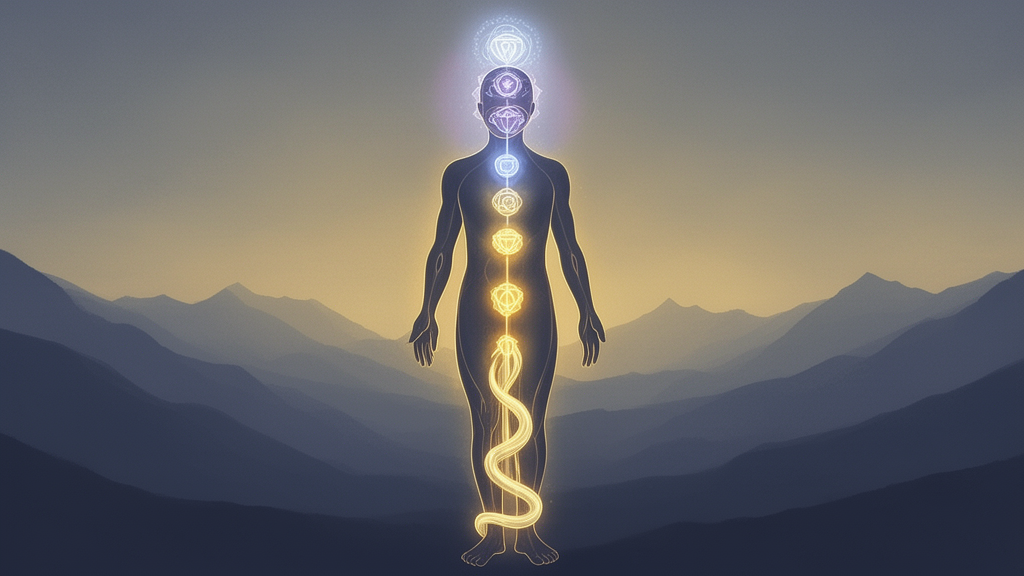
The Yogachudamani Upanishad is a Sanskrit text of the Yoga Upanishad genre, traditionally associated with the Samaveda. According to Wikipedia, it is one of the minor Upanishads and is composed in Sanskrit; it is also listed among the Yoga Upanishads and, in some classifications, among the Raja Yoga texts [1]. The Vedanta Spiritual Library translation describes the work as an instruction for yogis seeking liberation through self-purification [4]. The Sanskrit text itself opens by stating that it will teach yoga for the benefit of yogis, and that the teaching is secret and leads to liberation (kaivalya) [2][4].
In short, the Upanishad is a practice-oriented teaching on yoga. Its major themes are Kundalini, the subtle body, pranayama, the Hamsa or Ajapa mantra, and meditation leading to realization.
The meaning of the title
The name combines yoga, meaning union or disciplined practice, with cudamani or chudamani, meaning a crest jewel or crown jewel. Wikipedia gives the translation “Crown Jewel of Yoga” [1]. Translators use similar phrasing, such as “crest jewel” in the Vedanta Spiritual Library edition, which notes the title as an indication of a teaching regarded as elevated within yogic spirituality [4][6].
The title is also written in several forms. Wikipedia lists Yoga-cudamany Upanishad and Yogachudamanyupanisad (in Devanagari, ोगचूडामण्युपनिषत्) as alternative names [1]. Readers may see any of these spellings in library catalogues or older print editions. They refer to the same text.
Where the Upanishad fits in Hindu scripture
Samaveda attribution
Traditionally, the Upanishads are linked to the Vedas, and many are assigned to a particular Veda. The Yogachudamani is commonly described as attached to the Samaveda [1][5][6]. The Hinduwebsite introduction states that the work belongs to the Sama Veda and has 121 verses [5]. This attribution is a textual and classificatory claim found in the sources reviewed. It should not be confused with a claim about who composed the text or when it was composed.
A Yoga Upanishad
Wikipedia states that the Yogachudamani is one of twenty Yoga Upanishads across the four Vedas [1]. It is also listed in the Muktika enumeration of 108 Upanishads, at number 46, in the anthology presented as Rama speaking to Hanuman [1]. Wikipedia also says that the Upanishad under the Samaveda is one of ten Upanishads of the Raja Yoga genre [1]. Because these are classifications within a modern anthology and within later yogic literature, readers should treat them as useful categories, not as a single universal ranking of Hindu scripture.
Why the classification matters
Upanishads are traditionally read within a family of texts that discuss Brahman, the self (atman) and liberation. A Yoga Upanishad applies these ideas to practice: breath, posture, sense control, concentration and absorption. The Yogachudamani is therefore best read as a manual of yogic discipline placed within an Upanishadic philosophical frame, not as a general account of Vedic ritual.
Date and historical background
The date of the Yogachudamani is uncertain, and sources differ in how precisely they state it. Wikipedia reports that the scholar Richard Rosen dates the Upanishad to about the 14th to 15th century CE [1]. Wikipedia also cites Swami Satyadharma Saraswati, who describes it as an advanced treatise for higher practice for yogins and notes that its Kundalini discussion anticipated later books on the subject [1]. The Hinduwebsite and Sacred Texts of Hinduism pages describe the text as a later Yoga Upanishad, without giving a precise date [5][6].
Because the dating rests on scholarly judgment, it should be presented as a scholarly estimate, not a fixed fact. A reader who sees an earlier or different date in another source should check whether that source refers to the Upanishad, a Sanskrit verse tradition, or a related Yoga text.
Printed editions and textual transmission
Wikipedia notes that the text was printed in 1883 in the Telugu language, though with some errors [1]. This points to the importance of comparing editions. Sanskrit Documents presents the Devanagari text and numbered verses online [2], while the Vedanta Spiritual Library provides an English translation by P. R. Ramachander that marks some verses as unavailable in that edition [4]. Readers who need a definitive reading should compare the Sanskrit edition, the translation and any commentary they plan to use.
Structure of the text
The Upanishad is mostly poetic verse and is organized as a single chapter of 121 verses [1][5]. Wikipedia summarizes its arrangement this way: the opening verses state the goal of attaining kaivalya; the first seventy verses present Kundalini theory, including chakras, nadis, prana vayus, mudras and shakti; and the rest describes meditative exercises with Om [1]. Wikipedia also says that the text asserts that enlightenment can be reached by combining hatha yoga, Kundalini yoga and reflection on the innermost consciousness [1].
The Vedanta Spiritual Library translation shows the same division in practice. Its edition indicates that some verse groups, including slokas 2–29 and 40–71, are not available in that particular text [4]. Readers should therefore not assume that every verse has been translated in every online edition. When an online summary describes the whole text, check it against the numbered verses.
Three broad movements
- Foundations: the opening verses define the aim, the subtle body and the components of yoga.
- Kundalini and the subtle body: the text describes chakras, nadis and the movement of prana and apana.
- Meditative practice: later verses describe mantra, Om, absorption and realization of Brahman.
This sequence is a reading of the text’s content, not an official subdivision. Some editions and commentaries may group the verses differently.
The six limbs of yoga in the opening teaching
One of the clearest passages in the Sanskrit text is verse 2, which lists six limbs of yoga. The Sanskrit Documents edition gives them as asana, pranarodha (breath restraint), pratyahara (withdrawal of the senses), dharana (concentration), dhyana (meditation) and samadhi (absorption) [2]. Hinduwebsite’s summary also highlights pranayama, pratyahara and asana as core practices in the text [5]. The overlap is useful for readers because it shows how the Upanishad connects bodily posture, breath and mental focus.
The verse is a structured statement within the text. Later commentators and modern teachers may explain these limbs in different ways, and the explanations are interpretive.
Chakras, nadis and the subtle body
The subtle body as taught in the text
The Yogachudamani uses the vocabulary of a subtle body that is not visible to ordinary observation. It refers to chakras, which Wikipedia describes as energy centers, and nadis, which it describes as vessels for blood and energy [1]. The Sanskrit text speaks of six chakras and a set of energy channels ranging from many thousands down to a principal group [2]. Verse 15 refers to seventy-two thousand nadis and then to seventy-two as the principal number described, while verses 16 and 17 name ten principal life-breath channels: Ida, Pingala, Sushumna, Gandhari, Hastijihva, Pusha, Yashasvini, Alambusa, Kuhu and Shankhini [2].
These are teachings within a yogic framework. They are not descriptions of anatomy in the modern medical sense. A reader should treat them as the text’s own map of inner experience and practice.
Principal channels
The text places Ida on the left, Pingala on the right and Sushumna in the middle, as shown in verses 18 and 19 of the Sanskrit edition [2]. Sushumna is the central channel that later Kundalini literature treats as the path of awakening. Many translators and teachers emphasize it, while others focus on the prana movement described in the text.
Prana and apana
The Upanishad describes the individual soul (jivatma) as being moved by the upward and downward pull of prana and apana. The Vedanta Spiritual Library translation says that apana pulls prana and prana pulls apana, and that a person who understands this mutual pull understands yoga [4]. Sanskrit Documents gives the same theme in verses 30 and 31 [2]. The passage is an important example of how the text links breath with inner movement and self-knowledge.
Kundalini in the Yogachudamani
What the text says about Kundalini
Kundalini yoga is the subject most often associated with the Yogachudamani. Wikipedia says the text is notable for its discussion of Kundalini yoga and has been used in studies of Kundalini theories and tantra traditions [1]. In the Vedanta Spiritual Library translation, the Kundalini power is described as resting above the mooladhara in an eight-coiled form, covering the mouth of Sushumna, which is called the gate of Brahman [4]. The text then describes Kundalini as going up through Sushumna after being stirred by yogic heat, the speed of breath and mental power [4].
The translation uses the image of opening a house door with a key. The yogi is said to open the gate to liberation by means of Kundalini [4]. Readers should note that this is an image within the text, not a physical description of an energy that can be measured.
Belief, text and later tradition
There are three layers to keep separate. First, the scripture teaches Kundalini as a path to liberation. Second, later yogic traditions and modern teachers have elaborated Kundalini in many ways. Third, modern scholarship studies how these ideas developed. Wikipedia notes that the Yogachudamani’s Kundalini discussion served as a precursor to later books on the subject [1]. The Sacred Texts of Hinduism page describes the text as reflecting later developments in which subtle energetic systems, contemplative practice and realization-oriented philosophy became integrated [6]. Those statements are scholarly or editorial descriptions of the text’s place, not proof of any physical claim about the body.
The Hamsa mantra and Ajapa Gayatri
The mantra in the text
The Hamsa mantra is a central practice in the Yogachudamani. The Vedanta Spiritual Library translation describes the breath in two parts: it goes out with the sound “ha” and comes in with the sound “sa”, and beings chant “Hamsa” in this way [4]. The Hinduwebsite summary says that the Hamsa mantra is naturally chanted by all beings during inhalation and exhalation [5]. The text therefore presents this mantra as already present in ordinary breathing, which the yogi can practice consciously.
Counting the repetitions
The number of daily repetitions is a point where the sources differ. The Vedanta Spiritual Library translation states that beings chant the mantra twenty-one thousand and one hundred times day and night [4]. The Hinduwebsite introduction gives the same phrase, “twenty one thousand and one hundred times” [5]. Its summary, however, states that the mantra is chanted 21,600 times daily [5]. Readers who need the figure should use the verse translation rather than the summary, and should note the discrepancy. The translation figure is 21,100 in the English rendering quoted here.
Ajapa Gayatri
The text calls the conscious practice of this mantra Ajapa Gayatri. It states that this mantra gives liberation to all yogis and that merely thinking of it helps one get rid of sins [4]. The translation also states that there is no practice as holy, no chanting equal to it and no wisdom equal to it [4]. These are scriptural assertions within the text. They describe the value the Upanishad assigns to the practice. They are not a promise that a particular person will experience a specific outcome.
The Ajapa practice is also connected with Kundalini. The Vedanta Spiritual Library translation says that the Ajapa Gayatri rises from Kundalini and supports the soul, and that a person who knows this will know the Vedas [4]. This is a claim of the text about the value of the teaching.
Practical example: how a student might read this section
A reader who wants to study the Hamsa passage might follow three steps. First, read the Sanskrit or a reliable translation of verses 30 to 35 to see the sequence of prana, mantra and claimed benefits. Second, compare that passage with the Hinduwebsite and Sacred Texts summaries to see how each source describes the mantra and its context [5][6]. Third, consult a qualified teacher or a commentary from a known yogic lineage before attempting extended breath practice, since the text itself addresses advanced yogins.
This approach separates what the text says, what the translator says and what a teacher recommends. It also helps a reader notice where a summary has simplified the original.
Sushumna, the gate and the path of awakening
The Sanskrit text describes Sushumna as the central channel that is fundamental to Kundalini practice. The English translation in the Vedanta Spiritual Library calls it the gate of Brahman and says the Kundalini closes its mouth in sleep [4]. Verses in the Sanskrit edition describe the central channel as the principal path for the awakened energy [2]. In this image, awakening is not presented as forceful action but as the opening of a gate through disciplined practice.
Wikipedia summarizes the goal of the text as bringing about the union of Shiva and Shakti within the self, a formulation that it attributes to the Yogachudamani Upanishad [1]. This phrase belongs to the text’s symbolic language. Readers from other traditions may interpret Shiva and Shakti as cosmic principles, as inner states or as symbolic terms, and the text itself does not settle every possible reading.
Other practices: Om, mudras and reflection
Wikipedia reports that the later part of the Upanishad describes meditative exercises with Om and asserts that enlightenment can be reached by combining hatha yoga, Kundalini yoga and reflection on innermost consciousness [1]. The Sacred Texts of Hinduism page also describes the text as combining practical yogic instruction, meditative discipline and Advaita-oriented realization [6]. These are useful summaries, but the detailed sequence of practices is best studied from the verses themselves, since different translations may divide them differently.
Practice as tradition-specific
The Upanishad is a teaching text, and its instructions are addressed to a particular audience of yogins. Modern readers may adopt parts of its vocabulary or breathing practice, but they should recognize that a specific yogic lineage may teach these practices with particular sequencing, cautions and terminology. A general article can explain the text; it cannot replace the teaching of a qualified guide.
Belief, scripture and scholarship: how to read the claims
The Yogachudamani contains several kinds of statements. Some are descriptions of a subtle body. Some are instructions for practice. Some are assertions of spiritual value, such as the claim that the mantra gives liberation. Others are scholarly descriptions of the text’s place in history. Each kind of statement needs different handling.
- Scriptural statement: what the text says, such as the Ajapa mantra being a path to liberation [4].
- Translation or editorial summary: how a translator or website presents the text, such as the Hinduwebsite description of the mantra [5].
- Scholarly interpretation: how a scholar dates or interprets the text, such as Richard Rosen’s dating reported by Wikipedia [1].
- Devotional or teacher belief: how practitioners understand the mantra or Kundalini in their own lives, which varies among communities.
These categories are not rigid, and many sources mix them. A careful reader asks which category a claim belongs to before accepting it.
Regional and textual differences
The Yogachudamani appears in several editions and languages. Wikipedia notes an 1883 Telugu printing with some errors [1]. The Sacred Texts of Hinduism page lists it among the Yoga Upanishads in its online collection [6]. Sanskrit Documents provides a Devanagari text with numbering and related editions in other scripts [2]. The Vedanta Spiritual Library has an English translation that indicates some verse gaps [4].
The text’s Kundalini and chakra vocabulary is also related to later yogic and tantric traditions. Wikipedia notes its use in studies of tantra traditions [1]. This means that readers may encounter similar terms in texts that are not Upanishads, and the terms may have different meanings in different lineages.
Frequently asked questions
Is the Yogachudamani Upanishad about physical yoga postures?
Partly. The text lists asana as one of the six limbs of yoga in verse 2 [2]. However, its main concerns include breath, subtle body, mantra, sense control and meditative absorption. Posture is one component within that wider discipline.
Does the text promise liberation?
The text states that its teaching is capable of giving the attainment of kaivalya, or liberation, and that the Ajapa mantra gives salvation to yogis [1][4]. These are scriptural claims. A reader can study them as part of the tradition, but this article does not treat them as a guaranteed outcome for any individual.
Should beginners try the Kundalini practices?
The Upanishad is addressed to advanced yogins and describes its teaching as secret and for those who know yoga well [4]. Beginners should study the text’s context and consult a qualified teacher before attempting intensive breath or Kundalini practices. This is a general editorial caution rather than a claim from the sources.
Why do translations of the Hamsa count differ?
The sources present the figure as twenty-one thousand and one hundred in the verse translation, while one summary gives 21,600 [4][5]. A reader should check the verse and translation, and note whether a figure comes from a translation, a summary or a commentary.
Key takeaway
The Yogachudamani Upanishad is a concise, technical yoga text within the Samaveda tradition, best known for its Kundalini discussion, its account of the subtle body and its teaching on the Hamsa mantra. Its value for readers lies in understanding how one classical text links breath, mantra, subtle anatomy and meditative absorption. To study it responsibly, distinguish the scripture from translations, later commentaries and modern interpretation, and check the verses and editions you use.
Sources and further reading
- Yogachudamani Upanishad, Wikipedia: overview, title meaning, Samaveda attribution, dating by Richard Rosen, the 1883 Telugu printing, and the summary of the text’s structure.
- Yogachudamani Upanishad, Sanskrit Documents: Devanagari text and verse numbering, including the six limbs of yoga and the nadi passages.
- Yoga Chudamani Upanishad, Vedanta Spiritual Library: English translation by P. R. Ramachander, used for the Hamsa, Ajapa Gayatri and Kundalini passages, including the note on unavailable slokas.
- Yoga Chudamani Upanishad: Crown Jewel of Yoga Practice, Hinduwebsite.com: introduction and summary on the Hamsa mantra, pranayama, pratyahara and asana.
- Yoga Chudamani Upanishad, Sacred Texts of Hinduism: editorial note on the text’s later Yoga Upanishad status and its Kundalini and subtle-body themes.
Related HindusGod.com reading, subject to publication status: Meaning of Upanishad, 10 Upanishad, 108 Upanishad, Adhyatma Upanishad, Advaita Upanishad, Atmabodha Upanishad.