Tibetan sutras are the discourses attributed to the Buddha and related scriptural texts preserved in the Tibetan language and recognized within Tibetan Buddhism. They are not Hindu scriptures. They belong to the Buddhist tradition, although readers interested in Hindu texts often encounter them alongside Indian religious literature. This guide explains where sutras sit within the Tibetan Buddhist canon, how they are classified, which texts are often discussed, and how to approach them with care.
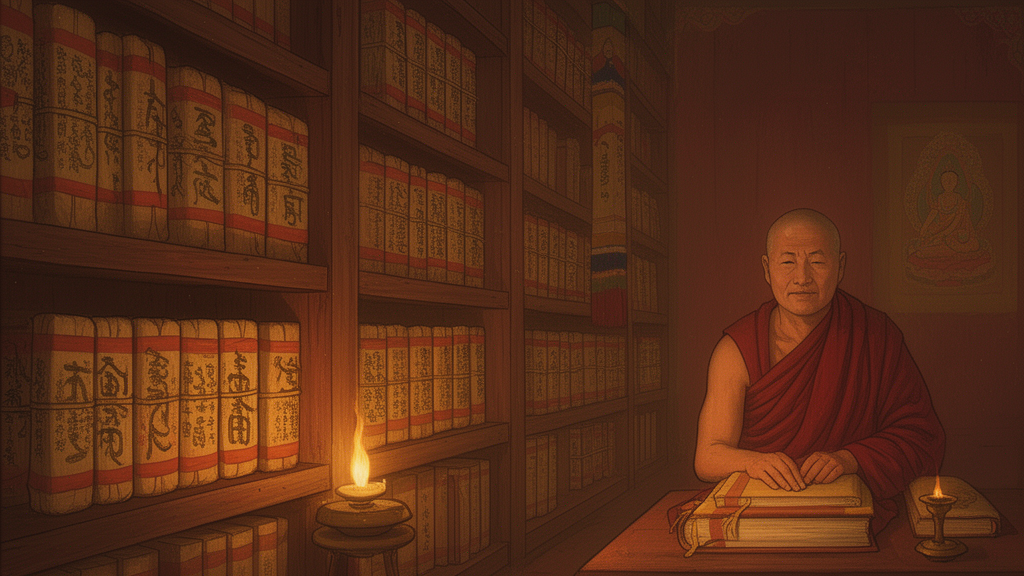
Quick answer: what are Tibetan sutras?
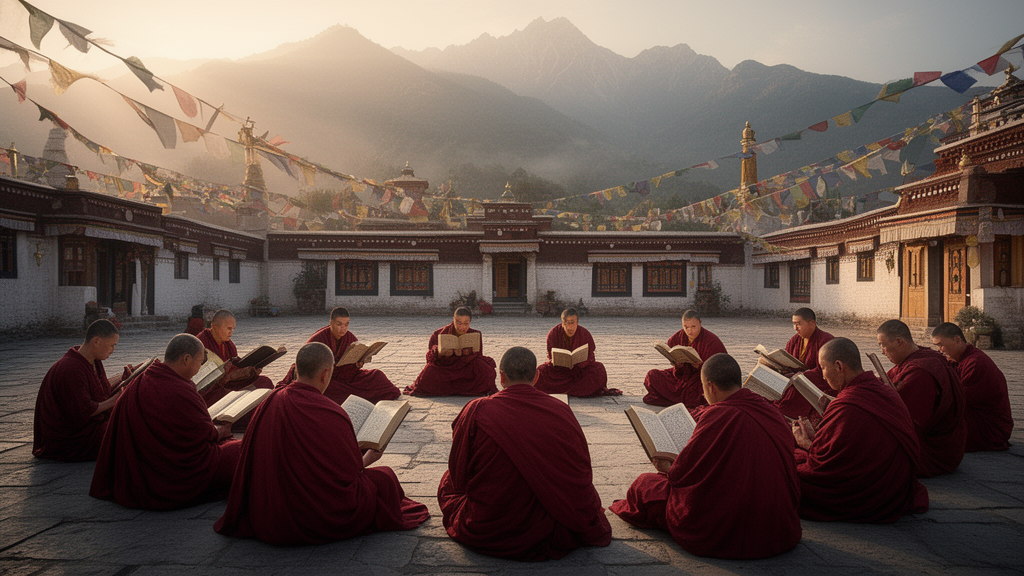
In the Tibetan Buddhist tradition, a sutra is a canonical discourse presented as the teaching of the Buddha. Sutras are collected in the Tibetan Buddhist canon, a defined list of sacred texts recognized by various schools of Tibetan Buddhism. The canon is commonly described as having two main collections: the Kangyur, which holds texts presented as the words of the Buddha, and the Tengyur, which holds commentaries and treatises by Indian scholars. Sutras are therefore central to the Kangyur, but the word also appears in general discussions of Buddhist teaching across both collections.
The short answer for most readers is this: Tibetan sutras are Buddhist scriptures preserved in Tibetan translation, grouped within a larger canon, and read differently by different schools and lineages.
Where sutras sit in the Tibetan Buddhist canon
The Tibetan canon is not a single book. It is a large body of texts organized into collections, and its structure matters for understanding what a “sutra” is in Tibetan usage.
The Kangyur and the Tengyur
The Tibetan Buddhist canon is traditionally divided into the Kangyur (bka’ ‘gyur, often translated as “translated words” of the Buddha) and the Tengyur (bstan ‘gyur, often translated as “translated treatises”). According to the Wikipedia overview of the canon, the Kangyur is the collection associated with the Buddha’s own teachings, while the Tengyur gathers commentaries and treatises. This division is a practical organizing principle. It helps readers see that a sutra is not the same thing as a commentary on a sutra, even when both are studied together in monastic education.
The Kangyur’s history is itself a subject of scholarly study. The Wikipedia article on the canon includes sections on the origin and later development of the Kangyur, on early catalogues of collections kept in royal palaces, and on differing Kangyur versions associated with particular lineages and regions. These sections show that the canon was assembled, catalogued, and copied over centuries, and that editions do not always agree in content or arrangement. Readers should therefore not assume that every Tibetan edition contains identical texts in identical order.
Non-collected works
The Tibetan canon also includes works that are not placed in the two main collections. The Wikipedia article treats these as a separate category of non-collected works. For a general reader, the key point is that the canon is broader than a single list of sutras, and that some valued texts sit outside the core structure. When a book or website cites a “Tibetan sutra,” it helps to ask which collection or edition it draws from.
Exoteric sutra tradition and esoteric tantra tradition
One of the most useful distinctions in Tibetan Buddhist scholarship is the division between the exoteric or Sutra tradition and the esoteric or Tantra tradition. The Wikipedia article on the canon uses this classification as part of its general outline of canonical texts. In broad terms, the Sutra tradition is associated with teachings that are presented as widely accessible discourses, while the Tantra tradition is associated with esoteric instructions, practices, and initiations.
This distinction is a classification used in the literature, not a rigid wall. Many practitioners study both sutras and tantras, and Tibetan teachers often present sutra teachings as the foundation for tantric practice. Readers should treat the terms as scholarly and traditional categories rather than as a ranking of which texts are more valuable.
The Essence Sutras and Buddha-nature
Some Tibetan sutra discussions focus on a particular theme. The Tibetan Buddhist Encyclopedia entry on the “Great Essence Sutras” explains that a group of ten texts, often called the Essence Sutras, are central to the teaching of tathagatagarbha, usually rendered as Buddha-nature. According to that entry, these ten sutras serve as a textual basis for zhentong, a Tibetan philosophical position associated with the Jonang tradition.
The encyclopedia lists the Sanskrit names of the ten sutras, including the Tathagatagarbha Sutra, the Maha-parinirvana Sutra, the Anguli-malya Sutra, the Shri-mala-devi-simha-nada Sutra, the Samdhi-nirmochana Sutra, and others. It also states that the Tathagatagarbha Sutra appears to be the earliest occurrence of the Buddha’s teaching on Buddha-nature among these texts, while the Maha-parinirvana Sutra, the Shrimaladevi Simhanada Sutra, and the Samdhinirmochana Sutra were highly influential but appear to be later. The entry adds that the Avatamsaka Sutra and the Lankavatara Sutra also explain Buddha-nature.
This example shows how sutras work in practice. A reader who wants to understand Buddha-nature will find that the question is discussed in several texts, that some are earlier and some later, and that different schools interpret them differently. The Essence Sutras are a scholarly and doctrinal topic, not simply a list of devotional texts.
Why the dates matter
The encyclopedia’s remarks about which sutras appear earlier are scholarly observations, not final historical verdicts. Where a source says a text “appears” to be early or late, readers should understand that the claim reflects a current interpretation of textual evidence. Avoid turning such observations into a precise timeline unless a specific academic study supports it.
Early sutras and their relation to other Buddhist canons
Scholars often compare Tibetan sutras with the sutras of other Buddhist canons. The Encyclopedia of Buddhism entry on the early sutras of the Tibetan Canon describes these early sutras as corresponding to the agamas of the Chinese Buddhist canon and the nikayas of the Pali Canon, and as texts from early Buddhist schools of India that were translated into Tibetan. Note that this entry was identified from a search summary and was not fully reviewed for this article, so readers who want to rely on its details should consult the full entry.
This comparison is useful because it reminds readers that Tibetan sutras were translated from Indic originals, often through a long process of translation and revision, and that many Tibetan texts have counterparts in other canons. The Tibetan version is one important witness to the Buddhist tradition, but it is not the only one.
Schools and lineages: why sutra reading varies
Tibetan Buddhism includes several schools, and each has its own emphases, teaching lineages, and monastic institutions. The Wikipedia series on Tibetan Buddhism lists schools including Nyingma, Bon, Kadam, Sakya, Bodong, Kagyu, Jonang, Gelug, and Rime, among others. The canon is shared in broad outline, but the way a school reads particular sutras can differ.
For example, the Gelug school is associated with Je Tsongkhapa, and the FPMT, a Gelug-lineage organization, states on its website that its work is based on the Buddhist tradition of Lama Tsongkhapa as taught by its founders. FPMT also maintains a sutra and dharani resource page for practitioners. A Nyingma, Kagyu, Sakya, or Jonang reader may encounter a different interpretive framework for the same texts. Neither approach is the only valid reading of the canon.
Readers should therefore be cautious about statements like “the Tibetan sutras teach X” without naming the school, lineage, or commentary. In Tibetan Buddhism, interpretation is often transmitted through teachers, commentaries, and monastic curricula, and this is part of what makes the tradition diverse.
Practice and devotion: how Tibetan sutras are used
Tibetan sutras are used in several ways, and it is important to distinguish these uses. Some readers study them as philosophy or history. Some use them as the basis for monastic education or meditation. Others recite them or keep texts as part of devotional practice. Each use is tradition-specific and does not follow a single universal rule.
Some publishers and Buddhist organizations make sutra texts available for practice. The Saraswati Bhawan Publications website, for example, describes offering a selection of prayers, practice texts, and sutras for download, with the original Tibetan U-chen script, a line of phonetics, and an English translation. That page was not fully reviewed for this article, so readers should check the current site and the translation’s attribution before relying on it. Because translations can differ, practitioners who work with a particular teacher or center may be guided to use the edition that teacher recommends.
A devotional reading of a sutra is a religious practice, not a scholarly claim. A scholarly reading asks what a text says in context. A tradition-specific reading asks how a lineage has understood and used the text. Keeping these categories separate helps readers avoid presenting devotion as historical fact or treating a modern commentary as the scripture itself.
Avoiding confusion with Hindu texts that use the word sutra
The word sutra appears across Indian religious traditions. In Hinduism, several well-known texts are called sutras, including the Brahma Sutras associated with Vedanta and the Shiva Sutras associated with Kashmir Shaivism. These are different textual traditions from the Tibetan Buddhist canon. Even the word sutra has a shared general meaning in Indian literature, often referring to a concise aphoristic text, but the content, authority, and community around each collection differ.
If you are researching Hindu texts, the Brahma Sutras guide and related pages on HindusGod.com can help you distinguish Vedantic material from Buddhist discourses. For readers who want to see how the word is used in Hindu contexts, the Shiva Sutras in English page is a separate topic from Tibetan Buddhist sutras, even though both use the same term.
Finding reliable Tibetan sutra texts
Readers who want to study Tibetan sutras should look for several features in any edition or website:
- Named tradition or lineage: The publisher should say which school or lineage the translation or commentary represents.
- Translator or editor: A translation should identify who produced it and when, where that information is available.
- Tibetan text or transliteration: Editions that show Tibetan script, transliteration, or a clear note on Sanskrit names help readers check terms.
- Distinction between text and commentary: The page should make clear whether a passage is the sutra itself or an explanation by a later author.
- Clear copyright and access terms: Free downloads are sometimes offered, but readers should respect the publisher’s license.
Scholarly editions and reputable academic resources are often the best starting point for historical questions. For devotional use, a teacher or center associated with a lineage can help readers choose a text that fits their practice. HindusGod.com does not supply or verify Tibetan Buddhist editions, so readers should consult the publisher or institution directly.
Related reading on HindusGod.com
The following pages on HindusGod.com may help readers compare Buddhist and Hindu uses of the word sutra. Some are still in draft form, so they may not be publicly available yet:
- For a broad overview of the word, see the general guide to sutras.
- For readers new to the subject, the Buddhist sutras for beginners article offers an introductory route.
- For a list of Buddhist texts in English, see Buddhist sutras in English and the Buddhist sutras list.
- For Mahayana texts more broadly, see Mahayana sutras and Mahayana sutras in English.
- For the Pali-based tradition, see Theravada sutras.
- For a specific Tibetan-language topic, read Heart Sutra in Tibetan.
- For Hindu texts that also use the word sutra, see Brahma sutras, Dharma sutras and Dharma shastras, and Shiva sutras in English.
- For a broader list of sutra topics, see List of sutras.
Frequently asked questions
Are Tibetan sutras part of Hinduism?
No. Tibetan sutras are Buddhist texts. They are preserved in Tibetan translation within the Tibetan Buddhist canon. They are relevant to readers of Indian religion because Buddhism arose in India and shares religious vocabulary with Hindu traditions, but the texts and communities are distinct.
What is the difference between a sutra and a tantra in Tibetan Buddhism?
Broadly, the sutra tradition is described as the exoteric teaching, and the tantra tradition is described as the esoteric teaching. Many practitioners study both. The distinction is a classification used in Tibetan scholarship and practice, and specific schools may explain it in different ways.
Which collection contains Tibetan sutras?
The Kangyur, the collection presented as the translated words of the Buddha, is the primary home of sutras in the Tibetan canon. The Tengyur contains commentaries and treatises. Editions and arrangements can vary.
Should I start with the Essence Sutras?
The Essence Sutras are a specialized topic in Buddha-nature teaching. Readers new to the subject may benefit from a general introduction first, then move to a specific theme. A teacher or academic introduction can help place the texts in context.
Summary
Tibetan sutras are Buddhist discourses preserved in the Tibetan canon, especially within the Kangyur. Their meaning and use depend on the school, lineage, edition, and context in which they are read. Scholarship can describe their history and classification, while devotional practice follows tradition-specific guidance. Readers who keep these categories distinct will be better able to study Tibetan sutras accurately and respectfully.
Sources and further reading
- Tibetan Buddhist canon, Wikipedia: overview of the Kangyur, Tengyur, non-collected works, and the Sutra and Tantra classification.
- Sutra: Great Essence Sutras, Tibetan Buddhist Encyclopedia: the ten Essence Sutras and their relation to Buddha-nature and zhentong.
- Sutras and Dharanis, FPMT: practice materials from a Gelug-lineage organization, and its statement of Tsongkhapa lineage.
- Early sutras of the Tibetan Canon, Encyclopedia of Buddhism: correspondence between early Tibetan sutras and the agamas and nikayas (summary reviewed only).
- Free Prayers, Sutras and Texts, Saraswati Bhawan Publications: downloadable practice texts with Tibetan script, phonetics, and English translation (listing reviewed only).