The Yogasara Upanishad by Sri Sri Ravi Shankar is a commentary-style book in which the spiritual leader Sri Sri Ravi Shankar explains the Yogasara Upanishad, a short text on the essence of yoga. The book is not a bare translation of the scripture. It is a set of lucid talks that unpack the text in plain language, and it is published by The Art of Living in several editions. This guide explains what the book is, how it is organized in the sources available to us, how it relates to the Upanishadic tradition, and how a reader can approach it with care.
The short answer: what this book is

The book is best understood as a modern commentary built on a classical Upanishadic framework. Publisher listings describe it as a series of commentaries drawn from four talks that Sri Sri Ravi Shankar gave to an intimate audience in Weggis, Switzerland. The listed talk titles include “Surrender and Bondage” and “Uniting with the Depth.” A reader who wants the root Sanskrit text, a verse-by-verse critical edition, or an academic historical study will need a different resource. This book is valuable for the teacher’s explanation and the devotional and practical framing of the teaching.
Publication details and editions
Several listings describe the book, but their details differ, so readers should check the specific edition they plan to buy.
- Paperback, Art of Living edition: The Open Library record describes a paperback in the Art of Living edition with a listed date of December 31, 2005. (Open Library record)
- Booksmandala listing: The Booksmandala page lists a paperback with 72 pages, a weight of 155 g, ISBN 9789380114378, and English as the language. The same page says a “Free Knowledge CD” is included. It lists a price of Rs. 250 at the time of inspection. (Booksmandala product page)
- Amazon.in listing: The Amazon.in page lists a paperback under the Hinduism category with ISBN 9380114370. Prices on marketplace pages change, so the price should be checked directly. (Amazon.in product page)
- Ebook edition: The Everand listing describes an ebook of 78 pages, published by Aslan eReads with a release date of April 3, 2019, and ISBN 9789385898181. (Everand ebook page)
Because the paperback page counts (72 pages) and the ebook page count (78 pages) differ, the page count should be treated as edition-specific. Readers should not assume that every printing has identical pagination or inserts.
What the Upanishad means in this book’s framing
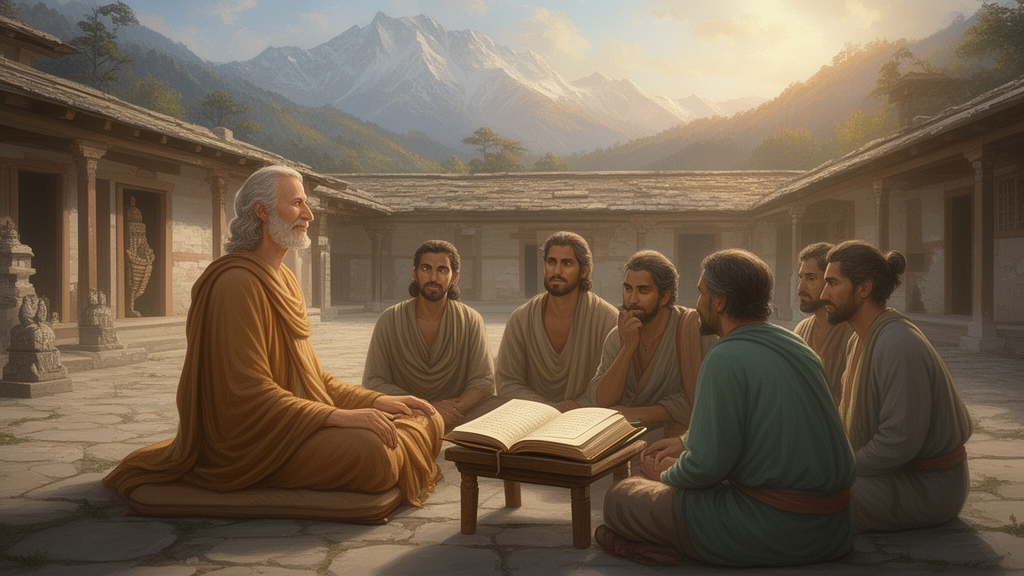
The word Upanishad is often translated as “sitting near” a teacher. The Booksmandala synopsis uses this sense, describing the word as sitting close to the Master, where something beyond words is communicated and knowledge alone does not complete the process. (Booksmandala product page)
This is a teaching-centered understanding of the word. It describes how the Upanishadic tradition has often presented knowledge: as something received in a relationship with a teacher, not only as information read from a page. Scholars also discuss the etymology of the word in other ways, so this definition should be read as the book’s own framing rather than a settled academic consensus.
The Yogasara Upanishad as a text and as a commentary
A useful reading practice is to separate three layers:
- The scripture: the Yogasara Upanishad itself, a text traditionally grouped among the Upanishads that deal with yoga.
- The commentary: Sri Sri Ravi Shankar’s explanations, delivered as talks and then presented in book form.
- Modern devotional interpretation: the way the commentary applies the text to contemporary life, meditation, and the spiritual practice of the Art of Living movement.
The sources used for this article do not provide the Sanskrit verses, verse numbers, or a critical translation of the root text. Because of that, this article does not quote the scripture or cite specific verses. Readers who want to check what the root text says should consult a recognized Sanskrit edition or a scholarly translation of the Yogasara Upanishad. The commentary’s claims should be read as Sri Sri Ravi Shankar’s interpretation of that text.
Major themes from the talks
The publisher listings and the Everand description highlight a few themes. These themes describe the book’s emphasis, and they should be understood as teachings from one modern teacher.
Surrender and bondage
One of the four talks is titled “Surrender and Bondage.” The Everand listing includes an excerpt that uses a simple image: if a person is carrying a load on the head, there cannot be freedom. The excerpt then says that freedom and surrender go together. (Everand ebook page)
This is a devotional and psychological teaching. In many Hindu devotional traditions, surrender (often expressed through words like sharanagati or prapatti) is an important theme, but its meaning varies widely between traditions. Readers should not assume that surrender in this commentary means the same thing as surrender in a particular Vaishnava or Shaiva practice.
Uniting with the depth
The second talk title listed on the Everand page is “Uniting with the Depth.” The listing does not provide the full talk content, so this article does not attribute specific arguments to it beyond its title. Readers can read the book itself to see how the teacher develops the idea.
Words as a vehicle
The Everand description includes a statement by Gurudev Sri Sri Ravi Shankar that words are a vehicle, and that something larger moves between the words. This theme connects with the Booksmandala synopsis, which says that something beyond words is communicated in the teacher-student closeness. Both sources point to the same idea: the commentary is meant to point toward experience, not to replace it.
How the book fits into the wider Upanishad collection
Readers searching for this title often also look for other Upanishads that Sri Sri Ravi Shankar has commented on or that are published alongside it. An Amazon.com listing for a volume titled Upanishads Vol 1 includes Ishavasya, Kena, Katha, and Yogasara in one collection, with Sri Sri Ravi Shankar as an author. (Amazon.com product page) This indicates that the Yogasara commentary has been published in a multi-text volume as well as on its own. Check the contents of each edition before buying, since bundled volumes may differ in their included texts.
For readers who want to compare approaches, HindusGod.com also has related pages on other Upanishad topics. Each one serves a distinct question:
- The Upanishad Sri Sri Ravi Shankar page (target draft; may not be public yet) addresses the broader teaching context of the teacher’s Upanishad commentaries.
- The Katha Upanishad Sri Sri Ravi Shankar page (target draft; may not be public yet) covers a different commentary within the same publishing family.
- The Kena Upanishad Sri Sri Ravi Shankar page (target draft; may not be public yet) covers another short Upanishad from the same kind of commentary series.
- The Ishavasya Upanishad Sri M page (target draft; may not be public yet) offers a different commentary tradition for the Ishavasya Upanishad, which is useful for comparison.
Each of these pages is a WordPress draft at the time of this research, so the links will become public only if the owner publishes those target posts. Their existence as drafts was not verified as public pages.
Belief, text, tradition, and scholarship
Discussion of a commentary like this one touches several categories that should be kept apart:
- Scriptural text: the Upanishad itself, which has its own manuscript history, versions, and interpreters.
- Commentarial tradition: the long line of Indian commentators, such as those in the Vedanta tradition, who have explained the Upanishads in different ways. This book belongs to a modern teaching lineage rather than to a single historical commentary tradition.
- Devotional belief: the personal conviction, held by many readers, that a teacher’s words carry grace or transformative power.
- Academic interpretation: historical studies of when and where these texts were composed, and how they were transmitted.
The sources used here do not provide historical dating for the root Yogasara Upanishad or a scholarly account of its composition. Therefore this article does not give a date or author for the root text. Readers who need that information should consult academic reference works on the Upanishads and check specific editions.
Practical ways to read the book
The book is short, and it is written as talks rather than as a dense technical treatise. The following approach can help readers get more from it:
- Read a short passage slowly. The publisher’s framing suggests that the teaching is meant to be absorbed in a receptive state, not rushed through.
- Note the teacher’s examples. The surrender example about carrying a load is a concrete image that readers can test against their own experience.
- Separate the root text from the commentary. If you have access to a Sanskrit or scholarly translation of the Yogasara Upanishad, read the root verses alongside the commentary to see how the teacher is interpreting them.
- Consider a teacher or study group. Many Art of Living programs offer guided learning, but readers should verify current program details directly with the organization before attending.
- Keep a personal journal. Writing down how a teaching applies in daily life can help distinguish your own understanding from the author’s explanation.
Limits of this guide
This guide is based on publisher pages, a retailer listing, a library catalogue record, and an ebook page. It does not include a full reading of the book, a comparison of translations, or a review of the Sanskrit root text. Some secondary listings were not fully inspected, so claims from them are not included. Edition details, prices, and page counts can change, and readers should confirm them on the current seller or publisher page.
Frequently asked questions
Is The Yogasara Upanishad by Sri Sri Ravi Shankar a translation of the Upanishad?
It is best described as a commentary on the Yogasara Upanishad. The publisher listing describes lucid commentaries drawn from four talks. A reader who wants the root text itself should consult a separate Sanskrit edition or scholarly translation.
Does the book include a CD?
The Booksmandala listing says a “Free Knowledge CD” is included with the paperback at the time it was inspected. Other editions may not include one, so check the specific product before purchase.
Which edition should I buy?
The right edition depends on your preference. A paperback, an ebook, or a bundled volume with other Upanishad commentaries each has different content and format. Compare the page count, ISBN, publisher, and included items before buying.
Summary
The Yogasara Upanishad by Sri Sri Ravi Shankar is a short commentary that presents the Upanishad as a teaching received in closeness with a teacher. Its main themes, as shown in the available sources, include surrender, the relationship between freedom and letting go, and the idea that words point to something beyond themselves. Readers should treat it as one modern teacher’s interpretation, read it alongside the root text if possible, and verify edition details before buying.
Sources and further reading
- Booksmandala, The Yogasara Upanishad by Sri Sri Ravi Shankar: synopsis, page count, ISBN 9789380114378, and the book’s description of the word Upanishad.
- Everand, The Yogasara Upanishad ebook: ebook details, talk titles, and the excerpt on surrender and freedom.
- Amazon.in, The Yogasara Upanishad paperback: paperback listing and ISBN 9380114370.
- Amazon.com, Upanishads Vol 1 (Ishavasya, Kena, Katha, Yogasara): multi-text volume listing that includes the Yogasara commentary.
- Open Library, The Yogasara Upanishad: catalogue record describing an Art of Living paperback edition.