Revival of the Holy Spirit is a phrase used mainly in Christian theology, preaching, and church history. It refers to a renewed sense of the Holy Spirit’s presence, power, and activity among believers, often described as a time of spiritual renewal. This article explains what the phrase means within Christianity, where its ideas come from, and how different Christian communities understand it. It is written for readers who want accurate information about a religious term that is not a Hindu concept.

Direct answer: what the phrase means
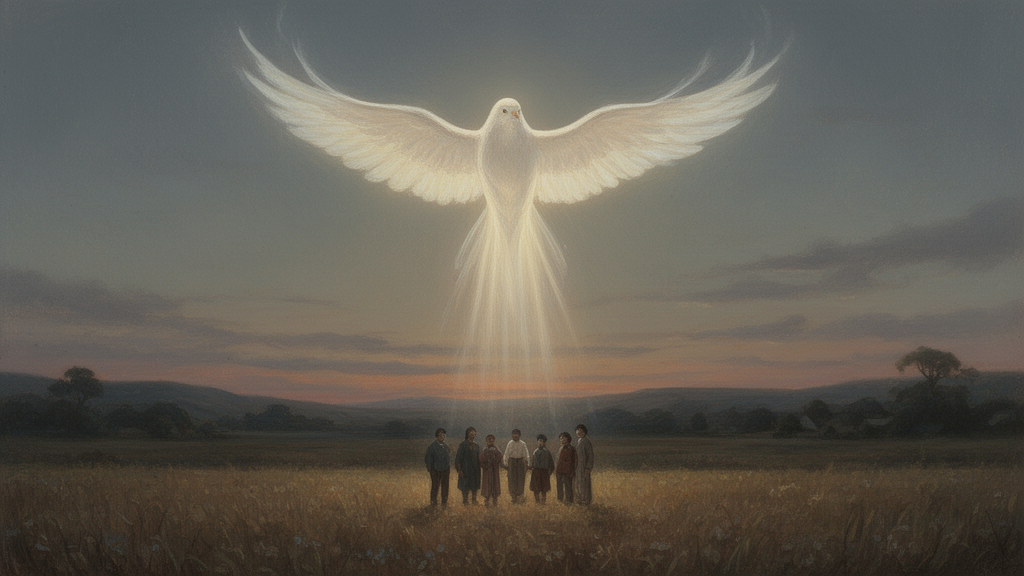
In Christian usage, the revival of the Holy Spirit describes a period when people believe the Holy Spirit is working with unusual intensity, leading to renewed prayer, repentance, worship, or missionary activity. The Holy Spirit is understood by most Christian churches as the third person of the Trinity, alongside the Father and the Son. The word revival is used in its ordinary sense of renewal or restoration, not as a technical doctrine with one agreed definition.
Biblical background
The Holy Spirit in the New Testament
Christians base the concept of the Holy Spirit mainly on the New Testament. The Book of Acts describes the Spirit coming upon the followers of Jesus at Pentecost, an event that many churches regard as the starting point of the church’s mission. Readers who want to examine the passage directly can read Acts chapter 2 in a full Bible text, such as the editions available through BibleGateway. Note that translations differ in wording, so comparing two or three versions is helpful.
The Hebrew Scriptures and the idea of renewal
The Hebrew Bible, which Christians call the Old Testament, uses the Hebrew word ruach, often translated as breath, wind, or spirit. Christian interpreters often connect passages about God renewing or pouring out his Spirit with later Christian ideas of revival. These connections are interpretive. Jewish readers and many scholars read such passages within their own original contexts, and Christian readings are one tradition among several.
Historical revival movements
Church historians commonly describe several periods of religious awakening in Western Christianity, such as the eighteenth-century movements often called the Great Awakening and the nineteenth-century movements sometimes called the Second Great Awakening. Pentecostal and charismatic movements that emerged in the early twentieth century, including the Azusa Street revival in Los Angeles, are often cited in discussions of the Holy Spirit’s renewed role. Historians differ on how to measure these movements, how far they spread, and how they should be interpreted. Descriptions of such events should be checked against academic histories rather than popular accounts.
Distinguishing belief, text, and history
- Scripture: The New Testament describes the Spirit’s work in the early church.
- Tradition and belief: Churches teach that the Spirit continues to work in believers today. Views on the form this work takes vary widely.
- Historical evidence: Revival movements are documented in letters, sermons, newspapers, and church records, but the accounts are often written by participants.
- Scholarly interpretation: Historians debate the social, economic, and theological causes of revival periods.
How Christian traditions differ
The phrase is understood in different ways across Christianity. Some traditions, such as many Pentecostal and charismatic churches, emphasize visible signs such as prayer languages, healing, and prophecy. Catholic and Orthodox churches also teach about the Holy Spirit, but they place greater emphasis on sacraments, the church’s teaching authority, and liturgical life. Many Reformed and Lutheran writers focus on the Spirit’s work through Scripture and the preaching of the gospel. Readers should not assume that one description represents all Christians.
Examples of how the idea appears in practice
- A congregation may hold extended prayer meetings and call them a season of revival.
- A preacher may use the phrase to encourage renewed commitment to Bible study and service.
- A historian may describe a regional movement as a revival, while noting disagreements about its lasting effects.
Related reading on HindusGod.com
Several related articles on this site discuss the Holy Spirit from different angles. Readers may find these useful as starting points, though many are currently drafts and may not yet be publicly visible: Acts of the Holy Spirit, Experiencing the Holy Spirit, History of the Holy Spirit, Anointing of the Holy Spirit, and Guided by the Holy Spirit.
Frequently asked questions
Is revival of the Holy Spirit a Hindu concept?
No. It is a Christian term. Readers interested in Hindu ideas of divine presence, grace, and devotion should consult separate material on Hindu scriptures and traditions.
Does every Christian believe revival happens in the same way?
No. Christian denominations differ in how they understand the Spirit’s activity, the role of emotion, and the evidence required to call something a revival.
Summary
The revival of the Holy Spirit is a Christian phrase describing renewed belief in and expectation of the Spirit’s work in individuals and communities. Its foundations lie in the New Testament, its later history includes several awakening movements, and its interpretation varies across traditions. When studying the topic, separate scripture, church teaching, historical records, and modern commentary.