The main religious book of the Parsis is the Avesta, the collection of sacred texts associated with Zoroastrianism. Parsis are a Zoroastrian community, so their scripture is the Zoroastrian Avesta. Because the Avesta preserves only some of the older material, many details of Parsi ceremonies and customs are found in later Middle Persian (Pahlavi) writings. This article explains what each text is, how the two relate, and where community practice and scholarly interpretation differ.

Short answer: the Avesta is the core scripture
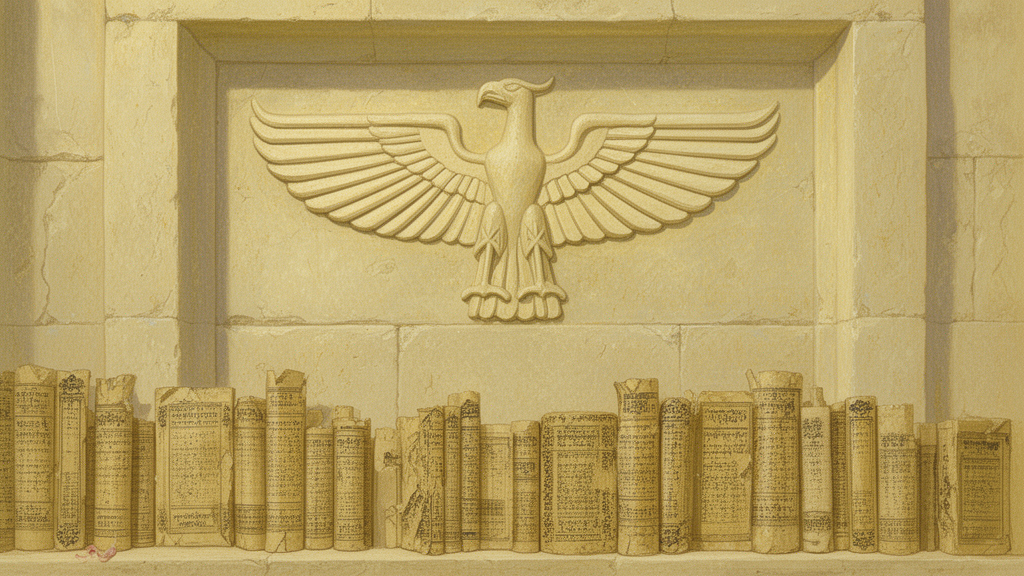
The Avesta is the principal scripture of Zoroastrianism, and Parsis regard it as their sacred book. The Wikipedia article on Zoroastrianism lists the Avesta and Middle Persian (Pahlavi) texts as its two main scriptural headings (Zoroastrianism, Scripture section). The Pahlavi texts are later writings in Middle Persian that help explain the Avesta and record many ritual and legal details.
In short, the Avesta is the foundational scripture, the Pahlavi literature is an important commentary and detail layer, and Parsi practice is shaped by both within a living community tradition.
Who the Parsis are
The Parsis are a Zoroastrian community in the Indian subcontinent, and the English Wikipedia article on them describes them in those terms (Parsis, Wikipedia). The article’s infobox lists the Parsi religion as Zoroastrianism and gives a language profile that includes Gujarati, Marathi, Hindi-Urdu and English, with Avestan used as a liturgical language.
Population figures for the community vary by census year and by method. The same article gives a population of 57,264 in India, 3,630 in Canada and 2,348 in Pakistan. These should be read as approximate figures from that source, not as a current census count. Readers who need current demographic data should check the most recent Indian census and other official statistics.
The Parsi community is not the only group that follows Zoroastrian teachings. Zoroastrians in Iran, Central Asia and elsewhere have their own histories and practices. The Wikipedia article on Zoroastrianism includes separate demographic sections for Iran, Kurdistan Region of Iraq and Central Asia, South Asia and the Western world, which reflects this wider diversity (Zoroastrianism, Demographics section).
The Avesta: the Zoroastrian scripture
The Avesta is the body of sacred texts most closely associated with Zarathustra (also called Zoroaster) and the Zoroastrian faith. The word is used for the collection as a whole. Scholars and practitioners often speak of the Avesta in the singular even though it contains several parts, including liturgical texts, hymns and other material used in worship.
The Pahlavi introduction in the Sacred Books of the East series puts the relationship between the two bodies of literature clearly. It says that the Avesta gives the main outlines of the Parsi religion, while Pahlavi writings provide most of the details about traditions, ceremonies and customs. It also notes that the faith calls itself ‘the good religion of the Mazdayasnians’ and calls its laity bahdînân, meaning ‘those of the good religion’ (The Parsi Scriptures, Pahlavi Texts Part I, Internet Sacred Text Archive). This is an old scholarly translation and introduction, so its wording reflects its period. It is best used for context rather than as the last word on modern practice.
Avestan language and liturgy
Avestan is an ancient Iranian language and is the language of the Avesta. The Wikipedia Parsis article lists Avestan as used in a liturgical capacity in the Parsi community (Parsis, language field). In practice, this means many prayers are recited in a language that many lay worshippers do not use in everyday speech. Community members often rely on translations, catechisms and priestly teaching to understand what they recite.
This point matters for readers. A worshipper may recite Avestan prayers regularly and still understand their meaning only in part, which is common in many religious traditions where scripture is preserved in a classical language. Where a translation is needed, it should be treated as a translation with its own scholarly choices, not as the sacred text itself.
Named prayers and texts
The navigation box of the Wikipedia Parsis article lists Avesta-related items such as Ashem Vohu, Ahuna Vairya and Yenghe Hatam, which are among the best-known Avestan prayers in Zoroastrian worship. The navigation box does not provide their content, so this article does not describe their meaning in detail. Readers who want to study them should consult a scholarly edition or translation and a community source that explains the liturgical use.
The Pahlavi texts: detail and commentary
Pahlavi, or Middle Persian, is the language of many Zoroastrian texts written after the Avesta. The Wikipedia Zoroastrianism article has a separate scripture subsection for Middle Persian (Pahlavi) literature, distinct from the Avesta subsection (Zoroastrianism, Scripture section). The Sacred Texts page on Pahlavi writings says that these works are the main source for much of the detail about Parsi ceremonies and customs (Pahlavi Texts Part I).
The Pahlavi literature is therefore best understood as a major body of interpretation and ritual detail. It is not identical with the Avesta. Scholars distinguish between the older scripture and the later texts that explain, expand and systematize it. Treating the two as one undifferentiated book can lead to confusion about which practice rests on which source.
Why the distinction matters for practice
When a Parsi family asks how a rite should be performed, the answer may come from priestly training, community custom and written tradition together. A reader who wants the historical origin of a practice may need to ask whether the detail appears in the Avesta, in a Pahlavi text, in later community handbooks, or in modern practice. Each answer requires a different kind of evidence.
Belief, tradition and scholarship
Readers often ask a simple question: what does the Parsi holy book say? The most accurate answer has three layers. The first is the scriptural text, the Avesta, as preserved in its manuscripts and editions. The second is the traditional interpretation, which includes priestly commentary and community teaching. The third is scholarly interpretation, which uses philology, history and comparison to explain what the texts meant in their original setting.
These layers overlap but are not the same. A belief held by a community is not automatically historical fact, and a historical reconstruction is not automatically a community teaching. For example, the Parsi community’s account of its arrival in the Indian subcontinent is a historical subject addressed in the Wikipedia Parsis article under a separate heading (Parsis, History section). Readers should look at the historical sources for that account rather than assuming the scripture itself records it.
Where sources differ
Sources do not always agree on dates, authorship and the order in which texts developed. The Wikipedia Zoroastrianism article includes sections on Zoroaster, legendary accounts, early history and later history, which shows that the origin and development of the tradition are debated (Zoroastrianism, History section). This article does not provide precise dates for the composition of the Avesta or the Pahlavi texts, because the sources reviewed here do not support a single date that could be stated with confidence.
Practices the texts inform
The Wikipedia Parsis article has sections on purity and pollution, fasting, navjote (initiation), marriage, funerals and temples (Parsis, Religious practices section). These headings show that the community’s practice covers major life events and daily concerns. The headings alone do not give the full content of each practice, so readers should consult detailed community and scholarly sources for ritual procedure.
The Pahlavi texts provide many of the older details that such practices draw on, according to the Sacred Texts introduction (Pahlavi Texts Part I). For readers, the most useful approach is to ask whether a particular practice is scriptural, traditional, local or optional. Many Zoroastrian customs vary by family, priest, region and period, and no single text settles every question.
Purity, fire and worship
The Parsi religious system includes concern with purity and with the sacred fire. The Wikipedia Parsis article names purity and pollution as a religious topic and includes a section on temples. The Zoroastrianism article also lists the broader religious framework in which these themes sit. Readers who want to understand fire temples should look for sources that explain the difference between sacred fire in the temple and domestic practice, since these practices are not identical in every community.
Initiation and life-cycle rites
The navjote is listed as a practice in the Wikipedia Parsis article. In general terms, it is a religious initiation rite for young Zoroastrians. The sources reviewed here do not provide enough detail to describe its steps, age norms or variations, so this article does not give a procedure. Readers should consult a Parsi priest, community organization or a detailed ethnographic or scholarly study before drawing conclusions.
Calendar differences and community variation
Parsi religious observance involves a calendar, and the Wikipedia Parsis article includes a section on calendrical differences and the effect of calendar disputes (Parsis, Factions within the community section). This means that festival dates and observance timing can differ among groups. Readers should not assume that a single date applies to all Parsis in all places.
The article also lists a section on Ilm-e-Khshnoom and a section on issues relating to the deceased. These topics show that the community is not uniform in its teaching or practice. Readers should treat such differences as part of the community’s history rather than as errors.
How to study the Parsi holy book
A careful reader can approach the Parsi holy book in five steps:
- Identify the scripture first: the Avesta is the core text, and the Pahlavi texts are a separate body of later literature.
- Check which translation or edition is being quoted and who prepared it.
- Separate scriptural text from commentary, community teaching and modern interpretation.
- Check dates, calendar and locality before treating a practice as universal.
- Consult a community source or priest for ritual procedure, since many details are tradition-specific.
This approach helps avoid two common mistakes: treating the Avesta as a single modern book with one fixed meaning, and treating community custom as if it were recorded identically in every ancient text.
Related HindusGod.com guides
Readers who want to compare the Parsi scriptural tradition with other religious books can start with our overview of the Parsi holy book, which is a URL to confirm before publication because the target draft may not yet be public. For a broader introduction to what a holy book means in different traditions, see Holy Book and Holy Book Meaning, both URLs to confirm. Readers who want the name of the Parsi scripture in a shorter form may also find Parsi Holy Book Name helpful, and those comparing the community’s relationship to a deity-centred vocabulary may consult Parsi God. For the community-level context, see Religious Community. All of these are WordPress draft targets, and their live status must be checked before publication.
Frequently asked questions
Is the Avesta the only Parsi holy book?
The Avesta is the principal scripture of the Zoroastrian faith that Parsis follow. The Pahlavi texts are also important, especially for ritual and customary detail. Many communities also use prayer books, catechisms and priestly manuals, but these are derivative guides rather than the foundational scripture.
Do Parsis read the Avesta in English?
Many worshippers learn Avestan prayers in their liturgical form and use translations for understanding. Translations are interpretations, so readers should check who prepared them and whether they are scholarly, devotional or community-authored.
Why do sources disagree about dates?
The Avesta and Pahlavi literature developed over a long period and were transmitted through oral and written traditions. Scholars use textual, linguistic and historical evidence, and these methods do not always yield the same dates. Where the sources reviewed here do not give a settled date, this article does not supply one.
Key takeaway
The religious book of the Parsis is the Avesta, the core scripture of Zoroastrianism. The Pahlavi texts add essential commentary and ritual detail. For accurate study, keep the scripture, the later literature, community tradition and modern scholarship distinct, and check any ritual instruction with a tradition-specific source.
Sources and further reading
- Parsis, Wikipedia: Parsi community overview, population figures, languages and topic headings.
- Zoroastrianism, Wikipedia: Scripture headings for the Avesta and Middle Persian (Pahlavi) texts, and the broader tradition.
- The Parsi Scriptures, Pahlavi Texts Part I, Internet Sacred Text Archive: Introduction describing the relationship between the Avesta and Pahlavi writings. This is an older scholarly translation and should be read with its date in mind.
- The Parsi Religion, John Wilson, Internet Archive: Digitized older work on the Parsi religion, listed for further reading. Check the scan and edition before relying on it.
- History of the Parsis, Dosabhai Framji Karaka, Internet Archive: Older historical work on Parsi manners, customs and religion, listed for further reading. Historical claims in older works should be checked against modern scholarship.