The Rama Raksha Sutra in Kannada usually refers to the Rama Raksha Stotra, a Sanskrit devotional hymn to Lord Rama that is widely read in Kannada-script and Kannada-language editions. Readers searching for this phrase most often want three things: a clear explanation of what the text is, a sense of its meaning and tradition, and guidance on finding a reliable Kannada edition. This article answers those questions in that order. Where the sources of a claim are devotional, traditional, or scholarly, the article says so.
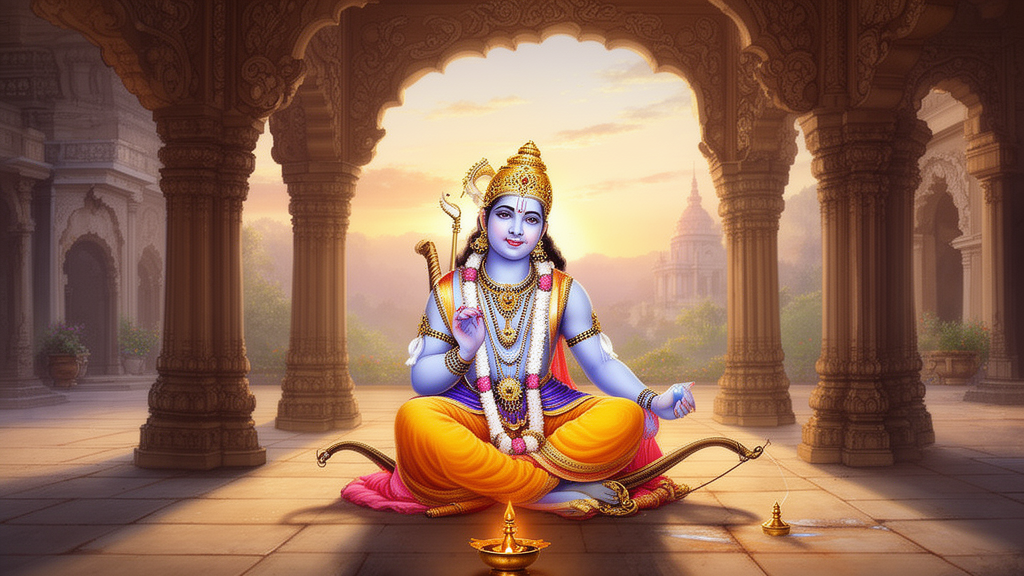
Quick answer: what the Rama Raksha Sutra in Kannada is
In most usage, the phrase points to a Kannada rendering or Kannada-script edition of the Rama Raksha Stotra. It is a prayer for protection that invokes Lord Rama, and it is often recited by devotees who follow Rama-centred worship. The text is commonly called a stotra (a hymn of praise), not a sutra (an aphoristic line of teaching, as in the Yoga Sutras). The word sutra appears in search queries because many people use the terms loosely. Clarifying this difference is the first step to reading the text accurately.
Devotees do not agree on a single authoritative recitation method. Some recite it daily, some only on specific occasions, and some as part of a larger Rama or Vishnu practice. The belief that the hymn offers protection is a devotional belief. It is not a result that a text or a recitation can be guaranteed to produce.
Sutra or stotra? Clearing up the terminology
The distinction matters for accuracy and for reading. A sutra in Sanskrit literature is a compact aphorism, often a line requiring commentary, as in Patanjali’s Yoga Sutras or the Brahma Sutras. A stotra is a hymn of praise, usually composed in verses (shlokas) with a devotional structure. The Rama Raksha Stotra belongs to the second category.
Because of this, a reader who expects a short philosophical sutra may be surprised by the length and the devotional tone. Readers who want a Rama-centred protective prayer will find the hymn directly relevant. Related HindusGod draft pages on other sutras are listed later in this article so readers can compare genres.
Why the word sutra is common in search
Many Indian-language readers use the word sutra for any short sacred text or formula. Publishers and devotional booklets sometimes use the title Raksha Sutra for different items, including protective threads (rakhi) and talismanic formulas. The phrase Raksha Sutra therefore can refer to a thread or a prayer, depending on context. This article is about the Sanskrit hymn to Rama, not about the thread.
Traditional attribution and origin
Within the devotional tradition, the Rama Raksha Stotra is commonly attributed to a sage called Budha Kaushika. Published editions often state this attribution in their introductory notes or at the start of the text. This is a traditional attribution. It is not established by modern textual scholarship that can be verified from the information available to this article.
Editions also differ on the larger scripture from which the hymn is said to come. Some editions present it as part of a larger tantric or puranic compilation, while others print it as an independent devotional text. Readers should treat these claims as traditional statements about the text’s origin, and check a specific edition’s publisher note before repeating a source claim.
What scholarship can and cannot say
Scholars of Sanskrit devotional literature generally distinguish between the Valmiki Ramayana as a major narrative source for Rama’s story and later devotional texts that draw on it. The Rama Raksha Stotra is a later devotional composition in this wider tradition. However, the exact date, authorship, and manuscript history of the hymn are matters that this article cannot confirm from the sources it could access. Readers who need a historical date should consult a critical edition or a specialist study before relying on any date.
Structure and themes of the hymn
Printed editions of the Rama Raksha Stotra are commonly organised as a sequence of verses. Many editions include an opening section, a main body that names Rama and invokes protection for different parts of the devotee’s body and surroundings, and a closing section that describes the benefits attributed to recitation. The exact number of verses varies by edition, with counts often cited near the high thirties. Because the numbering differs, this article does not give a fixed verse count.
Major themes
- Invocation of Rama: the hymn addresses Rama by many names and epithets, expressing devotion and trust.
- Protection of the body: the text asks for protection of body parts, which is a common feature of devotional protective prayers.
- Association with other figures: editions commonly mention Sita, Lakshmana, and Hanuman as part of the devotional setting.
- Phalashruti, or statement of fruits: the closing portion describes the benefits believed to follow from recitation. This is a traditional devotional statement, not a verified guarantee.
Readers should not assume that every edition uses identical wording or identical sequencing. Differences in verse order, in the names used for Rama, and in the closing lines are common across printed texts.
Reading the Kannada edition
Kannada readers may find the hymn in three forms: in Sanskrit written in Kannada script, in Sanskrit written in Devanagari or Roman script, or in a Kannada-language explanatory text that gives meaning in Kannada. Each form serves a different reader. A Kannada-script Sanskrit text is suited to recitation. A transliteration in Roman letters helps those who do not read Kannada script. A Kannada explanatory text helps those who want the meaning.
Choosing a reliable edition
When selecting an edition, look for these features:
- The publisher or temple’s name and the year of printing, if given.
- A clear statement of whether the text is Sanskrit with Kannada script, or a Kannada translation.
- Consistent verse numbering, and a note explaining any variant readings.
- A translator or editor named on the title page, where a translation is provided.
Be cautious with free downloads of unknown origin, since errors in transcription and spelling are common in informal copies. If an edition is a translation, the translation’s wording is the translator’s interpretation. It is not the same as the Sanskrit original. Attribute translated meanings to the named translator where possible.
Transliteration and spelling
The same Sanskrit name can appear in several spellings across editions, such as Rama, Raama, or Ram in English transliteration, and the Kannada spelling may differ again. This article uses the common form Rama for the deity and Raksha for protection. Readers who encounter other spellings should treat them as variants of the same name, not as different deities.
Traditional recitation practice
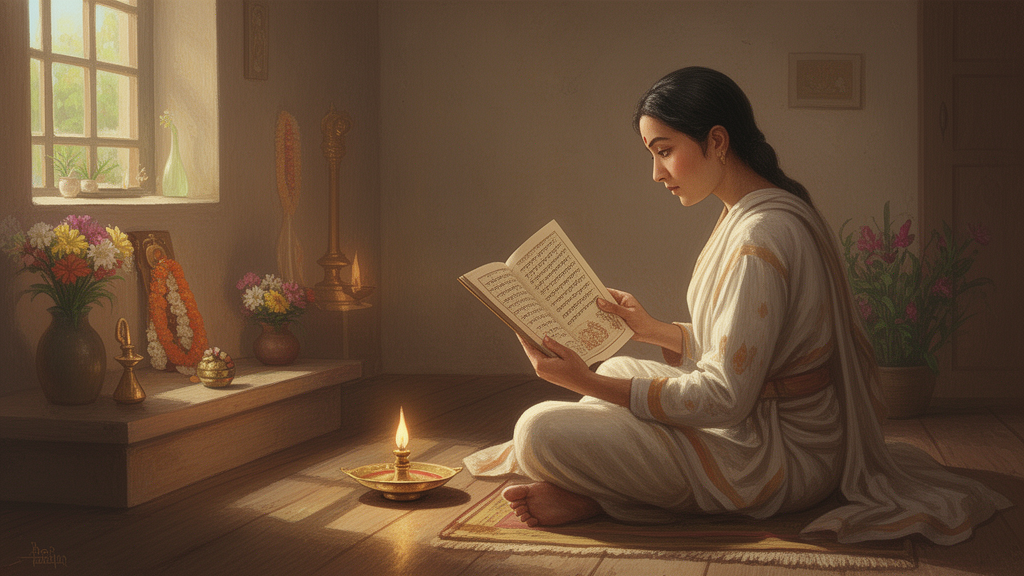
Recitation practices for the Rama Raksha Stotra vary widely. In many households, devotees recite it in the morning after washing and before other prayers. Some recite it before travel, examinations, or important undertakings, reflecting the protective theme. Others recite it on Rama-related days such as Rama Navami, when the festival is observed according to local calendars. Some devotees recite it silently, while others recite aloud in groups.
These practices are not universal. Many Hindus do not recite this hymn at all, and those who do may follow different customs. The following steps describe a common approach as reported in devotional guides. They are optional and tradition-specific rather than required by the text itself:
- Sit in a clean, quiet place, facing a shrine or an image of Rama if one is available.
- Light a lamp or incense if this is your household’s custom.
- Recite the hymn slowly, with attention to the meaning, or follow a teacher’s guidance on pronunciation.
- Close with a prayer of your own choosing, or with the closing verses of your edition.
Pronunciation and respect
Sanskrit recitation traditions often emphasise correct pronunciation and rhythm. Readers without formal training can listen to a recording from a respected devotional source or learn from a teacher. Recitation is also a form of devotion. Many devotees say that sincere attention matters more than perfect technique, but this is a devotional view rather than a textual rule.
Belief, text, tradition, and evidence
The Rama Raksha Stotra raises several kinds of questions that should be kept separate. What the text says is one question. What devotees believe the text does is another. How the text came to be composed and transmitted is a third, which is a matter for historians and textual scholars.
What the hymn says versus what devotees believe
The closing portion of the hymn, and many devotional guides, describe benefits such as protection from harm, fear, and misfortune. These statements are part of the devotional tradition. They express what devotees hope for and believe. They are not verified outcomes. No credible source available to this article shows that reciting the hymn produces a specific material or health result. Readers who are facing medical, legal, or financial problems should seek qualified professional help alongside any spiritual practice they choose.
Where scholarship has not reached a consensus
Questions about the hymn’s date, original manuscript, and relationship to larger scriptures are not settled in the sources available here. Where editions disagree, the honest approach is to say so. Readers interested in the academic history can consult critical editions of the Valmiki Ramayana and studies of later Rama devotional literature, which place the stotra within a wider tradition of composition.
Related HindusGod posts
Readers comparing this article with other sutra and stotra topics may find these pages useful. Each link points to a draft page on HindusGod.com; some may not be publicly visible until the owner publishes them.
- Sri Rama Raksha Sutra covers the Rama-centred protective text in more detail.
- Raksha Sutra explains the broader term and its common uses.
- Raksha Sutra Meaning focuses on the meaning of the term.
- Raksha Sutra in English offers an English-language overview for readers who prefer English.
- Hanuman Raksha Sutra is relevant for readers interested in protective prayers connected with Hanuman, who is a devotee figure in the Rama tradition.
Only five draft links were judged relevant to this topic. Other drafts in the verified list concern unrelated sutras, such as Buddhist or Yoga texts, and were not used.
Frequently asked questions
Is the Rama Raksha Sutra the same as a protective thread?
Not in the context of this article. The Sanskrit hymn is a prayer. A protective thread, often called raksha or rakhi in some contexts, is a physical object tied for blessing. Some readers use the term raksha sutra for both, so check the context when reading.
Can anyone recite it?
Traditions differ. Many devotional communities encourage anyone with sincere devotion to recite it, while some teachers recommend learning pronunciation first. Follow the guidance of your family or teacher, and choose an edition you can read clearly.
Does reciting it guarantee protection?
No. The hymn expresses devotion and describes benefits within the devotional tradition. Its effects, whether spiritual or practical, are a matter of belief, and no credible evidence available here establishes a guaranteed outcome.
Summary and next step
The Rama Raksha Sutra in Kannada usually means the Sanskrit Rama Raksha Stotra, presented in Kannada script or with Kannada explanation. It is a traditional protective prayer to Lord Rama, attributed in tradition to Budha Kaushika, with editions that differ in numbering and wording. Choose a clear, named edition, check any translation against its translator’s notes, and treat the benefits it describes as devotional beliefs. For a broader view, compare the related HindusGod pages listed above.
Sources and further reading
- Valmiki Ramayana, a critical edition from a university or established publisher. Title, publisher, and URL: to confirm before publication.
- Rama Raksha Stotra, a named Kannada-script or bilingual edition from a recognised devotional publisher. Title, publisher, and URL: to confirm before publication.
- Scholarly studies of Sanskrit devotional hymns (stotra literature) from a university press. Title and URL: to confirm before publication.
Note: no external URLs were retrieved or verified while preparing this draft. Replace these entries with verified references before publication.