An odia purana shastra is best understood as an Odia-language work that carries Puranic storytelling into the language of ordinary readers and listeners. The phrase is descriptive rather than a fixed category in Hindu scripture. The clearest documented example in the sources reviewed for this post is Sarala Das’s Chandi Purana, which its English edition describes as “a shastra for laymen.” This article explains what that description means, how the Odia text relates to Sanskrit Puranas, and how readers can approach it while keeping belief, tradition, and scholarship separate.
What the phrase means
Two words carry most of the meaning. Purana refers to a class of narrative texts that tell stories of deities, sages, kings, and cosmic history. Shastra means a body of authoritative teaching or knowledge. Put together, the phrase suggests a Purana-style work that is treated as instructive and authoritative within a community, written in Odia.
The phrase does not name a single canon. No supplied source defines “odia purana shastra” as an official category. Readers searching for it are usually looking for one of three things: Odia versions of Puranic stories, Odia devotional literature with Purana-like themes, or an explanation of a specific text such as the Chandi Purana. This post focuses on the third, because it is the one the available sources document in detail.
Sanskrit Puranas and Odia retellings
Many readers first meet the Puranas through Sanskrit texts. An Odia retelling is not simply a translation of those texts. The English edition of the Chandi Purana states that it “is not, however, just a renewed vernacular edition of an old story told in Sanskrit long ago.” Its aim is to communicate a major theme of Indian mythology to common people, whom the publisher’s description says “myth marginalizes and history excludes.”
This distinction matters for readers. A Sanskrit Purana and an Odia retelling may share a core legend while differing in narrator, audience, emphasis, and local religious content. Treating one version as the only correct form of the story would misread the tradition.
Readers who want to compare Odia works with other Puranic texts can browse the related HindusGod posts listed later in this article. Those posts are part of the same broad topic, but each covers a different text, so the comparison should be made case by case.
Sarala Das and the Chandi Purana
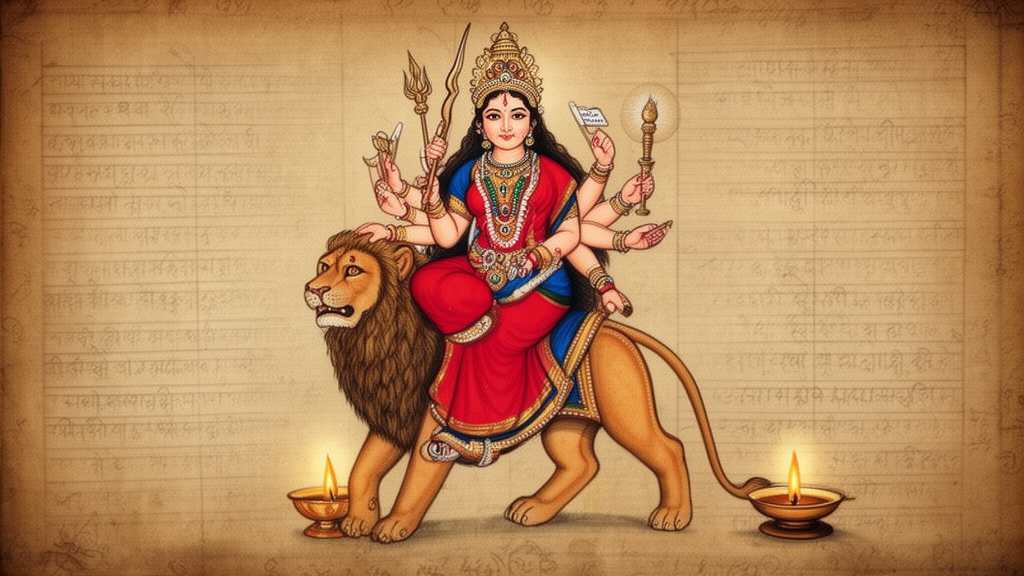
The Chandi Purana is written in Odia by Sarala Das. The publisher’s description, drawn from the Routledge and Taylor & Francis editions, says it is based on the legend of Durga’s incarnation as Chandi, as narrated in the Vishnu Purana. It also describes the work as marking “the beginning of the era of classical Odia literature.”
The sources do not provide a verified birth date or a precise composition date for the poet or the text in the material reviewed. Any article that gives a specific century should cite a dedicated literary-historical source. Until then, readers should treat such dates as unconfirmed.
The Odia figure of Sarala Chandi
The English edition says the poet introduces the Odia legend of Chandi by interpreting her as Sarala Chandi of Kanakpur, Odisha. According to that description, she has been “worshipped for one lakh and thirty-two thousand years of Kaliyuga” in that place. This is a claim made within the devotional and local framework of the text and the Odia tradition it reflects. It is not a historical measurement, and it should be presented as the text’s own assertion.
The local naming is an example of how Puranic material can take on regional identity. Readers should note that a specific shrine or worship tradition is tied to a particular place, and that practices there may differ from practices elsewhere in India.
How the Odia telling differs from Sanskrit versions
The publisher’s description identifies several differences between the Odia legend and Sanskrit accounts. These can be summarized as follows.
- Narrators. In Sanskrit texts, the story is told by Sage Medha to King Suratha and the merchant Samadhi. In the Chandi Purana, Sage Shuka is the narrator and King Parikshit is the listener.
- Sectarian emphasis. The English edition states that this framing “reflects the poet’s adherence to Vaishnavism.”
- Local religion and custom. The poet adapts the story “based on local religions, beliefs, and customs,” as the publisher puts it.
- Portrayal of Durga. The book describes Durga as “not only as a goddess in war, but also as a mother figure” who challenges a patriarchal order in which women are treated as subordinates.
These points are interpretations stated by the publisher and the English translators, drawing on the original text. Readers who want to assess them should consult the translation itself and, where possible, scholarship on Odia literature.
What the story contains
The Chandi Purana is organized as a sequence of numbered episodes. The table of contents included in the publisher’s listings shows how the war narrative unfolds. Examples include:
- Prayers to Sri Ganesh and to Goddess Sarala, which open the work.
- Mahisasura’s meditation, conquests, and battles, including his fights with Chanda and Munda and with Shumbha and Nishumbha.
- Mahisasura’s letter to Indra and Durga’s stay at Ratnagiri.
- Episodes concerning the killing of the demon commanders, including Chanda, Munda, Shumbha, Nishumbha, Raktabirjya, and others.
The episode titles show that the text is essentially a war story. Its structure follows the demon king’s rise and defeat, with Durga at the center. Readers unfamiliar with these names should read them as characters within this Odia narrative, and should not assume every detail matches the Sanskrit Devi Mahatmya or other retellings.
A shastra for laymen
The English edition describes the Chandi Purana as “indigenous and secular” and as a “shastra for laymen,” calling it “a bold step towards fulfilling their right to knowledge.” In practical terms, this suggests a work written so that people outside the learned Sanskrit tradition could access its stories and teachings in their own language.
The description of the text as secular in the publisher’s note should be read carefully. It appears to refer to the work’s accessibility to lay audiences and its vernacular character, not to a claim that devotion is absent. Devotional and literary readings can both be valid, and the text is widely discussed in both frames.
Belief, tradition, and scholarship
Readers often combine several kinds of claims when reading about a text like this. It helps to separate them.
- Textual content. What the Chandi Purana narrates, such as the episodes listed above, can be checked against the Odia text or an accurate English translation.
- Devotional belief. Statements that Sarala Chandi is worshipped at Kanakpur, or that the goddess has been honored for a long period, express belief within a community. They are not historical measurements.
- Local tradition. Worship practices, festivals, and shrine customs in Odisha vary by locality and family. A reader should check current local sources before describing a specific observance.
- Scholarly interpretation. Claims about the poet’s intent, the text’s social meaning, or its place in literary history are interpretations. The English edition presents its own interpretation of the poet’s choices.
Keeping these categories distinct protects accuracy and respects the range of views held by Hindus and by scholars.
Why the Chandi Purana matters for readers of Puranic literature
For readers exploring Puranas, the Chandi Purana offers a useful case study. It shows that a Puranic theme can be retold in a regional language, shaped by local religion and beliefs, and given a different narrator and sectarian frame. The same basic legend, Durga’s battle against demonic forces, becomes a text with its own character.
It also shows why a single answer to “what does the Purana say?” is often incomplete. The Vishnu Purana, the Sanskrit Devi tradition, and the Odia Chandi Purana each present aspects of the story. Readers should ask which text they are reading and which tradition it belongs to.
Related Purana and shastra topics on HindusGod
The following HindusGod pages are related topics. Their status should be confirmed before publication. The URLs below are WordPress draft destinations as supplied for this project; they may not be public yet, and links should be checked again before the post goes live.
- For Odia-language Bhagavata material, see Bhagavata Purana Odia (URL to confirm; draft may not be public).
- For the general Bhagavata Purana, see Bhagavata Purana (URL to confirm; draft may not be public).
- For Odia Harivamsa material, see Harivamsa Purana Odia (URL to confirm; draft may not be public).
- For Odia Haribansha material, see Haribansha Purana Odia (URL to confirm; draft may not be public).
- For Markandeya Purana material, where the Devi narrative tradition is commonly discussed, see Markandeya Purana Odia (URL to confirm; draft may not be public).
- For Odia Skanda Purana material, see Skanda Purana Odia (URL to confirm; draft may not be public).
- For Odia Padma Purana material, see Padma Purana Odia (URL to confirm; draft may not be public).
- For Odia Shiva Purana material, see Odia Shiva Purana (URL to confirm; draft may not be public).
- For the Odia Purana Gita, see Odia Purana Gita (URL to confirm; draft may not be public).
- For a broader overview of shastra terms, see 6 Shastra (URL to confirm; draft may not be public).
- For another use of the word shastra in a distinct tradition, see Agama Shastra (URL to confirm; draft may not be public).
- For a related devotional text category, see Bhagwat Shastra (URL to confirm; draft may not be public).
The Odia-specific pages are the most directly relevant. The Agama Shastra and 6 Shastra pages are included only as broader context for the word shastra, which is used in several traditions with different meanings.
How to read an Odia Purana with care
Readers who want to study an Odia Purana such as the Chandi Purana can follow a simple process.
- Identify the text and edition. Confirm the author, language, translator, and publisher. The English edition cited here was published by Routledge in 2023 and includes an introduction on the Odia legend.
- Read the framing. Note who narrates the story, who listens, and what the introduction says about sources and changes from earlier versions.
- Track the episodes. Use the table of contents to follow the sequence of battles and characters rather than relying on a single summary.
- Separate story from practice. When the text describes worship, check whether the description belongs to the narrative or to a current observance, and whether it is local or widely shared.
- Consult more than one source. Compare the translation with scholarly discussion and, where possible, with the Odia original.
Common misunderstandings
Several errors are common when people first encounter the term.
- Assuming a single canon. “Odia purana shastra” is not a fixed list of books. Treat it as a descriptive phrase.
- Treating a retelling as the original. Odia Puranas adapt earlier material and should be read on their own terms.
- Confusing local claims with universal ones. Statements about worship at Kanakpur are specific to that place and tradition.
- Overlooking sectarian framing. The Vaishnavite narrative frame is a meaningful feature of the Chandi Purana, not a neutral detail.
Frequently asked questions
Is the Chandi Purana the same as the Devi Mahatmya?
The sources reviewed show that the Chandi Purana is based on the legend of Durga’s incarnation as Chandi, as narrated in the Vishnu Purana, and that Sanskrit texts tell the story through different narrators. The English edition states that the Odia work is not simply a renewed version of an older Sanskrit story. Readers who want to compare the two should consult both texts directly and note that the traditions overlap but are not identical.
Is the Chandi Purana a religious text or a literary one?
It is both, depending on the reader and the tradition. The English edition calls it a shastra for laymen and also describes it as a literary landmark in Odia. Devotional reading and literary study can coexist.
Where should I start reading?
Start with a reliable translation or edition, read the introduction, and follow the episode list. Then compare with other Puranic texts on HindusGod once their pages are confirmed as live.
Summary and next step
The phrase odia purana shastra points to Odia-language works that make Puranic stories accessible in a regional language. Sarala Das’s Chandi Purana is the best-documented example in the reviewed sources. It retells Durga’s war with the demon Mahisasura, changes the narrator and framing, reflects local religious identity in Odisha, and presents Durga as both a warrior and a mother figure.
To read it well, keep the text, the devotional belief, local tradition, and scholarly interpretation separate. If you plan to study or share the text, begin with a verified edition and check related HindusGod pages before relying on their links.
Sources and further reading
- Chandi Purana: A Goddess Goes to War, Sarala Das, edited by Udayanath Sahoo and Basant Kumar Tripathy (Taylor & Francis eBooks listing). Supports the description of the book, the narrator and listener framing, the Vaishnavite frame, and the Sarala Chandi reference.
- Chandi Purana: A Goddess Goes to War, 1st edition, Routledge. Supports the publication year of 2023, the book description, and the table of contents episodes.
- Chandi Purana by Sarala Das, Perlego listing. Supports the book description and table of contents; the listing is a commercial page and should not be treated as an authoritative edition.
- Chandi Purana: The Odia Legend of Chandi, Pratisruti Plus. Listed as a related source for the Odia legend. Page content was inspected in the research pass, but the page was dominated by site navigation, so readers should consult the article directly for its specific claims.
- Chandi Purana: A Goddess Goes to War, Google Books. Supports the description of the work as indigenous and secular, a shastra for laymen, and as marking the beginning of classical Odia literature. This page was not inspected in full during research.