The Vedanta Sutra is a concise collection of aphorisms traditionally attributed to the sage Vyasa, and it is one of the foundational texts that ISKCON and other Vaishnava communities study alongside the Upanishads and the Bhagavad-gita. In short, ISKCON treats the Vedanta Sutra as a text that establishes Lord Vishnu or Krishna as the supreme truth, while other schools, including Advaita Vedanta, read the same aphorisms in different ways. This guide explains what the text is, how ISKCON-linked sources introduce it, and why the question of interpretation matters.
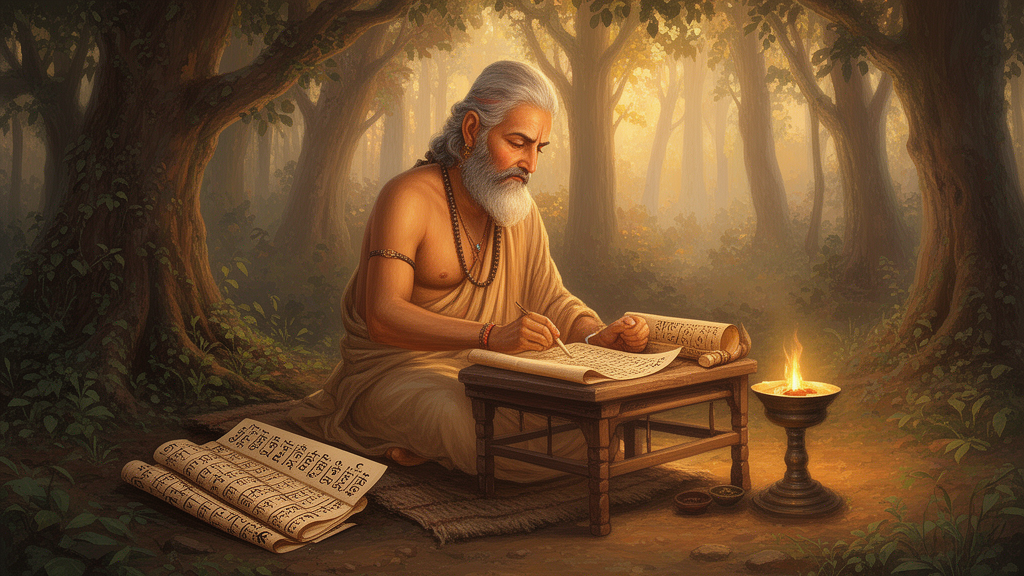
Readers searching for “vedanta sutra iskcon” are often trying to answer three practical questions: what the text is, how ISKCON understands it, and how that understanding differs from other Vedanta schools. Each section below separates what the text itself is said to contain, what commentators and traditions say about it, and where scholarly or historical claims need further study.
What the Vedanta Sutra Is

The Vedanta Sutra is a text of short aphorisms that aims to systematize the teachings of the Upanishads. The word sutra refers to a compressed statement, and the text is therefore known for brevity rather than for narrative. The Vedanta Sutra is also called by several other names, including Brahma-sutra, Saririka-sutra, Vyasa-sutra, Badarayana-sutra, Uttara-mimamsa, and Vedanta-darsana, according to a Vaishnava reference site that presents the text in English (radha.name, Vedanta Sutra).
The name itself points to its purpose. Veda means knowledge, and anta means end or conclusion, so Vedanta refers to the understanding of the ultimate purpose of the Vedas. The same source explains that the aphorisms are meant to be supported by the Upanishads, which is why the Vedanta Sutra is usually studied as part of the wider body of shruti, or revealed scripture, rather than as a free-standing philosophy (radha.name).
The Heart of Hinduism resource, produced by an educational project, classifies the Vedanta Sutras with the Upanishads under the heading of Shruti within its section on Hindu sacred books (ISKCON Educational Services, Heart of Hinduism). That classification matters for readers because it places the Vedanta Sutra among texts that are treated as authoritative in most Hindu traditions, while the interpretation of that authority varies.
Who Is Credited With Composing It
Within ISKCON-linked and Gaudiya Vaishnava sources, the aphorisms are attributed to Vyasa. The ISKCON Desire Tree introduction names him as Krishna Dvaipayana Vyasa, who is described as an appearance of the Supreme Personality of Godhead, and says that Vyasa composed the Vedanta-sutra in four chapters to explain the restored Vedas (ISKCON Desire Tree, Vedanta Sutra introduction). This is a devotional and tradition-based account. It is not a claim that a modern historian has verified the authorship.
The radha.name page also notes that the authorship is sometimes attributed to a sage named Apantaratama. It cites a Gaudiya teaching that the Pancaratra and the Vedanta Sutra express the same opinions, and that the Vedanta Sutra can therefore be understood as emanating from the breath of Sri Narayana (radha.name). Readers should treat these as traditional positions, with the attribution to Vyasa being the central claim in Vaishnava introductions.
The Structure of the Text
Vaishnava introductions often describe the Vedanta Sutra by its outline as well as its content. According to the radha.name summary, the text has four chapters, called adhyayas, and each chapter has four divisions, called padas. Because of this arrangement, it is sometimes called sodasa-pada, or sixteen divisions (radha.name).
The same source explains that each division is developed through five parts of argument, named in technical terms as pratijna (declaration of purpose), hetu (reason), udaharana (example), upanaya (bringing the theme nearer), and nigamana (support from authoritative scripture) (radha.name). This five-part pattern is presented as a feature of how the aphorisms are meant to be understood. Readers who want to verify the method should compare it with a complete translation and with commentary, since a summary page cannot show how each sutra applies it.
The Opening Aphorism
The first aphorism is athato brahma-jijnasa, which the radha.name page translates as “Now is the time to inquire about the Absolute Truth” (radha.name). The same source treats this opening as the solemn declaration of the text’s purpose. In its explanation, the human form of life is described as especially suited to this inquiry.
The opening line is often used in teaching because it frames the whole text as an inquiry rather than a collection of rituals. Other traditions also begin with this aphorism, but they give it different content, as the later sections on Advaita Vedanta and Vaishnava bhashyas show.
ISKCON and Gaudiya Introductions to the Vedanta Sutra
ISKCON-linked introductions to the Vedanta Sutra commonly begin with a Gaudiya Vaishnava framework. A post on the ISKCON Desire Tree community site presents an introduction attributed to Shrila Baladeva Vidyabhushana. It opens by identifying Lord Govinda as the Supreme Brahman, the original cause of all causes, and as the object of worship of devotees (ISKCON Desire Tree). This is a devotional statement of the Gaudiya position, not a neutral summary of all Vedanta.
The Historical Background Given in the Introduction
The introduction gives a narrative in which the Vedas were lost in the Dvapara-yuga, and Vyasa restored them and divided them into parts, then composed the Vedanta-sutra to explain them. The text says this is described in the Skanda Purana (ISKCON Desire Tree). Readers should note that this is the account given in that introduction and by its source tradition. The Skanda Purana reference is attributed by the introduction; it was not independently checked against the Purana text for this article.
Misinterpretations the Sutra Is Said to Address
The same introduction lists several views that it describes as misinterpretations of the Vedas. These include the idea that the highest goal is to act piously to gain the results of good karma; the idea that Vishnu is bound by the laws of karma; the idea that heavenly residence is eternal; the idea that the jivas and prakriti act independently of any higher God; and the idea that the jivas are actually the Supreme Brahman (ISKCON Desire Tree).
According to the introduction, the Vedanta-sutra refutes these views and establishes Lord Vishnu as supremely independent, the original creator and cause of all causes, the ultimate goal of life for all living beings, and the supreme religious principle and supreme transcendental knowledge (ISKCON Desire Tree). These are the claims of a Gaudiya Vaishnava reading. Other schools would describe the text’s central teaching differently, and the sections below explain that difference.
The Five Tattvas
The introduction goes on to describe five tattvas, or truths, beginning with ishvara, the Supreme Personality of Godhead (ISKCON Desire Tree). The source excerpt available for this article is cut off before the full list, so this guide does not list the remaining four tattvas. Readers who want the complete list should read the full introduction.
How Different Schools Read the Vedanta Sutra
The Vedanta Sutra is not interpreted by one community alone. Commentaries called bhashyas are the main way that different schools have explained the aphorisms. The radha.name summary states that each of the four main Vaishnava sampradayas, along with the Mayavadi school, has its own bhashya (radha.name). The same page does not, in the excerpt used here, name each bhashya, so readers should consult a dedicated study source for the names and authors of individual commentaries.
Why Commentaries Matter
Because the aphorisms are concise, their meaning depends heavily on the commentary tradition. Two readers can use the same sutra and reach different conclusions about the nature of Brahman, the individual self, the world, and liberation. For this reason, a responsible discussion should say which commentary or tradition is being described.
ISKCON Compared With Advaita Vedanta
A widely read comparison from the blog YesVedanta presents the difference between ISKCON and Advaita Vedanta as a difference over the relationship between the individual, the world, and the divine. It states that ISKCON teaches that the living being is Krishna’s eternal servant, “forever distinct yet devoted,” while Advaita Vedanta teaches that the one reality is the Self and that multiplicity is a result of ignorance (YesVedanta).
This source is a comparison written from the perspective of an Advaita-oriented publisher. It should be read as one account of the difference, not as a neutral academic survey. The more reliable use of this comparison is to note the points of disagreement it identifies, then check each claim against the primary text and an academic or tradition-specific commentary.
The Mayavadi Criticism
The radha.name summary notes that the Mayavadi school also has its own bhashya (radha.name). In Gaudiya and ISKCON-linked writing, the term “Mayavada” is often used for teachings associated with Advaita Vedanta. Because the term can be used as criticism, readers should recognize that it is a label used within a particular theological debate. In neutral writing, it is better to name the school, such as Advaita Vedanta, and describe its claims directly.
The Vrajavasi Bhasyam and the Krishna-Source Conclusion
A separate publication, the Vedanta Sutra Vrajavasi Bhasyam, presents a translation and commentary in Sanskrit, English, and Hindi. Its sales page says that it restores what it calls the original conclusion of the Vedanta Sutra, presenting Brahman as the radiance emanating from the Supreme Personality Sri Krishna (Vedanta Sutra Vrajavasi Bhasyam). The same page describes the book as 759 pages, hardbound, with trilingual purports, and it is offered for sale from Bhagavat Dharma Samaj in Vrindavan.
This is a commentary and a commercial publication. Its claim about what Vyasa “actually taught” is a claim of interpretation. Readers who want to explore this view should treat it as a specific commentarial position, and they should compare it with other bhashyas before accepting its conclusion. The sales page also contains promotional wording, so its statements about authority or distinctiveness should not be repeated without independent checking.
Separating Scripture, Tradition, and Scholarship
A careful reader distinguishes several kinds of claims when studying the Vedanta Sutra. The first is what the aphorisms say, which requires the Sanskrit text or a faithful translation. The second is what a commentary tradition says the aphorisms mean. The third is what devotional communities believe about the text, its author, and its place in sacred history. The fourth is what historians and academic scholars can establish about the text’s composition and transmission.
The sources used for this article mostly belong to the second and third categories. The ISKCON Desire Tree and radha.name pages explain Gaudiya and tradition-based readings, and the Vrajavasi Bhasyam page presents a specific commentarial conclusion. The YesVedanta page is a comparison from an Advaita-oriented publisher. None of these sources, in the material available for this article, provides a verified academic date for the composition of the Vedanta Sutra. This article therefore does not state a date of composition.
Points Where Traditions Differ
- Authorship: Vaishnava introductions attribute the text to Vyasa, while the radha.name summary notes that some say the sage Apantaratama compiled it (radha.name).
- Ultimate reality: The ISKCON-linked introduction identifies Lord Govinda or Vishnu as the Supreme Brahman, while the Advaita-oriented comparison identifies one reality as the Self (ISKCON Desire Tree), (YesVedanta).
- The status of the individual: Gaudiya-linked writing describes the living being as an eternal servant, while Advaita writing describes the individual self as identical with the consciousness in which the world appears (YesVedanta).
A Practical Way to Study the Vedanta Sutra
Readers who want to study the Vedanta Sutra with an ISKCON or Gaudiya orientation, while keeping their sources clear, can use the following steps. The steps are suggestions for study, not a required practice.
- Read a complete translation with its commentary, and note the translator and the commentarial tradition.
- Read the opening aphorism, athato brahma-jijnasa, and identify how the commentator explains the purpose of inquiry.
- Study the four chapters and sixteen divisions, and note how each division uses the five-part argument structure described in the radha.name summary.
- Compare the commentary’s reading with at least one other tradition’s bhashya or a scholarly introduction.
- Keep a record of which statements come from the aphorisms, which come from the commentary, and which are devotional explanation.
This method helps readers avoid treating one commentary as the only possible reading. It also helps them see why ISKCON and Advaita Vedanta can both refer to the same text while reaching different conclusions.
Related Topics on HindusGod.com
The Vedanta Sutra is one of several sutra-style texts that readers may search for. The HindusGod.com draft for this topic is listed as Vedanta Sutra (target draft; may not be public yet). Readers interested in devotional teachings on surrender and service may also find the Bhakti Sutra draft relevant, and those interested in contemplative practice may compare the Dhyana Sutra draft. These are draft destinations; they should be checked before publication, and the owner should confirm that each becomes public if the post is published. The Meaning Sutra and other unrelated sutra drafts were not linked because they do not address the Vedanta Sutra or its interpretation.
Frequently Asked Questions
Is the Vedanta Sutra the same as ISKCON’s teaching?
No. The Vedanta Sutra is a scripture-linked text studied by many traditions. ISKCON-linked and Gaudiya Vaishnava commentaries read it in a way that establishes Krishna or Vishnu as the supreme truth. Other traditions, including Advaita Vedanta, read the same aphorisms differently.
Who wrote the Vedanta Sutra?
Vaishnava and ISKCON-linked introductions attribute it to Vyasa. The radha.name summary also notes that some say the sage Apantaratama compiled it. Modern academic dating and authorship are not established in this article’s sources.
Where should a beginner start?
A beginner can start with a full translation that includes a clear introduction and notes on the tradition. Reading the opening aphorism and the chapter outline before the detailed commentary is a useful first step.
Closing Takeaway
The Vedanta Sutra is a concise text that asks readers to inquire into the Absolute Truth. For ISKCON and Gaudiya Vaishnava readers, it is a scripture that establishes Krishna or Vishnu as the supreme cause and goal of life. For other Vedanta schools, the same aphorisms support different conclusions. The most helpful way to study it is to name the commentary, separate scripture from tradition and scholarship, and read more than one interpretation before deciding what the text means.
Sources and Further Reading
- Vedanta Sutra-An Introduction, ISKCON Desire Tree: a Gaudiya-linked introduction attributed to Shrila Baladeva Vidyabhushana, used for its account of the text’s background, its four chapters, and its listed refutations.
- Vedanta Sutra, radha.name: a Vaishnava reference page used for alternative names, the four chapters and sixteen divisions, the five-part argument structure, the opening aphorism, and the existence of commentaries from several schools.
- Shruti: The Upanishads and Vedanta Sutras, ISKCON Educational Services (Heart of Hinduism): used for the classification of the Vedanta Sutras under Shruti within the sacred books section. The available excerpt was limited, so this source supports only that classification.
- ISKCON vs Advaita Vedanta: A Comprehensive Comparison, YesVedanta: an Advaita-oriented comparison used to describe that school’s view of the one reality and the ISKCON-linked view of the eternal servant. It is a polemical comparison, not a neutral academic source.
- Vedanta Sutra Vrajavasi Bhasyam: a commentary and sales page used to describe one commentarial conclusion. Its promotional claims are not treated as verified.