The Serpent Grail is a 2005 non-fiction book by Philip Gardiner and Gary Osborn. It argues that legends such as the Holy Grail, the Philosopher’s Stone, and the Elixir of Life descend from the rituals of a prehistoric serpent-venerating cult, whose central rite is described as mixing snake blood and venom in a ceremonial bowl to make a healing elixir. The book is a speculative work of alternative history and esoteric interpretation. It is not a mainstream academic study of the Grail romances or of alchemy, and its central thesis is not accepted by mainstream historians or archaeologists based on the sources this post reviewed.
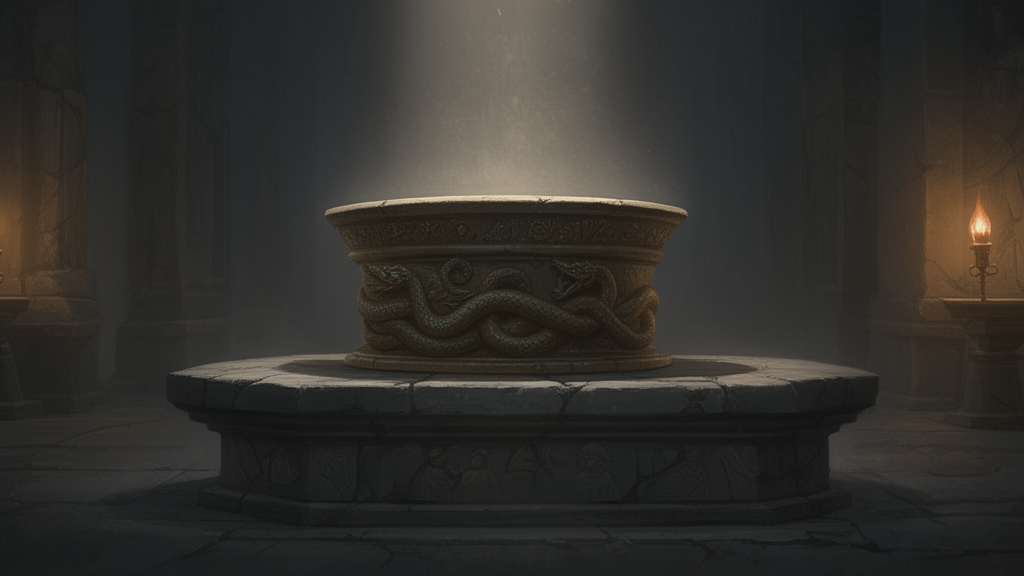
Quick answer: what is The Serpent Grail?

The Serpent Grail is a book that connects Western legends about sacred vessels and life-giving substances with a proposed ancient serpent cult. The publisher, date, and central thesis are described consistently across the publicly listed sources reviewed for this post, but the book’s historical claims are contested and are presented by its authors as an interpretation rather than as established fact.
If you are searching for this title, you are most likely looking for three things: what the book argues, who wrote it, and whether its claims hold up. This post addresses each question in turn and keeps the book’s assertions separate from the historical and scholarly evidence that exists.
Book details and the two authors
Several public listings describe the book as The Serpent Grail: The Truth Behind the Holy Grail, the Philosopher’s Stone and the Elixir of Life, written by Philip Gardiner and Gary Osborn and first published on September 30, 2005. A Goodreads listing gives a first printing of 50,000 copies and identifies the genres as nonfiction, history, occult, spirituality, metaphysics, and religion. The page lists the format as hardcover, but the page count differs between two Goodreads listings (244 and 352 pages), so readers should check the edition they plan to buy.
Amazon’s listing for the book shows the title, both authors, and ISBN 9781842931578. The retrieved Amazon page was largely navigation content, so it confirms the listing rather than the book’s full contents.
Philip Gardiner
Philip Gardiner is described by a Grokipedia summary as a British author known for work on ancient mysteries, secret societies, and esoteric history. The same summary says he worked in marketing before becoming a writer and lists other titles, including The Shining Ones and Gnosis: The Secret of Solomon’s Temple Revealed. Because this biographical detail comes from a wiki-style summary, treat it as a lead to verify against a publisher or author page before repeating it in print.
Gary Osborn
Gary Osborn is described as a British writer on ancient mysteries and esoteric knowledge who has coauthored books with Gardiner, including The Shining Ones. The Goodreads page describes him as a writer on mysticism and consciousness. These descriptions show the collaboration’s orientation, which is toward esoteric and alternative history rather than toward peer-reviewed religious or archaeological research.
The central thesis: a serpent cult and a shared elixir
The book’s core argument is that a prehistoric serpent-venerating cult existed across the world and that its ritual gave rise to a family of enduring legends. According to the Goodreads blurb, the cult’s central rite involved mixing snake blood and venom in a ceremonial bowl to forge a healing elixir. The publisher-style description extends the argument to the Holy Grail, the Elixir of Life, the Philosopher’s Stone, and the lost city of Atlantis.
It is important to be precise about what this is. It is the book’s proposed interpretation. The listing describes the evidence as if it were conclusive, but the sources reviewed here do not provide archaeological finds, dated inscriptions, or textual records that independently confirm such a cult. The claim therefore sits in the category of speculative interpretation, not documented history.
Why the Grail is a difficult fit for this thesis
Medieval Grail stories, such as the romances that gave the Grail its later form, are generally studied as literary texts within European Christian and courtly culture. A serpent-cult origin would require the book to show a documented chain from ancient ritual to those stories. The sources retrieved for this post do not establish that chain. Readers who want to understand the Grail as a literary and historical subject should consult academic treatments of the medieval romances, which this post did not retrieve and which the owner should verify before adding them as references.
Key arguments and how to evaluate them
The book draws on serpent symbolism across cultures, shamanism, alchemy, and religious traditions. A Grokipedia summary states that the book uses ancient myth, archaeology, etymology, religion, and science, and that it highlights a recurring pairing of red and white elements, often linked to blood and venom. Each of these approaches needs separate evaluation.
Serpent symbolism across traditions
Snakes appear as symbols in many cultures, often with mixed meanings: danger and healing, death and renewal, wisdom and deception. A reader can recognize that serpent imagery is widespread without accepting that all such imagery descends from one cult. The book’s method, as described by its summaries, moves from shared symbols to a shared origin. That step is the point where readers should ask for evidence of a direct historical link.
Goodreads reviews describe the book in ways that reflect this concern. One reviewer, Lee Hutchinson, wrote that the book’s central thread circles without reaching a demonstrated conclusion and compared its linked speculations to a chain of possibilities that are never tested. That review is one reader’s opinion and is not a scholarly assessment, but it reflects a common critique of the book’s method.
Red and white as a recurring motif
The Grokipedia summary says the book treats red and white as a recurring symbolic pair in alchemy and Grail lore, often connected to blood and venom. Alchemical texts do use colour symbolism, and the pairing of red and white appears in alchemical literature. Whether the book’s specific reading of that pairing is correct is a question for historians of alchemy. Readers should treat the book’s reading as one interpretation among several.
Alchemical and scientific claims
The book also makes claims about alchemy and science. Alchemy is a historical tradition with its own texts, authors, and practices, and historians study it in those terms. Claims that alchemical symbols encode a physical elixir derived from snake venom are not established by the sources reviewed here. Any scientific claim about venom or blood as a healing agent should be checked against medical and toxicological literature, not against the book alone.
Belief, text, tradition, and scholarship: keeping them separate
Readers often encounter a book like this as if its claims were a single kind of knowledge. It helps to sort them into categories.
- Literary texts: Medieval Grail romances and alchemical treatises are documents with known authors, languages, and manuscripts. Their content can be checked directly.
- Traditions and later reception: Modern Grail tradition, including novels, films, and popular retellings, reshapes older stories. These adaptations are not the same as the earliest texts.
- Scholarly interpretation: Historians and literary scholars propose readings of these texts, and those readings can disagree.
- Speculative or esoteric claims: A thesis about an ancient serpent cult that unites distant traditions belongs here unless documentary or archaeological evidence supports it.
This Serpent Grail book sits mainly in the last category. Its value for a reader depends on whether they want an esoteric interpretation to consider or a documented history to rely on.
How the book has been received
The book’s reception is mixed. A Goodreads average of 3.51 from 82 ratings, with 10 written reviews, shows that readers are divided. The rating breakdown listed there includes 24 five-star ratings (29%), 21 four-star ratings (25%), 17 three-star ratings (20%), 13 two-star ratings (15%), and 7 one-star ratings (8%). These numbers come from one platform at one point in time and are not a measure of accuracy.
The Grokipedia summary records that some readers praised the book’s wide synthesis of historical and mythological material, while others criticized its arguments as speculative or insufficiently supported. That split matches what a careful reader would expect from a work that combines a popular synthesis with a single contested thesis.
Reading the book critically: a practical method
If you plan to read The Serpent Grail, these steps will help you separate its claims from its evidence.
- Identify the thesis. Write down the main claim in one sentence, such as the proposed link between a serpent cult and the Grail.
- List the evidence for each step. For every link in the argument, note the source the book cites. Check whether the source is a primary text, an archaeological report, or a secondary summary.
- Check the original source. Where the book quotes or paraphrases an ancient or medieval text, find the text in a reliable edition or a scholarly translation and compare the wording.
- Separate similarity from descent. Symbols that look alike in different cultures do not prove a shared origin. Ask whether the book shows a documented historical path.
- Consult specialist scholarship. For Grail romances, look for academic studies of medieval literature. For alchemy, look for histories of alchemical texts. For venom or blood claims, look for medical and toxicological research.
Where this topic meets Hindu and other traditions
HindusGod.com focuses on Hinduism, its deities, scriptures, festivals, and devotional practice. The Serpent Grail is a Western esoteric book about European legends and alchemy, and it does not establish a link to Hindu scripture or worship. Readers who arrive here from a search for this title should not assume that the book addresses Hindu traditions.
Serpent imagery is present in many religious traditions, and Hindu traditions include their own serpent-related figures and practices. Those subjects need separate, source-based treatment with attention to the specific tradition, text, region, and community. This post does not make claims about those traditions, and readers who want to explore them should look for dedicated posts or scriptural sources rather than relying on the book’s thesis.
Frequently asked questions
Is The Serpent Grail a historical study?
It is best described as a speculative, esoteric interpretation. Its summaries present a thesis about a prehistoric serpent cult, but the sources reviewed here do not show independent historical or archaeological evidence for that cult. Mainstream historians would need documentary evidence before accepting the thesis.
Does the book prove that the Holy Grail came from a snake cult?
No source reviewed for this post establishes that. The book proposes the connection. Readers should judge whether the proposed chain of links is supported by primary texts and reliable scholarship.
Is the book connected to Hindu scripture?
The sources reviewed for this post describe the book as covering global mythology, religion, shamanism, and alchemy, but they do not show a documented link to Hindu scripture or practice. Treat any claim of such a link as unverified unless it is supported by a named text and a reliable translation.
Related reading on HindusGod.com
The following posts are existing WordPress drafts on HindusGod.com. They may not be public yet, so the links below should be checked before publication. They are relevant because they cover Grail legends, related books, and the historical and literary background that readers may compare with The Serpent Grail.
- For an overview of the legend’s development, read History of the Holy Grail (URL to confirm live status).
- For a broader survey of the legend, see Story of the Holy Grail (URL to confirm live status).
- For a discussion of the Grail’s mysteries as they are commonly presented, read The Mystery of the Grail (URL to confirm live status).
- For another popular book that links the Grail to a contested historical theory, see Holy Blood Holy Grail (URL to confirm live status).
- For a reading list to compare with The Serpent Grail, see Books About the Holy Grail (URL to confirm live status).
- For the bloodline theory as it appears in popular Grail writing, read Bloodline of the Holy Grail (URL to confirm live status).
- For a companion discussion on a related book, see Book Holy Blood Holy Grail (URL to confirm live status).
- For a case study in how Grail ideas enter popular fiction, read Da Vinci Code Holy Grail (URL to confirm live status).
- For a discussion of Mary Magdalene in Grail traditions, see Mary Magdalene and the Holy Grail (URL to confirm live status).
- For the medieval knightly romances, read In the Quest of the Holy Grail (URL to confirm live status).
- For a character-centred look at the Grail quest, see Parsifal and the Holy Grail (URL to confirm live status).
- For the Perceval strand of Grail literature, read Perceval and the Holy Grail (URL to confirm live status).
- For the Cathar connection often discussed in Grail theories, see Cathars and the Holy Grail (URL to confirm live status).
Sources and further reading
- Grokipedia summary of The Serpent Grail: used for the book’s publication details, authors’ backgrounds, and a summary of the thesis and reception. This is a wiki-style summary and should be checked against the publisher or a library record.
- Goodreads listing for The Serpent Grail: used for the blurb, first publication date, genres, rating summary, and a sample critical review.
- Goodreads edition listing for The Serpent Grail: used for the alternate page count and publisher-style description of the thesis.
- Amazon listing for The Serpent Grail: used to confirm the title, authors, and ISBN 9781842931578.
Scholarly treatments of medieval Grail romances, histories of alchemy, and medical research on venom are not included in this list because they were not retrieved for this draft. Add them only after the owner or an editor has checked each source.
Takeaway
The Serpent Grail offers a bold, speculative account that links serpent symbolism, alchemy, and Grail legends to an ancient cult. Its thesis is a proposed interpretation, and the sources reviewed here do not establish it as documented history. Read it as one esoteric interpretation, check its sources against primary texts and specialist scholarship, and keep its claims separate from the historical record.