St Nicodemus of the Holy Mountain (c. 1749 to 1809), also called Nikodemos the Hagiorite or Nicodemus the Athonite, was a Greek Orthodox monk, theologian, editor, and hymnographer who lived on Mount Athos. He is best known for helping compile the Philokalia, a major anthology of monastic prayer and spirituality, and for reviving the practice of inner prayer known as hesychasm. The Orthodox Church glorified him as a saint in 1955. This article explains who he was, what he wrote, how he is venerated, and where the sources are clear or uncertain.
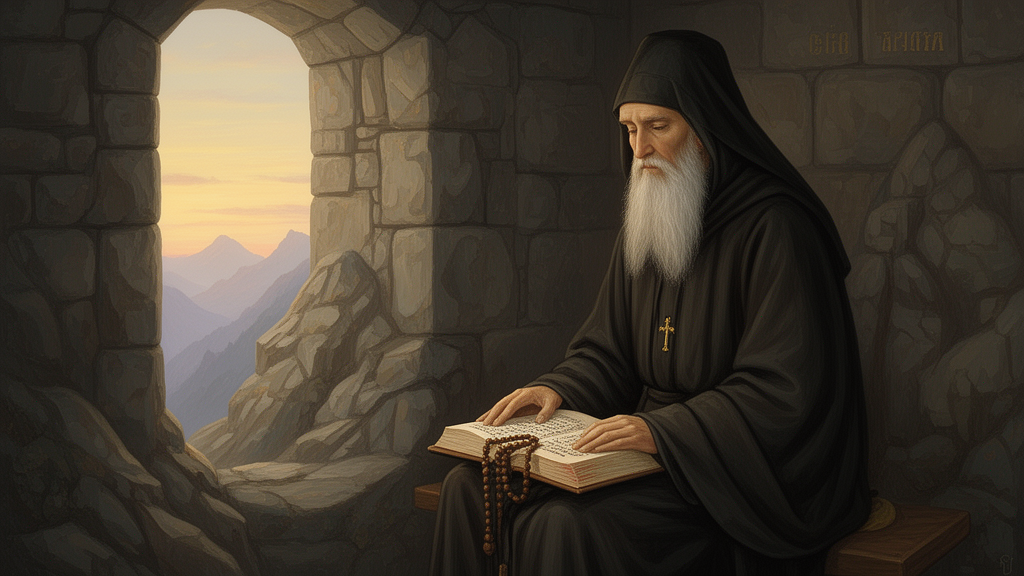
The short answer: he was an 18th-century monk from the island of Naxos who spent most of his adult life on Mount Athos, translating and publishing patristic texts so that Orthodox Christians could read the teachings of the Church Fathers in Greek. He is a saint of the Orthodox Church, and his teaching belongs to the Orthodox Christian tradition, not to Hinduism. We include him here because readers often ask how Christian monastic traditions handled repetitive prayer, devotion, and discipline, and because his life shows a practical, text-based approach to spiritual formation.
Who was St Nicodemus of the Holy Mountain?
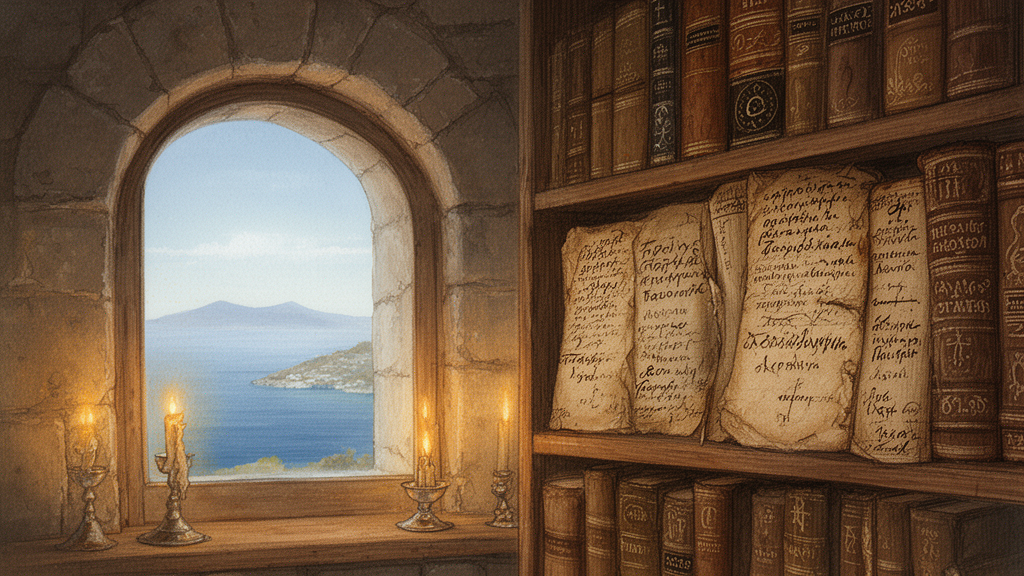
He is commemorated as a local saint of the Metropolis of Paronaxia and the Holy Mountain, and his feast day is July 14. According to Wikipedia’s article on him, he was born in 1749 on Naxos, died on July 14, 1809 on Mount Athos, and was canonized on May 31, 1955 by the Patriarchate of Constantinople (Wikipedia, Nicodemus the Hagiorite). OrthoWiki gives the same feast day and glorification date and describes him as a theologian, teacher, reviver of hesychasm, canonist, hagiologist, and writer of liturgical poetry (OrthoWiki, Nicodemus of the Holy Mountain).
The Catholic Online saint profile gives a shorter account: he was a monk and writer born on Naxos, entered the Athos monastery in 1775, worked with St Macarius of Corinth on the Philokalia, translated Western spiritual writings, and was canonized by the Orthodox Greek Church in 1955 (Catholic Online, St. Nicodemus of the Holy Mountain). Because this profile is a brief summary from outside the Orthodox tradition, we use it only for basic dates and his collaboration, and we rely on Orthodox sources for the details of his monastic and theological life.
Early life on Naxos and in Smyrna
Most accounts agree that he was baptized Nicholas and grew up on Naxos. OrthoWiki reports that he was born Nicholas Kallivourtzis and that his biographer praised his “great acuteness of mind, accurate perception, intellectual brightness, and vast memory” (OrthoWiki). An Orthodox homily published by OrthoChristian.com describes the young Nicholas as a reader who preferred books to games, and says that he was sent to a local priest to learn to read (OrthoChristian.com, St. Nicodemus of the Holy Mountain—Bright Star of the Church). This is a devotional account, so treat its descriptions of his character as tradition rather than documented biography.
His education then took him to Smyrna, now Izmir in Turkey. OrthoWiki says he studied at the Evangelical School there, learning theology and ancient Greek, along with Latin, French, and Italian. The same article says that Ottoman persecution cut his studies short and that he returned to Naxos in 1770 (OrthoWiki). The OrthoChristian homily places his time in Smyrna under a teacher named Joseph Dendrinos and describes the return to Naxos as a result of the violence against Greeks in the region. The sources agree on the broad sequence but differ in emphasis, so this section relies on the more specific biographical statements and labels the rest as tradition.
These years matter because they gave him the languages he later used. Reading Greek sources in their original form was central to his later work of making patristic writings available to other Orthodox Christians.
Becoming a monk on Mount Athos
Mount Athos is an Orthodox monastic republic in northern Greece, and many of its monasteries have long histories of monastic prayer and manuscript copying. Several sources say that Nicholas was drawn to monastic life through monks who had left Athos. The OrthoChristian homily names three Athonite monks, Gregorios, Niphon, and Arsenios, who had left the Holy Mountain over the Kollyvades controversy and who encouraged him in the basics of inner prayer. It also describes a meeting with Metropolitan Macarios of Corinth on the island of Hydra (OrthoChristian.com).
In 1775 he went to Mount Athos and entered the Dionysiou Monastery. Wikipedia and OrthoWiki both give 1775 and Dionysiou. When he was tonsured, his name was changed to Nicodemos, which OrthoWiki explains was the custom for those who had left the world (Wikipedia; OrthoWiki). The OrthoChristian homily adds that he was appointed secretary and church reader and was known for humility, prayer, and abstinence. Those details come from a devotional source and should be read as hagiographical description.
A name change at tonsure is a practice in Orthodox monasticism. Readers should not assume that every monastic community uses the same customs. The naming tradition here is specific to Orthodox monastic life, and it reflects a break from a former worldly identity.
Hesychasm and the Jesus Prayer
The most distinctive part of his spiritual formation was hesychasm, a term from the Greek word for stillness or quiet. OrthoWiki describes hesychia as a method of prayer involving inner stillness, controlled breathing, and repetition of the “Jesus Prayer”: “Lord Jesus Christ, Son of God, have mercy on me, a sinner” (OrthoWiki). The OrthoChristian homily describes inner prayer as something he was taught early, through monks who shaped his understanding of ascetic life (OrthoChristian.com).
It is important to be precise here. The sources describe the practice as part of Orthodox Christian monastic tradition. They do not present it as a universal Christian requirement, and many Orthodox Christians pray in liturgical, communal, and family settings without the full hesychast discipline. The Jesus Prayer is a Christian prayer addressed to Jesus Christ, and it should not be confused with a mantra from a Hindu tradition, even though readers sometimes notice the structural similarity of repetition.
The Kollyvades and the call to tradition
Nicodemus is closely associated with the Kollyvades (sometimes called Kollyvadists), a group of monks who sought to restore traditional Orthodox practices and the study of patristic literature. OrthoWiki says he aligned himself with them and spent the rest of his life translating and publishing these works. It also says he labored to restore the practice of Saturday commemoration services, worked on patristic ecclesiology, and sought a balance between economy and strictness in applying the canons (OrthoWiki).
The word “Kollyvades” comes from the boiled wheat used in memorial services, and the movement is best understood as a dispute within Orthodoxy over liturgical and devotional practice. The OrthoChristian homily notes that the controversy led some Athonite monks to leave the Holy Mountain. Because this was an internal Orthodox debate, the honest way to present it is as a historical disagreement about how far the Church should adapt or preserve older customs. Different Orthodox communities today may view these disputes differently.
For a broader view of Athonite life and writing, our post on Counsels from the Holy Mountain is a useful companion, and The Holy Mountain Book offers another angle on the monastic setting. Both are draft pages that may not yet be public.
The Philokalia and the work with Macarius of Corinth
The Philokalia is the work most associated with St Nicodemus. OrthoWiki says that in 1777 Saint Makarius of Corinth visited him and gave him three texts to edit and revise: the Philokalia, a defining work on monastic spirituality; On Frequent Holy Communion; and the Evergetinos, a collection drawing on the lives of the desert fathers (OrthoWiki). Catholic Online also credits him with working with Macarius to compile the Philokalia, a compendium of monastic life and spirituality (Catholic Online).
The OrthoChristian homily describes the two men as sharing the goal of translating and publishing the works of the holy fathers, which it calls the foundation of Church Tradition (OrthoChristian.com). Taken together, the sources support a clear claim: he worked with Macarius on a major anthology of monastic and ascetic texts, and his editorial role was significant. They do not provide enough detail in these sources to describe the editing method, the manuscripts used, or the exact contents of each edition, so readers who need those details should consult a scholarly edition or a specialist study.
Spellings vary across sources. Catholic Online uses “Macanus Nataras” in its text, while OrthoWiki and OrthoChristian use Makarius or Macarios. This article uses “Macarius of Corinth” for consistency, and readers who search for the name may encounter these variants.
Original writings and liturgical commentary
Nicodemus was a prolific translator and editor, but he also wrote original works. OrthoWiki identifies three commentaries on liturgical books. The first is the Eortodromion, a commentary on the canons of the Dominical and Marian feasts. The second is the New Klimax, a commentary on the seventy-five anavathmoi (ascending steps) of the Octoechos. The third is The Garden of Graces, described as an elegant interpretation of the nine odes of the Stichologia (OrthoWiki).
Why liturgical commentary matters
Liturgical commentaries explain how the services of the Church are structured, which hymns are sung on which feasts, and what the texts mean. For Orthodox readers, these works connect daily prayer with the Church year. For outside readers, they show how Orthodox worship is built on a large body of written prayers, canons, and hymns.
OrthoWiki also says he wrote the Lives of the Saints and later compiled the writings of St Symeon, but the excerpt available to us ends before giving details of that work. We therefore mention his hagiographical writing as recorded in OrthoWiki and avoid describing its contents.
Death, veneration, and canonization
He died on July 14, 1809, according to Wikipedia and OrthoWiki. Wikipedia lists the Church of the Naxian Saints on Naxos as a major shrine alongside Mount Athos, and gives the feast as July 14 with another commemoration on the First Sunday of September with the other saints of Paros and Naxos (Wikipedia). The Wikipedia infobox also says the Orthodox Church canonized him on May 31, 1955, by the Patriarchate of Constantinople. OrthoWiki says he was glorified by the Orthodox Church on the same date and is a local saint of the Metropolis of Paronaxia and the Holy Mountain.
Veneration in Orthodox practice usually includes feast-day commemorations, icons, prayers, and reading of the saint’s writings and life. Icons often show him as a monk with a long white beard, in monastic dress, sometimes writing on a scroll or in a book, which Wikipedia lists as typical attributes. Iconographic conventions are part of Orthodox tradition, so the attributes are best described as traditional representation rather than biography.
Whether a particular parish or monastery observes additional customs depends on local practice. Readers who want to observe his feast should check the calendar and services of their own Orthodox parish, because local arrangements may differ from the general summary above.
Clearing up a name confusion: Nicodemus in the New Testament
Searches for “Nicodemus” often bring up a different figure. The New Testament Nicodemus is a Pharisee and member of the Sanhedrin who comes to Jesus by night in the Gospel of John. Wikipedia’s article on him notes that John devotes more than half of Chapter 3 and a few verses of Chapter 7 to Nicodemus, and mentions him again in Chapter 19 (Wikipedia, Nicodemus). The article also states that some scholars link the New Testament figure with a first-century historical Nicodemus ben Gurion, while others doubt this because of dates and age discrepancies. Wikipedia also notes that he is venerated in several Christian traditions, but that is a different saint and a different story from St Nicodemus of the Holy Mountain.
The two figures share a name, which comes from a Greek form of a Hebrew name, but they lived in different centuries and belong to different roles in Christian history. A careful reader should check which Nicodemus a source describes before drawing conclusions.
Comparing prayer traditions: a note for readers of Hindu texts
Many HindusGod.com readers come to Christian monastic topics from an interest in comparative religion or in the practice of repetitive prayer. A fair comparison can be helpful, as long as it does not flatten the differences between traditions.
- Theological object: The Jesus Prayer is addressed to Jesus Christ as Lord and Son of God. Japa in Hindu practice is the repetition of a name or mantra connected with a deity, a guru’s teaching, or a particular path.
- Setting: Hesychasm in the sources is tied to Orthodox monastic life, with a spiritual father, a monastic rule, and liturgical life. Japa is practiced in many forms, from household worship to solitary meditation and temple settings.
- Method: OrthoWiki describes hesychasm as including inner stillness, controlled breathing, and repetition. Methods of breath control and repetition vary widely among Hindu lineages, and not all japa involves them.
Such comparisons can clarify the structure of practice, but they should not be used to claim influence or equivalence. The sources reviewed for this article do not discuss any historical connection between Nicodemus and Indian traditions, and none should be assumed. This is a comparison of practices, not a historical claim.
Where the sources differ or stay limited
- Early dates: Wikipedia and OrthoWiki give c. 1749 for his birth, while the OrthoChristian homily describes his birth year as 1749 in its devotional opening. The birth year is approximate in these sources, so readers should treat it as an estimate.
- Name spellings: Nicodemus, Nikodemos, Nicodemos, Nikodemus, and Nicholas appear across sources. Nicholas is his baptismal name; Nicodemus is his monastic name.
- Macarius of Corinth: Sources spell this name differently and describe his role in slightly different ways. The shared point is that he worked with Nicodemus on the Philokalia and related texts.
- Biographical detail: Much of the vivid description of his childhood and youth comes from devotional literature, including the OrthoChristian homily. It is useful for understanding the Orthodox memory of his life, but it is not a neutral historical record.
A fuller study would need scholarly editions, Greek-language sources, and specialist works on Athonite history. This article does not claim to settle those questions.
Frequently asked questions
Is St Nicodemus of the Holy Mountain a Hindu saint?
No. He is an Orthodox Christian saint and monk. He is discussed on HindusGod.com only for comparative reading about monastic prayer and spirituality.
What is the Philokalia?
It is an anthology of monastic and ascetic writings. Sources describe it as a defining work on monastic spirituality, and Nicodemus helped compile and edit it with Macarius of Corinth.
Why is he called Nicodemos?
OrthoWiki says his name changed to Nicodemos when he was tonsured a monk, as was customary for those who had left the world.
When is his feast day?
Wikipedia and OrthoWiki give July 14 as his feast day. Wikipedia also lists the First Sunday of September as a shared commemoration with other saints of Paros and Naxos. Check your local Orthodox calendar for current observances.
Key takeaway
St Nicodemus of the Holy Mountain is an 18th-century Orthodox monk whose lasting contribution was to make patristic and ascetic texts accessible, especially through the Philokalia. His life shows how learning, translation, and disciplined prayer can shape a tradition. Readers who want to explore him further should begin with Orthodox sources and then compare them with scholarly accounts, keeping devotional belief, historical evidence, and modern interpretation distinct.
Sources and Further Reading
- Wikipedia, Nicodemus the Hagiorite: birth and death dates, canonization, feast days, and iconographic attributes.
- OrthoWiki, Nicodemus of the Holy Mountain: biographical details, hesychasm, the Kollyvades, the Philokalia collaboration, and liturgical commentaries.
- Catholic Online, St. Nicodemus of the Holy Mountain: a brief outside summary of his Athos period, Philokalia work, and 1955 canonization.
- OrthoChristian.com, St. Nicodemus of the Holy Mountain—Bright Star of the Church: a devotional Orthodox account of his youth, Smyrna studies, and early monastic formation.
- Wikipedia, Nicodemus: background on the New Testament Nicodemus, to distinguish the two figures.
Related HindusGod.com drafts: From the Holy Mountain William Dalrymple, The Holy Rule of St Benedict, Holy Book Meaning, Holy Scriptures, and Holy Book. These are WordPress drafts and may not be public until the owner publishes them.