The story of the Holy Grail is a body of medieval European legends about a sacred vessel connected with Christian themes and the court of King Arthur. The Grail is usually described as a cup, dish or stone of extraordinary power, and its quest became one of the most influential narratives in Western literature. This article explains how the story developed, which texts shaped it, and where scholars disagree about its origins. The Holy Grail belongs to Western literary and Christian tradition, not to Hindu scripture, so the discussion below separates what the medieval texts say from later devotional, scholarly and speculative interpretations.
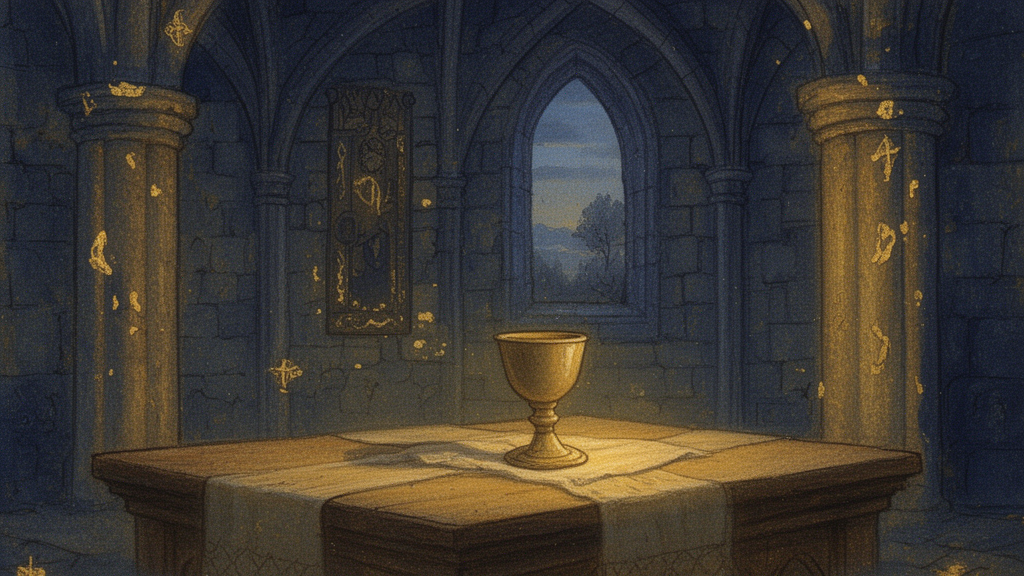
The short answer: what is the Holy Grail story?
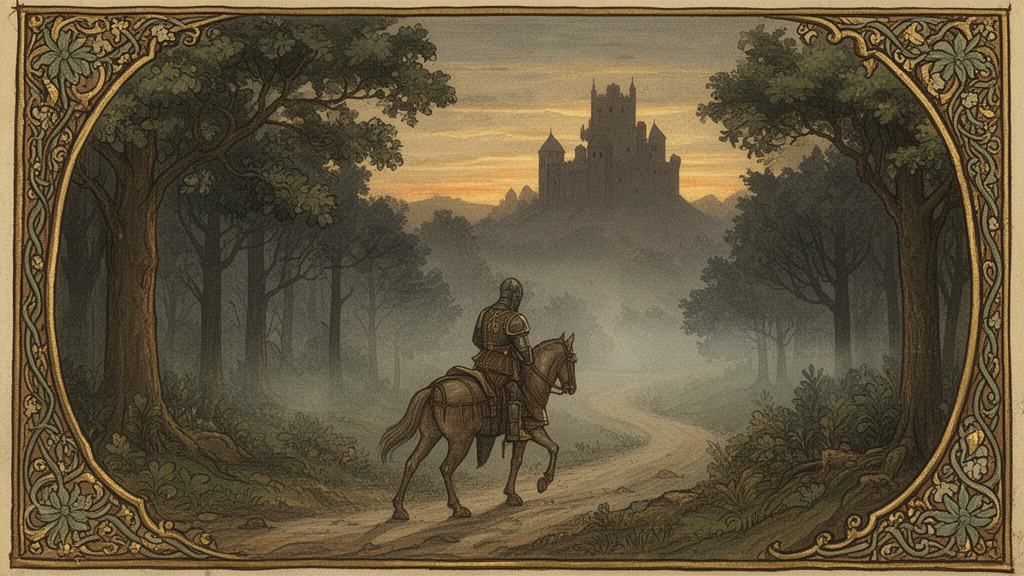
In its best-known form, the story follows a knight, often Perceval, Galahad or Lancelot, who searches for a mysterious holy object. The search is linked to the wounded or ailing Fisher King, whose land is barren. Later versions turned the Grail into the cup used at the Last Supper or the vessel that caught Christ’s blood at the Crucifixion. Early versions did not agree on what the Grail was, and that open-ended quality helped the story spread across centuries and languages.
Where the Grail first appears: Chrétien de Troyes
The earliest surviving text to feature the Grail is generally attributed to the French poet Chrétien de Troyes, whose unfinished romance Perceval, the Story of the Grail (Le Conte du Graal) was written in the late 12th century. Scholars commonly date it to the 1180s, but the exact date is debated, so treat that figure as an estimate.
In Chrétien’s text, the Grail is carried in a procession through a castle hall. It is described as a dish or platter, and it is not explicitly identified as a cup. The young Perceval sees it but fails to ask the question that would heal the Fisher King, a failure that drives the rest of the narrative. Chrétien does not give a clear account of the Grail’s nature or purpose, which is one reason later writers felt free to supply their own explanations.
Readers interested in the early Arthurian material can compare this foundation with the broader overview on our History of the Holy Grail draft, which traces how the legend changed over time.
Robert de Boron and the Eucharistic cup
Around the turn of the 13th century, Robert de Boron wrote verse romances that tied the Grail to Christian sacramental themes. In his account, Joseph of Arimathea receives the vessel used at the Last Supper and collects the blood of Christ after the Crucifixion. The Grail thus becomes a relic connected with the Eucharist, the Christian rite of communion.
This shift is one of the most important developments in the legend. The Grail moved from an enigmatic object in a Celtic-flavoured court to a sacred relic with direct links to the Gospel narratives. Scholars generally consider Robert’s work an important step in this transformation, although the surviving texts are fragmentary and their dating is discussed in specialist studies.
For readers who want to see how this Christian framing has been reread in later centuries, the Holy Blood Holy Grail draft discusses modern theories that built on the bloodline and relic motifs.
The Vulgate Cycle and the quest for Galahad
In the early 13th century, a large set of prose romances, often called the Vulgate Cycle or Lancelot-Grail Cycle, expanded the Grail story into a full quest. Its most famous episode is the search for the Grail by the knights of the Round Table, in which Lancelot’s sin and adultery with Guinevere prevent him from achieving the vision of the Grail. The knight Galahad, the son of Lancelot, is the one who attains it.
This version added moral and spiritual weight to the quest. Success depended less on courage in battle and more on purity, humility and faithfulness. Many later retellings keep this idea, even when they change the details. A reader who wants to follow the Lancelot material can start with the Lancelot Holy Grail draft and the In the Quest of the Holy Grail draft, both of which are currently WordPress drafts and may not yet be public.
Why the quest mattered
The quest gave medieval audiences a model of knighthood that combined chivalry with religious devotion. It also created a structure that later authors could reuse: a set of knights, a series of trials, and a final revelation. This pattern explains why the Grail story can be retold as adventure, mystery, romance or spiritual allegory.
Wolfram von Eschenbach’s Parzival and the stone
The German poet Wolfram von Eschenbach wrote Parzival, a long romance usually dated to the early 13th century, that presents a different version of the Grail. In Wolfram’s work, the Grail is a stone with miraculous properties, and it is guarded in the castle of Munsalvaesche by a community of knights. The Grail sustains its guardians with food and sustains the sacred order through its power.
Wolfram’s Grail is less clearly a cup and more a source of spiritual nourishment. His text also gives the story a different emotional center, focusing on Parzival’s failure through compassion and questioning, and his eventual redemption. Scholars often note that Wolfram’s narrative differs materially from Chrétien’s and from the prose cycles, so it should not be treated as a simple continuation of the same text.
Because Wolfram’s work contains many details that differ from other versions, readers should identify which text they are reading. Our Parsifal and the Holy Grail draft and the Perceval and the Holy Grail draft are planned to explain these differences in more detail once reviewed.
Thomas Malory and the English tradition
Thomas Malory’s Le Morte d’Arthur, printed by William Caxton in 1485, gathered many earlier Arthurian stories into a single English prose work. Malory’s Grail quest includes Galahad, Percival, Bors and Lancelot, and it ends with the knights’ partial failure and the decline of Arthur’s kingdom. The Grail appears as a sacred vision, and the quest is portrayed as a sign of spiritual aspiration that many knights cannot fulfil.
Malory’s version became one of the most widely read English sources, and it shaped later Victorian and modern Arthurian literature. Because it compiles earlier material, it is best read as a synthesis, not as the original form of the legend.
Where the legend came from: origins and scholarly debate
Scholars have long debated where the Grail story began. There is no consensus on a single source, and the question remains open. The main proposals include the following:
- Celtic and Welsh sources: Some scholars point to Welsh and Irish tales that feature magical vessels, feasts and wounded kings. Connections are proposed rather than proven, and interpretations vary.
- Christian liturgical and relic traditions: The Eucharist, the cult of relics and medieval interest in the Last Supper and the Crucifixion all influenced how later writers described the Grail.
- Literary invention: Chrétien and his successors may have created the Grail as a literary symbol, drawing on available motifs and shaping them to suit their own purposes.
These proposals are not mutually exclusive, and many scholars combine them. What the evidence supports most firmly is that the medieval Grail texts were written by authors who adapted existing motifs and developed new ones. The earliest romances are literary works, and historians have not found an actual physical object that corresponds to the Grail in these stories.
This distinction matters. The medieval texts are important cultural and religious documents, but they are not historical records of a relic. Devotional readers may treat the Grail as a spiritual symbol, scholars may study its textual history, and popular writers may use it as a source of mystery. Each approach is legitimate, but they should not be confused.
Modern retellings and speculative theories
In the modern period, the Grail has become a common subject for novels, films, games and popular history. Some of these works are straightforward adaptations, while others present speculative claims about hidden bloodlines, secret societies or lost documents. These claims are not supported by the medieval sources and are better understood as modern interpretations.
Holy Blood, Holy Grail and The Da Vinci Code
The 1982 book Holy Blood, Holy Grail proposed that the Grail was a metaphor for a bloodline descended from Jesus and Mary Magdalene. Dan Brown’s 2003 novel The Da Vinci Code popularised a related set of ideas. Historians and biblical scholars have widely criticised these theories for weak evidence and for relying on questionable sources. They should be read as works of popular speculation, not as established history. Readers can explore the Bloodline of the Holy Grail, the Da Vinci Code Holy Grail and the Mary Magdalene and the Holy Grail drafts for separate treatments of these themes.
Film, comedy and literary reinterpretation
The Grail also appears in comic and experimental forms. Monty Python and the Holy Grail (1975) parodies the Arthurian quest, and the screenplay has become a well-known example of comic reinterpretation. Neil Gaiman’s short story treatment of the Grail is another modern reading. These works show how the legend can be reshaped without any claim to historical accuracy.
Our draft pages on the Monty Python and the Holy Grail Screenplay and the Neil Gaiman Holy Grail Short Story are placeholders for future coverage of these works, and their links become public only if the owner publishes them.
The Cathars and other historical associations
Some modern writers link the Grail with the Cathars, a dualist Christian movement in southern France that was suppressed in the 13th century. Scholars have discussed whether the Grail legend contains Cathar ideas, but the evidence is disputed. Many historians consider the connection speculative. The Cathar movement is historically documented, while the claim that it inspired the Grail romances remains an interpretation. Readers can compare the arguments in the Cathars and the Holy Grail draft.
Books and resources for further study
For readers who want to study the legend in depth, the most useful approach is to read the medieval texts in good translations and then read secondary scholarship that compares them. Popular books are also available, but they should be checked against academic sources. Our Books About the Holy Grail draft is intended to list reading options once verified.
The historical and literary context is also explored in the History’s Greatest Mysteries the Holy Grail draft and the The High History of the Holy Grail draft, which can serve as further reading once they are published.
Guardians and later mythic motifs
Later retellings often give the Grail guardians, protectors or hidden orders. The Guardians of the Holy Grail draft examines these motifs. Such guardians are mostly literary inventions in the medieval texts. Wolfram’s Grail guardians are an exception in the sense that they form a community with specific rules, but even there the function is narrative rather than historical.
How Hindu readers and HindusGod.com readers might approach this legend
HindusGod.com focuses on Hindu deities, scriptures, festivals and devotional practice. The Holy Grail is not part of Hindu scripture, and this article does not claim any historical or doctrinal connection between the Grail and Hindu traditions. Readers from Hindu backgrounds may still find the Grail story interesting as a comparative literary subject, especially because many religious traditions use quests, sacred vessels and spiritual trials as narrative themes.
Any comparison should be stated carefully. Shared narrative patterns do not show shared origins, and each tradition should be understood in its own context. For Hindu texts and practices, readers should consult the relevant scriptures and tradition-specific sources rather than relying on Arthurian comparisons.
Frequently asked questions
Is the Holy Grail a real object?
No physical Grail has been verified by historians. The Grail is a literary and religious motif in medieval texts, and later traditions have proposed various physical identifications, none of which has been established by evidence.
Which text first introduced the Grail?
The earliest surviving text is generally attributed to Chrétien de Troyes’s unfinished romance Perceval, the Story of the Grail, written in the late 12th century. Scholars continue to discuss its dating and sources.
Why do different versions describe the Grail differently?
Medieval authors wrote for different audiences and purposes. Chrétien describes a dish, Robert de Boron links it to the Last Supper, Wolfram describes a stone, and Malory presents a spiritual vision. Each version should be read on its own terms.
Summary
The story of the Holy Grail began as a medieval romance and grew into a rich tradition of quests, relics and symbolic meanings. Chrétien de Troyes introduced the Grail, Robert de Boron linked it to Christian sacramental themes, the Vulgate Cycle developed the quest, Wolfram von Eschenbach offered a distinct version, and Malory gathered these threads in English. Modern writers have added speculative theories, which historians widely dispute. For readers, the most reliable approach is to separate the medieval texts, later interpretations and modern speculation, and to check each claim against a named source.
Sources and Further Reading
- Holy Grail: general overview of the legend’s textual history and variants. Use as a starting point only; verify individual claims against the primary texts and scholarly works it cites.
- Holy Grail (Encyclopaedia Britannica): reference overview of the Grail in medieval literature. Use for general orientation.
Recommended primary texts to consult in published translations: Chrétien de Troyes, Perceval, the Story of the Grail; Wolfram von Eschenbach, Parzival; Thomas Malory, Le Morte d’Arthur. Check the translator and edition before citing.