The Holy Innocents is a 1988 novel by the Scottish writer Gilbert Adair. It follows three young film lovers in Paris during the turbulent months of May 1968: an American student named Matthew and a pair of French twins, Guillaume and Danielle. The novel is a story of obsession, youth and cinema, and it is set against the political upheaval that shut down much of France that spring. If you are looking for the short answer, the Holy Innocents Adair novel is a literary work about cinephilia, adolescence and a closed-off world of games, not a religious text.
This article explains the plot, the historical setting, the novel’s literary influences, its publication history, the 2003 film adaptation, and why a site devoted to Hinduism covers a book with a title that also has a biblical meaning. Plot and background details below are drawn from the sources listed at the end, and the post separates what the novel itself shows from what critics and reference works report about it.
The Holy Innocents at a glance
The key facts are straightforward. The novel was first published in 1988 and is credited to Heinemann in the Wikipedia entry, with an ISBN of 978-0-434-04578-5. Wikipedia describes it as a novel about three young cinephiles, two French siblings and an American stranger who enters their world. Its themes were inspired by Jean Cocteau’s 1929 novel Les Enfants Terribles (translated in the Wikipedia entry as The Holy Terrors) and by Jean-Pierre Melville’s 1950 film of the same name.
- Author: Gilbert Adair, a Scottish novelist, poet, film critic and journalist.
- First published: 1988, according to the Wikipedia article and Goodreads.
- Setting: Paris, in the months leading up to and including May 1968.
- Central figures: Matthew, an American studying film in Paris, and the twins Guillaume and Danielle.
- Main subject: obsession with cinema, youth, and the games that develop among the three characters.
What the novel is about
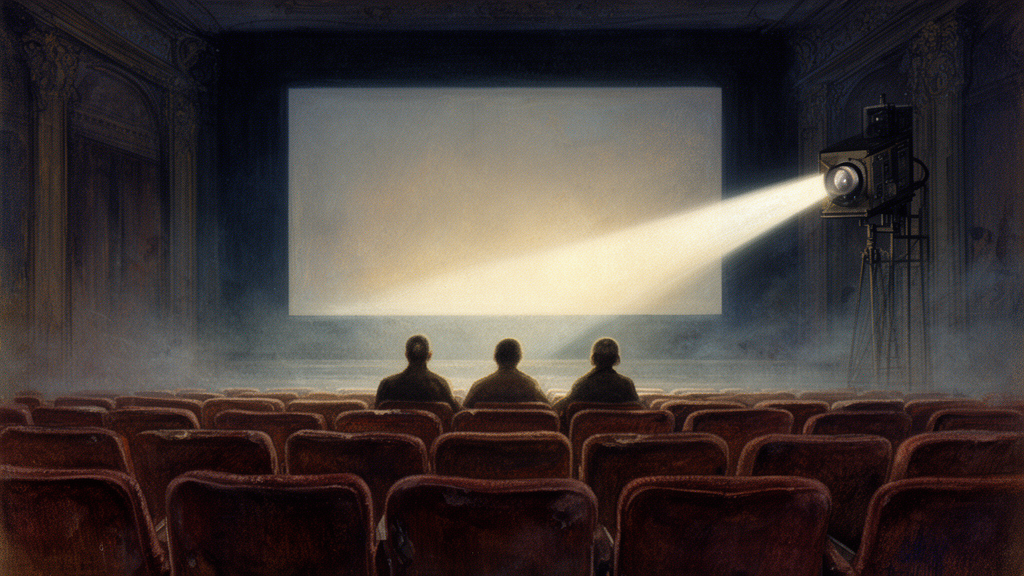
The story begins in cinema. Matthew is studying film, and the twins are fascinated by movies. Their shared interest draws them together, and in the evenings they spend time at the Cinémathèque in Paris, a famous film archive and screening venue. For these characters, the cinema is the center of life. Goodreads’ summary describes the trio as living for the cinema and playing cinematic trivia games that grow more demanding as they go.
That world is disrupted when French Culture Minister André Malraux dismisses Cinémathèque director Henri Langlois, a move that Wikipedia describes as a prelude to the May uprising. The Cinémathèque is closed. The wider nation is thrown into confusion, but the three young people barely register it. Their small world has been damaged, and they do not know how to respond.
From shared interest to a private household
Matthew’s friendship with the twins grows beyond the Cinémathèque, though at first it remains centered on film. He is invited to dinner at their house and then to stay the night. There he discovers that the relationship between Danielle and Guillaume goes beyond ordinary sibling closeness. According to the Wikipedia plot summary, Matthew is not as disturbed by this as he expected, and he becomes attracted to both twins.
He then moves in with them while their father, a well-known poet, and their stepmother are away for an extended stay in the country. The three live in their own enclosed world. They stop attending school, play cinematic games with rising stakes, and focus on their youth. The Wikipedia summary describes them as living like innocents who neglect ordinary responsibilities, and it notes that their relationships take many forms within the group.
Why the title matters
The title invites a reader to think about innocence, but the novel’s characters do not present innocence in a simple way. The story presents them as sheltered and self-absorbed, living outside the normal rules of school, home and public life. Readers should expect a book that treats youthful absorption with seriousness and also reflects on its costs. Because the sexual content and family relationships are central to the plot, the book is best suited to adult readers who are comfortable with mature material.
May 1968 as the backdrop
The novel’s historical setting is one of its main features. Wikipedia notes that the characters are thrust back into society in May 1968, only to find the streets under siege. The Cinémathèque closure is presented as a trigger for the wider May uprising. For readers unfamiliar with the period, it was a major political and social crisis in France, involving student protests, strikes and large demonstrations. The novel uses that moment less as a political history lesson and more as a shock that exposes how sealed off its characters have become.
This is a useful distinction for readers. The novel is fiction, so its events and characters are invented, even when they are placed against real events such as Malraux’s dismissal of Langlois. Anyone who wants a detailed history of May 1968 should consult dedicated historical sources rather than relying on a novel for factual accuracy.
Literary influences: Cocteau and Melville
Wikipedia states that the novel’s themes were inspired by Jean Cocteau’s 1929 novel Les Enfants Terribles and by the 1950 film of the same name directed by Jean-Pierre Melville. Readers who know those works will recognize a shared interest in adolescent isolation, a closed domestic world, and an intense private code of games and loyalties. Adair’s novel updates that tradition to a cinephile milieu in late 1960s Paris.
Influence is not the same as adaptation. Adair’s book is not a retelling of Cocteau’s novel or Melville’s film. It draws on their themes and places them in a new setting. Readers who want to compare the works should read them as separate creative texts that share a mood and a question about how young people build their own worlds.
Publication history and editions
The novel has appeared in several editions, and bibliographic records vary in their details. Wikipedia gives the first publisher as Heinemann in 1988. Open Library lists a 1988 Heinemann edition and a 1989 American edition published by E. P. Dutton, which it describes as the first American edition under the title The Holy Innocents: A Romance. The same catalog also lists a June 1989 Minerva paperback with 160 pages.
Page counts also differ between sources. Goodreads lists a 154-page hardcover first published in 1988, while Open Library lists the Minerva paperback at 160 pages. These differences are normal across editions and printings, so readers buying or borrowing a copy should check the publisher, year, ISBN and page count on the specific edition they plan to use.
- Heinemann (1988): listed by Wikipedia and Open Library, with the ISBN 978-0-434-04578-5 given in the Wikipedia infobox.
- E. P. Dutton (1989): an American edition listed in Open Library, which uses the subtitle a romance in some records.
- Minerva (June 1989): a paperback edition listed in Open Library with 160 pages.
Library and catalog records can also list the book under variant titles, such as The Holy Innocents: A Romance and Holy Innocents, The. Searching by author name, publisher and year is often the most reliable way to find the edition you need.
The 2003 film adaptation: The Dreamers
Wikipedia’s disambiguation page lists The Dreamers (2003) as a film based, in part, on the Adair novel. Goodreads also notes that Adair’s novels Love and Death on Long Island (1997) and The Dreamers (2003) were both made into films. The film is therefore best understood as a related work rather than a direct translation of the book. Readers who watch the film should expect adaptation choices, condensation and changes in emphasis.
Because the film is based partly on the novel, comparisons can be useful. The book’s internal monologue, its sense of a self-contained world, and its layered treatment of the cinema are all features a reader may want to examine in the text. The film is a different medium with its own visual language, so it should not be treated as a complete summary of the novel.
About Gilbert Adair
Gilbert Adair was a Scottish novelist, poet, film critic and journalist. Goodreads’ author biography says he was born in Edinburgh and lived in Paris from 1968 through 1980. It also notes that he was the translator of Georges Perec’s A Void, a novel written without the letter e, and that he won the 1995 Scott Moncrieff Translation Prize for that work. Goodreads reports that he died from a brain hemorrhage in 2011.
His personal life is discussed carefully in reference sources. Goodreads reports that he rarely spoke about his sexual orientation in public, but acknowledged in an interview that there were many gay themes in his work. Readers should use that information to understand the books in their literary context rather than as a substitute for reading the novel itself.
Why a Hindu-focused site covers this novel
HindusGod.com focuses on Hinduism, deities, scriptures, festivals and devotional practice. The Holy Innocents is not a Hindu text, it does not deal with Hindu deities or scriptures, and this article should not be read as a statement about Hindu teaching. The post exists because readers searching for the Holy Innocents Adair novel may encounter a site devoted to religion and want accurate guidance. Clarifying the book’s scope is the most helpful response.
If your interest is in Hindu literature rather than this novel, you will find more relevant reading in the site’s material on scripture and devotional texts. For readers who arrived here by searching for the title, the best route is to read the novel directly or consult a literary reference. A religious site should not present a secular novel as sacred or as a source of religious teaching.
The title and its other meanings
The phrase The Holy Innocents has a religious background that predates Adair’s book. Wikipedia’s disambiguation page notes that the phrase refers to the victims of the biblical Massacre of the Innocents and to several artistic depictions of that event, including works by Giotto di Bondone. The title therefore carries Christian associations, though the novel does not retell that story.
The same disambiguation page lists two other works with similar names: a novel by Miguel Delibes titled The Holy Innocents, and a film based on the Delibes novel. Readers who search for the title should check which work they need, because the Adair novel and the Delibes novel are distinct books with different authors and subjects.
How to approach the novel
Readers new to Adair or to this period of French cinema may find it helpful to approach the book in three layers. First, read it as a story about three people and their shared fascination with film. Second, note how the Cinémathèque closure and May 1968 shape the plot. Third, consider the literary echoes of Cocteau and Melville, which help explain the novel’s themes of adolescence, isolation and self-invention.
- Check the edition. Confirm the publisher, year and ISBN, since records vary across catalogs.
- Read the historical setting. Use a separate history of May 1968 for accurate background.
- Look at the influences. Reading Cocteau’s Les Enfants Terribles or viewing Melville’s film can show how the earlier works shaped the mood.
- Consider mature content. The novel includes sexual content and family relationships that some readers may find difficult.
Common questions readers ask
Is The Holy Innocents a religious book?
No. The novel by Gilbert Adair is a work of fiction about cinephilia, youth and Paris in 1968. The religious meaning of the phrase comes from the biblical Massacre of the Innocents, which is a separate subject. Nothing in the sources reviewed for this post indicates that the novel is a scripture or a devotional text.
Is The Holy Innocents based on a true story?
The sources reviewed describe it as a novel and do not present it as a true story about specific real people. It is set during real events, including the closure of the Cinémathèque and the May 1968 unrest, but the central characters and their relationships are fictional. Readers who want to know about the historical events should consult dedicated historical sources.
Is the novel the same as the film The Dreamers?
No. Wikipedia describes The Dreamers as based in part on the novel. A film adaptation can change structure, scenes and emphasis, so readers should treat the film and the book as related but separate works.
Summary and next step
The Holy Innocents by Gilbert Adair is a 1988 novel about three young film lovers in Paris during the May 1968 crisis. It draws on Jean Cocteau’s Les Enfants Terribles and Jean-Pierre Melville’s film of the same name, and it has been published in several editions. Its title has a biblical background, but the novel is a secular work of fiction. For accurate reading, check the edition details, read the mature content warnings, and use separate historical sources for May 1968.
If you are researching the book, start with the publisher records and the Wikipedia article. If you are exploring Hindu scripture, deity stories or devotional practice, return to the site’s religious guides, where the subject matter is directly relevant.
Sources and Further Reading
- The Holy Innocents (Adair novel), Wikipedia: used for the plot summary, publication year, publisher, ISBN, Cocteau and Melville influences, and The Dreamers adaptation note.
- The Holy Innocents disambiguation page, Wikipedia: used for the biblical meaning of the title, the Delibes novel and film, and the reference to The Dreamers.
- The Holy Innocents, Goodreads: used for the book blurb, page count and first publication date, and the author biography.
- The Holy Innocents, Open Library: used for the edition listings, the 1989 E. P. Dutton and Minerva records, and catalog identifiers.
- The holy innocents, Internet Archive: listed as a catalog record for the book; the page was reviewed for the existence of the record only.
Readers who want to check the book further should consult their local library catalog and the publisher’s record for the specific edition they plan to read.