The phrase “the holy book of Christmas” does not point to one single text. Readers who use it usually mean one of two things: the Bible, whose Gospel accounts of Jesus’s birth are the scriptural basis for Christmas in Christianity, or The Book of Christmas by Thomas K. Hervey, a descriptive account of English and related customs. Neither is a “holy book of Christmas” in the sense that the Vedas, the Gita, or the Quran are scriptures within their own traditions. This article explains what each text is, what it contains, and how to read them with care.

Short answer: which book is meant?
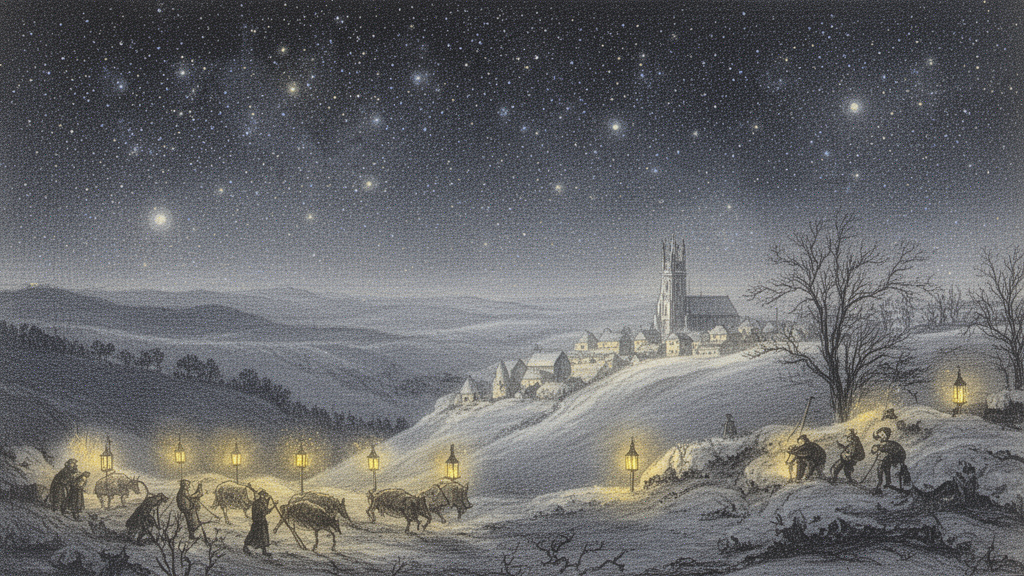
If you are asking about the sacred text behind the Christmas festival, the answer is the Christian Bible, specifically the Nativity narratives in the Gospels of Matthew and Luke. If you are asking about a book titled The Book of Christmas, the best-known example in the sources reviewed here is Thomas K. Hervey’s work, which is cultural and descriptive rather than scriptural. Christmas itself is observed by Christians, and it is a festival in the Christian liturgical year.
The Bible and the Christmas story
For Christians, the Christmas story is part of scripture. The Christianity.com page on the Nativity presents the account of the angel Gabriel’s visit to Mary from Luke 1:26–38 and describes the wider story as including the shepherds and the visit of the wise men. The same page quotes Isaiah 9:6 as a prophecy that Christians connect with the birth of Jesus: “For to us a child is born, to us a son is given…” (as printed on that page). Christians read this passage as Old Testament prophecy, and the page presents it that way. A Jewish reading of Isaiah 9:6 differs, and Hindu readers will recognize that scriptural interpretation is itself a matter of tradition.
When you read these passages, it helps to keep three categories apart:
- Scripture: what the Gospel text says, in the translation you are using.
- Theology and devotion: how Christian churches understand the birth of Jesus, including the Incarnation and the meaning of Christmas as an act of God’s love.
- Historical scholarship: questions about dates, sources, and the development of the Christmas feast. Scholars discuss these, and the sources reviewed for this article do not settle them.
Christianity.com’s page is a devotional and educational resource, not a critical edition. For study, compare the passages in a Bible translation you trust, and check the verse numbers in that edition.
Thomas K. Hervey’s The Book of Christmas
The second text people often mean is The Book of Christmas: descriptive of the customs, ceremonies, traditions, superstitions, fun, feeling, and festivities of the Christmas season by Thomas K. Hervey. The Project Gutenberg edition used here is based on the Boston: Roberts Brothers printing dated 1888, with illustrations by R. Seymour and a University Press imprint from Cambridge. The Gutenberg record lists the book as a public-domain text in the United States, and it has been transcribed as a free ebook.
This is not a scripture. It is a descriptive book about Christmas customs, and it is valuable for understanding how the season was observed and written about in the English-speaking world. Because it is a literary and antiquarian work, its claims about older customs should be read as the author’s description rather than as a verified history of every village or household.
What the book covers
The table of contents in the Gutenberg text shows how broadly Hervey ranges. The sections include:
- The Christmas Season: mingled origins of the festival, court and Inns of Court celebrations, the Lord of Misrule, and the decline and partial revival of the older festival.
- Feelings of the Season: domestic preparations, mince pie, evergreens, kissing under the mistletoe, waits, carol singing, and the bellman.
- The Christmas Days: St Thomas’s Day, sports of the season, Christmas Eve customs such as the Yule-clog, Christmas candles, and the wassail bowl, and Christmas Day customs including plum pudding and the bringing in of the boar’s head.
- St Stephen’s Day and Boxing Day: the origin of the name “Boxing Day” and Christmas-boxes, plus customs such as hunting the wren in the Isle of Man and the wren boys in Ireland.
- New Year’s Eve and New Year’s Day: Scottish observances, Hogmanay, and New Year’s gifts.
- Twelfth Day and Twelfth Night: the Twelfth cake, drawing for characters, and the Three Kings of Cologne.
Examples from the text
Three examples show the book’s range. The first is the Yule-clog, listed under Christmas Eve, a log traditionally associated with the evening’s celebration. The second is the mistletoe, listed under the feelings of the season. The third is hunting the wren, which the contents attribute to the Isle of Man, with the wren boys listed under Ireland. Each of these is a regional or community custom, and each should be read in its local context. None is a universal Christian requirement.
How to read an old book of customs
Hervey’s book was written in the nineteenth century and reflects the outlook of its time. The Gutenberg record gives a reading ease score of 59.9, which it describes as somewhat difficult, roughly tenth to twelfth grade. Its prose is ornate, and some passages draw on literary and poetic material. The Gutenberg summary on the ebook page is labelled as automatically generated, so it should not be treated as the author’s own words or as a scholarly review.
Read the book with four questions in mind:
- Who is describing the custom? Hervey is describing what he knew or had read, often for an English-speaking readership.
- Where did the custom belong? Many customs were local. The contents themselves name specific places, such as the Isle of Man and Ireland.
- Is the custom a belief or a practice? Some entries describe games, food, or social habits. Others describe superstitions, which are customs tied to beliefs about luck or omens. Keep these separate.
- Has the claim been checked elsewhere? For historical questions about origins or dates, consult academic histories and primary documents rather than relying on a single popular book.
Scripture, tradition, custom, and scholarship
Much confusion about “holy” Christmas books comes from mixing four different kinds of material. The following distinctions help:
- Scripture is the canonical text a religious community treats as authoritative. For Christmas, this means the Gospel passages on the birth of Jesus.
- Tradition is the teaching and practice that a church or community has received and developed. Carols, the Christmas liturgy, and the celebration of the feast belong here.
- Custom is a local or family practice, such as a particular food, game, or household decoration. Hervey’s book is mainly a record of customs.
- Scholarship is critical study of texts, dates, and sources. It may confirm, qualify, or challenge what tradition says about a custom’s origin.
A devout Christian may treat the Gospel accounts as historical and theologically authoritative. A historian may study the same texts as ancient narratives and ask how they were composed and used. Both approaches can be respectful, and this article does not decide between them.
Christmas customs vary by region and community
Hervey’s book demonstrates how varied Christmas has been. Customs such as the Yule-clog, the wassail bowl, the boar’s head, and the wren hunt belonged to particular places and periods. Readers in other countries may keep none of these customs, or may keep different ones. Many Christians today celebrate Christmas with church services, nativity scenes, and family meals, but practice differs among denominations, cultures, and households.
Church calendars also differ. Christian communities do not all follow the same calendar for the feast, and not every Christian church celebrates it on the same date. Anyone planning worship or a visit to a church should check the schedule of that particular community.
The Gutenberg text itself shows that customs can cross traditions. Its contents include the Greek songs of the crow and swallow under St Stephen’s Day, which is a reminder that European Christmas customs were not uniform. The book also includes “Saint Distaff’s Day” and rustic sports, which fall outside the central religious events of the season. This variety is part of what the book documents.
Why this matters to Hindu readers
HindusGod.com readers often explore world religions and festivals, and some encounter Christmas through friends, workplaces, or public life. Christmas is a Christian festival, and the Bible is the scripture that Christians consider holy. A Hindu reader who wants to understand Christmas can approach it as they would any other religious observance: by reading the primary texts and the community’s own explanations, and by noting how the customs of ordinary people differ.
Comparisons with Hindu scripture can be useful, but they should be made carefully. Hinduism does not have a single book comparable to the Bible, and its texts are classified and interpreted in different ways across traditions. If you are interested in Hindu sacred texts, you can begin with the Gita Holy Book guide and the broader overview in Holy Book Meaning. For a general comparison of the sacred texts of different communities, see Holy Book in the World.
Reading the Christmas sources together
A useful approach is to read in layers:
- Start with the Gospel passages on the birth of Jesus in a Bible translation you trust.
- Read a devotional or educational resource, such as the Christianity.com page, to see how Christians explain and apply the story.
- Read Hervey’s book to understand how the wider season was described and practised in English-speaking communities in the nineteenth century.
- Look for academic histories of Christmas for questions about origins, dates, and the development of customs.
This sequence keeps scripture, devotion, custom, and history distinct. It also prevents a common error: treating a descriptive book about customs as if it were a sacred text.
Common questions about the Christmas “holy book”
Is The Book of Christmas a religious scripture?
No. Thomas K. Hervey’s book is a descriptive work about customs, ceremonies, traditions, superstitions, and festivities of the Christmas season. It is not a scripture for any religious community, and it should be read as a historical and cultural account.
Which text should Christians read for the Christmas story?
Christians usually turn to the Gospel accounts of Matthew and Luke for the birth narratives. The Christianity.com page presents the Luke passage on Gabriel’s visit to Mary, along with the shepherds and the wise men, and it quotes Isaiah 9:6 as a prophecy. Many Christians also read the Old Testament prophecies alongside the Gospels, and churches differ in how they teach these passages.
Are the customs in Hervey’s book still practised?
Some are, some have changed, and some are no longer common. Practice varies widely by place, family, and period. Hervey’s book is a useful record of what was described, but it does not tell you what any given household does today.
Closing takeaway
The “holy book of Christmas” is best understood as a question about two different kinds of text. For Christians, the holy book behind Christmas is the Bible, and the Nativity narratives are its center. Thomas K. Hervey’s The Book of Christmas is a rich descriptive account of customs, traditions, and festivities, useful for understanding the cultural side of the season. Read the scripture as scripture, the customs as customs, and the scholarship as scholarship, and keep the three distinct. For more on the broader question of sacred texts, you can explore Holy Book and Best Holy Book on HindusGod.com.
Sources and Further Reading
- The Book of Christmas by Thomas K. Hervey, Project Gutenberg edition (1888 Boston printing): used for the contents, edition details, illustrator, and descriptive scope of the book.
- Project Gutenberg catalogue record for The Book of Christmas: used for the reading ease score, public-domain status in the USA, and the note that the summary is automatically generated.
- The Nativity Christmas Bible Story, Christianity.com: used for the summary of the Nativity narratives and the quoted Isaiah 9:6 text. This is a devotional resource, so check passages against a Bible translation.