This article explains what people mean by “the healing power of the Holy Communion,” where that teaching comes from, and what the sources support. In short, the idea that Holy Communion brings physical healing is a teaching found in some Christian ministries, most prominently in the work of Pastor Joseph Prince. It rests on his reading of Bible passages about Jesus’ suffering. Many other Christian churches understand the sacrament mainly as remembrance of Christ, proclamation of his death, forgiveness of sins, and fellowship with God and the church. The sources reviewed for this article contain no clinical evidence that taking communion treats or cures illness.
Holy Communion is a Christian sacrament, not a Hindu rite. HindusGod.com readers may be familiar with prasad, the food offered to a deity and shared afterward. Both practices involve a shared sacred meal, but they come from different theologies and should not be treated as equivalent.
What Holy Communion Is

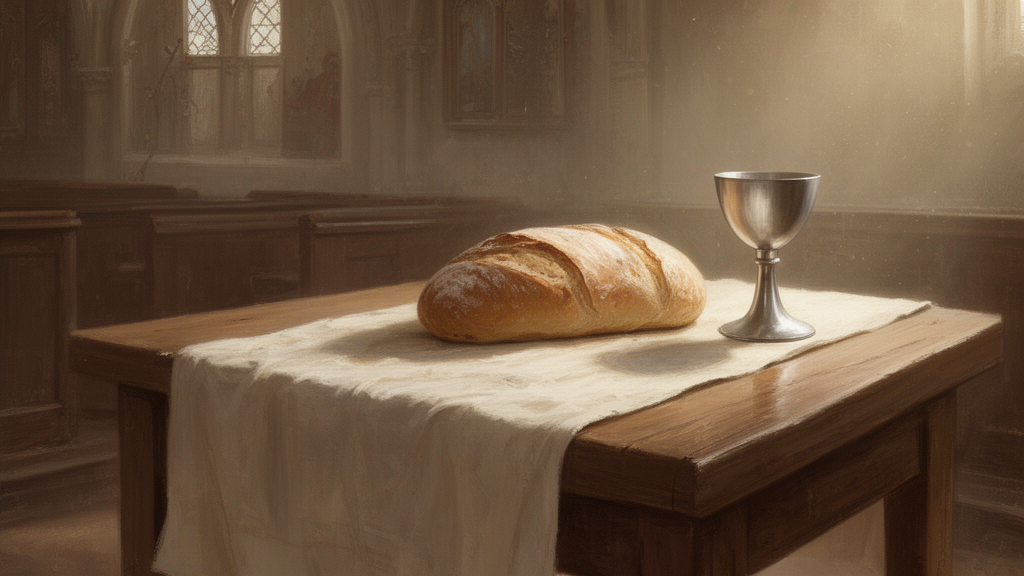
Holy Communion, also called the Lord’s Supper or Eucharist in many churches, is a ritual meal that Christians share in worship. Bread and wine (or grape juice, in some churches) are used. The Christian account of its origin is found in the Gospels and in Paul’s letters. Luke 22:19–20 and 1 Corinthians 11:23–26 describe Jesus sharing bread and a cup with his disciples on the night before his crucifixion and asking them to remember him.
Across Christian traditions the core elements are similar, but explanations differ. Church bodies disagree about what happens to the bread and wine, who may take communion, how often it is celebrated, and what preparation is required. These differences are part of why there is no single “official” account of healing that applies to all Christians.
Where the Healing Teaching Comes From
The phrase “healing power” is most closely tied in the sources to Joseph Prince, a Singapore-based pastor whose ministry, Joseph Prince Ministries, publishes sermon notes, articles, and books. His article “The Power Of The Holy Communion” describes the bread as representing Jesus’ body “scourged and broken,” and the cup as representing his shed blood. It states that Jesus was never sick, that at the cross God “took all our sicknesses and diseases,” and that believers should “walk in divine health.” The article grounds this in Isaiah 53:5 and 1 Peter 2:24, which speak of healing “by His stripes” in Christian readings.
A companion sermon-notes page for “The Healing Power Of The Holy Communion,” preached on 24 February 2019 in Singapore, presents the same theme. Its overview says that God has given believers a gift “so that none of us would be sick, weak, or die young,” and that the message teaches how to “break free from the curse of sickness through the Holy Communion.” These are the ministry’s own statements of belief. They are not neutral historical or scholarly findings.
The teaching also appears in marketing material. The official devotional page for The Healing Power of the Holy Communion: A 90-Day Devotional describes it as a guide to “God’s provision of health and wholeness through the holy Communion,” and includes testimonies from readers. The Amazon listing and a Trinity Broadcasting Network page identify the book as by Joseph Prince and promote it as a 90-day devotional. Testimonies and promotional copy show what the ministry teaches and how it presents that teaching. They do not establish that the healings described happened as stated.
The Scripture Passages Used in the Teaching
Readers who want to check this teaching should look at the passages themselves, in context, and in a translation they trust. The main passages cited are:
- Luke 22:19–20, where Jesus gives bread and the cup and speaks of a “new covenant” in his blood. This passage is about remembrance and covenant, and the sources connect it to forgiveness.
- 1 Corinthians 11:23–26, Paul’s account of the Lord’s Supper and the instruction to proclaim the Lord’s death “till He comes.”
- 1 Corinthians 11:27–29, a warning about partaking “in an unworthy manner” and a call to examine oneself. Churches read this passage very differently, as discussed below.
- Isaiah 53:5 and 1 Peter 2:24, which the ministry reads as referring to physical healing. Many commentators and churches read these verses primarily as referring to spiritual reconciliation and forgiveness, though some also apply them to healing. Readers should compare commentaries rather than relying on one ministry’s reading.
The sources used for this article also cite Hebrews 4:16 for confident access to God and Colossians 1:14 and Ephesians 1:7 for forgiveness through Christ’s blood. These passages support the forgiveness and access themes that run through the ministry’s teaching, but they do not, on their own, mention healing from disease in the context of communion.
How Christian Traditions Differ
The phrase “Holy Communion” does not describe one belief. Christian traditions differ in several ways that matter for this topic. The following is a general outline; readers should consult each church’s official catechisms or confessions for exact wording.
Sacramental Churches
The Roman Catholic, Eastern Orthodox, and many Anglican and Lutheran churches teach that communion is a sacrament through which believers receive grace. Catholic teaching describes the bread and wine as becoming the body and blood of Christ, while Lutheran teaching describes Christ being present “in, with, and under” the elements. Healing is generally understood in these churches as spiritual grace and as one dimension of God’s care, and many also keep a separate tradition of prayer for the sick, sometimes including anointing with oil.
Reformed and Memorial Views
Many Reformed, Baptist, and Free Church traditions understand communion mainly as a memorial and a means by which believers spiritually feed on Christ by faith. Zwingli, in the Reformed tradition, is often cited for a memorial reading, though Reformed theology is not uniform. These churches usually do not teach that communion itself causes physical healing.
Pentecostal and Charismatic Teaching
Pentecostal and charismatic churches often emphasise divine healing and the expectation that God acts today. Some teachers within these movements, including the ministry discussed in this article, connect healing directly to communion. Teaching of this kind is not universal among Pentecostal or charismatic believers. Many emphasise prayer, faith, medical care, or the sovereignty of God in different ways.
Belief, Scripture, Tradition, and Scholarship
It helps to separate four kinds of statements when reading about the healing power of communion:
- Scripture is what the biblical text says, such as Jesus instituting a meal of bread and wine.
- Doctrine and tradition is what a church teaches about that text, such as whether the bread becomes Christ’s body or whether communion is primarily remembrance.
- Devotional testimony is what individuals report about their experiences, which may be sincere and meaningful to them but are not verified medical outcomes.
- Scholarly and historical analysis examines how these texts and practices developed and how they were understood in different periods.
When a ministry says that communion “is God’s ordained channel of healing,” that is a doctrinal claim within one tradition. It is an important belief for those who hold it, but it is not a scholarly consensus or a scientific finding.
What the Evidence Can and Cannot Show
The sources reviewed for this article describe testimonies, including reports of a child healed of scoliosis and a husband healed of Alzheimer’s disease. These accounts appear on promotional pages. They are presented as personal stories without medical records, diagnoses, or independent confirmation in the material reviewed.
No medical study was found in the research for this article that shows communion treats any disease. Scoliosis and Alzheimer’s disease are serious medical conditions that need professional diagnosis and care. A devotional act is not a substitute for medical treatment, and no reputable Christian tradition reviewed here presents communion as one.
Readers who are ill should consult qualified doctors. Those who wish to pray for healing can do so within their church community, and many churches offer prayer for the sick alongside medical care.
How Churches Describe Taking Communion
The practice of communion is tradition-specific. Some churches use an ordained minister, some have set liturgies, and some have open or closed tables. Practices also vary on preparation. Many traditions encourage self-examination, prayer, and sometimes fasting or confession before communion. Some restrict communion to baptised members, while others invite all believers.
The ministry discussed here says that communion “is not a ritual” in the sense of an empty form, and that believers should approach it with awareness of Christ’s broken body and shed blood. Whether one describes communion as a ritual, sacrament, memorial, or ordinance depends on one’s church. A reader who is unsure what their own church teaches should ask a pastor or read the church’s official statements.
For readers who want to learn the basics of Christian communion, the following resources on HindusGod.com may help, though they focus on related Christian topics rather than on healing:
- Power of the Holy Communion (WordPress draft; may not be public yet) discusses the broader theme of power in Christian sacramental teaching.
- Catechism for First Holy Communion (WordPress draft; may not be public yet) covers instruction for those preparing for their first communion.
- Common Worship Holy Communion (WordPress draft; may not be public yet) looks at the Anglican liturgical forms used in many churches.
Health, Healing, and Responsible Reading
Healing is a serious and sensitive subject. Christian writers differ on whether God heals physically through communion, through prayer, through medicine, or in other ways. Sincere believers can hold different views, and many have experienced suffering that was not resolved by any devotional practice.
A balanced reading of the healing teaching includes these points: the teaching is a specific interpretation within a specific ministry; the Scripture passages it cites are read differently by other Christians; and the testimonies, while meaningful to those who share them, do not verify a cause-and-effect link between communion and healing. Readers seeking more on divine healing may find related discussion in Healing Power of the Holy Spirit (WordPress draft; may not be public yet), which addresses a related theme from a different angle.
Comparing Communion With Other Sacred Meals
Hindu readers may wonder how communion relates to practices such as prasad. Both involve a shared meal with sacred meaning. In Hindu worship, food is offered to a deity and then received back as blessed food, and the meaning of prasad varies by deity, temple, and community. In Christian communion, the meal commemorates Jesus’ death and resurrection and is tied to the New Testament account of the Last Supper.
Comparison can help readers understand the role of sacred food in different traditions, but it should not blur the theology. Christian communion and Hindu prasad should be described on their own terms.
Frequently Asked Questions
Does the Bible say communion heals the body?
The Gospels and Paul’s letters describe communion as remembrance of Christ, proclamation of his death, and a sign of the new covenant. Some teachers connect passages about Christ’s suffering, such as Isaiah 53:5 and 1 Peter 2:24, to physical healing and to communion. Others read those verses mainly as referring to spiritual healing or forgiveness. The question is interpreted differently across churches.
Is communion required to receive healing?
The sources reviewed do not show that any mainstream church makes communion a requirement for healing. Practices vary widely. Those who seek prayer for healing should talk with their church leaders and their doctors.
Should someone stop medical treatment and rely on communion?
No. The sources reviewed contain no medical evidence that communion treats illness. Serious conditions require professional diagnosis and care. Spiritual practices and medical treatment can exist side by side, but they should not be treated as substitutes for one another.
Summary
The healing power of the Holy Communion is a teaching found in some Christian ministries, most clearly in the work of Joseph Prince. It draws on Bible passages about Christ’s suffering and on testimonies that the ministry presents. Other Christian traditions understand communion as remembrance, sacrament, or spiritual grace, and many do not teach that communion itself produces physical healing. The sources reviewed contain no clinical evidence for healing through communion. Readers who want to explore the topic should compare the Scripture passages, read the relevant church traditions, and consult qualified medical professionals about health concerns.
Sources and Further Reading
- Joseph Prince Ministries, “The Power Of The Holy Communion” (ministry article stating the healing teaching)
- JosephPrince.com, sermon notes for “The Healing Power Of The Holy Communion” (24 February 2019)
- The Healing Power of the Holy Communion: A 90-Day Devotional (official promotional page)
- Amazon listing for The Healing Power of the Holy Communion: A 90-Day Devotional (book details)
- Trinity Broadcasting Network, The Healing Power of the Holy Communion by Joseph Prince (promotional page)