The Shakta Upanishads are a group of later Sanskrit texts in which the Supreme Reality is worshipped as the Goddess (Devi, Shakti, or Tripura). They are usually counted among the minor Upanishads, and they sit alongside the older philosophical Upanishads without belonging to the earliest layer of Vedic literature. In short, they are devotional and philosophical texts that present Shakti as both the power of the universe and the ground of liberating knowledge. Their exact number, titles, and order vary by source and edition, so readers should treat any single list as one tradition’s count.
Direct answer: what are the Shakta Upanishads?
The term combines Shakta, referring to traditions centred on Shakti, the feminine divine power, with Upanishad, a class of texts traditionally regarded as the concluding portions of the Vedas. The Shakta Upanishads are not a single book. They are a set of separately composed texts, many of which are linked in later listings to the Atharvaveda, and which address the Goddess in terms of consciousness, sacred sound, ritual mantra, and inner awakening.
Scholars generally place most of them in the medieval period, and they should be distinguished from the older prose Upanishads such as the Brihadaranyaka and Chandogya, which are much earlier and do not centre on a goddess in the same way. Devotional belief, textual history, and academic dating are three different questions, and this article keeps them separate.
Upanishads in brief
The word Upanishad is commonly explained as “sitting near” a teacher, reflecting the setting in which esoteric knowledge was passed on. The older Upanishads are regarded across Hindu traditions as foundational texts of Vedanta, and they discuss Brahman, the Self (Atman), and liberation. Standard reference works describe the wider corpus as ranging from early prose texts to late, often sectarian compositions.
A later canonical listing, the Muktika Upanishad, enumerates 108 Upanishads and arranges them by Veda. In that arrangement, a group of texts is associated with Shakta or goddess-centred teaching. That listing is one important traditional classification, but it is not the only one, and other traditions and scholars organise the corpus differently.
Why the goddess-centred texts stand out
Much of the older Upanishadic literature speaks of Brahman in impersonal or abstract terms. The Shakta Upanishads move the same metaphysical vocabulary toward a personal and dynamic Goddess. This shift is one reason the texts are important for understanding how Shakta devotion took philosophical form within Hindu literature.
Major texts often included in the Shakta group
Lists vary, but the following titles are commonly cited in reference works and academic overviews of Shakta literature. Readers should check a specific edition to confirm contents before relying on any particular verse or passage.
- Devi Upanishad: presents the Goddess as the ultimate reality and the source of all powers and deities.
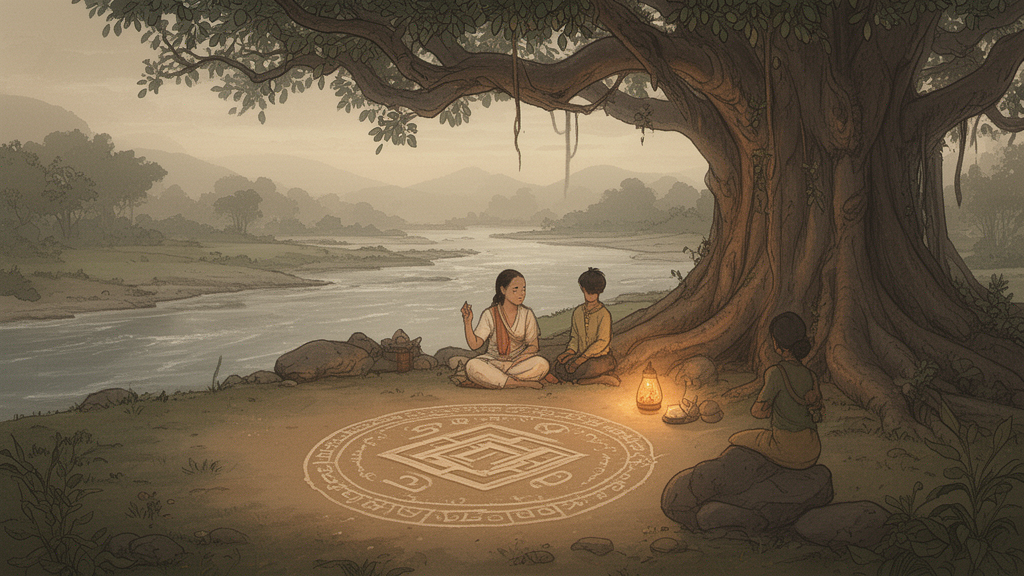
- Tripura Upanishad: associated with Tripura Sundari, the goddess of the Shri Vidya tradition, and with interpretive links to mantra and yantra.
- Bhavana Upanishad: discusses meditative and devotional approaches to the Goddess, often connected with inner worship.
- Saubhagyalakshmi Upanishad: associated with auspiciousness and the goddess Lakshmi in a Shakta frame.
- Devi Atharvashirsha: a short text in which the Goddess is identified with the highest reality, often recited in devotional settings.
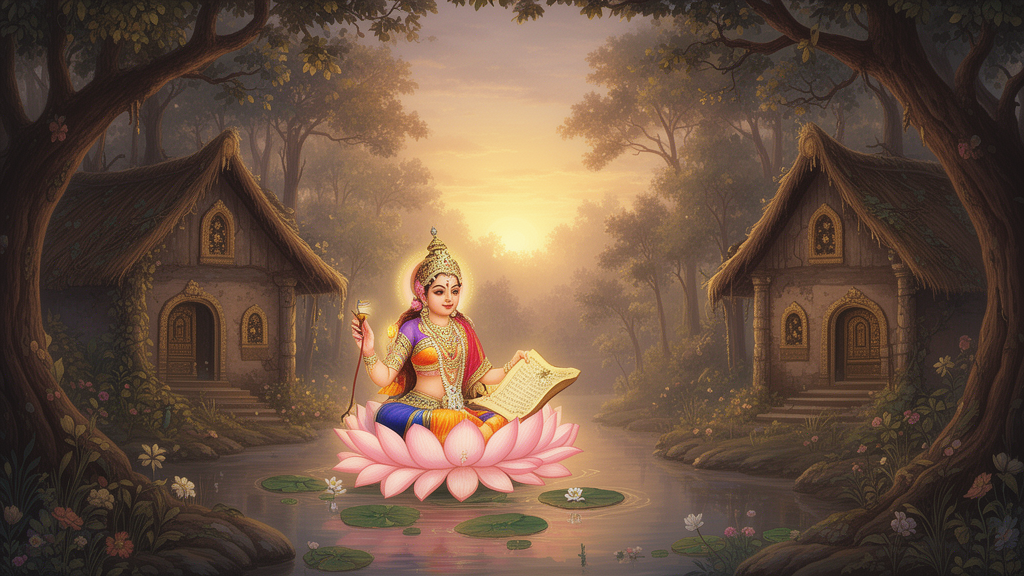
- Sarasvati Rahasya Upanishad: connected with Sarasvati and with the sacred power of speech and knowledge.
These titles are listed here as examples of the genre. Their content, length, and textual history differ, and some appear in one enumeration but not another.
Core themes of the Shakta Upanishads
The Goddess as ultimate reality
The central theme is that the Goddess is not merely a subordinate deity. In several texts she is described as the source from which gods, cosmos, and sacred knowledge arise. This presentation parallels the older Upanishadic claim that a single reality underlies all appearances, but it names that reality through feminine divine power.
Shakti and consciousness
Many passages treat Shakti as the dynamic aspect of consciousness, sometimes contrasted with a static, witnessing principle. Commentators in Shakta philosophy, especially in the Shakta-Advaita and Kashmir Shaivism traditions, developed these ideas at length. Readers should note that these later philosophical systems are interpretations layered on top of the texts, not simply the texts’ own words.
Sound, mantra, and sacred syllables
Mantra and sacred sound feature prominently. Some texts discuss bija (seed) syllables and the subtle relationship between sound and creation. For devotees, this material supports japa and meditation; for historians, it shows how Tantric and Vedic vocabularies were combined.
Inner worship and liberation
Several texts present worship as both external ritual and internal meditation. The goal is commonly described as knowledge of the Self or union with the Goddess as the highest reality. Traditional readers understand this as spiritual liberation, while modern academic readers analyse it as a religious claim within a particular literary tradition. Neither reading removes the other, but they should not be confused.
Shakta Upanishads and the wider Shakta tradition
Shakta devotion is a broad family of practices. It includes temple worship, household puja, goddess festivals, and Tantric ritual, and it is practised in many regions of India, especially in Bengal, Assam, Kashmir, and parts of South India. The Shakta Upanishads are one text family within this wider world. They are not the only scriptural base for Shakta practice, and many practitioners relate to goddesses such as Durga, Kali, Lakshmi, Saraswati, and Tripura Sundari through local lineages, family traditions, and devotional literature rather than through Upanishadic study alone.
It is therefore inaccurate to present the Shakta Upanishads as the single source of goddess worship. Their role varies: some communities recite them regularly, some study them mainly as philosophy, and others treat them as one part of a larger canon. Local custom, sampradaya (lineage), and personal practice all shape how the texts are used.
Distinguishing text, tradition, and scholarship
Readers often encounter three kinds of claims about these texts, and they should be distinguished:
- Textual claims: what a particular Upanishad says, as found in a named edition or translation.
- Traditional claims: how a lineage or community understands the text, including beliefs about authorship, revelation, and efficacy of recitation.
- Scholarly claims: historical dating, manuscript history, and analysis of philosophical influences, which are often provisional and debated.
For example, the claim that a text is “ancient” may be a traditional belief in one context and a scholarly question in another. Responsible study keeps these levels separate and identifies which one a statement belongs to.
Translation and edition notes
Many English translations of the Upanishads date from the nineteenth and early twentieth centuries and reflect the interests and assumptions of their translators. Several public-domain collections are available online, and modern scholarly editions often provide critical apparatus. Translations of the Shakta texts vary considerably in quality and in how they render technical terms such as Shakti, Brahman, and Atman. When quoting or studying a passage, readers should identify the translator and edition and compare alternatives where possible.
This article does not reproduce verses from any translation. Readers who want exact wording should consult the edition they are using.
How to study the Shakta Upanishads respectfully
- Start with a reliable overview of the Upanishadic corpus to understand where these texts fit.
- Choose one text and read it in a translation that identifies its source and translator.
- Note any technical terms, such as Shakti, mantra, or yantra, and look up their meaning in context.
- Compare how a modern commentary explains the text with how a traditional teacher or lineage presents it, and keep those views distinct.
- If you wish to practise a recitation or meditation, learn it from a qualified teacher within a recognised lineage, since instructions vary by tradition.
Frequently asked questions
Are the Shakta Upanishads part of the Vedas?
They are traditionally classed as Upanishads, which are regarded in Hindu tradition as the concluding portions of the Vedas. Many of the Shakta texts are linked in later lists to the Atharvaveda, but their composition is generally dated later than the earliest Vedic material, and scholars debate their precise dates.
How many Shakta Upanishads are there?
There is no single agreed count. Traditional listings and modern compilations differ in which texts they include. A reader should check the list used by a particular edition or source.
Do I need to know Sanskrit to read them?
No, but Sanskrit terms are central to the texts, and a good translation will explain them. Learning a few key terms such as Shakti, Brahman, and mantra makes reading easier.
Summary and next step
The Shakta Upanishads present the Goddess as ultimate reality, link sacred sound and meditation to liberating knowledge, and form one important strand of Hindu goddess literature. They are best approached by distinguishing what the texts say, how traditions use them, and what historians conclude about their origins. To continue, read the general Upanishads overview on HindusGod.com and then select one Shakta text in a clearly attributed translation.
Sources and further reading
- Upanishad, Wikipedia: general overview of the Upanishadic corpus and its classification. Supports the description of the Upanishads as a textual class and the note on varying enumerations. Verify before publication.
- Upanishad, Encyclopaedia Britannica: reference overview of the Upanishads and their philosophical content. Supports the general description of Upanishadic themes. Verify before publication.
- Sacred Texts: Hinduism: public-domain collection of older English translations. Useful for reading source texts; translations are dated and should be compared with modern editions.
Editorial note: the research sources supplied for this task were pages from Mercy University and were unrelated to the Upanishads, so they were not used as evidence. The references above were not fetched or verified in this session and must be checked before publication.
Related HindusGod.com reading
For a general introduction, see Upanishads. To understand the wider body of texts, read About Upanishads in English. For a condensed overview of major philosophical ideas, see Essence of the Upanishads. These are WordPress draft targets and may not yet be public; confirm status before publishing this link.