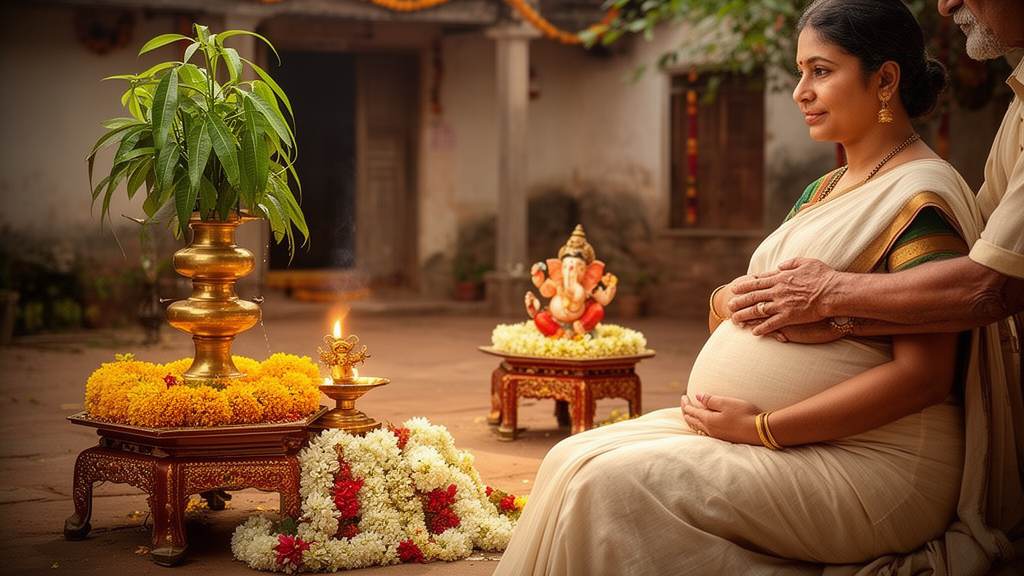
Seemantha shastra in Kannada refers to the seemantha ceremony (ಸೀಮಂತ), a Hindu rite performed for a pregnant woman, most commonly in her seventh month of pregnancy. The ceremony is performed for the mother and the child in her womb, and it seeks blessings for a safe delivery and the well-being of both. Families in Karnataka and elsewhere observe it in different ways, so the exact order of rituals, the choice of date, and the guests involved can vary. This article explains the term, the usual timing, the rituals reported in Kannada and English sources, the meanings families commonly give to the rite, and how to separate traditional belief from historical and scholarly information.
What seemantha shastra means in Kannada
In Kannada, ಸೀಮಂತ (seemanta, also spelled seemantha or seemantham) names the ceremony itself. The word ಶಾಸ್ತ್ರ (shastra) is often added in everyday speech, so the phrase ಸೀಮಂತ ಶಾಸ್ತ್ರ, or seemantha shastra, is used for the rite as a practice. Kannada news coverage follows this usage. A TV9 Kannada explainer titled its article on the ceremony with the words ಸೀಮಂತ ಶಾಸ್ತ್ರ, and a separate TV9 Kannada video report about a celebrity family’s seemantha used the same phrase for the event.
This usage is important for readers searching for this topic. In this context, shastra means a rite or observance, not a written treatise. A reader looking for a scripture such as the Dharma Shastra or Agama Shastra is searching for a different subject. Our related guides on those texts are listed at the end of this article.
Spelling varies. You may see seemantha, seemantham, seemanta, or the Kannada form ಸೀಮಂತ. This article uses seemantha in English text for consistency, and Kannada script where it helps the reader recognize the term.
Seemantha as a samskara in the Hindu life cycle
Seemantha is usually described as a samskara, a rite marking a stage in personal life. The TV9 Kannada explainer describes seemantha, called ಸೀಮಂತೋನ್ನಯನ (seemantonnayana) in Sanskrit, as one of the sixteen Hindu samskaras. This is a common way of presenting the topic in popular Kannada media, and it reflects one tradition’s framework rather than a single universal list.
Scholars note that lists of samskaras differ among texts, communities, and periods, and the numbering and order are not identical everywhere. For that reason, this article presents the sixteen-samskara framework as a commonly cited framework, not as a fixed rule that every family follows.
The sixteen samskaras framework
Popular accounts commonly place seemantha among the rites connected with pregnancy and early childhood. Readers who want to study the classical lists should consult primary texts and academic studies of the samskaras, which explain how different Grihya texts and commentaries arrange these rites. This article does not cite a specific Grihya text for the ceremony’s exact procedure, because that detail was not verified from a primary source during preparation.
Why the rite is linked to pregnancy
Seemantha is closely tied to the period of pregnancy, and its purpose is generally described as spiritual and communal. Its focus is on the mother, the unborn child, and the blessing of elders. The rite is therefore best understood as a religious observance within family life, rather than a standalone event.
When seemantha is performed
The most commonly reported timing is the seventh month of pregnancy. The TV9 Kannada explainer states that the rite is generally held when the seventh month is reached, and notes that some families hold it in the fifth or ninth month instead. The Kannada Wikipedia article on ಸೀಮಂತ also describes the rite as performed for a woman in her seventh month of pregnancy, after she has married and gone to her husband’s home.
A Harivara service page, which is a commercial priest-booking site, describes the ceremony as performed in the seventh month and says that it is held in odd months of pregnancy, such as the seventh and ninth. Because this is a vendor description, treat it as one practitioner’s account, not as an independent standard.
The seventh month as the common practice
The seventh month appears most often in the sources reviewed. This is a common practice, not a universal requirement. Families may also decide on the fifth or ninth month, based on family tradition, local practice, and the mother’s health and comfort. For medical decisions about pregnancy, travel, or large gatherings, the mother should follow the advice of her doctor.
Choosing an auspicious date
The Harivara page states that the date and lagna (auspicious time) are fixed based on the nakshatra, or lunar mansion, of the husband and wife. Other families may consult a family priest, a local panchangam, or an elder before choosing a date. Practices differ on which calendar, nakshatra, or muhurta method to use. If the date matters to your family, ask a trusted priest or elder to explain the method used in your community.
How the ceremony is usually arranged
The rituals vary, but Kannada and English sources describe several recurring elements. The Harivara page reports that the ceremony includes a Ganesha puja and a kalasha puja for the mother. It also says that food is cooked according to the wishes of the pregnant woman, and that mantras are chanted during the ceremony. The TV9 explainer reports that the rite includes blessings from elders for a safe delivery.
Because these details come from a commercial service page and a popular explainer, they should be read as commonly reported practices, not as an official ritual manual. Your family priest or elders can tell you what is appropriate in your tradition.
Core elements reported in the sources
- Ganesha puja: reported as an opening worship in the Harivara description of the ceremony, consistent with the common practice of invoking Ganesha at the start of many Hindu rites.
- Kalasha puja for the mother: reported as part of the ritual, with the kalasha water described as giving strength to the mother.
- Blessings of elders: reported in both TV9 Kannada and Harivara descriptions as part of the ceremony’s purpose.
- Food prepared to the mother’s wishes: reported by Harivara as part of the ceremony.
- Mantra recitation: reported as part of the ceremony, though the specific mantras depend on the officiating priest and tradition.
Families may also add family customs, gifts, and gatherings. These are social and cultural practices, and they should be distinguished from the ritual core.
Variations by family, region and community
A seemantha in a rural household, an urban apartment, and a family that moved abroad may look quite different. The Kannada Wikipedia article describes the ceremony as held at the husband’s home, which reflects one common setting, but other families may hold it at a parent’s home, a temple, a community hall, or a function hall. Some families hold it in the seventh month, some in the fifth or ninth, and some make the date by consulting an astrologer.
Hindu communities are diverse, and no single version should be presented as the only correct form. If your family follows a particular sampradaya, regional custom, or household practice, follow the guidance of those who know that practice. Where this article describes a custom, it describes it as reported in the source, not as a universal requirement.
Meanings given to the ceremony
Families and writers give several meanings to seemantha. Some are religious, some are social, and some are popular explanations. The distinction matters, because a devotional meaning is not the same as a medical result.
Blessings for a safe delivery
The most commonly stated purpose is to seek blessings for a safe delivery and the well-being of mother and child. The TV9 explainer says the rite is performed to get the blessings of elders for a safe delivery. Harivara says the ceremony is performed for a smooth delivery and the blessings of gods and elders. These are devotional aims. The ceremony is a prayer and a family blessing, not a guarantee of any outcome.
Protection against drishti (evil eye)
Both the TV9 explainer and the Harivara page refer to the belief that a pregnant woman may be affected by drishti, or the evil eye, and that the rite helps remove it. This is a traditional belief. It belongs to the devotional and folk dimension of the practice and is not established by medical science. Readers should treat it as a belief held by some families and communities.
Emotional support and reassurance
The TV9 explainer says that hormonal changes in pregnancy can cause anxiety or low mood in some women, and that the rite can bring reassurance and joy through family care and attention. This is a popular explanation offered in the article. It is not a medical finding from the sources reviewed. If a pregnant woman experiences persistent low mood or anxiety, she should speak to her doctor or a qualified mental health professional.
Claims about the child’s intellect
The Harivara page makes claims that the ceremony helps develop the child’s brain and intellect, and that mantras chanted during the ceremony help the child become sharp and intelligent. These are vendor claims. They were not verified with an independent scientific or scriptural source for this article, so they should not be presented as established facts. A responsible account of seemantha presents such claims, if mentioned at all, as beliefs stated by a particular source.
Scripture, tradition, and scholarship: how to read the claims
Readers often encounter a mix of scripture, tradition, personal belief, popular media, and commercial description when they search for seemantha. Separating these categories helps avoid confusion.
- Samskara framework: the sixteen-samskara list is a traditional framework cited in popular sources such as TV9 Kannada. Its exact composition depends on the text and tradition consulted.
- Ritual procedure: the sequence of puja, mantra, and food is reported by commercial and popular sources. The exact procedure depends on family, priest, and region.
- Devotional belief: blessings for a safe delivery and protection from drishti are beliefs held by many families.
- Popular explanation: the explanation involving hormones and emotional wellbeing is presented in a media explainer and is not a medical source.
- Commercial description: prices, packages, and priest booking are service offerings and should be checked directly with the provider.
- Scholarly study: the history of the samskaras, the variation among Grihya texts, and the regional development of the rite require academic sources. This article does not make historical claims about when the ceremony began.
Where scripture is concerned, this article does not quote or cite a specific verse for seemantha, because no primary text passage was verified during preparation. Readers who want textual evidence should consult a scholarly edition of the Grihya Sutras or a published academic study of the samskaras, and should note which tradition the text represents.
Media coverage can also shape public understanding. A celebrity family’s seemantha, reported by TV9 Kannada in 2022, shows how a family observance can be publicized. Such reports describe events, but they do not establish the ritual standard for all families.
An illustrative planning example
The following steps are a general planning outline drawn from the common elements reported in the sources. They are not a prescribed rite. Your family’s priest, elders, or community tradition should guide the actual ceremony.
- Discuss tradition and timing. Talk with the couple and senior family members about which month, place, and style of ceremony they prefer.
- Consult for the date. Ask a family priest or elder to check the muhurta and nakshatra method your family uses.
- Plan the guests and the setting. Decide whether the ceremony will be at home, at a parent’s house, or in a hall, and keep the mother’s comfort and rest in mind.
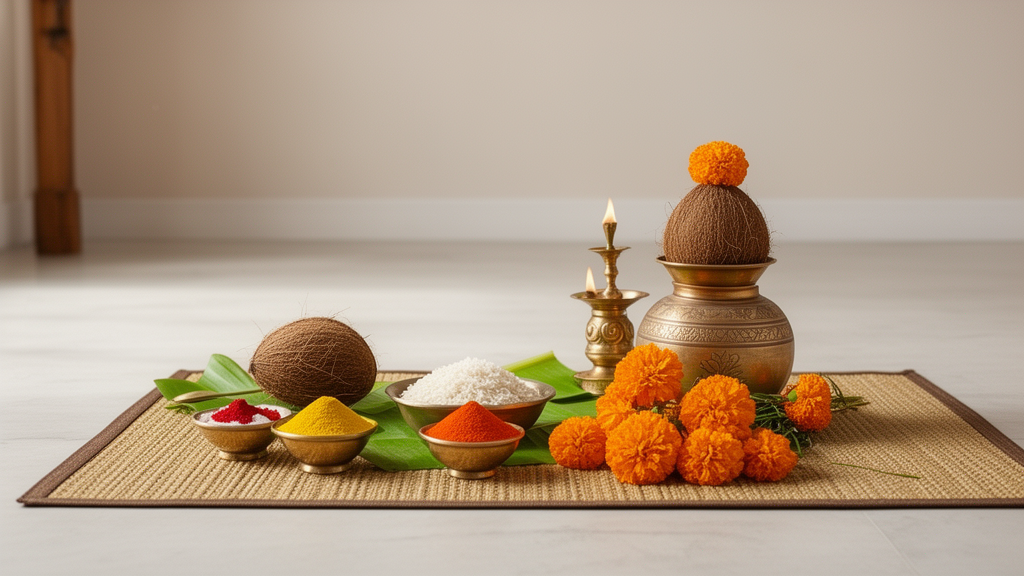
- Arrange the puja items. Ask the priest which items are needed for the Ganesha puja, kalasha, and other offerings in your tradition.
- Prepare food as the mother wishes. Reported practice holds that food is prepared according to the pregnant woman’s wishes, within any dietary advice from her doctor.
- Hold the blessings and closing. Invite elders to bless the mother and child, and close the ceremony with the customs your family follows.
Some families may skip some of these steps or add others. Planning with a qualified priest or elder, and with the mother’s doctor for any health-related arrangements, is the most reliable approach.
Common questions about seemantha shastra in Kannada
Is seemantha the same as a baby shower?
Some sources describe seemantha as similar to a baby shower. The Harivara page calls it a baby shower ceremony, and the TV9 Kannada explainer uses the English phrase baby shower in its headline. However, seemantha is a Hindu rite with religious elements, including puja and blessings. Many people in Karnataka use both terms, but the observance and its meaning may differ from a baby shower in other cultures.
Does seemantha guarantee a healthy delivery?
No. Seemantha is performed as a prayer and a family blessing. It is not a medical treatment and does not guarantee any outcome. Prenatal care, medical advice, and emergency planning remain the responsibility of the mother and her doctor.
Is seemantha performed in every family?
No. Practice varies by family, region, and community. Some families hold a detailed ceremony, others a simpler family gathering, and some do not observe it at all. The sources reviewed describe it as a common practice, not a universal one.
Summary
Seemantha shastra in Kannada refers to the seemantha ceremony, a Hindu rite for a pregnant woman that is most commonly held in the seventh month. It is described in popular and commercial sources as a samskara, with rituals that may include Ganesha puja, kalasha puja, mantra recitation, food prepared to the mother’s wishes, and blessings from elders. Its common meanings include blessings for a safe delivery and protection from drishti, which are devotional beliefs rather than medical facts. Timing, date selection, and rituals vary by family and community, so the best next step is to consult a trusted family priest or elder and the pregnant woman’s doctor.
Sources and further reading
- ಸೀಮಂತ, Kannada Wikipedia: supports the description of seemantha as performed for a pregnant woman in her seventh month, and as held at the husband’s home. Note: the page was not fully inspected during preparation.
- TV9 Kannada explainer on seemantha shastra: supports the Kannada usage of seemantha shastra, the sixteen-samskara framing, the common seventh-month timing, the blessings for a safe delivery, and the popular explanation involving emotional wellbeing. The hormonal explanation is a popular account, not a medical source.
- Seemantha, Harivara.com: a commercial service page that supports the descriptions of odd-month timing, nakshatra-based dating, Ganesha and kalasha puja, and mantra recitation as reported practices. Its claims about intellect and prices are vendor claims.
- YouTube video on seemantha preparation and ceremony in Karnataka: listed as a related video. The page content inspected was only platform text, so it is not used as evidence for ritual details.
- TV9 Kannada report on a celebrity seemantha shastra ceremony: supports only the observation that media reported a seemantha ceremony in 2022. It is not evidence of a standard ritual.
- Alar Kannada-English dictionary entry for seemantha: a dictionary gloss describing the ceremony and a custom connected with a first pregnancy. This entry was not fully inspected during preparation, so the gloss is listed for reference only.
Related HindusGod.com reading
- Dharma Shastra in Kannada (target draft; may not be public yet): for readers exploring the wider meaning of dharma and shastra.
- Veda Shastra in Kannada (target draft; may not be public yet): for background on Vedic texts and their Kannada-language discussion.
- Agama Shastra in Kannada (target draft; may not be public yet): for readers who want to distinguish ritual texts from family rites.
- Agama Shastra (target draft; may not be public yet): an English-language companion on the Agama tradition.