This guide explains the Yoga Sutra attributed to Patanjali and what Tamil readers should know before choosing a Tamil edition or commentary. In short, the Yoga Sutra is a foundational Sanskrit text of the Yoga school of Indian philosophy. The sources reviewed for this draft describe its authorship, dates, and place in tradition, but they do not verify the content, translator, or chapter structure of any specific Tamil edition. Readers should treat Tamil-language versions as translations that need to be checked against the Sanskrit text and a named commentary.
Direct answer: what the Patanjali Yoga Sutra is

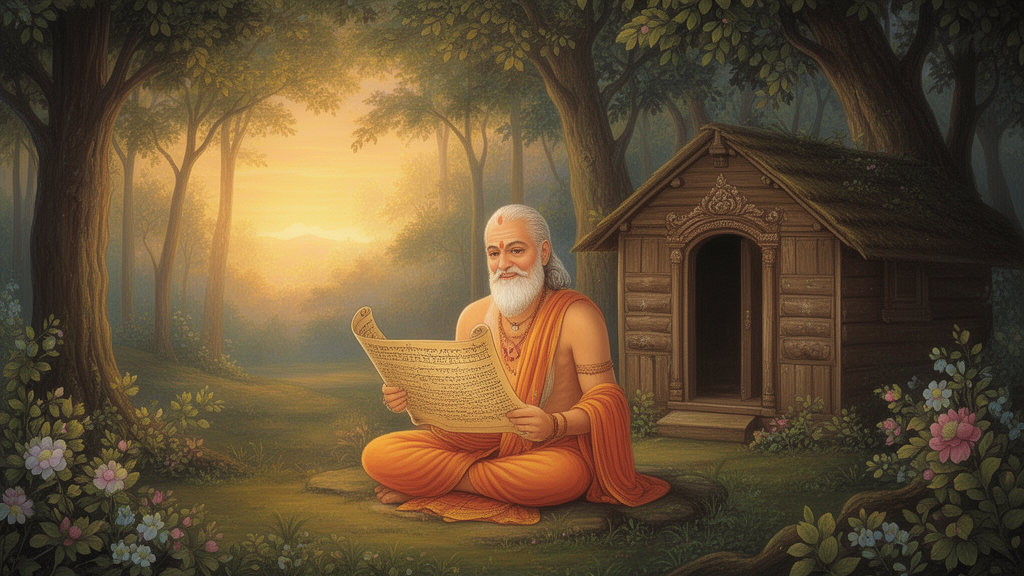
The Yoga Sutra is traditionally attributed to a sage named Patanjali. Britannica describes it as the basic text of Yoga, one of the six systems (darshanas) of Indian philosophy, and dates the text to around the 2nd century BCE or the 5th century CE. Those dates are uncertain, and the text has influenced many other schools of Indian thought. For a Tamil reader, the most useful starting point is to understand the Sanskrit sutras, their commentaries, and then the Tamil translations or explanations that interpret them.
Who was Patanjali?
The name Patanjali is attached to more than one line of work in Indian intellectual history. The Wikipedia entry on Patanjali lists several works under this name, including the Yoga Sutra, the Mahabhashya (a commentary on Sanskrit grammar), and the Patanjalatantra. It also places Patanjali in the Yoga tradition and notes a Tamil Saivite legend about the figure, along with a traditional depiction in snake form that links him to kundalini or to the serpent Shesha. These are important points, but they are not the same kind of evidence. The Yoga Sutra text, the grammar commentary, and the later legends should be discussed separately.
Dates and scholarly uncertainty
Dates for Patanjali vary by source. Britannica gives the Yoga Sutra a date of around the 2nd century BCE or the 5th century CE. A devotional-style biography on the Arhanta Yoga website says it is believed that Patanjali lived between 400 BCE and 200 CE, and it also states that very little is known for sure about his life. The disagreement shows why readers should avoid precise claims about when Patanjali lived. The safest statement is that the date of the text is debated, and the traditional biography is not a substitute for historical evidence.
The name and its traditional meaning
The Arhanta Yoga blog gives a popular explanation of the name. It says that pata can mean to fall or descend and anjali can mean an offering or folded hands, so the name is read as a symbol of divine knowledge coming down to humanity. This is a devotional or traditional explanation, not a linguistic proof from a scholarly source. It is useful for understanding how many readers relate to Patanjali, but it should be presented as one interpretation of the name.
Patanjali in legend and iconography
Many Hindu communities treat Patanjali as a sage with sacred associations. The Arhanta source says he is said, in Indian mythology, to be an incarnation of Ananta, the thousand-headed serpent on whom Vishnu rests. The Wikipedia image caption describes a traditional statue showing Patanjali in snake form, which is linked to kundalini or to Shesha. These images belong to devotional and mythological traditions. They are not evidence of the sage’s biography, and different communities may explain them differently.
What the Yoga Sutra teaches in broad terms
The Yoga Sutra is a compact set of aphorisms, written in Sanskrit, that explains how a practitioner can reduce the disturbances of the mind and move toward a state of stillness and self-knowledge. The sources reviewed here do not provide the full structure, chapter titles, or verse numbers of the text, so this draft does not cite specific sutras. Readers who want exact references should use a critical Sanskrit edition or a commentary that gives verse numbers and explains its method.
Because the sutras are short and dense, many translators add explanatory words in brackets or write a running commentary. A translation can therefore look quite different from another translation of the same sutra. This is normal for a text of this kind, and it is why a careful reader compares more than one rendering.
Why Tamil readers search for this text
Readers searching for the Patanjali Yoga Sutra in Tamil usually want one of three things: an accessible explanation of the text, a Tamil translation to read alongside the Sanskrit, or guidance on how to begin practice. Each need calls for a different approach. A general explanation can help a beginner understand the text’s purpose. A translation requires attention to the translator’s choices. A practice-oriented reader should remember that yoga instruction is often tradition-specific and that a text alone does not replace a qualified teacher.
Look for the translator and the commentary
When choosing a Tamil edition, check whether it names the translator, identifies the Sanskrit source text it follows, and states whether it includes a commentary. A reliable edition usually makes these details visible. If a Tamil book presents a sutra without saying what it is translating from, or without distinguishing its own explanation from the sutra, readers should compare it with another source before relying on it.
Compare translations for key terms
Some Sanskrit terms in the Yoga Sutra are difficult to render into any single language. Words connected with mind, attention, effort, and detachment may be translated in different ways. A practical method is to choose one passage, read two or three Tamil or English versions, and note where the translators agree and where they differ. This shows which parts are close to the Sanskrit and which parts are interpretation. For background on how the text is studied in English, the Britannica entry is a general starting point.
Text, tradition, belief, and scholarship
Discussion of the Yoga Sutra often mixes several kinds of claims. It helps to keep them apart:
- Scripture or text: the sutras themselves, read in a Sanskrit edition or a translation that names its source.
- Commentary: later explanations by teachers and scholars, which may differ from one another.
- Tradition and belief: stories about Patanjali as a sage, incarnation, or sacred figure, which matter to devotees but are not historical evidence.
- Historical scholarship: analysis of dates, authorship, and textual layers, where scholars often express uncertainty.
- Modern practice: classes, retreats, and wellness uses of yoga, which vary widely and are not defined by the sutras alone.
A careful article or book on the Yoga Sutra labels which of these it is discussing. A reader who notices a mixture, such as a historical date presented as a devotional certainty, should treat the claim with caution.
Example: reading one idea in three ways
Consider a reader who wants to understand a single idea: that yoga involves restraining the fluctuations of the mind. In a Sanskrit-based study, the reader would first identify the sutra that states this idea and check the Sanskrit word for mind-modifications or fluctuations. Next, the reader would compare two translations and one commentary. The translations might use different Tamil or English words for the same concept, and the commentary might explain how it connects to practice. The reader then writes a short note: what the sutra says, how translators render it, and what the commentator adds. This method keeps scripture separate from interpretation and makes disagreements visible.
A common confusion: Patanjali Ayurved is a different subject
Search results for Patanjali often include Patanjali Ayurved, a company based in Haridwar, Uttarakhand. The Wikipedia entry for Patanjali Ayurved describes it as an Indian multinational conglomerate founded in 2006 by Ramdev and Balkrishna, and it notes controversies over advertising and product claims. The company’s website also refers to yoga and Ayurveda in its public programs. These are commercial and organizational matters. They do not explain the ancient sage or the Yoga Sutra. Readers searching for the sutra should avoid treating company materials as scriptural sources.
How to start reading responsibly
- Choose a Tamil edition that names its translator and, if possible, the Sanskrit text or commentary it follows.
- Read a short section first, and keep a note of the sutra or section number used by that edition.
- Compare one key passage with a second translation or a commentary.
- Separate what the text says from what the translator or teacher adds.
- If you plan to practise postures or breathing techniques, seek qualified instruction, especially if you have a health condition.
For related reading on Patanjali and Tamil-language scripture on this site, the following drafts may be useful once they are published:
- Patanjali Yoga Sutra in Bengali, for comparing how the same text is approached in another regional language.
- Patanjali Yoga Sutra in Kannada, for a second South Indian language perspective.
- Patanjali Yoga Sutra Telugu, for readers comparing Telugu and Tamil editions.
- Patanjali Yoga Sutra Gita Press, for readers looking at a specific publisher’s edition.
- Yoga Sutra in Kannada, for a broader Kannada-language overview.
- About Mahabharatham in Tamil, for Tamil readers interested in another major Sanskrit-origin text.
Frequently asked questions
Is there a single correct Tamil translation of the Yoga Sutra?
No single translation can be treated as the only correct version. Translators make different choices, especially for technical terms. A useful edition is one that is transparent about its method and source.
Does Patanjali’s Yoga Sutra require a particular religion?
The Yoga Sutra is part of Indian philosophical tradition and has been read and practised in different communities. Readers should not assume that every commentator or teacher interprets it in the same religious or devotional way.
Are the traditional stories about Patanjali historical facts?
Not necessarily. Stories about Patanjali as an incarnation or as a figure in Tamil Saivite legend belong to devotional or mythological traditions. Historical claims about his life and dates require evidence, and scholars express uncertainty about them.
Closing takeaway
The Patanjali Yoga Sutra is a central text for understanding classical Yoga, and Tamil readers can approach it with a clear method: identify the Sanskrit source, compare translations, read commentaries, and keep devotional belief, historical evidence, and modern practice distinct. A careful Tamil edition is a useful bridge, but it should be read as one interpretation among several.
Sources and further reading
- Patanjali, Wikipedia: used for the list of works attributed to Patanjali, the Yoga tradition placement, the Tamil Saivite legend heading, and the snake-form iconography caption.
- Patanjali, Encyclopaedia Britannica: used for the description of the Yoga Sutra as the basic text of Yoga and its dating as c. 2nd century BCE or 5th century CE.
- Who Is Patanjali? Discover The Sage Behind The Yoga Sutras, Arhanta Yoga: used for the traditional name explanation and the devotional account of his dates and legendary identity, presented as belief rather than proven history.
- Patanjali Ayurved, Wikipedia: used only to distinguish the company from the ancient sage and the Yoga Sutra.