The phrase original Vedic texts usually asks one question: what is the earliest form of the Vedic scriptures, and how can a reader know whether a text has been preserved faithfully? The short answer is that the Vedic literature was transmitted first by memory and recitation, and that no single ‘original’ manuscript survives. What we have are carefully maintained oral traditions, later written recensions, and modern critical editions built from them. Understanding that distinction helps readers judge any claim about an ‘original’ text.
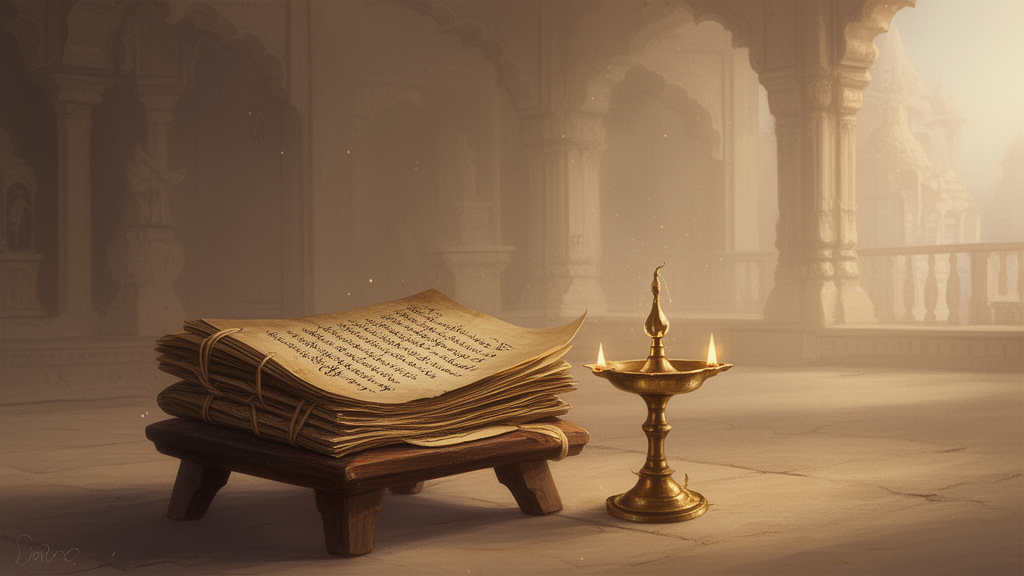
This guide explains what the word ‘original’ means in this context, which texts are usually called Vedic, how they were preserved, and how to separate scripture, tradition and scholarship when you read about them. It is written for general readers. Traditions differ in how they read and recite these texts, and this article notes those differences where they matter.
What ‘original’ means in this context
The English word ‘original’ has several meanings. Cambridge Dictionary defines the adjective, in one sense, as ‘existing since the beginning, or being the earliest form of something’ (Cambridge Dictionary, ‘original’). Dictionary.com lists a related sense: ‘belonging or pertaining to the origin or beginning of something’ (Dictionary.com, ‘original’).
Applied to scripture, these meanings point in two directions. One is historical: the earliest recoverable form of a text. The other is devotional or traditional: a text regarded as authoritative and correctly transmitted. These are not the same question. A text can be treated as authoritative by a community even when scholars cannot reconstruct its earliest wording with certainty.
Readers searching for ‘original Vedic texts’ often mean the first sense. That is a reasonable question, but the answer has to be qualified. Scholars can compare surviving versions, identify variants, and study linguistic layers. They cannot usually point to an autograph from which every later copy descends.
Which texts are called Vedic
The term ‘Veda’ means knowledge or sacred knowledge. In the traditional classification, the four principal Vedas are the Rigveda, Samaveda, Yajurveda and Atharvaveda. Each has a Samhita, the core collection of mantras or verses. Around these collections, Vedic literature includes Brahmanas (prose texts on ritual), Aranyakas (texts often associated with forest study) and Upanishads (philosophical texts). Many scholars and traditions include the Upanishads within the Vedic corpus, though they are sometimes treated separately in discussions of Vedic ritual.
The term ‘Vedic texts’ therefore covers more than one genre. A reader looking for ritual instructions will find different material from a reader looking for hymns or philosophical discussion. For a broader overview of the collection, see our page on Vedic Texts (URL to confirm as public; currently a WordPress draft). For the historical and religious sense of the word ‘Veda’, see Vedic Texts and the Vedas (URL to confirm as public).
The Samhitas, Brahmanas and Upanishads
The Samhitas are the oldest layer that is usually discussed as the core of the Vedas. They contain hymns, chants and formulas used in sacrifice and recitation. The Brahmanas explain how these formulas are used in ritual. The Aranyakas and Upanishads move toward meditation, cosmology and questions about the self and ultimate reality.
Not every reader will treat these layers equally. Some traditions regard the whole collection as uniquely authoritative revelation. Others prioritize particular parts for daily practice. Scholars generally use the layers to study historical development, and they note that the boundaries between them are not always sharp.
Shruti and smriti
Hindu tradition often distinguishes shruti, ‘that which is heard’, from smriti, ‘that which is remembered’. Shruti is usually applied to the Vedas and is regarded as revealed or authorless in traditional theology. Smriti covers texts such as the law books, epics and Puranas, which are regarded as remembered and derived from tradition. This classification is a religious and theological category. It is not the same as a historical dating system, and modern scholars do not use it to date texts.
How the Vedic texts were preserved
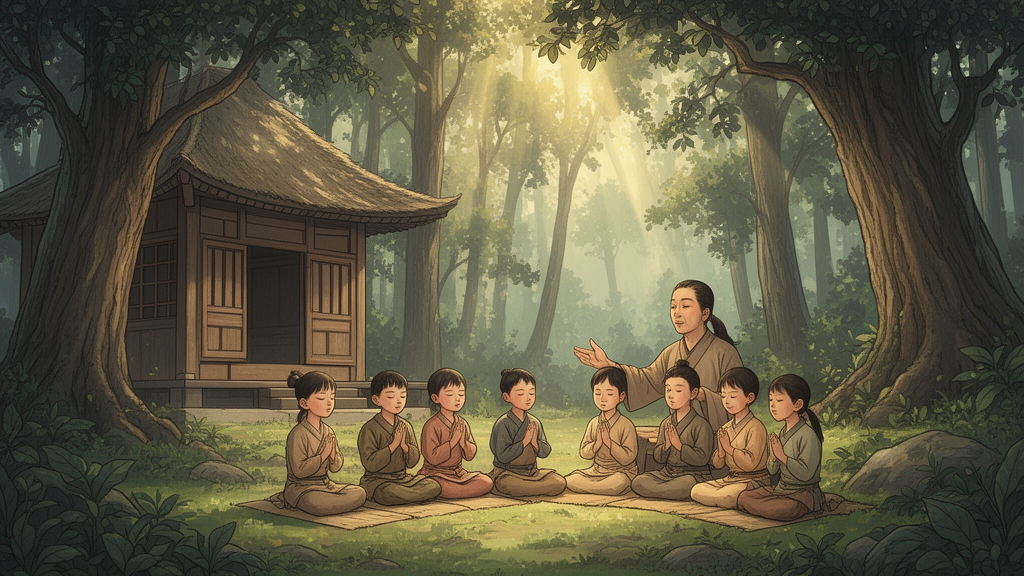
The Vedic literature was long maintained through oral transmission. Traditional schools trained students to memorize and recite texts with great precision, including tonal accent and fixed patterns of repetition. This method is often described as a central reason for the stability of the Vedic recitation. Scholars widely accept that oral transmission played a major role, but the exact methods, schools and periods are debated and should be described with care.
Writing became important over time, but the surviving manuscripts that scholars can examine are generally much later than the compositions they transmit. This is a common point in academic discussions of Indian manuscript culture. A manuscript’s age does not show when the wording first came into being.
Recensions and branches
The Vedas survive in recensions, sometimes called shakhas or branches. Each Veda has been associated with traditional schools that preserved particular versions of the text, with differences in arrangement, pronunciation and some wording. Readers who compare editions may notice variant readings. These differences do not necessarily mean that one version is corrupt. They often reflect the transmission histories of different schools.
This is one reason the question ‘Which is the original?’ has no simple answer. A school may regard its own recension as fully authentic, while a critical edition may reconstruct a text from several witnesses. Both approaches have value, but they answer different questions.
Printed and critical editions
From the nineteenth century onward, European and Indian scholars produced printed editions of Vedic texts, often comparing multiple manuscripts and commentaries. Critical editions note variants and explain the editor’s choices. For readers who want to study a text rather than hear it recited, a critical edition, a scholarly translation, or an edition associated with a living tradition is usually more useful than an unsourced online copy.
When choosing an edition, check the editor, the translator, the date of publication, and whether the edition includes notes about its sources. Avoid treating a single website’s text as the definitive original unless it names its base edition and method.
How to read claims about an ‘original’ Veda
Claims about an ‘original’ Vedic text often combine three different kinds of statement. Some are devotional: a tradition holds that the Vedas are eternal or revealed. Some are historical: scholars analyze language, meter, manuscripts and citations to date layers of the texts. Some are interpretive: a writer explains what a passage means for practice or belief.
A useful way to read such claims is to ask:
- Which text or edition is being discussed? A claim about the Rigveda is not automatically a claim about the Upanishads.
- Is the statement about belief, history or interpretation? Each needs different evidence.
- Which tradition or school is speaking? Vedic recitation and ritual vary by community and lineage.
- Does the source name its edition or manuscript base? Without this, a claim about ‘the original wording’ cannot be checked.
Examples of the difference
Consider a claim that ‘the Vedas were never changed.’ A traditional teacher may say the recitation has been preserved with extraordinary fidelity through disciplined memorization. That is a statement about transmission and devotion. A historian may instead note that the same tradition shows multiple recensions and variant readings, and that the dating of the oldest layers is an active research question. Both statements can be discussed, but neither should be presented as the only fact.
Another example involves ritual. A Brahmana may describe a sacrificial procedure. That text tells us how a particular school understood a rite at a certain period. It does not automatically show how every Hindu community performs worship today.
Regional and community differences
Vedic study has been carried on in many regions, and some communities maintain specialized recitation traditions. Practice may differ by school, region, family lineage and language of instruction. Some people encounter the Vedas mainly through public ceremonies, others through formal study, and many through summaries, devotional songs and popular retellings.
Because of this diversity, it is inaccurate to present one manner of recitation, one interpretation or one ritual as universal Hindu practice. Where a point depends on a particular school or community, this article says so.
Practical steps for readers who want to study original Vedic texts
- Decide your purpose. Are you studying language, ritual, philosophy or devotional recitation? Each purpose points to different editions.
- Choose a recognized edition. Look for a critical edition, an academic translation, or a text published by a reputable institution or living tradition.
- Read the front matter. The editor’s note usually explains the manuscripts used, the accent or recension, and the translation method.
- Separate the text from commentary. Medieval commentaries, such as those on the Rigveda, are important witnesses to interpretation but are not the same as the Samhita itself.
- Check the translation. Compare renderings of key terms, and note when a translator is interpreting rather than translating literally.
- Consult a teacher or community where appropriate. For recitation and ritual, tradition-specific guidance is often more reliable than general summaries.
Common misunderstandings
Several misunderstandings appear often. The first is that the Vedas exist as a single fixed book in one language version. In fact, they survive in several recensions and forms. The second is that oral transmission means the text was never written. Writing was used in various ways, but the oldest transmission is strongly associated with memorization. The third is that a later manuscript is worthless. Later witnesses can preserve valuable readings, but they must be compared carefully.
A fourth misunderstanding is that modern critical editions replace traditional recitation. They serve different functions. A critical edition helps scholars compare readings. A living recitation preserves sound, accent and practice within a lineage. Readers who value both can study each on its own terms.
Where to continue reading on HindusGod.com
If you are new to the subject, start with a general overview and then move to specific texts. Our pages on Ancient Vedic Texts, Ancient Vedic Scriptures and The Vedic Scriptures cover related questions about age, categories and scope (all URLs to confirm as public before linking live). For readers who want to compare Vedic material with later scriptural categories, see Important Hindu Texts and Hindu Texts. Those posts are separate from this one and cover different scope.
For the Upanishads, which are often read as the philosophical end portion of the Vedic corpus, see Original Upanishads. The Puranas are a separate genre within smriti, and Original Puranas explains how they differ from the Vedas. For the religious world that formed around these texts, Vedic Religion discusses sacrifice, deities and ritual context. Readers interested in English-language study can also consult Vedic Texts in English, Hindu Texts in English and Hindu Vedic Texts.
Frequently asked questions
Is there one original copy of the Vedas?
No single autograph or universally agreed original manuscript is known. The Vedas were transmitted through recitation and multiple recensions, and surviving manuscripts are generally later than the compositions they record.
Are the Vedas ‘original’ because they are oral?
Oral transmission is central to their preservation, but ‘oral’ does not by itself mean ‘unchanged.’ Scholars study variants, linguistic features and manuscript witnesses to understand the textual history.
Can a translation be an original text?
A translation is an interpretation in another language. It can be accurate and useful, but it is not the original text. Compare translations and consult the Sanskrit where possible.
Summary
The search for ‘original Vedic texts’ leads to a more careful question: which form of the text, transmitted by which school, and studied for which purpose? The Vedas were preserved through disciplined memorization, recensions and later written editions. No single original copy is available for direct inspection, so claims about the earliest wording should be qualified. A good starting point is a recognized critical or scholarly edition, read alongside the tradition that preserves its recitation.
Sources and Further Reading
- Cambridge Dictionary, ‘original’ (definition of the earliest form sense)
- Dictionary.com, ‘original’ (definitions and etymology)
Note for editors: scripture-specific references, such as critical editions of the Samhitas and academic histories of Vedic transmission, still need to be added from verified sources before publication.