The word Hindu most often refers to a person who follows Hinduism, or to something connected with Hindu religion, culture, or community. It is also used as an adjective, as in “Hindu temple,” “Hindu festival,” or “Hindu scripture.” Hinduism itself is a family of philosophies, practices, and traditions rather than a single system with one founder, one creed, or one book. This article explains what the term means, what Hindus share, where practices differ, and how to find trustworthy information on the subject.

The short answer: what “Hindu” means
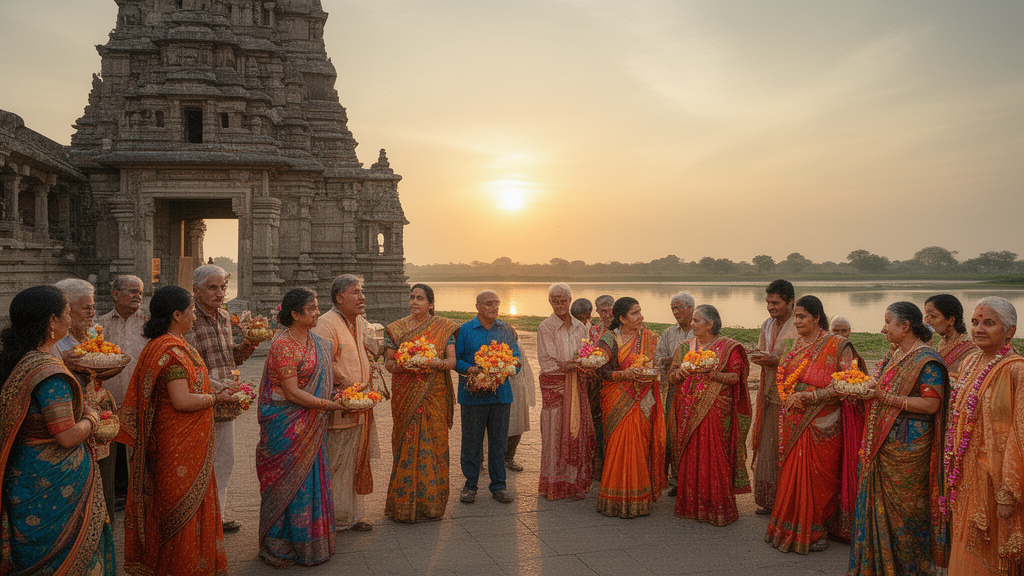
In most contexts, a Hindu is a person who belongs to the Hindu religious and cultural tradition, which is also called Hinduism. The Hindu American Foundation (HAF) describes Hinduism as also known as Sanātana Dharma, a term meaning something like “eternal dharma” or “eternal way.” HAF calls it the world’s oldest living religion, a statement that reflects that community’s own view. Scholars usually discuss the origins of Hindu traditions in terms of long, layered development rather than a single starting point.
The word can also be used in a broader cultural sense. Someone may describe a dance, a dish, a wedding custom, or a calendar as “Hindu” because it comes from Hindu religious life, even when the person performing it is not religious in a formal sense. Context matters, and some communities use the term in more specific ways.
The same spelling appears in unrelated names, such as The Hindu newspaper or Hindu College in Delhi. This article covers the religious and cultural meaning only. If you arrived here looking for one of those institutions, please search for it directly.
Etymology and changing usage
The English word “Hindu” and its older form “Hindoo” have a history of their own. Wikipedia’s article on Hindus notes that “Hindu” and “Hindoo” are alternate forms, and that the article includes sections on etymology, terminology, medieval-era usage, colonial-era usage, contemporary usage, and disputes about the term. These sections show that the word has not always meant the same thing to everyone who used it.
This matters for readers because older texts, colonial records, and modern community discussions may use “Hindu” with different assumptions. Some modern Hindus prefer to describe their tradition through its own terms, such as Sanātana Dharma or simply dharma, while others use “Hindu” as their everyday identity. Neither usage is wrong. Readers should note who is speaking and in what period.
How many people are Hindu?
Population figures for religious groups are estimates, and different sources use different methods. Wikipedia’s Hindus article gives a worldwide population of about 1.17 billion, or 14.9 percent of the global population, based on a 2020 estimate. Its country table lists India first, with an estimate of about 1.11 billion, followed by Nepal, Bangladesh, Pakistan, Indonesia, Sri Lanka, the United States, Malaysia, the United Kingdom, and the United Arab Emirates.
HAF also notes that Hindus live on every continent and that Hinduism has majorities in India, Nepal, and Mauritius. The global spread is important. Hinduism is not limited to one country, language, or ethnic group, even though its roots lie in the Indian subcontinent.
Diversity within Hinduism
Hinduism is not a single uniform religion. The Wikipedia Hindus article presents an estimated breakdown of Hindu traditions: Vaishnavism at about 67.6 percent, Shaivism at about 26.6 percent, Shaktism at about 3.2 percent, and a remainder of about 2.6 percent in other traditions, including Neo-Hinduism, Reform Hinduism, and Hindu atheism. These are estimates reported in that article, and they should be read as broad indicators rather than exact counts.
The main categories describe where devotion is centred. Vaishnavas primarily worship Viṣṇu or his avatars, such as Rāma and Kṛṣṇa. Shaivas primarily worship Śiva. Shaktas focus on the Goddess, often understood as Devī in her many forms. Many Hindus, however, worship several deities and move between traditions within one household. Ganesha, for example, is widely honoured across the Hindu world, and many families begin rituals with prayers to him regardless of their main devotional path.
This diversity also appears in language, dress, temple architecture, festival customs, and food. A Tamil temple, a Bengali household puja, and a Gujarati festival can each be Hindu while looking very different. Readers should be careful not to treat one region’s custom as the universal Hindu practice.
Oneness, pluralism, and no single founder
HAF describes two foundational concepts that many Hindu schools share: the oneness of existence and pluralism. According to HAF, all beings are considered manifestations of the Divine or reflections of its qualities, depending on the school of thought. HAF also states that Hinduism has no identifiable beginning in history, no single founder, no central religious establishment, and no sole authoritative scripture.
These points help explain why Hindu teaching is often described in terms of many paths and many expressions of the divine. They do not mean that every Hindu believes the same thing. Some schools emphasise a personal God, others emphasise an impersonal absolute, and others focus on ritual, ethics, or philosophical inquiry. The honest way to describe Hinduism is as a tradition with shared concepts and considerable internal debate.
Core concepts: dharma, artha, kāma, and mokṣa
The Wikipedia Hinduism article organises a major part of its discussion of beliefs around the puruṣārthas, or four aims of human life. These are dharma (moral duty, righteousness, and ethics), artha (the means or resources needed for a fulfilling life), kāma (sensory, emotional, and aesthetic pleasure), and mokṣa (liberation or freedom from suffering). Many Hindu teachings treat these aims as part of a balanced life rather than as competing goals.
Dharma
Dharma is one of the most important and most debated terms in Hindu thought. It can refer to cosmic order, social duty, personal ethics, ritual correctness, or the teachings that support them. A person’s dharma may depend on age, family role, occupation, or stage of life. Because of this range, the word cannot be translated with one English term.
Mokṣa
Mokṣa is commonly described as liberation from the cycle of birth and death, or from suffering and ignorance. The Wikipedia Hinduism article includes a subsection on differing views of the nature of mokṣa, which shows that schools do not agree on exactly what liberation is or how it is reached. Some describe it as union with the divine, some as freedom of the self, and others in more abstract terms.
Karma, saṃsāra, and the concept of God
Many Hindu traditions teach karma, the principle that actions have consequences, and saṃsāra, the cycle of rebirth. These teachings are widely shared but are interpreted differently. Some present karma as a moral law that shapes future lives. Others focus on intention, duty, or devotion. Readers should treat these as religious and philosophical beliefs, not as scientific claims that can be tested in the usual way.
The Wikipedia Hinduism article also includes a section on the concept of God. Hindu thought includes personal deities with names, forms, and stories, as well as more abstract understandings of ultimate reality. Because the tradition does not have a single creed, it is more accurate to say that Hindus hold varied views of God than to assign one doctrine to all of them.
Scriptures: śruti, smṛti, and the question of authority
Hindu scripture is one of the first areas where simple answers fail. The Wikipedia Hindus article divides the major scriptures into two broad categories. Śruti, often described as “what is heard,” includes the Vedas, Saṃhitās, Brāhmaṇas, Āraṇyakas, and Upaniṣads. Smṛti, often described as “what is remembered,” includes the Upavedas, Darśanas, Dharmaśāstras, Śāstras, Āgamas, Tantras, Purāṇas, Upapurāṇas, the Rāmāyaṇa, the Mahābhārata (including the Bhagavad Gītā), Sūtras, Stotras, and other texts.
The categories matter because different communities give different weight to different texts. Many traditions regard the Vedas and Upaniṣads as foundational. Others centre their devotion on the Rāmāyaṇa, the Bhāgavata Purāṇa, the Bhagavad Gītā, or regional devotional works. The Wikipedia Hindus article also notes that some regional communities consider Old Tamil sacred. Sacred language is also a matter of tradition: Vedic Sanskrit is widely regarded as sacred in Hindu liturgy, while many devotional works are in regional languages.
Śruti: the Vedas and Upaniṣads
The Vedas are a large body of texts that include hymns, ritual formulas, and instructions connected with sacrifice. Many Hindu traditions regard them as especially authoritative, though the way they are studied and used varies. The Upaniṣads are philosophical texts that many readers encounter as the basis of later Vedānta schools. Readers who want to study these works should use a translation that identifies its editor, commentary tradition, and method, because the same passage can be read in very different ways.
Smṛti: epics, Purāṇas, and devotional texts
The Rāmāyaṇa and Mahābhārata are among the most widely known Hindu stories, and they shape festivals, dramas, art, and everyday speech. The Bhagavad Gītā is a section of the Mahābhārata and is widely read as a teaching on duty, devotion, and knowledge. Purāṇas contain mythology, genealogies, pilgrimage material, and devotional accounts. Because they are large and varied, one retelling of a story may not match another. When a tale matters for a reader, it is best to identify the text, version, or tradition that tells it.
Translations and interpretations
Translations of Hindu scripture involve choices about vocabulary, grammar, and commentary. A translation may reflect a school of thought, a scholarly method, or a devotional perspective. Readers can improve their understanding by comparing more than one translation, reading introductions, and noticing whether a passage is being explained by a commentary rather than by the text itself. This article does not quote scripture directly; readers who want exact wording should consult a dedicated edition.
Gods, goddesses, and devotion
Many Hindus approach the divine through deities, often called devatā or in a broader sense devī and devatās depending on the context. The deity may be seen as a personal form of God, as a manifestation of a higher reality, or as a helper with specific powers. Explanations differ by tradition. For a fuller overview of the major figures, see our guide to Hindu deities, and for the broader idea of God in Hindu teaching, see Hindu God.
Major deities and regional devotion
Viṣṇu, Śiva, and the Goddess are central to many traditions, but many other figures are widely honoured. Gaṇeśa, the remover of obstacles in many households, is commonly invoked at the start of rituals and new ventures. Hanumān, known for devotion and service in the Rāmāyaṇa tradition, is honoured across many regions. Agni, the fire deity of Vedic ritual, remains important in the sacrificial and domestic fire practices associated with yajña. Readers can learn more in our articles on Ganesh in Hinduism, Hanuman in Hinduism, and Agni in Hinduism.
Some deities are more prominent in certain regions or communities than others. Brahmā is part of major Hindu theological and mythological traditions, but his worship is less widespread in many temples than the worship of some other deities. This pattern is a good example of why readers should avoid assuming that the most popular figure in one place is the most popular everywhere.
Goddess traditions and the idea of Devī
Goddess worship is a major part of Hindu life. Many traditions understand the Goddess as the power of the divine, and many devotees address her through names, forms, and stories that vary by region. The Shakta tradition gives particular emphasis to the Goddess, while many Vaishnava and Shaiva families also honour female deities. For a guide to these figures, see Hindu Devi and Hindu Devta.
Bhakti: devotion as practice
Bhakti refers to loving devotion to a deity or to God, and it is one of the most visible forms of Hindu practice. Bhakti can take place in a temple, at home, through song, through recitation, through service, or through pilgrimage. Many traditions regard bhakti as accessible to people in different social and economic situations, although the exact understanding of access and rank has been debated in Hindu history.
Everyday practice: home worship, yajña, and rites of passage
Hindu practice is often divided between public worship in temples and private worship in the home. The Wikipedia Hinduism article includes sections on rituals at home, yajña or fire sacrifice, sādhanā or spiritual discipline, life-cycle rites of passage, bhakti, festivals, and pilgrimage. These categories show how religious life connects to daily routines, family events, and communal celebrations.
Home worship
Home worship commonly involves a small shrine, lamps, flowers, water, incense, offerings of food, and prayers or chants. The exact steps vary widely. Some families perform a short daily arrangement; others follow detailed instructions for particular deities or occasions. A puja should be understood as tradition-specific: one family’s method is not a universal requirement. For a general overview of practice, see Hindu culture.
Yajña and sādhanā
Yajña refers to ritual offerings, especially fire rituals connected with Vedic tradition. Modern practice may be limited to specialists, temples, festivals, or family ceremonies, depending on the community. Sādhanā refers to disciplined spiritual practice, which may include meditation, study, austerity, service, or devotion. Both terms describe broad categories, and their meaning depends on the school and the individual teacher or family.
Rites of passage
Life-cycle rites, often called saṃskāras, mark stages such as birth, naming, education, marriage, and death. These ceremonies are common across Hindu communities, but their timing, language, and details vary by region, caste history, family custom, and sampradāya. The Hindu American Foundation’s articles on Hindu funerals, for example, explain one community’s understanding of death as a renewal of form for the ātman, the true individual self. Readers should check the tradition they are studying before applying any one explanation.
Festivals, pilgrimage, and the sacred calendar
Festivals are one of the most visible ways Hindus express their religious identity. Some are celebrated across India and in diaspora communities, including Dīwālī and Holī. Others are local, tied to a particular deity, temple, harvest, river, or region. Festival dates depend on the lunar and solar calendars used by a community, so the same festival may fall on different dates in different places or years. Readers should not infer a current year’s date from a previous year’s calendar. For festival dates and observances, use a current, regional calendar from a trusted source. Our guide to Hindu festivals explains major celebrations, and the HAF offers a festival calendar for many Hindu traditions.
Pilgrimage is also central to many Hindu communities. Temples, rivers, mountains, and holy cities are visited for worship, penance, study, and festival participation. Pilgrimage practices differ widely, and many devotees do not visit the same sites that other Hindus consider most important. The value of a visit is understood in religious terms by the devotee; it is not something this article can measure or guarantee.
Temples, monasticism, and institutions
The Wikipedia Hinduism article includes sections on temples, āśramas, and monasticism. Temples are places of worship, festival, art, and community life, and their architecture, governance, and rituals depend on region and tradition. Āśrama has more than one meaning: it can refer to a stage of life in classical Hindu thought, to a hermitage or spiritual centre, or to a monastic community. Monasticism exists within several Hindu traditions, but it is not the only form of religious life.
Because institutions vary so much, a visitor to a Hindu temple should look for local guidance about dress, photography, offerings, entry rules, and the role of priests. These customs are community-specific. A temple is not a single organisation with one set of rules across India or the diaspora.
Hindu identity in community and diaspora
Hindu communities now exist on every continent, including in cities where Hindu temples, cultural centres, and festival associations serve local families. HAF states that Hinduism includes adherents from virtually every racial, ethnic, and national background. This is an important correction to the common belief that Hinduism belongs to one ethnic group. People may practise Hinduism in ways shaped by language, migration history, school, family, and local law.
For readers exploring community life, our page on Hindu community is a useful starting point. Community life can include worship, education, charity, language classes, festivals, and social service, but these activities also vary widely.
Scripture, culture, and Hindu identity
Religious identity and cultural identity overlap, but they are not identical. A person may be culturally Hindu through food, language, art, or calendar without holding the same beliefs as another person who practises daily worship. Scholars also distinguish religious belief from historical evidence. A story in the Purāṇas may be central to devotion, important to cultural memory, and still not be a historical record in the modern sense. Keeping these categories separate helps readers respect belief while evaluating claims carefully.
Common misunderstandings
“Hindu” means a single ethnic group
Hinduism has adherents from many ethnic and national backgrounds, as HAF notes. The term refers to religious and cultural membership, but it can also be used loosely in ways that blur ethnicity, nationality, and religion. Precise language helps avoid these confusions.
Hindus share one holy book
There is no single authoritative scripture for all Hindus, according to HAF. Different texts carry different weight in different communities. A reader interested in Hindu scripture should ask which text, which tradition, and which translation is being discussed.
One ritual is the correct ritual
Hindu ritual practice is varied. Mantras, offerings, timing, dress, and symbolism may differ between regions, families, temples, and sampradāyas. A method described in one book or video should be treated as one tradition’s practice unless the source says otherwise.
Religious practice guarantees material results
Devotional acts are important to practitioners, but this article does not promise health, wealth, protection, success, or any other material result. Religious benefits are understood differently by different communities, and many Hindu teachings focus on dharma, devotion, and liberation rather than on guaranteed outcomes.
How to study Hinduism carefully
Readers who want to learn more can use a simple method. First, identify whether a source is scripture, commentary, devotional writing, academic history, or personal experience. Second, check the tradition or community being described. Third, compare more than one reliable source when the topic involves disputed history, philosophy, or practice. Fourth, be cautious with dates, numbers, and sensational claims, especially when they lack a source.
Good starting points include encyclopedic overviews, introductory books by recognised scholars, translations with clear introductions, and community organisations that explain their own traditions. Our site also has guides on Hindu Gītā teachings, Geeta in Hindu tradition, and Hindu figures in religion and history, which can help readers follow specific threads from this overview.
Frequently asked questions
Is Hindu a religion or an ethnicity?
In most religious and cultural discussions, Hindu refers to membership in the Hindu tradition. HAF notes that Hindus come from many racial, ethnic, and national backgrounds, so the term should not be treated as a simple ethnic label.
Is there one Hindu holy book?
No single text is authoritative for all Hindus. Traditions distinguish śruti and smṛti, and they give different importance to the Vedas, Upaniṣads, epics, Purāṇas, Āgamas, Tantras, and other works.
How many Hindus are there?
Wikipedia’s Hindus article gives an estimated worldwide population of about 1.17 billion, based on a 2020 estimate. Estimates vary by method, so readers should treat the figure as approximate.
Summary
“Hindu” most commonly refers to a person who belongs to Hinduism, a diverse family of traditions also known as Sanātana Dharma. Hindu life includes shared concepts such as dharma, karma, saṃsāra, and mokṣa, but its teachings, scriptures, deities, and rituals differ across regions, families, and schools. The best way to understand Hinduism is to ask which tradition, text, community, or time period is being described. For a next step, read our guides to Hindu deities, Hindu festivals, or Hindu culture.
Sources and further reading
- Hinduism – Wikipedia: used for the overview of diversity, practices, scripture categories, and the purusharthas, karma and saṃsāra, and concept of God sections.
- Hindus – Wikipedia: used for population estimates, the Hindu tradition breakdown, the śruti and smṛti scripture categories, and terminology sections.
- Hinduism Basics – Hindu American Foundation: used for Sanātana Dharma terminology, the oneness and pluralism concept, the absence of a single founder or sole authoritative scripture, and the diversity of adherents.