The thirty minor Upanishads are a collection of thirty shorter Sanskrit scriptures that were rendered into English in a widely read 1914 translation by K. Narayanasvami Aiyar. The collection is usually grouped into five categories: fourteen Vedanta texts, two Physiological texts, three Mantra texts, two Sannyasa texts, and nine Yoga Upanishads. The grouping is useful for study, but the categories are not rigid. This guide explains what the collection contains, where its texts come from, how the translation should be read, and how to tell scripture apart from commentary, tradition, and modern interpretation.
What the phrase “thirty minor Upanishads” refers to
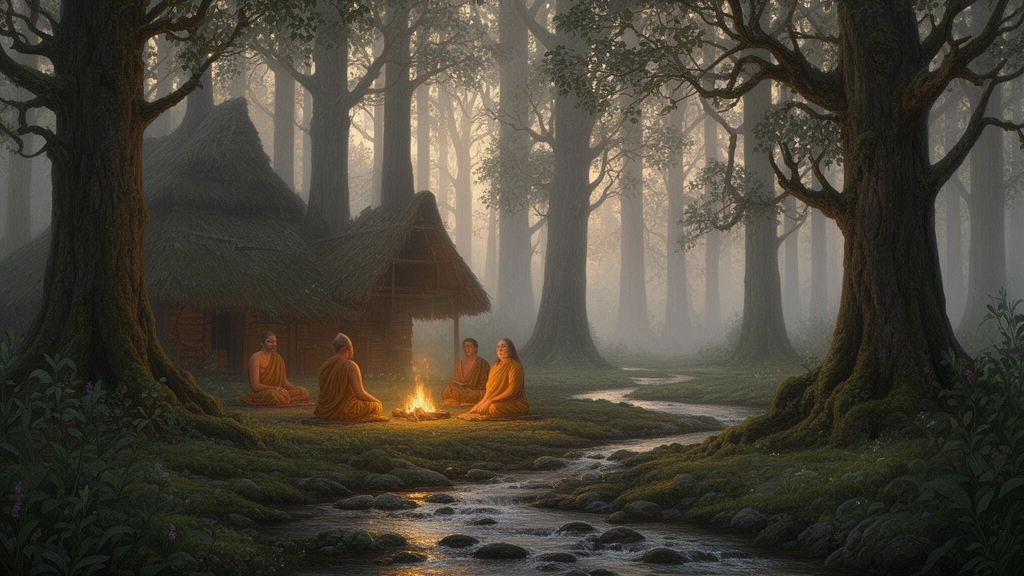
The word Upanishad is usually translated as a teaching given in close sitting or as a secret teaching, although the meaning is debated among scholars. The Upanishads form the philosophical end of the Vedas, the most ancient Hindu scriptures, and they are often called Vedanta, meaning “the end or final crown of the Vedas.” The Wisdom Library summary of the 1914 translation explains that these texts are properly defined as the Aranya portion of the Vedas, so called because they were read in a forest by those who had given up worldly life.[2]
The phrase “thirty minor Upanishads” does not refer to a single canonical set that every Hindu tradition recognizes. It refers to the thirty texts included in one English translation. Other traditions and editions organize the Upanishads differently, and readers who encounter a different number in another book are usually looking at a different selection. The safest way to use the phrase is to say: these are the thirty texts translated in the 1914 volume by K. Narayanasvami Aiyar.[2][5]
Why these texts are called “minor”
The word “minor” describes how these texts are usually placed within the wider Upanishadic literature. It does not mean that they are unimportant to the people who study or recite them. The Sacred-Texts edition describes the selection as translations from the ‘minor’ Upanishads, texts that have been incorporated into the list of 108 Upanishads and that deal principally with yogic philosophy and practices.[5] The Online Library of Liberty describes the selection as drawn from the very many Upanishads of the Indian tradition, grouped under themes such as Vedanta, physiological, mantra, Sannyasa, and Yoga.[6]
In practical terms, “minor” usually signals that these texts are shorter, less commonly quoted in standard overviews, and more specialized in subject matter than the older prose Upanishads that many readers meet first. A reader who begins with the minor texts should expect technical language about the body, breath, mantra, renunciation, and meditation, as well as more general philosophical statements about the self and ultimate reality.
The five groups in the 1914 translation
The Wisdom Library summary of the translation lists the following division: fourteen belong to Vedanta, two are categorized as Physiological, three are Mantra, two are Sannyasa, and nine are categorized as Yoga Upanishads.[2] The English translation’s own introductory note, as reproduced in the public PDF, adds an important caution: these headings are not hard and fast divisions. Some Sannyasa and Yoga Upanishads also give mantras, and the Mantra texts give mantras alone.[3]
Vedanta Upanishads (fourteen texts)
The Vedanta group is the largest in the collection. These texts focus on the nature of the self, the relation between the individual self and ultimate reality, and the means of knowledge that lead to liberation. In the Vedanta tradition, the Upanishads are read as the concluding section of the Vedas. Because the group is large, it is often the best place for readers to begin when they want philosophical rather than technical teaching.
Physiological Upanishads (two texts)
The two Physiological texts describe the body and its inner channels, energies, and processes in detail. The translation’s own grouping uses the word “physiological” for this category, but readers should understand that the descriptions belong to the internal vocabulary of the texts and yogic traditions. They are not modern medical explanations. Any reader who wishes to apply such teachings to health should consult qualified medical sources and should not treat the scripture as a substitute for medical care.
Mantra Upanishads (three texts)
The three Mantra texts are the most direct in form. As the translation’s introduction notes, the Mantric Upanishads give mantras alone, rather than extended philosophical argument.[3] For a reader, this means these texts are easier to skim for their structure but harder to understand without the context supplied by the other groups.
Sannyasa Upanishads (two texts)
The two Sannyasa texts are concerned with renunciation and the life of the renunciant, the sannyasin who has given up ordinary social and ritual obligations in pursuit of liberation. These texts are a tradition-specific guide to a particular stage of life. Readers should not take them as a universal rule for all Hindus. Many Hindus live as householders, and sannyasa is one path among several in the wider tradition.
Yoga Upanishads (nine texts)
The nine Yoga Upanishads deal with yogic philosophy and practice, including meditation, breath discipline, and the use of mantra. The Sacred-Texts description of the minor Upanishads notes their principal focus on yogic philosophy and practice.[5] These texts often blend philosophical statements with practical instructions. When reading them, it helps to separate what a text says about the goal of yoga from what a teacher or modern practitioner may recommend as a method. The texts themselves do not offer guaranteed physical, psychological, or spiritual outcomes.
Which texts are included
The Sacred-Texts edition provides an early list of the translated texts, each linked to a Veda and branch. The first entries include the Muktika Upanishad of the Shukla-Yajurveda, the Sarvasara Upanishad of the Krishna-Yajurveda, the Niralamba Upanishad of the Shukla-Yajurveda, the Maitreya Upanishad of the Samaveda, the Kaivalya Upanishad of the Krishna-Yajurveda, the Amritabindu Upanishad of the Krishna-Yajurveda, the Atmabodha Upanishad of the Rigveda, the Skanda Upanishad of the Krishna-Yajurveda, the Paingala Upanishad of the Shukla-Yajurveda, and the Adhyatma Upanishad of the Shukla-Yajurveda.[5] The list continues through texts such as the Subala, Tejobindu, Brahmopanishad, Vajrasuchi, Shariraka, Garbha, Tarasara, Narayana, Kalisantarana, and Bhikshuka Upanishads, and ends with the Naradaparivrajaka Upanishad of the Atharvaveda.[5]
Readers should note that the chapter count and the text count are not the same. The Sacred-Texts edition lists 36 chapters, which includes a foreword and several chapter divisions for longer texts such as the Subala, Paingala, and Maitreya Upanishads.[5] The Archive.org scanned editions show the same translation title and author, and the two Archive.org entries reflect different catalogue identifiers rather than different books.[1][4]
Where the texts come from: the Vedic branches
Many entries in the collection carry a Veda and branch name, such as Shukla-Yajurveda, Krishna-Yajurveda, Samaveda, Rigveda, or Atharvaveda. In traditional Hindu study, the Vedas are organized into schools or recensions, and a text is often associated with one of these branches. The labels help readers see that the Upanishads are not a single book by a single author. Sacred-Texts lists the Vedic attributions for each entry, but it describes the author as unknown.[5] That is a reasonable way to present the collection: the translation credits K. Narayanasvami Aiyar, while the original texts are anonymous in the edition consulted here.
The Vedic labels are a traditional and textual classification. They are not a claim about each text’s date, place of composition, or exact historical setting. This post does not assign dates to individual texts, because the available sources reviewed here do not supply verified dates for each one. Readers who want historical dating should consult scholarly introductions to the Upanishads rather than relying on a single web summary.
Understanding the 1914 English translation
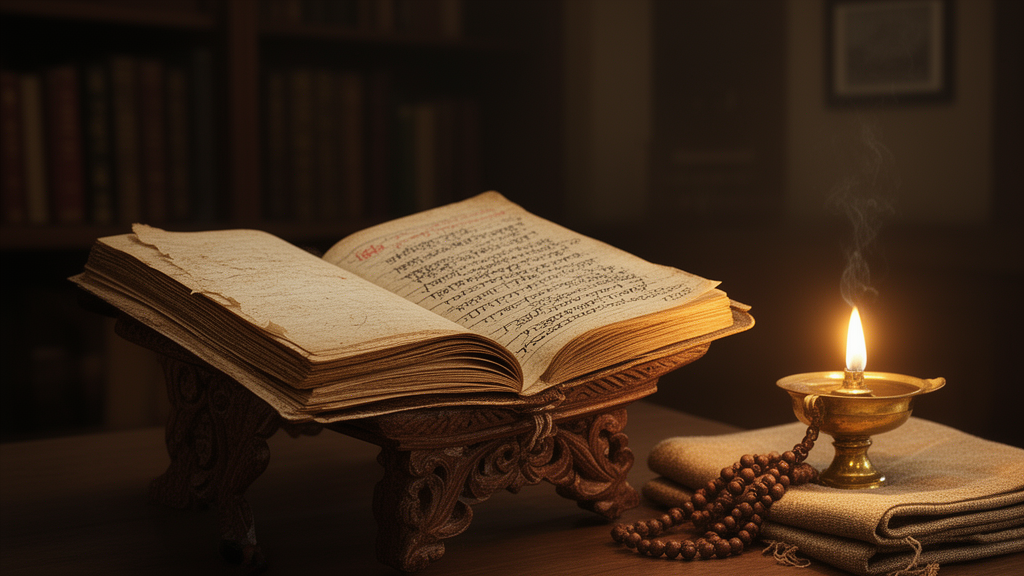
The most widely accessible version of the collection is the 1914 translation by K. Narayanasvami Aiyar. The Wisdom Library lists the book as published in 1914 and describes it as containing about 95,228 words of English translation.[2] The Archive.org record gives the title as Thirty Minor Upanishads and identifies the author as Narayanasvami Aiyar, K.[1] The spelling of the translator’s name varies across sources, appearing as both Narayanasvami and Narayanaswami. Readers searching for the book should try both spellings.
A translation is an interpretation. Words such as atman, brahman, prana, and mantra can carry several meanings, and translators choose English words that reflect their understanding of the text and the commentarial tradition behind it. The Sacred-Texts page shows the Sanskrit names of the texts with diacritics, while other pages use simpler transliterations.[5] When reading a translation, keep three things in mind: the translator’s choices, the edition’s date, and the difference between the Sanskrit original and the English rendering. If a term matters for your study, compare it with a second translation or a scholarly glossary.
How to read the thirty minor Upanishads
A useful reading order can help beginners avoid confusion. The steps below are a study method, not a traditional requirement.
- Read the introduction and category notes first. The translation’s own introduction explains that the categories are loose, so it is helpful to know that before reading the texts.[3]
- Start with a short Vedanta text. Vedanta texts give the philosophical frame that many other texts assume.
- Read one Mantra text slowly. Notice how little explanation is given and how much meaning depends on the surrounding tradition.
- Read a Yoga text alongside a teacher or a reliable commentary. Yogic practice is traditionally taught through guidance, and the text alone may not provide enough practical context.
- Compare two translations of a key term. Looking at how different translators render a word helps you see the interpretive choices involved.
Readers should also avoid treating a single text as the complete teaching of Hinduism. The Upanishads are one part of a large and varied tradition that includes the Vedas, epics, Puranas, devotional literature, ritual manuals, and regional practices.
Distinguishing scripture, tradition, and scholarship
Discussion of the Upanishads often mixes several different kinds of statement. It is helpful to separate them clearly.
- Scripture: What a named text says, as shown in a specific translation and edition. Here, the relevant texts are the thirty minor Upanishads in the 1914 translation.
- Tradition: How communities, teachers, and schools have read, recited, and applied the texts over time. Traditional readings can differ by region, lineage, and school.
- Devotional belief: What individual believers hold or feel about the texts. This is personal and should be described as belief, not as a neutral fact.
- Scholarship: Historical, linguistic, and comparative analysis of the texts, including questions about dating, transmission, and editing. Scholars may disagree on these matters.
The Wisdom Library summary and the Sacred-Texts description both present the collection as a translation and selection, with thematic categories supplied for convenience.[2][5] That framing is a good model for any reader writing about these texts: say which edition is being used, which group a text belongs to, and whether a claim comes from the text, a translator, a tradition, or a modern interpreter.
Common misunderstandings
“Minor” means less sacred
The label “minor” is about the place these texts hold in certain lists and the way they are usually cited. It does not mean that they lack spiritual significance for their readers. Many devotional and yogic communities value shorter texts for their practical focus.
All thirty texts teach the same practice
The categories show that the texts differ in subject. A Mantra text, a Sannyasa text, and a Yoga text address different concerns. A reader who expects one uniform method will be disappointed. Where the texts agree, the agreement is often conceptual; where they differ, practice may differ too.
The texts promise results
Some popular writing about yoga or mantra presents health, wealth, or protection as guaranteed outcomes. The sources reviewed here describe the texts’ contents and categories, not guaranteed results. Religious and yogic practices can be meaningful to people in their own right, but they should not be presented as assured cures or material rewards.
A note on practice and tradition
Some readers will want to use the texts in personal practice. In that case, it is important to recognize that many Upanishadic practices are taught within lineages, schools, and communities that explain how to approach them. A text read alone may be misunderstood, especially where it uses technical terms for the body, breath, or mind. Readers who are unsure about a practice should seek guidance from a qualified teacher within their own tradition and should consult a physician for any health concerns.
Related HindusGod.com reading
Readers who want a broader overview of the Upanishads may find the following HindusGod.com pages useful. The links below are to draft posts in the WordPress inventory; they may not be public until the owner publishes those posts.
- For the general category of minor texts, see Minor Upanishads.
- For the wider collection of texts known as the Upanishads, see Upanishads.
- For a plain introduction to the phrase itself, see About Upanishads in English.
- For a summary of the central teachings, see Essence of the Upanishads.
- For readers comparing traditional totals, see 112 Upanishads and 14 Upanishads, which can help distinguish different groupings from the thirty-text selection discussed here.
- For the nine-text yogic grouping, see 9 Upanishads.
- For the three-text mantra grouping, see 3 Upanishads.
Note for the owner: the target page for the nine-text and three-text groupings is listed as a draft about counts of Upanishads, so the link should be reviewed for relevance before publication.
Frequently asked questions
Are the thirty minor Upanishads the same as the 108 Upanishads?
No. The Sacred-Texts description says these minor texts have been incorporated into the list of 108 Upanishads, but the thirty-text collection is a selection translated in one English volume.[5] Other lists and editions may include different texts.
Who translated the thirty minor Upanishads?
The 1914 English translation is credited to K. Narayanasvami Aiyar in the Wisdom Library, Sacred-Texts, and Archive.org records. The name appears in more than one spelling across sources.[1][2][5]
Should beginners start with the Yoga Upanishads?
Beginners may find the Vedanta texts easier to place within the wider tradition, because they state the philosophical frame. Yoga Upanishads can be read afterward with a teacher or a reliable commentary, since their practical instructions depend on context.
Sources and further reading
- Archive.org, Thirty minor Upanishads by Narayanasvami Aiyar, K. Scanned edition record: https://archive.org/details/thirtyminorupani00xxxxuoft. Used for title, author, and edition record.
- Archive.org, Thirty minor Upanishads by Narayanaswami Aiyar, K. Second scanned record: https://archive.org/details/thirtyminorupani00naraiala. Used to confirm the spelling variant of the translator’s name.
- Wisdom Library, Thirty minor Upanishads (1914 translation summary and category counts): https://www.wisdomlib.org/hinduism/book/thirty-minor-upanishads. Used for the five-group count, the Aranya description, and the 1914 date.
- Public PDF, Thirty Minor Upanishads (translation introduction): https://ia800506.us.archive.org/18/items/in.ernet.dli.2015.537222/2015.537222.thirty-minor_text.pdf. Used for the note that the categories are not hard and fast. This page was not fully inspected in this run.
- Sacred-Texts, Thirty Minor Upanishads: https://sacred-texts.com/book/thirty-minor-upanishads. Used for the table of contents, Vedic attributions, chapter count, and the description of the 108-text list.
- Online Library of Liberty, Thirty Minor Upanishads: https://oll.libertyfund.org/titles/aiyar-thirty-minor-upanishads. Used for the thematic description. This page was not fully inspected in this run.
Closing takeaway
The thirty minor Upanishads are best approached as a carefully bounded selection rather than a complete picture of Hindu scripture. Their five-group structure gives a helpful map, but the categories overlap. Reading them well means noticing which edition is being used, separating what the text says from later commentary and devotional belief, and treating practical yogic or mantric instructions as tradition-specific guidance. A slow reading, supported by a second translation and a qualified teacher where needed, will serve readers far better than any promise of quick results.