The Holy Psalmody is a Christian service of praise in the Coptic Orthodox Church. It is made up of psalms, biblical canticles, theotokia (hymns to the Virgin Mary), doxologies and prayers, and it is sung in the Evening Hour, the Midnight Psalmody and the Morning Hour. This article explains what the Psalmody contains, how a service is ordered, and what the sources say about its meaning and history. It is written for general readers who meet the term in Coptic contexts or while exploring Christian worship beside Hindu and other traditions. The Holy Psalmody is not a Hindu practice, and this post does not describe it as one.
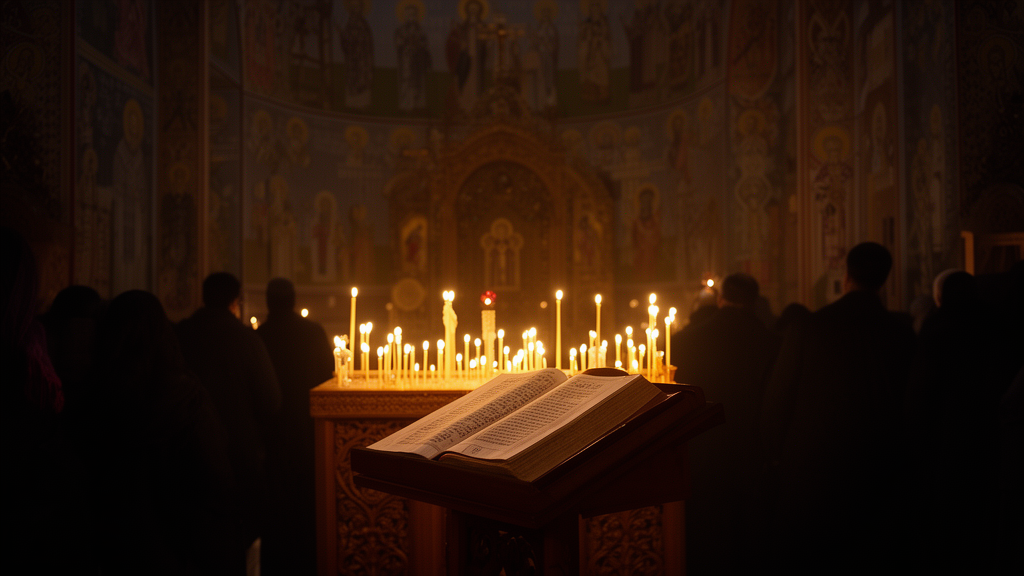
The Direct Answer: What the Holy Psalmody Is

The Holy Psalmody is the set of prayers and chanted hymns that the Coptic Church uses before the Holy Liturgy. According to the Tasbeha article on the arrangement of the Psalmody, it consists of the prayers of the Evening Hour, the Raising of the Evening Incense, the Midnight Psalmody, the prayers of the Morning Hour, and the Raising of the Morning Incense. The Holy Liturgy is said after it (Tasbeha.org, The Arrangement of the Holy Psalmody).
In short, the Psalmody is a sequence of scriptural psalms and canticles, joined with meditations and tuned for chanting. Its purpose, as one Coptic author puts it, is praise, prayer, thanksgiving, glorification and appeal to God (HCOC, The Spirituality of the Holy Psalmody).
The Parts of the Psalmody
The Evening Hour and the Evening Incense
The Tasbeha arrangement places the Evening Hour first. As with other Coptic services, the Psalmody opens with the Doxa Patri, the Lord’s Prayer, a thanksgiving prayer and Psalm 50. On non-fasting days the prayers of the 9th, 11th, 12th and Veil offices of the Agpeya follow; on fasting days the prayers of the 11th, 12th and Veil offices are said. The congregation then sings the Introductory Psalm, Psalm 116, and moves to the Fourth Hoos (canticle), the Psali of the day, the Theotokia of the day, and a conclusion of the Theotokia. The service ends with the raising of the Evening Incense (Tasbeha.org).
The Midnight Psalmody
The Midnight Psalmody is the longest part. It begins with the Midnight Office of the Agpeya. Then the chant Tenqhnou (Ten-theeno), meaning “Arise, O children of light,” invites the worshipper to rise and praise the Lord. The Tasbeha account lists the Hoos canticles, the Psali for the Three Saintly Children, the commemoration of the saints, the doxologies, and the Fourth Hoos. The body of the Midnight Psalmody contains the Psali of the feast or day, the Theotokia, the Antiphonarium, the Creed and a litany before the service closes with absolution (Tasbeha.org).
The Wiscopts overview adds detail on the opening chants. Starting after Resurrection and continuing through the fifty days of Pentecost, and later only on Sundays until the last Sunday of Hatoor, the chant Tennau is said. It praises the Resurrection as the basis of faith and is therefore called the Hymn of Resurrection. The First Hoas, which praises God after the crossing of the Red Sea (Exodus 15), follows. On Sundays the Second Hoas comes next; on other days the Gospel of Departure (Luke 2:29–32) and sections 7, 8 and 9 of the Sunday Theotokia are said (Wiscopts.net, Psalmody: The Prayer of Praise).
The Morning Hour
After the Midnight Psalmody is concluded, the congregation says the prayers of the Morning Hour. These include the prayers of the First Hour of the Agpeya and the Morning Doxology, which ends with the conclusion of the Adam Theotokias. The Liturgy follows (Tasbeha.org).
How the Psalmody Is Arranged
The Psalmody is not a single fixed text read the same way every day. Its contents change with the day of the week, the season and the feasts. The e-Coptic Book edition of The Holy Annual Psalmody reflects this structure. Its contents list includes a Psali and a Theotokia for each day from Sunday through Saturday, with a Lobsh for each weekday, along with separate sections for Morning Prayers and Doxologies, Annual Verses, and the Doxologies of the Feasts, Great Lent and Holy Week (e.copticbook.net, The Holy Annual Psalmody).
The same edition lists verses for particular occasions, such as the Angels, the Apostles, the Martyrs, Nayrouz, the Feast of the Cross, the Month of Kiahk, Great Lent, Palm Sunday, Great Thursday and Easter. The table of contents shows the variety of the Psalmody, but it does not by itself explain the theology of each item. For that, readers need the commentaries and liturgical guides.
A Simple Order for Reading the Service
- Opening prayers: Doxa Patri, the Lord’s Prayer, a thanksgiving prayer and Psalm 50.
- Evening Hour: Agpeya prayers appropriate to the day (fasting or non-fasting), the Introductory Psalm (Psalm 116), the Fourth Hoos, the Psali and Theotokia of the day, and the Evening Incense.
- Midnight Psalmody: the Midnight Office, Tenqhnou, Tennau where applicable, the Hoos canticles, the Psali for the Three Saintly Children, the commemoration of the saints, and the doxologies.
- Body of the Midnight Psalmody: the Psali and Theotokia, the Antiphonarium, the Creed, the litany and absolution.
- Morning Hour: the First Hour of the Agpeya, the Morning Doxology, and the Morning Incense, followed by the Liturgy.
Sources differ on how many parts belong to each stage and on exact labels. The Tasbeha article and the Wiscopts overview use slightly different spellings and groupings, so this list follows the Tasbeha arrangement for order and uses Wiscopts only where it adds explanation.
Psalms, Canticles and Theotokia
What the Psalms Contribute
The Psalmody draws mainly from the Psalms and from canticles in the Old Testament that contain prayers of praise. The Wiscopts overview describes these passages as Scripture that has been augmented with meditations and summaries and set to particular tunes (Wiscopts.net). The Scripture remains the core, and the commentary and tune are the way the Church presents it in worship.
The Hoos, Psali and Theotokia
Three terms recur in the sources and are often unfamiliar to readers:
- Hoos (Hoas or Hoos): a canticle, usually taken from Scripture, sung as praise.
- Psali: a psalm or psalm-based chant set for a particular day or feast.
- Theotokia: hymns addressed to the Virgin Mary, the Theotokos, sung in the Psalmody.
These definitions are a practical summary of how the sources use the terms. The Wiscopts article notes that the Theotokia’s sections explain the relationship between Christ and humanity through the incarnation from the Virgin Mary, which is a theological interpretation within Coptic tradition.
The Spiritual Meaning of the Canticles
The HCOC book on the Spirituality of the Holy Psalmody, written by Matthew Massoud and edited with a foreword by H.G. Bishop Youssef, offers a devotional reading of the Sunday Psalmody. It treats the first hymn, “Tentheno” or “Arise,” as a call to awaken from physical and spiritual sleep. It reads the First Canticle as the crossing of the Red Sea, a symbol of baptism and a new life of repentance. The Second Canticle is read as thanksgiving, and the Third as the persecution that follows. The Fourth is read as a foretaste of heaven (HCOC).
This is a devotional interpretation by one author in one church community. It is useful for understanding how Coptic worshippers may read the texts, but it is not the only reading and should not be treated as an official statement of doctrine.
Tradition, History and Scholarly Claims
Devotional, historical and scholarly claims about the Psalmody should be kept apart. The Wiscopts overview states that the Psalmody is a “living link” with ancient Egyptian religious practice, and it cites the Coptic Encyclopedia, Volume 8, pages 1730–1731, for the view that Coptic music has continued unbroken from its beginnings and should be sung in Coptic to express the spirituality of the ancient church (Wiscopts.net).
These are scholarly and community views presented by a parish-related site. They are important context, but readers who want to test them should consult the Coptic Encyclopedia directly and academic work on Coptic music. This article does not treat the link to ancient Egyptian practice as settled fact.
Tradition and Liturgical Order
The Tasbeha article quotes 1 Corinthians 14:40, “Let all things be done decently and in order,” as the principle behind the service order (Tasbeha.org). This is a theological principle cited by the source, not a historical account of how the order developed.
Relation to the Holy Liturgy
The Psalmody comes before the Holy Liturgy. Churches may vary in how fully they keep every part of the Psalmody, especially on weekdays, in parish settings, and in monasteries, so readers should follow their own parish or community guidance. The sources describe the classic order; they do not say every congregation performs all of it.
Comparing Traditions Without Overstating Them
Readers on a Hindu devotional website may meet the Psalmody alongside devotional music from Hinduism, such as bhajan and kirtan, or with scriptures such as the Holy Geeta and the Holy Gita. The useful comparison is structural: both are sung forms of devotion with set texts, tunes and community settings. Beyond that, the two traditions differ in theology, scripture, deities and ritual. A Christian liturgy such as the Psalmody should not be explained through Hindu concepts, nor should Hindu practices be explained through Coptic categories.
For scripture-level comparisons, readers can start with general pages on Holy Scriptures and Holy Book, and with the guides on the meaning of holy books. Other traditions’ texts are covered in the Holy Injil, the Holy Zabur, the Holy Qur’an and the Holy Text drafts. The idea of the Holy Spirit in Christian doctrine is covered in the And the Holy Spirit draft. These are draft posts and may not be public yet, so readers should not assume the links work until the owner publishes them.
Spelling and Transliteration
Coptic terms appear in several forms across sources. Psalmody is also written Psalmodia in the Wiscopts overview, which uses that term for the book. The opening chant appears as Tenqhnou (Ten-theeno) in one source and as Tentheno in another. The Resurrection hymn appears as Tennau or Tenneu. The First Hoos is also written Hoas. These are transliteration differences, not different practices. This article uses Psalmody, Tenqhnou and Tennau for consistency.
FAQs
Is the Holy Psalmody the same as the Holy Liturgy?
No. The Psalmody comes before the Liturgy. The Tasbeha article describes the Psalmody as the prayers and chants of the Evening Hour, Midnight Psalmody and Morning Hour, and says the Liturgy follows (Tasbeha.org).
Does the Psalmody change by day?
Yes, in part. The Psali, Theotokia and Lobsh sections vary by day of the week, and feasts and fasting periods add further variation, according to the e-Coptic Book table of contents (e.copticbook.net).
Is the Psalmody a Hindu practice?
No. It is part of the Coptic Orthodox Christian tradition. Readers interested in Hindu devotional practice should consult Hindu sources and the site’s Hindu guides.
Sources and Further Reading
- The Arrangement of the Holy Psalmody (Praises), Tasbeha.org: order of the Evening Hour, Midnight Psalmody and Morning Hour.
- The Spirituality of the Holy Psalmody, HCOC: devotional reading of the Psalmody by Matthew Massoud, with a foreword by H.G. Bishop Youssef.
- The Holy Annual Psalmody, e.copticbook.net: table of contents showing daily Psali, Theotokia and Doxologies.
- Psalmody: The Prayer of Praise, Wiscopts.net: overview of the Psalmody, the Midnight Psalmody and scholarly citations to the Coptic Encyclopedia.
Closing Takeaway
The Holy Psalmody is a Coptic Orthodox service of psalms, canticles, hymns and prayers that prepares the community for the Liturgy. Its order follows the Evening Hour, Midnight Psalmody and Morning Hour, with content that varies by day and season. For accurate study, read the parish or community guidance together with the primary texts and the scholarly sources cited above.