The Sutra of Great Liberation is a Mahayana Buddhist text, not a Hindu scripture. It is presented as a teaching of Lord Śākyamuni Buddha, and it is especially valued in Tibetan Buddhist communities. Its full Sanskrit-style title, as rendered in the FPMT English edition, is The Ārya Mahāyāna Sūtra Called “The All-Expansive Great Liberation, Purifying Negative Deeds through Cleansing Remorse, Perfectly Arranged for the Accomplishment of Buddhahood.” This article explains what the sutra is, what it teaches, how its devotional claims should be understood, and how Tibetan communities use it in daily practice and after death.

Quick answer: what is the Sutra of Great Liberation?
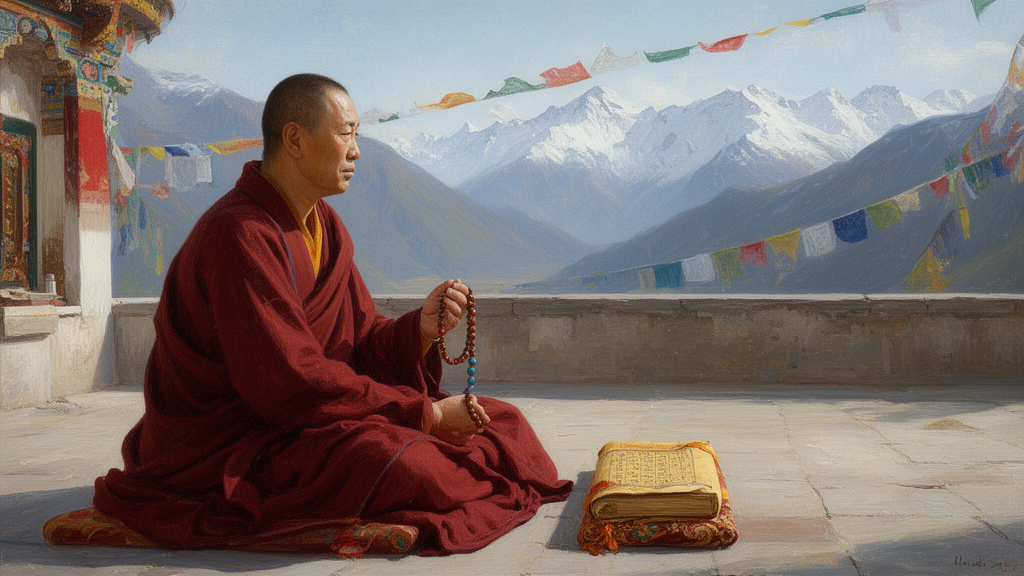
The Sutra of Great Liberation is a Mahayana sutra that teaches methods for purifying negative karma, realizing emptiness, generating bodhisattva aspiration, and benefiting sentient beings. According to the Khenpo Sodargye Rinpoche teaching page, the sutra is regarded as a teaching left by the Buddha before his parinirvana, and although it is named a sutra, Khenpo Sodargye describes it as almost a tantric teaching. Its popularity in Tibetan regions is tied to its pith instructions and to its many names of buddhas and bodhisattvas, which practitioners regard as beneficial to read or hear.
In short, the text is best approached as a Tibetan-practiced Mahayana scripture with strong devotional and ritual uses. Readers who want to study it should begin with an authoritative English translation and with commentary from teachers in the tradition.
The title and what it signals
The title contains several elements that help readers recognize the text’s character. Ārya indicates a text regarded as a noble or sacred teaching within Buddhist usage. Mahāyāna identifies it with the Great Vehicle tradition. Sūtra means a discourse attributed to the Buddha. The phrase “All-Expansive Great Liberation” appears in the translated title, along with the teaching’s stated aim of purifying negative deeds through cleansing remorse and leading to the accomplishment of buddhahood.
Readers will see several spellings and forms in English materials. Some sources write Sutra without diacritics, while others use Sūtra. Some use the shorter title “Sutra of Great Liberation,” and others give the longer full title. These are different renderings of the same text, not different texts. The FPMT edition uses the diacritic form in its own title, and the Khenpo Sodargye teaching page uses the shorter English title.
Who translated it and where to read it
The most visible English edition connected with the sutra is the translation by Ven. Gyalten Lekden published through FPMT Education Services. The copy found online in the research (a Scribd upload of that book) shows a title page, translator credit, and a 2023 copyright notice held by the Foundation for the Preservation of the Mahayana Tradition, Inc. It also includes a translator’s introduction, a guide to pronouncing Sanskrit, a mantra to increase the power of recitation, appendices listing attested and unattested proper Sanskrit names, and notes.
Because that Scribd page is an unofficial upload of a copyrighted book, readers should prefer an official or library-held edition rather than an unofficial copy. The FPMT website also publicized the English availability of the sutra in a news article titled “Unimaginable Benefits,” which is useful for confirming the publisher’s own announcement. Readers who want the full text should consult the official FPMT publication channels or a legitimate bookseller.
The main teaching areas
Khenpo Sodargye’s teaching summary identifies several major themes. These are useful for understanding why the sutra has such a wide role in practice.
- Purifying negativities: The sutra is described as containing instructions on purifying negative karma, which is the central theme implied by its title.
- Realizing emptiness: The teaching is said to include guidance on realizing emptiness, a core topic in Mahayana philosophy.
- Making aspiration: Practitioners are encouraged to form bodhisattva aspirations for the benefit of others.
- Benefiting and liberating sentient beings: The sutra frames practice as oriented toward the welfare of all beings.
- Names of buddhas and bodhisattvas: The text mentions many buddhas of the past, present, and future and numerous bodhisattvas. Khenpo Sodargye notes that this, too, is regarded as beneficial to readers and listeners.
These are teaching claims attributed to the sutra and explained by a Tibetan teacher. They describe how the text is taught and valued, not independent historical proof of any particular outcome.
Purification and remorse: the central idea
The title’s phrase “Purifying Negative Deeds through Cleansing Remorse” points to the sutra’s emphasis on confession and remorse. In Mahayana practice, negative karma is generally understood as the result of harmful actions, speech, and thoughts, and purification is typically pursued through regret, a commitment to refrain, and practices that generate positive intention. This sutra is one of many Mahayana texts that gives practical methods for this purpose.
Purification here is a spiritual process within Buddhist doctrine. It is not a guarantee that particular life events will change. Readers should treat remorse, ethical commitment, and meditative practice as the sutra’s core instruction, and should be cautious about any claim that reciting a text automatically removes all consequences of past actions.
Devotional claims in the opening passages
The English edition, as reproduced in the research copy, includes an introductory passage attributed to Lama Zopa Rinpoche. It states that hearing the sutra’s name, or writing, reading, printing, or keeping a copy of it, is regarded as generating great merit. It also says that reciting the sutra is said to purify heavy negative karmas and lead toward nirvana and enlightenment, and that the sutra is said to bring protection to those around the practitioner. It further says that where the sutra abides, the Buddha abides.
These are devotional claims. They express the value that the tradition places on the text. They should be read as statements of faith and religious meaning, not as promises of material benefits, health outcomes, protection from harm, or guaranteed rebirth. The Buddhist teachings themselves emphasize understanding, ethical conduct, and practice over automatic results. A respectful reader can appreciate these claims as part of the text’s devotional framework while recognizing that they are not scientifically testable.
How devotion and study fit together
Many Tibetan practitioners approach the sutra with both devotion and study. Devotion gives motivation to recite and keep the text, while study helps them understand what the sutra actually teaches about emptiness, remorse, and bodhicitta. Khenpo Sodargye’s teaching presents the sutra as containing practical instructions, which means that reading the text with a teacher or with a good commentary can deepen the practice beyond ritual repetition.
Recitation in Tibetan communities
Khenpo Sodargye’s teaching page reports that the sutra is greatly valued by both lay people and monastics in Tibetan regions, and that almost every Tibetan family attaches great importance to it. Many practitioners recite it as a daily practice. These are general descriptions from one teacher and may vary by family, monastery, and region.
Recitation after death
One of the most widely described uses concerns death and the period after it. According to the same teaching, when someone passes away, the family often requests monks or nuns to recite the sutra for the deceased every day during the first 49 days. The stated belief is that having others recite it for the deceased even once can prevent the person from falling into lower realms and can help them attain liberation. Khenpo Sodargye presents this as a traditional belief held within Tibetan communities.
This custom is tradition-specific. Buddhists in other regions may have different funerary practices, and Tibetan families may vary in how they arrange recitation, who leads it, and how long it continues. Readers who are planning a funeral or memorial should consult a local monastery, lama, or community elder about the appropriate form.
Recitation as daily practice
For many practitioners, the sutra is part of a personal daily routine. Recitation can be combined with prostrations, prayers, mantra practice, meditation, or study, depending on the lineage and the individual’s teacher. The text’s length and its many names of buddhas and bodhisattvas make some practitioners prefer to recite it in a set schedule rather than all at once. Where a practitioner is unsure how to begin, a teacher from their own lineage is the most reliable guide.
The mantra included in the translation
The FPMT English edition includes a section described as a mantra to increase the power of recitation. This article does not reproduce that mantra or its transliteration, because the research did not include a verified text of the mantra beyond the table of contents listing. Readers who wish to recite it should use the official edition, which gives the correct form and any translation notes. Mantra practice within Tibetan Buddhism is often transmitted through empowerment and teaching, so readers should be mindful of lineage guidance.
Who is depicted in the sutra’s framing
The text is presented as a discourse of Lord Śākyamuni Buddha. The translated title identifies it as an Ārya Mahāyāna Sūtra, and the translation’s contents page lists a translator’s introduction and the main sutra text. The sutra’s framing, its emphasis on buddhas and bodhisattvas, and its teaching on aspiration place it firmly within the Mahayana tradition. Its presence in Tibetan practice reflects the transmission of Mahayana texts through Tibetan teachers and monasteries.
Scholarly and translation notes
The FPMT edition includes two appendices of proper Sanskrit names. One lists names regarded as attested, and the other lists names regarded as unattested. The existence of this division shows that the translators paid attention to the status of names in the text, distinguishing those supported by known Sanskrit sources from those that could not be confirmed. This is a good example of why translation notes matter: readers can see where the English rendering depends on transmitted forms and where names may not be independently verified.
Readers who want to study the text critically should keep the following distinctions in mind:
- Scripture: the translated sutra text itself, as presented in the official edition.
- Translator’s introduction and notes: the translator’s explanation of the text and its terms, which is commentary rather than the sutra’s own words.
- Teacher commentary: explanations by lamas and scholars, such as the Khenpo Sodargye teaching, which present the text within a practice tradition.
- Community custom: recitation after death or as daily practice, which reflects Tibetan family and monastic life.
- Historical research: questions about the text’s composition, transmission, and dating, which require scholarly sources. This article does not make claims about dating.
Because the research did not verify the text’s origin, date of composition, or early manuscript history, readers should not treat any claim about those topics as established unless it is supported by a dedicated scholarly source.
How this sutra relates to other texts on HindusGod.com
HindusGod.com covers Hindu gods, scriptures, festivals, and devotional practice, along with related educational topics. The Sutra of Great Liberation belongs to Buddhist tradition, so it should be read in that context. Readers interested in related sutras and dharanis may find the following posts useful for comparison:
- The Liberation Sutra post is a related draft on a similarly named text, and readers should check its content to see how it differs from the Great Liberation text described here.
- The The Great Dharani Sutra post covers a different dharani-focused text, which is useful for seeing how dharanis differ from longer sutras in function.
- The Dharani Sutra post explores the general category of dharani texts and their protective and recitation roles in Buddhist practice.
- The Avalokiteshvara Sutra post covers a Mahayana text centered on a bodhisattva, which relates to the sutra’s emphasis on bodhisattva aspiration.
- The Amida Sutra Meaning post is a useful companion for readers interested in how Mahayana sutras are explained for lay practitioners.
- The Dasabhumika Sutra post covers a text on the bodhisattva stages, relevant to the sutra’s theme of bodhisattva aspiration.
- The Avatamsaka Sutra post covers a major Mahayana scripture on the vast cosmos of buddhas and bodhisattvas, which is a useful context for the sutra’s names of buddhas and bodhisattvas.
- The Brahmajala Sutra post discusses a text on ethical precepts, relevant to the sutra’s emphasis on purifying negative deeds.
- The Meaning Sutra post offers a general treatment of how sutra meanings are explained, which can help readers approach the translator’s notes critically.
- The Agama Sutra post explains the Agama collections, a useful context for understanding how sutras are grouped in Buddhist canons.
Practical guidance for readers
Readers who wish to explore the Sutra of Great Liberation can take the following steps. These steps are general and should be adapted to the reader’s own tradition and teacher.
- Obtain an official English edition, such as the FPMT translation, and read the translator’s introduction first.
- Read the Khenpo Sodargye teaching summary or a similar commentary to understand the sutra’s practice context.
- Begin with study and reflection on purification and remorse before adopting a fixed recitation schedule.
- If you plan to recite the text regularly, seek guidance from a teacher in a lineage you trust, especially regarding mantras and empowerments.
- If you are arranging recitation for a deceased relative, consult a local monastery or lama about the customary form in your family’s tradition.
Frequently asked questions
Is the Sutra of Great Liberation a Hindu text?
No. It is a Mahayana Buddhist sutra. HindusGod.com covers Hindu topics, and this article explains the text for readers who encounter it in Buddhist or Tibetan contexts or in related searches.
Is it a sutra or a tantric text?
The title calls it a sutra. Khenpo Sodargye’s teaching describes it as almost a tantric teaching in content, because of its pith instructions and its practice orientation. Readers should note that classification can depend on the teacher and the tradition.
Does reciting the sutra guarantee a particular result?
The sutra and its commentators describe devotional benefits, including merit, purification, and protection. These are traditional beliefs. They are not guaranteed outcomes that can be verified, and the Buddhist teachings emphasize understanding and ethical practice alongside recitation.
Which English edition should I use?
The FPMT translation by Ven. Gyalten Lekden is one widely referenced English edition. Readers should consult the official publisher or a legitimate bookseller, rather than unofficial uploads.
Summary and next step
The Sutra of Great Liberation is a Mahayana Buddhist sutra valued in Tibetan communities for its instructions on purifying negative karma, realizing emptiness, forming bodhisattva aspirations, and benefiting sentient beings. Its devotional claims are an important part of its role in practice, but they should be understood as traditional beliefs rather than guaranteed outcomes. Its recitation, especially after death and as a daily practice, reflects Tibetan family and monastic customs that vary by community.
To go further, read an official English edition, study the translator’s notes, and consult a teacher from a lineage you trust. Readers interested in comparing Buddhist sutras can explore the related posts linked above.
Sources and further reading
- Ven. Gyalten Lekden (trans.), The Sūtra of Great Liberation, FPMT Education Services. Copy reviewed as an unofficial Scribd upload; the copyright notice is held by the Foundation for the Preservation of the Mahayana Tradition, Inc. Prefer an official edition. Scribd copy (unofficial)
- FPMT, “Unimaginable” Benefits: The Sutra of Great Liberation is Now Available in English. Used for the publisher’s announcement of the English edition. FPMT news article
- FPMT, The Sutra of Great Liberation: Unbelievable Benefits. Referenced for the FPMT’s teaching presentation of the sutra’s benefits. FPMT article
- Khenpo Sodargye Rinpoche, The Sutra of Great Liberation teaching page. Used for the summary of teaching themes, Tibetan recitation customs, and the description as almost a tantric teaching. Khenpo Sodargye teaching page
Note: Additional items found in the search (an Ah-Lama PDF on Rinpoche’s oral transmission and an Academia.edu copy of the translation) were not inspected in full during this research and are not used as evidence for any claim in this article.