The Sutra of Complete Enlightenment is a Buddhist scripture, not a Hindu one. It is known in Chinese as the Yuanjue jing (圓覺經), and it is usually called the Sutra of Perfect Enlightenment in English. It is a short text, traditionally read as a guide to meditation and to the nature of awakening, and it has been especially influential in Chan, Sŏn, and Zen Buddhism. This article explains what the sutra says, where it came from, how it is structured, and why scholars and practitioners treat its authorship and meaning with care. Because this site serves readers who want to understand Indian and Hindu traditions, it also explains how this Buddhist text differs from Hindu scriptures and why it is discussed here.
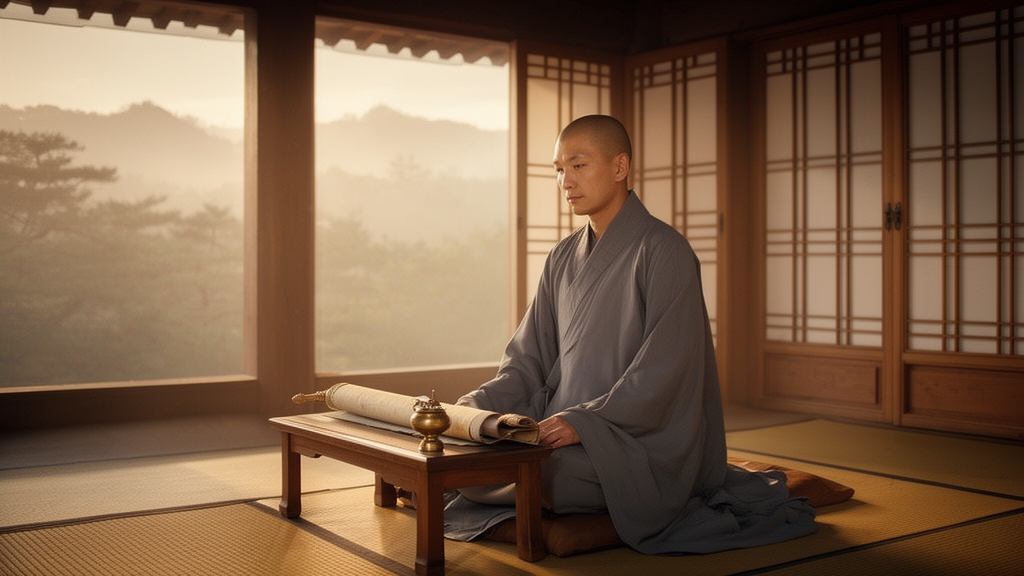
Direct answer: what the Sutra of Complete Enlightenment is
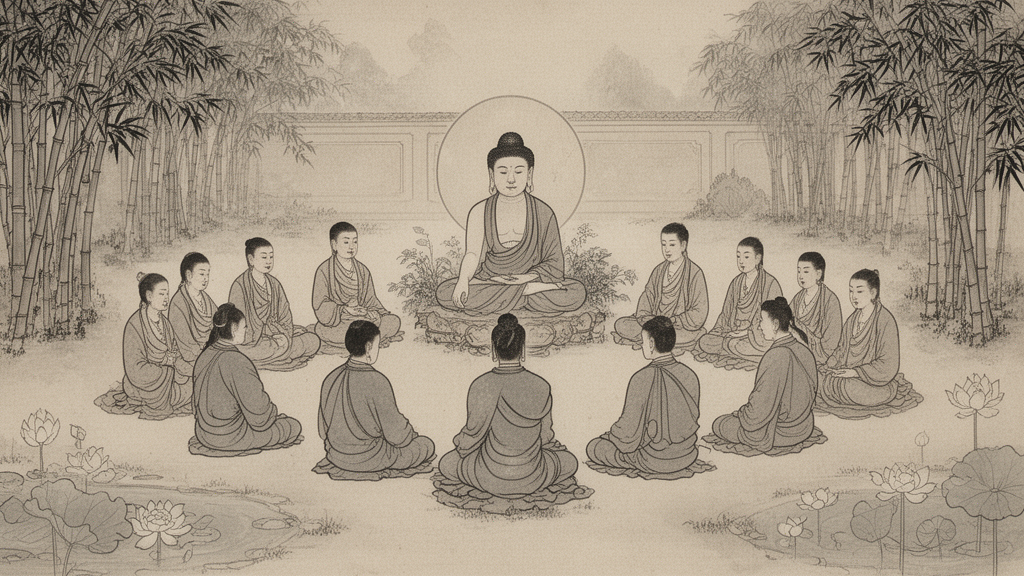
The sutra is a Mahayana Buddhist scripture in which the Buddha, in a dialogue format, explains that perfect enlightenment is non-dual and all-encompassing. It teaches that all sentient beings already possess original buddhahood, that ignorance and the sense of a separate self are illusory, and that practice should be guided by understanding rather than by attachment to forms. According to the secondary summary available for this article, the sutra is widely described as a concise guide to meditation in East Asian Buddhism, and it has long been studied in Korean monastic education.
Two points matter from the start. First, the sutra is best known through East Asian Buddhism, not through the early Indian Buddhist canon. Second, the modern English text most readers encounter is a translation with commentary, so the reader is reading a particular tradition’s interpretation as well as the sutra itself.
Name and translation: complete, perfect, or full?
The keyword sutra of complete enlightenment is a variant of the more common English title Sutra of Perfect Enlightenment. Both render the Chinese Yuanjue, where yuan is commonly understood as complete, perfect, or round, and jue means awakening or enlightenment. Readers may also see the title given as Yuanjue Sutra or Perfect Enlightenment Sutra. These forms refer to the same text, but translators choose different English words, so a reader should check which translation is being discussed.
In this article, the Chinese title is given as Yuanjue jing, the Sanskrit-style label sūtra is used for the genre, and the English title follows the 1999 translation cited in the research notes. No Sanskrit original is presented here as a verified source text, because the available evidence does not establish one.
Origins and authorship: an apocryphal Chinese scripture
The sutra is usually described as an apocryphal scripture, meaning that it was composed in China rather than brought from India as a recognized translation. The secondary source used for this draft states that it was composed in China around the early eighth century within Chan and Huayan circles. This is a dating claim that should be checked against primary scholarship before it is treated as settled. Scholars often describe such texts as products of a particular religious milieu that was reinterpreting Buddhist ideas for Chinese audiences.
This distinction matters for readers. Devotees may regard a sutra as the authentic teaching of the Buddha, while historians ask when, where, and by whom a text was written. These are different kinds of claims. A tradition can honor a scripture deeply even when the text’s origins are understood to lie in a later period and a different cultural setting.
Structure of the sutra
According to the secondary summary, the sutra has a convocation followed by twelve chapters. Its speakers include twelve bodhisattvas who pose questions to the Buddha, and the Buddha’s answers form the body of the text. The question-and-answer format is important because it lets the sutra address doubts that a practitioner might raise, such as how a person can be already awakened and yet still need practice.
The convocation and the question-and-answer form
The opening section sets the scene and introduces the bodhisattvas who will ask questions. The dialogue format is a common feature of Mahayana sutras, where named bodhisattvas serve as representatives of the questions a student might ask. In this sutra, the questions move from basic understanding of perfect enlightenment toward the practical problems of meditation.
Major movement within the twelve chapters
The secondary source describes the text as moving from sudden-enlightenment perspectives in its early chapters toward more gradual and functional approaches in its later chapters. This reading is common among commentators, but it is an interpretation, not a universal fact about the sutra. Some readers emphasize the unity of the chapters; others emphasize their progression. A careful reader should compare an edition’s own introduction and notes before deciding which reading is most accurate for that edition.
Editions and chapter divisions
Chapter numbering and section headings can vary among editions, translations, and commentaries. Before quoting chapter-level details, readers should check the specific edition in use. This article describes the twelve-chapter structure as reported in the research notes and avoids assigning specific doctrines to particular chapter numbers unless a primary edition has been checked.
Key teachings
Original buddhahood of all beings
A central theme of the sutra, as summarized in the research notes, is the original buddhahood of all sentient beings. In Buddhist terms, this means that awakening is not a new creation but the recognition of a nature that has always been present. Many East Asian Buddhist traditions express this idea in different ways, and the sutra’s wording should be read in its own context rather than as a simple equivalent of other doctrines.
Ignorance, body, mind, and objects as illusory
The sutra is described as teaching that ignorance is illusory, as are the body, the mind, and the objects that the mind perceives. This is not a claim that the world does not appear to us. It is a teaching that the way ordinary beings take appearances to be fixed and separate is mistaken. Readers who are new to Buddhist philosophy should note that terms like illusory are used technically and do not mean that everyday experience is unreal in a casual sense.
Beyond samsara and nirvana
The secondary summary says the sutra describes perfect enlightenment as transcending the distinction between samsara, the cycle of conditioned existence, and nirvana, its cessation. In many Buddhist texts these two are set against each other as bondage and liberation. The sutra’s non-dual presentation is one reason it is studied as a work of advanced Buddhist philosophy.
The four traces
The research notes mention removing karmic hindrances, including what the sutra calls the four traces of self, person, sentient being, and lifespan. These are conceptual marks of a separate individual that practitioners are taught to see through. Presenting this as a psychological and meditative teaching is more accurate than presenting it as a literal inventory of metaphysical entities. Commentaries differ on how to explain these traces in practice.
Meditation instructions in the sutra
The sutra is widely known for its meditation guidance. The secondary source lists three practices: śamatha, usually translated as calming or stabilization; samāpatti, often rendered as equanimity or meditative attainment; and dhyāna, meditative absorption. These terms appear across Buddhist literature, and each has a broader technical history. A reader should not assume that every school defines them identically.
Choosing a teacher and entering retreat
The research notes say the sutra addresses selecting teachers and conducting retreats. In Buddhist practice, a teacher or spiritual friend is often seen as essential for guidance, especially where meditation can produce confusion. The specific rules for retreats vary by monastery, lineage, and period, so general advice should be understood as traditional guidance rather than a fixed procedure.
Avoiding meditation maladies
The sutra also addresses what the research notes call meditation maladies, meaning mistakes or disturbances that can arise in practice. The text’s own treatment should be read directly, because descriptions of these difficulties differ among commentators. Anyone experiencing persistent distress during meditation should consult a qualified teacher or health professional, and should not treat a scripture as a substitute for medical or psychological care.
For readers who want to connect this to other Buddhist meditation literature, the Dasabhumika Sutra covers bodhisattva stages and is also available as a draft on this site: Dasabhumika Sutra. The Avatamsaka Sutra, which shares the Huayan context often linked with the Yuanjue jing, is another related draft: Avatamsaka Sutra. These links are provided for further study and may not be public until the owner publishes those posts.
Sudden and gradual approaches
One of the most discussed issues in East Asian Buddhism is the relation between sudden awakening and gradual cultivation. The research notes describe the sutra as reconciling these approaches, with sudden perspectives early and more gradual, functional approaches later. This is a helpful lens, but it should be used carefully. Sudden and gradual are not simply two separate schools inside the text. They are two ways of describing the same path, depending on whether one speaks from the standpoint of original nature or from the standpoint of practice.
A practical example helps. A student might hear that all beings are already buddhas and conclude that no effort is needed. A teacher using this sutra’s framework would likely respond that recognizing a nature is different from stabilizing that recognition in daily life. This is an interpretation of the text, and traditions differ in how they express it, so readers should treat such examples as explanatory rather than as the only authorized reading.
Influences: Awakening of Faith, Huayan, Tiantai, and East Asian thought
The secondary source says the sutra draws on concepts from the Awakening of Faith, Huayan, Tiantai, and indigenous East Asian thought. The Awakening of Faith is a major East Asian Buddhist treatise, and Huayan and Tiantai are influential Chinese schools. Describing the sutra as a synthesis is a common scholarly move, but readers should be aware that the degree and nature of these influences are debated. The research notes do not provide primary citations for each influence, so this article describes them as reported rather than fully verified.
Kihwa’s commentary and Muller’s translation
Hamhŏ Kihwa
The Korean Sŏn monk Kihwa (1376–1433) wrote a commentary on the sutra. According to the research notes, his amendments to the text were adopted by the translator A. Charles Muller to address perceived inconsistencies in received versions. Kihwa’s commentary is described as praised for its lucidity and poetic quality. It integrates doctrinal study, called Kyo, with meditative practice, called Sŏn, and offers paragraph-by-paragraph analysis and guidance for practitioners at different levels of capacity.
The phrase superior, middling, and inferior capacities refers to a traditional Buddhist way of describing differences in spiritual aptitude. Readers should understand this as a classification found in the commentary tradition, not as a statement about the worth of any person.
A. Charles Muller’s 1999 translation
The 1999 English translation by A. Charles Muller was published by the State University of New York Press and includes the full commentary by Kihwa. The research notes describe the volume as presenting parallel text, commentary, notes, and the original Chinese, which makes it useful for comparative study. Readers who want to quote or study the text should use the published translation directly and check the publisher’s edition, rather than relying on summaries.
How Korean Buddhism uses the sutra
The research notes say the sutra has held a prominent place in Korean monastic education for more than a millennium and forms part of the official curriculum of the Jogye Order. The Jogye Order is the largest Buddhist order in Korea. The phrase more than a millennium is a historical claim from the secondary summary and should be checked against Korean monastic and academic sources before being repeated in a formal publication. The reference to official curriculum should likewise be confirmed with the Jogye Order’s own materials or a specialist study.
This example shows an important point. A scripture can be central to one community’s training while being less prominent in another. Chinese Chan, Vietnamese Thiền, and Japanese Zen communities relate to Yuanjue ideas in different ways, and this article does not present the sutra as universally used in every Buddhist tradition.
Relationship to Hindu readers and Hindu scriptures
Readers of this website often come from Hindu backgrounds or study Indian religions. The Sutra of Complete Enlightenment should be understood as part of Buddhism, which emerged in the same broader religious world as Hinduism but developed its own scriptures, doctrines, and institutions. Many Buddhist concepts, such as karma, samsara, and meditation, have roots in older Indian thought, but Buddhist texts reinterpret these ideas in distinct ways.
Hindu traditions have their own texts for liberation and realization, including the Upanishads, the Bhagavad Gita, and the many traditions of yoga and devotion. Comparing these texts is valuable, but the comparison should not assume that terms such as nirvana, atman, or liberation mean the same thing across traditions. Each term should be read within its own context.
Practical reading guide
Readers who want to study the sutra can use a simple sequence. Begin with an introduction that explains the text’s origin and translation history. Read a full translation slowly, noting the questions asked by the bodhisattvas. Then read the commentary alongside the text, paying attention to terms like ignorance, self, buddhahood, and meditation. Finally, compare the text with another Buddhist scripture or a related article on this site to see how the teachings fit into the wider tradition.
A short study example: choose one dialogue in the sutra, identify the question, and summarize the Buddha’s answer in your own words. Then check whether the commentary explains the same point differently. This method builds understanding without requiring readers to accept any particular interpretation.
Common misunderstandings
- It is not a Hindu scripture. The sutra belongs to Buddhist literature and should be read in that context.
- It is not one universal Buddhist text. Its authority and use vary among Chinese, Korean, Japanese, and other communities.
- Original buddhahood is not a simple promise of instant results. The sutra’s teachings are presented as guidance for practice, and different teachers describe the relationship between insight and training differently.
- Meditation instructions are traditional guidance, not medical treatment. Serious psychological or physical difficulties should be addressed by qualified professionals.
FAQs
Is the Sutra of Complete Enlightenment the same as the Sutra of Perfect Enlightenment?
Yes, in most references they refer to the same Chinese text, the Yuanjue jing. The difference is mainly in English translation. Check the translator and edition when comparing quotations.
Who wrote the sutra?
The author is not known with certainty from the research notes. The secondary source describes the text as an apocryphal Chinese scripture composed within Chan and Huayan circles, but readers should consult specialist scholarship for a fuller discussion of authorship.
Why is Kihwa’s commentary important?
Kihwa’s commentary is one of the best-known interpretations of the sutra in Korean Buddhism. It combines doctrinal explanation with meditative guidance and is included in Muller’s 1999 translation.
Is this sutra relevant to Hindu devotion?
It is not a Hindu devotional text. Readers interested in Hindu scripture can compare its meditation and philosophy with Hindu texts, but should avoid treating Buddhist and Hindu terms as identical.
Summary
The Sutra of Complete Enlightenment, also called the Sutra of Perfect Enlightenment, is a Chinese Buddhist scripture that has been important in East Asian meditation traditions. Its central teachings include the original buddhahood of all beings, the illusory nature of ignorance and the separate self, and a non-dual view of enlightenment. Its meditation guidance has been studied in Korean monastic education, and Kihwa’s commentary and Muller’s translation make it accessible to modern readers.
The best next step is to read a full published translation with its commentary and to compare it with other Buddhist scriptures. For related reading on this site, see the draft Meaning Sutra, the draft Amida Sutra, or the draft Brahmajala Sutra, which address other Buddhist sutra topics. A separate draft with the same title is also listed as Sutra of Perfect Enlightenment; the owner should decide whether it should be merged, differentiated, or left as a separate topic. URL status: these internal URLs are verified as WordPress draft destinations in the supplied target list, but they are not confirmed public.
Sources and Further Reading
- Grokipedia: The Sutra of Perfect Enlightenment: Korean Buddhism’s Guide to Meditation (book). Used for the summary of the 1999 Muller translation, the Yuanjue jing identification, the twelve-chapter structure, key doctrines, meditation terms, Kihwa’s commentary, and the Jogye Order curriculum claim. This is a secondary, AI-generated encyclopedia summary and should be checked against the published translation and primary scholarship before publication.