The phrase ratna sutra does not point to one single, widely known scripture. Readers who search for it usually mean one of three things: the Sanskrit word ratna (jewel) in a religious or cultural context, a Buddhist text whose title includes ‘Ratna’ (such as the Mahāratnakūṭa Sūtra), or a Pali text called the Ratana Sutta. This article explains each meaning, separates text from tradition and modern belief, and notes where the sources available for this draft are limited.

Quick answer: what does ‘ratna sutra’ usually refer to?
In short, ratna means ‘jewel,’ and sūtra (Sanskrit) or sutta (Pali) means a teaching or discourse. The phrase therefore can be read in several ways. The best-documented match in the sources reviewed is the Mahāratnakūṭa Sūtra, a large Mahāyāna Buddhist collection also known as the Ratnakūṭa Sūtra, which means ‘the Sutra of the Heap of Jewels.’ A separate Theravāda text, the Ratana Sutta, carries a similar title in Pali. Neither is a Hindu scripture, and neither should be read as a single ‘Ratna Sutra’ that all communities share.
If you are reading about gems, the Hindu and Ayurvedic material on the nine ratnas is a different subject. It belongs to Sanskrit literary, medical, and astrological traditions rather than to a sutra. Keeping these meanings apart is the main way to avoid confusion.
What the Sanskrit word ratna means
The Sanskrit term ratna (रत्न) is generally translated as ‘jewel.’ Wikipedia’s disambiguation entry describes it as a Sanskrit term for jewel and notes that Ratna is also a popular female given name in India and elsewhere.[1] The word is also used figuratively in Indian languages for something precious or outstanding, which is why the same root appears in honours and titles.
The word has several spellings in English, including Ratna, Rathna, and Rathan. Readers may see all three in books, shop listings, and name lists, and they usually refer to the same Sanskrit root. This article uses ‘ratna’ for the Sanskrit word and keeps the same transliteration throughout.
Why ‘ratna sutra’ is not one fixed text
When someone searches for a ‘ratna sutra,’ the phrase can match several unrelated works. A reader who wants to study a specific text needs to confirm the title, language, tradition, and edition. The sources reviewed for this draft did not identify a single, canonical text called the ‘Ratna Sutra’ in Sanskrit, Pali, or Tibetan. Because of that, this article does not attribute any verse, chapter, or teaching to a ‘Ratna Sutra’ as such.
The following sections describe the two closest textual matches, then move to Hindu and Ayurvedic uses of ratna, which are better documented in the sources available.
Mahāratnakūṭa Sūtra (Buddhist)
The Mahāratnakūṭa Sūtra is described on Wikipedia as a major ancient collection of Indian Mahāyāna Buddhist sūtras. Its Sanskrit title is often rendered as Mahāratnakūṭa Sūtra, and it is also known simply as the Ratnakūṭa Sūtra, meaning the Sutra of the Heap of Jewels. The article notes that kūṭa means accumulation or heap.[3] The Wikipedia entry also gives Chinese and Tibetan titles for the same collection, which shows that the work circulated across several Buddhist language traditions.
This is a Buddhist text. It is important for readers of Hindu material not to merge it with Hindu scripture. The shared word ‘ratna’ reflects a common Indian vocabulary of value and radiance, not a shared doctrine.
The source reviewed for this draft gives the title, the Mahāyāna classification, and the ‘heap of jewels’ meaning. It does not provide a verified summary of the collection’s contents in the material available for this draft. Readers who want the teachings should consult a critical edition or an established translation and a reference work on Mahāyāna literature.
Ratana Sutta (Pali, Theravāda)
The Ratana Sutta is a Pali Buddhist sutta. Wikipedia lists it under Theravāda Buddhism and places it within the Sutta Piṭaka category of Pali literature.[4] The article’s navigation also lists related topics such as paritta texts and the Pali Canon, which suggests that it belongs to a recitation and devotional practice in Theravāda communities.
The title Ratana is the Pali form of the Sanskrit ratna. Because the Pali and Sanskrit words are related, readers searching for ‘ratna sutra’ sometimes find the Ratana Sutta. The content of that discourse was not verified in full for this draft, so this article does not summarise its verses. Readers should read the text in a Pali edition with a translation and commentary, and should identify whether they are reading a scriptural passage, a commentary, or a modern explanation.
Where Theravāda communities recite texts like this one, the practice can vary by country, monastery, and lineage. Some communities use recitation in ceremonies, while others use it for study. The sources reviewed did not establish a single shared practice across all Theravāda traditions, so this draft avoids describing one.
Ratna in Hindu sources: the nine ratnas
In Hindu and Indian cultural contexts, ‘ratna’ often refers to precious stones, and especially to a set of nine. The Ayurvedic and Rasashastra literature is the main textual setting for this idea. The Wisdom Library glossary entry cites the Rasaprakāśasudhākara, a Sanskrit work described there as a thirteenth-century text related to medical alchemy, or Rasaśāstra. It lists nine gems: Māṇikya (ruby), Mauktika (pearl), Vidruma or Pravāla (coral), Tārkṣya (emerald), Puṣparāga or Puṣpaka (topaz), Vajra (diamond), Nīla or Nīlamaṇi (sapphire), Gomeda (hessonite), and Vaidūrya (cat’s eye).[6]
Those names are useful as a reference list, but the same source also contains claims about the use of gems in ritual, medicine, and status. These are claims made within the text’s own framework. They are not established facts about health or outcomes, and this article does not endorse them. Readers should distinguish what a classical text says from what modern commercial sites promise.
The fourteen ratnas from the churning of the ocean
Wikipedia’s entry on Ratna notes that the ‘fourteen ratnas’ emerged from the sea of milk during the Samudra manthan, the churning of the ocean.[1] This episode is a mythological narrative, known from Purāṇic and epic retellings. Versions differ on the order of the items, the names used, and the role of the gods and asuras. For that reason, this article does not give a single list of fourteen items as definitive.
The churning is a story of cosmic cooperation and conflict. Its treasures include the nectar of immortality, the moon, and many precious objects. Many devotees see the story as devotional and spiritual teaching, while scholars study its versions as literary and religious history. Both approaches are legitimate, but they answer different questions.
The nine ratnas and the navagrahas
The Easy Ayurveda article links the nine ratnas to the nine grahas, or planetary influences. It lists ruby with the Sun, pearl with the Moon, coral with Mars, emerald with Mercury, topaz with Jupiter, diamond with Venus, sapphire with Saturn, zircon with the ascending lunar node Rāhu, and cat’s eye with the descending node Ketu.[5] The same article states that in Hindu belief, the ratnas mitigate the bad effects of the navagrahas.
This is a belief statement attributed to a tradition, and it appears in a commercial context. It is not a scriptural verse. The sources reviewed do not provide an independent scholarly basis for the claim that wearing or using a gemstone changes planetary effects. A careful reader should treat the navagraha link as a tradition-based belief and should not treat it as proven.
Ayurvedic and rasashastra uses
The Easy Ayurveda page describes gems as used in Ayurvedic preparations after purification, and it refers to rasashastra, a medical and alchemical literature. The Wisdom Library glossary also describes Ayurveda as a branch of Indian science covering medicine, herbalism, anatomy, surgery, and alchemy, and it notes that Ayurvedic practice in ancient India dates back to at least the first millennium BCE.[6]
Readers should be cautious. Historical and textual discussion of how gemstone preparations were classified is different from medical advice. Metals and minerals in traditional preparations raise safety concerns, and the sources reviewed do not establish safety or effectiveness for any modern use. Anyone considering a traditional preparation should consult a qualified healthcare professional. This article does not recommend any gemstone for health purposes.
Ratna in temple architecture and honours
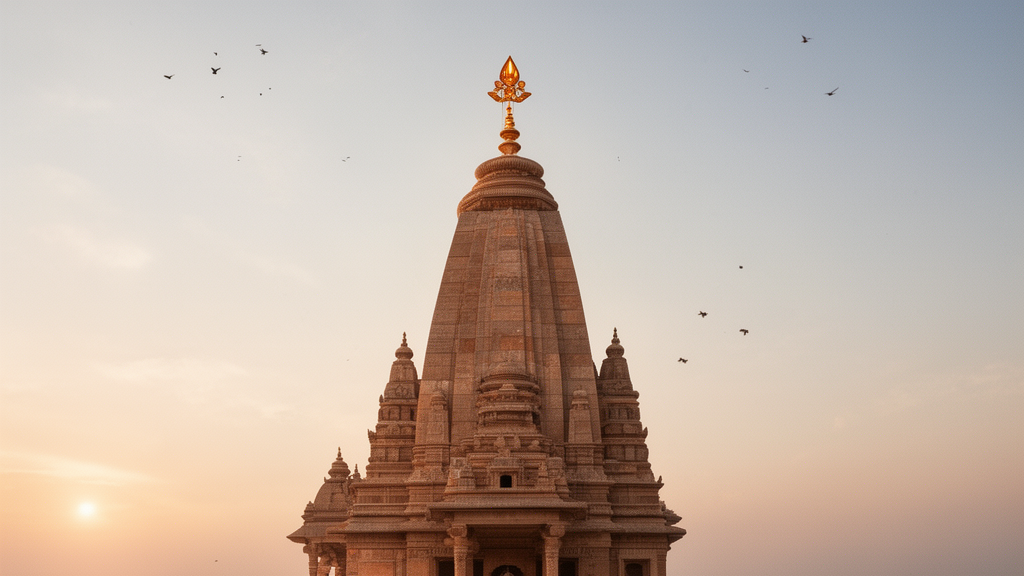
The word appears in unexpected places. Wikipedia’s Ratna entry notes that the ratna is the pinnacle of a Hindu temple.[1] In temple architecture, the upper part of a shrine’s tower is often discussed in terms of its finial and crowning elements. Terms and forms vary across regional styles, so readers should check a specialist architectural source before using a single term for every temple. This draft does not describe a specific temple’s finial, since no verified temple source was reviewed.
The word is also used in honours. Bharat Ratna, the highest civilian award of the Republic of India, has a name meaning ‘Jewel of India.’ Wikipedia reports that it was instituted on 2 January 1954, and that the award is presented for exceptional service or performance of the highest order.[2] The same article notes that the award’s criteria were expanded in December 2011 to include any field of human endeavour. This is a civic and state usage, not a religious one, and it should not be mixed with scriptural meanings.
Ratna in Shaivism: a named mātṛ
The Wisdom Library Shaivism entry describes Ratnā as the fifth of the eight Mātṛs, born from the body of Śaśinī according to the Kubjikāmata-tantra. The entry says these eight sub-manifestations connect to the moon.[6] The source’s text was cut off in the retrieved page, so this article does not describe further iconography or rituals associated with Ratnā.
This example shows how ‘ratna’ can be a proper name within a tantric system. It is a specialised reference for readers of Śaiva and tantric literature, and it is different from the general sense of ‘jewel.’ The Kubjikāmata-tantra and its commentaries should be consulted in a scholarly edition before drawing conclusions about the Mātṛs.
How to read claims about ratna
Several kinds of statements appear together in writing about ratna, and each should be read differently:
- Textual statements: what a named text says, such as the nine gem names in the Rasaprakāśasudhākara as summarised by Wisdom Library.
- Traditional belief: what a community or practitioner holds, such as the link between gems and the navagrahas.
- Historical and scholarly information: dates, authorship, and the classification of texts, such as the thirteenth-century dating of the Rasaprakāśasudhākara as reported by its glossary entry.
- Commercial or modern claims: promises about wealth, health, luck, or protection, which the sources reviewed do not support.
Keeping these categories separate helps readers judge a claim. A passage that says a stone ‘attracts wealth’ is a commercial or devotional claim unless a primary source supports it and the claim is presented as that text’s own teaching.
Examples to help you check a source
Suppose you find a page titled ‘Ratna Sutra’ that lists verses and promises results. Use these steps:
- Identify the language and the exact title, for example Sanskrit Ratnakūṭa or Pali Ratana.
- Check whether the page cites an edition, translator, or commentary.
- Separate any quoted verse from the author’s explanation.
- Look for independent confirmation in an academic or institutional source.
- Be cautious with any claim that a gemstone guarantees a material result.
A second example: a gemstone list may give the nine ratnas, but the Easy Ayurveda page and the Wisdom Library entry describe the list differently in places. One source gives the ‘Gomeda’ as zircon, while the other describes it as hessonite. Readers should note that gemstone identifications can vary across sources and periods, and that modern gemmological names may not match classical terms exactly.
Related HindusGod.com reading
Readers who want to explore related sutra and scripture topics on HindusGod.com may find these pages useful. Some are currently drafts, so their public availability should be checked before following the link:
- For a general introduction to a Mahāyāna text, see the Diamond Sutra Meaning draft.
- For another large Buddhist collection of teachings, see the Avatamsaka Sutra draft.
- For a devotion-focused sutra theme, see the Bhakti Sutra draft.
- For texts centred on the goddess, see the Devi Sutra draft.
- For a dhāraṇī text, see the Dharani Sutra draft.
- For meditation-focused teachings, see the Dhyana Sutra draft.
- For a Buddhist precepts text, see the Brahmajala Sutra draft.
- For a Buddhist text on a bodhisattva, see the Akasagarbha Sutra draft.
- For a Hindu ritual-textual subject, see the Ashvalayana Sutra draft.
- For a Pure Land scripture, see the Amida Sutra draft.
Each of these topics has its own tradition, language, and literature. Read each page for what it explains, and do not assume that a shared word such as ‘sutra’ means a shared teaching.
Frequently asked questions
Is there a Hindu scripture called the Ratna Sutra?
The sources reviewed did not identify a Hindu scripture with this exact title. The Hindu material on ratna comes from Sanskrit literary, Ayurvedic, rasashastra, and mythological sources, including the Samudra manthan narrative.
Is the Ratana Sutta the same as the Mahāratnakūṭa Sūtra?
No. The Ratana Sutta is a Pali Theravāda sutta, while the Mahāratnakūṭa Sūtra is a Sanskrit Mahāyāna collection. They share the root idea of ‘jewel’ but belong to different canons and traditions.
Why do gemstone lists differ?
Classical lists, regional traditions, and modern gemmology use different names and identifications. The Wisdom Library entry and the Easy Ayurveda page both list the nine ratnas, but they do not always agree on every modern gem equivalent. Readers should check the source and the translation used.
Can wearing a gemstone change luck or health?
The sources reviewed present such beliefs as traditional or commercial claims. They do not establish that gemstones produce health, wealth, or planetary outcomes. For health concerns, consult a qualified medical professional.
Summary and next step
‘Ratna sutra’ is best understood as a search phrase that can refer to several different things. The word ratna means ‘jewel’ in Sanskrit. The Mahāratnakūṭa Sūtra and the Ratana Sutta are Buddhist texts that use related titles. The nine ratnas are a Sanskrit and Ayurvedic classification connected with gems, planets, and tradition. Each subject needs its own source and its own care.
If you are studying a specific text, begin with a reliable edition and translation, note the tradition, and separate the text from the commentary. If you are interested in the nine ratnas, read the classical source and a modern, qualified overview side by side. Treat devotional and commercial claims as beliefs unless a primary source supports them.
Sources and further reading
- Ratna, Wikipedia (disambiguation): supports the meaning of ratna as Sanskrit for jewel, the fourteen ratnas from the Samudra manthan, and the ratna as the pinnacle of a Hindu temple.
- Bharat Ratna, Wikipedia: supports the institution date of 2 January 1954, the award’s purpose, and the December 2011 expansion of criteria.
- Mahāratnakūṭa Sūtra, Wikipedia: supports the description of the collection as Indian Mahāyāna Buddhist sūtras and the meaning of its alternate title.
- Ratana Sutta, Wikipedia: supports the classification of the text as a Pali Buddhist sutta within Theravāda Buddhism. Its full contents were not verified for this draft.
- Ratna (Gemstones), Easy Ayurveda: a commercial page cited for the nine-gem list, its navagraha associations, and its description of Ayurvedic use. Its health and belief claims are presented as the page’s own statements and are not independently verified.
- Ratna, Ratnā: 42 definitions, Wisdom Library: a glossary cited for the Rasaprakāśasudhākara nine-gem list, the Ayurvedic context, and the Ratnā mātṛ reference in the Kubjikāmata-tantra. Readers should check the primary texts.
Verify any cited text in a primary edition or established scholarly translation before quoting it in published material.
Thank you for sharing this informative article. It helps readers understand the deeper meaning of religious traditions and spiritual beliefs.
This article provides valuable insights into religious teachings. Thank you for spreading knowledge and positivity.