The phrase Ramayana story in Odia usually refers to Odia-language retellings of the Rama narrative. The two best-documented Odia works of this kind are the Bilanka Ramayana by Sarala Dasa and the Jagamohana Ramayana, also called the Dandi Ramayana, by Balarama Dasa. Both are 15th-century works. Both retell the Rama story in the Odia language and metre, and both differ from the Sanskrit Ramayana in important ways. This guide explains what each version covers, where they differ, and how to read them with the right context.
Short answer: there is no single “Odia Ramayana story.” Odia readers have several regional and literary retellings, and each one reflects its own author, patron, devotional focus, and local literary tradition. Choosing a version depends on what you want to read.
For a general overview of Odia Ramayana material on this site, see Odia Ramayana (URL status: WordPress target draft, may not be public yet). For the broader Rama narrative in other languages, see Ramayana Story (target draft, may not be public yet).
What the Odia Ramayana Tradition Means
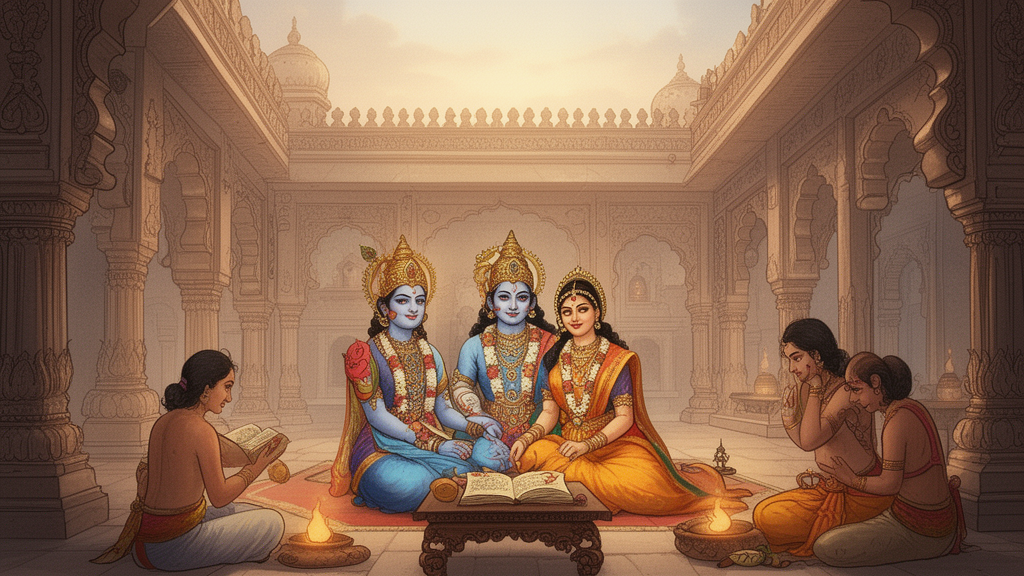
The Ramayana is a Sanskrit epic that has been retold in many Indian languages. Each retelling selects, adds, and reshapes episodes. In Odia literature, the retellings are not simple translations. Wikipedia’s entry on the Jagamohana Ramayana describes it as “a retelling of the Ramayana, though not a direct translation,” and notes that the central plot of the Sanskrit Ramayana is followed while some significant departures appear, influenced by local tradition.[2]
This matters for readers. When someone asks for the “Ramayana story in Odia,” they may mean:
- A devotional text read in temples or homes, often in Odisha.
- A classical literary poem studied for its language and metre.
- A regional retelling that differs from the Valmiki-attributed Sanskrit version.
- A modern printed or digital edition of one of these older works.
Each of these needs different sources. The rest of this article separates them so that claims are not mixed together.
The Two Major Odia Retellings
Two works are most often discussed in reference sources on the Odia Ramayana. Wikipedia’s articles on them are a useful starting point, but readers should check primary editions and scholarly studies before relying on any detail.
Bilanka Ramayana by Sarala Dasa
The Bilanka Ramayana, also known as the Vilanka Ramayana, is described as a 15th-century retelling written in Odia by Sarala Dasa. According to Wikipedia, the author dedicates the work to Sarala Chandi, the tutelary goddess of Jagatsinghpur in Odisha.[1] The same article says the work is generally regarded as forming a supplementary kanda, or book, to the Odia Ramayana. It is loosely based on the Adbhuta Ramayana, a Shakta version of the Ramayana written in Sanskrit.[1]
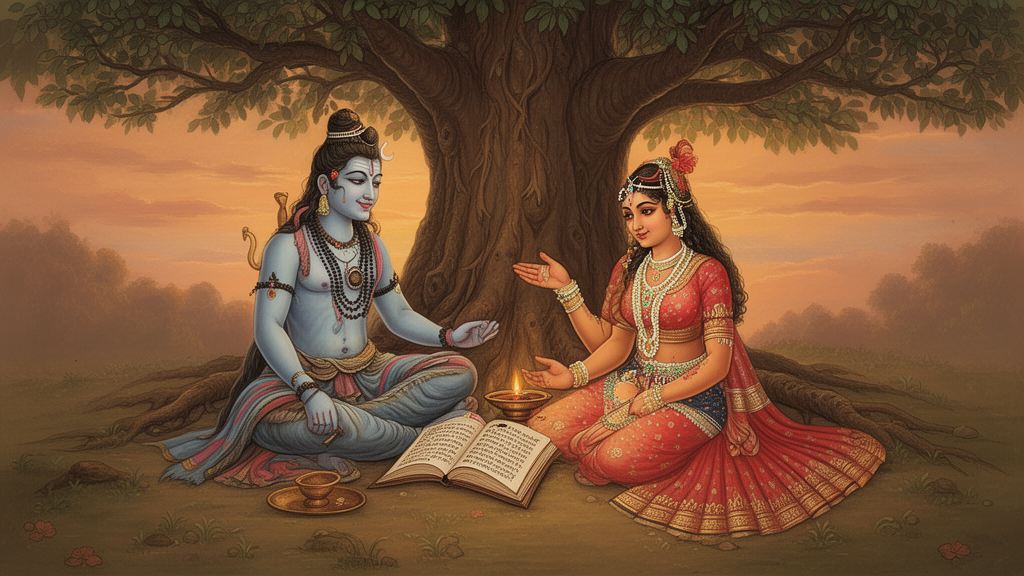
The Bilanka story begins after the death of Ravana in Lanka. The text is presented as a divine narration by Shiva to his wife Parvati. It opens in the court of Indra, where the gods discuss the danger posed by Sahasrasira Ravana, a demon who has imprisoned many of them in his city of Bilanka, or Vilanka, in Patala.[1] The gods then plan to stop Rama’s coronation in Ayodhya, because they fear that his kingly duties will keep him from confronting the demon.[1]
According to the summary on Wikipedia, Brahma sends two figures, Khala and Durbala, to sit on the tongues of Sita and Rama and shape what they say.[1] In that version, Rama goes to Patala with his army, and the army is destroyed. Sita challenges Rama to kill Sahasrasira Ravana to prove his might. The source also describes Hanuman’s journey to Bilanka on a separate errand.[1] These details show how the Bilanka text extends the story beyond the main Sanskrit narrative.
The same summary notes that the work is written in Dandi metre, which is commonly used in Odia literature. The metre makes the text suitable for singing and for reading aloud to a general audience.[1]
Jagamohana Ramayana by Balarama Dasa
The Jagamohana Ramayana, also called the Dandi Ramayana, is described on Wikipedia as an epic poem composed by the 15th-century poet Balarama Dasa. The article says it is popularly known across Odisha by the name Dandi Ramayana, and it is dedicated to Jagannath.[2] The infobox on the article lists Prataparudra Deva as patron, and the language as Middle Odia.[2]
This version is presented as a narration by Shiva to Parvati, in dialogue form. According to the article, the story begins with Sati and how Shiva is reunited with her in the form of Parvati. Shiva then tells the story of Rama. The plot of the Ramayana begins with Dasharatha’s efforts to obtain a son through a yajna.[2]
One of the best-documented differences from the Sanskrit original concerns the ending. In the Jagamohana Ramayana, Sita lives happily in Ayodhya with the royal family and is never sent into exile. Wikipedia contrasts this directly with the Sanskrit original.[2]
The article also reports that, according to the author, Rama is Jagannatha or Vishnu himself, Sita is Lakshmi, and his brothers are partial incarnations of Vishnu.[2] This is an authorial theological claim within the text. It should be presented as the text’s own perspective rather than as a universal belief about Rama.
The Jagamohana text, as summarised by Wikipedia, describes the gods arranging for Rama to be exiled after his wedding so that he would fulfil his destiny of slaying Ravana. Khala, Durbala, and Saraswati influence Kaikeyi’s hostility toward Rama.[2] Wikipedia also records that Shiva is regarded to have achieved liberation by chanting the name of Rama.[2]
How the Two Versions Differ
Readers who compare the two works can focus on a few clear points. These differences are supported by the summaries cited above and should be checked against the editions you use.
- Author and dedication: Sarala Dasa dedicates the Bilanka work to Sarala Chandi. Balarama Dasa dedicates the Jagamohana work to Jagannath.[1][2]
- Narrative focus: The Bilanka text centres on a separate episode involving Sahasrasira Ravana in Bilanka, presented as a supplementary book. The Jagamohana text retells the main Rama story with changes in the ending and in the roles of certain characters.[1][2]
- Sources named: The Bilanka article notes loose dependence on the Adbhuta Ramayana. The Jagamohana article says the author draws on Puranic versions, kavyas, Odia legends, southern and northern folk traditions, and natakas.[1][2]
- Metre: Both are associated with Dandi metre or Dandi Vritta. Wikipedia describes the Jagamohana text’s metre as a 14-letter form suitable for narrative style.[1][2]
A reader should note that Wikipedia summaries are secondary descriptions. They help orient a reader but do not replace a critical edition or a scholarly study.
The Core Ramayana Storyline in Brief
Many Odia versions share the central arc of the Sanskrit Ramayana, which the Jagamohana article describes as the plot being followed in the text.[2] In general outline, that arc includes Rama’s birth in Ayodhya, his marriage to Sita, his exile to the forest, Sita’s abduction by Ravana, Rama’s alliance with Hanuman and the monkey forces, the war in Lanka, and Rama’s return to Ayodhya.
The details, names, and emotional emphasis vary across versions. That is why a single summary cannot represent all Odia retellings. If you want the basic story as found in the Sanskrit tradition, see Valmiki Ramayana Odia (URL status: WordPress target draft, may not be public yet). That page is intended to cover Valmiki-attributed material in Odia, and its content should be checked before linking readers to it.
Devotional, Textual, and Scholarly Perspectives
The Odia Ramayana tradition involves several kinds of claims. Careful readers keep them apart.
- Textual claims: What a named work says, such as the summaries of the Bilanka and Jagamohana plots above.
- Authorial theology: What an author states about the identity of Rama or Sita, such as the Jagamohana claim that Rama is Jagannatha or Vishnu.
- Devotional belief: How worshippers in Odisha and elsewhere understand these texts, including reading or singing them in devotional settings. Practices differ by family, temple, and community.
- Historical and scholarly claims: Dating, authorship, manuscript history, and the relationship to earlier sources. These require academic evidence. The 15th-century dates given here come from the Wikipedia articles and should be confirmed in scholarly sources before being treated as settled.
Scholarly work on regional Ramayanas in India is extensive, and interpretations differ. Some scholars emphasise local literary innovation, while others focus on devotional transmission. This article does not adopt one interpretation as the only correct reading.
Where to Read or Listen to Odia Ramayana Versions
Several online sources offer Odia Ramayana content, but they vary in reliability. Before using any source, check the publisher, edition, translator, and whether the text is an authorised or complete version.
- Scribd uploads: One document titled “Complete Ramayana in Odia Language” was found during research. It is a user-uploaded file. Its text extraction in the source was garbled in several places, and it describes an author named Peter Parker2, who does not correspond to Sarala Dasa or Balarama Dasa. It should not be treated as a scholarly edition.[4]
- YouTube playlists and videos: Odia-language Ramayana playlists and devotional videos exist on YouTube. They are useful for listening, but the uploaded titles alone do not establish which text, translation, or edition is being recited or performed.[5][6]
- Printed editions: For study, prefer a published edition that names its editor or translator, states its textual basis, and provides a publisher or institutional affiliation.
For readers who want a broader view of Ramayana retellings across regions, see Books on Ramayana (target draft, may not be public yet). For a comparison of regional retellings, see Bichitra Ramayana (target draft, may not be public yet).
Choosing the Right Odia Ramayana Version
The best version depends on your purpose. The following guidance is practical rather than prescriptive.
- If you want a devotional Odia narrative with a strong Jagannath connection, the Jagamohana Ramayana is the more widely discussed of the two in the sources reviewed.[2]
- If you want to explore a supplementary episode in Shakta-influenced material, the Bilanka Ramayana, with its dependence on the Adbhuta Ramayana, is relevant.[1]
- If you want the main storyline in a form closest to the Sanskrit plot, begin with a version described as following the central plot, and then compare it with the Odia material.[2]
- If you are studying literature, look for critical editions, the metre, and the historical context of each work.
For alternatives that deal with the Dandi tradition specifically, see Dandi Ramayana (target draft, may not be public yet). For Chandrabati material, which belongs to a different Bengali regional tradition, see Chandrabati Ramayana (target draft, may not be public yet). Readers should not assume these works are interchangeable.
Why Regional Differences Matter
Regional Ramayanas are not simply errors or variations of a single master text. Each reflects its own audience. The Bilanka text links the story to the goddess worshipped at Jagatsinghpur.[1] The Jagamohana text links the story to Jagannath and to a royal patron.[2] These connections explain why the same epic can be read as a devotional text in one setting and as a literary achievement in another.
Readers who encounter a version that differs from the Valmiki-attributed Sanskrit story should not assume the difference is a mistake. The more useful question is: what does this particular text emphasise, and why?
Frequently Asked Questions
Is there one official Odia Ramayana story?
No. Odia literature includes several retellings, including the Bilanka Ramayana and the Jagamohana Ramayana. Each has its own author, dedication, and plot emphasis.[1][2]
Who wrote the Bilanka Ramayana?
Wikipedia attributes the Bilanka Ramayana to Sarala Dasa and describes it as a 15th-century retelling in Odia.[1]
Who wrote the Jagamohana Ramayana?
Wikipedia attributes the Jagamohana Ramayana to Balarama Dasa, also a 15th-century poet. The article says the work is also called the Dandi Ramayana.[2]
Does the Odia Ramayana end with Sita’s exile?
In the Jagamohana Ramayana, Wikipedia reports that Sita lives happily in Ayodhya and is never sent into exile, which differs from the Sanskrit original.[2] Readers should check the ending in the edition they are reading.
Is an online Odia Ramayana video or PDF reliable?
Not automatically. Check the publisher, edition, and textual basis. User-uploaded documents and videos may not identify their source text or translation.[4][5][6]
Summary and Next Step
The Ramayana story in Odia is best understood as a family of regional retellings. The two most documented 15th-century examples are the Bilanka Ramayana by Sarala Dasa and the Jagamohana Ramayana by Balarama Dasa. They differ in dedication, narrative emphasis, and in some key details of the story. Before choosing a version, identify the author, the edition, and whether you want devotional reading, literary study, or a comparison with the Sanskrit epic.
A practical next step is to read a published Odia edition alongside a summary from a reliable source, then compare the two. Keep notes on which claims come from the text, which come from the author’s theology, which reflect devotional practice, and which come from scholarship.
Sources and Further Reading
- Bilanka Ramayana, Wikipedia: used for the attribution to Sarala Dasa, the dedication to Sarala Chandi, the Adbhuta Ramayana connection, Dandi metre, and the plot summary of the Bilanka text.
- Jagamohana Ramayana, Wikipedia: used for the attribution to Balarama Dasa, the dedication to Jagannath, the Dandi Ramayana name, the Shiva-Parvati framing, the altered ending, and the authorial theological claims summarised in the article.
- Odia Ramayana, Odia Wikipedia: consulted only as a search snippet, which identifies Balarama Dasa as an early known author of an Odia Ramayana. The full page was not inspected, so it is not used for detailed claims.
- Complete Ramayana in Odia Language, Scribd upload: reviewed and noted as a user upload with garbled extracted text. Not used as a scholarly source.
- Odia Dandi Ramayana playlist, YouTube: listed as an example of online audio-visual material. Its content was not verified beyond the title and page metadata.
- Ramanand Sagar Ramayana Odia dubbed video, YouTube: listed as an example of a popular audio-visual adaptation. It is not a textual source for the Odia literary tradition.
Related HindusGod.com pages: Odia Ramayana Odia Ramayan, Odia Ramayana Gita, Complete Ramayana, and Dasaratha Ramayana. These are WordPress target drafts and may not yet be public.
A lovely reminder that peace, gratitude, humility, and compassion are values worth practicing every day.