The Pasupata Sutra, also written Pashupata Sutra or Pāśupatasūtra, is a Sanskrit text that Pashupata Shaivites regard as revelation. Most reference works describe it as the earliest surviving text of the Pashupata sect, and they date it roughly between 400 and 550 CE. Its central story is that Shiva enters the body of a dead Brahmana, who rises as the teacher Lakulisha and instructs four disciples. The text then lays out a demanding path of observances for a male Brahmana ascetic. Readers who want the short answer should note three points: the text belongs to one specific Shaivite sect, its dating is contested, and its contents are known largely through a small number of manuscripts, editions, and later summaries.
This article explains what the text says, how it is dated, who commented on it, and how it fits into the wider world of Shaivism. It also separates three kinds of statements that often get mixed together: what the scripture says, what the tradition believes, and what historians and scholars can support with evidence.
What the Pasupata Sutra Is
The word pashupata is commonly linked to Pashupati, a name of Shiva that means lord of beings or lord of the bound souls. In Pashupata thought, Shiva is the supreme lord, and the human soul is a pashu, a bound being who needs liberation. You will see the sect’s name spelled in several ways in books, articles, and catalogues, including Pashupata, Pasupata, Pashupatha, and Pāśupata. These variants refer to the same tradition. The sutra is also written as Pashupata-sutra or Pāśupatasūtra in transliteration.
The text is short and aphoristic, as the term sutra suggests. A sutra is a compressed rule or aphorism, which means that a reader usually depends on a commentary to unpack it. For the Pasupata Sutra, the most important early commentary is the Pañcārtha-bhāṣya (also written Pañcārthabhāṣya) by Kauṇḍinya. Scholars and tradition both treat the sutra and the commentary as a pair, and many modern translations and summaries present them together.
It is important to be precise about what the text does and does not do. The sutra is a manual of doctrine and discipline for a specific group of ascetics. It is not a general guide to home worship, and it is not a text that every Hindu accepts as authoritative. Its authority is recognized within Pashupata Shaivism and within the scholarly study of that sect.
Dating and Authorship: Where Sources Agree and Disagree
Dating ancient Sanskrit texts is difficult, and this one is no exception. The Wikipedia article on the Pashupata-sutra gives the range of 400 to 550 CE and describes the sutra as the earliest surviving text of the Pashupatas. The same article’s entry on the sect says the Pashupata movement may have existed from the 1st or 2nd century CE onward, and that it was influential in South India between the 7th and 14th centuries. These two statements are not contradictory: the first is about the date of the surviving text, while the second is about the broader movement, which may be older than any surviving text we can date.
Some popular websites give different dates. A widely read Hindu blog post on the Pashupata Sutras states that the sutras were composed in the 2nd century CE and that the commentary was written between the 4th and 6th centuries CE. That claim conflicts with the date range given in the Wikipedia article. Because the blog post is a secondary source without a clear scholarly apparatus, this article does not adopt its dating. Readers who want to check the question should consult the critical editions and academic studies listed at the end of this post.
The distinction matters because the question of when a text was written is different from the question of when a tradition began. A text may preserve teachings that circulated earlier in oral or manuscript form, and a commentary may be dated more confidently than the root text it explains. Good historical writing keeps these questions apart and says plainly where the evidence is thin.
Why the Sect’s Early History Is Hard to Reconstruct
The Pashupata tradition has an unusual documentary history. According to the Wikipedia article on Pashupata Shaivism, the two main texts, the Pāśupatasūtra with Kauṇḍinya’s Pañcārthabhāṣya and the Gaṇakārikā with Bhāsarvajña’s Ratnaṭīkā, were both discovered only in the twentieth century. Before that, the main source of information about the sect was a chapter in Vidyāraṇya’s Sarvadarśanasaṅgraha, a survey of philosophical systems. Scholars therefore had to reconstruct much of the early Pashupata picture from outside descriptions, which is one reason the history remains open to debate.
The Mahabharata is also cited in the sources as referring to the Pashupatas. The Wikipedia article on the sect says the epic is thought to have reached a final form by the 4th century CE, but it marks the reference to the Pashupatas with a citation-needed note. This means the connection should be treated as a point for further checking rather than settled fact.
The Origin Story: Shiva, Lakulisha, and Four Disciples
The most distinctive narrative in the Pasupata Sutra is its account of how the teaching began. According to the Wikipedia summary of the text, Shiva enters the dead body of a Brahmana. The body comes back to life as Lakulisha, who then imparts teachings to four disciples. This story places the authority of the teaching directly in Shiva and presents the human teacher as a vehicle for that revelation.
Devotees within the tradition would understand this narrative as a statement about the source of authority. The teaching is not presented as a human invention. Shiva is the one who speaks through the teacher. Historians, however, can only say that the text contains this story and that it presents Lakulisha as the transmitter. They cannot use the story alone to establish who Lakulisha was as a historical person, when he lived, or whether he existed as a single figure. A careful reader keeps the narrative in the category of tradition and text, not of verified biography.
The four disciples are also significant. The idea of a teacher with a small circle of students who carry the lineage forward is a common pattern in Indian religious history. In this case, the sources available here describe the basic arrangement but do not give a full account of the disciples’ names or their later careers. Readers who want that detail should consult the primary edition and the scholarly literature rather than popular summaries.
Kauṇḍinya’s Commentary: The Pañcārtha-bhāṣya
The sutra needs a commentary to make sense to most readers. The Wikipedia article on the text names Kauṇḍinya as the author of the Pañcārtha-bhāṣya, a commentary whose title refers to five subjects or meanings. The name Pañcārtha is often connected to five principles, and secondary sources present these as the framework of the system.
One secondary source, the Hindu blog post noted above, lists five principles as Karya (effect), Karana (cause), Yoga (union and meditation), Vidhi (proper conduct), and Duhkhanta (the end of suffering). The same post explains each in general terms, and it quotes passages from other Hindu texts. Those quotations were not verified against the cited texts for this article, so they are not used here. The list of five principles itself is a claim that should be checked against the commentary before being repeated as established doctrine. Until that check is done, this article presents the five-part structure as a description found in a secondary source, not as a confirmed reading of Kauṇḍinya.
This caution is important for anyone writing or reading about the Pasupata Sutra. Modern explanations often simplify a technical system into a neat list. Such lists can help beginners, but they can also flatten differences between the root text, the commentary, and later interpreters. The safest approach is to say which layer of the tradition is speaking.
The Discipline: Stages, Qualifications, and Observances
The Pasupata path is demanding. The Wikipedia summary of the sutra says that a Pashupata ascetic must be a Brahmana male and that he should not speak with people from low castes or with women. It also says the path moves through three stages of observances and is meant to take the practitioner beyond the four stages of life (āśrama) described in the Vedic tradition. This is a striking claim within the broader Brahmanical framework, and it shows that the Pashupata system presented itself as a distinct path rather than a simple variant of ordinary Vedic life.
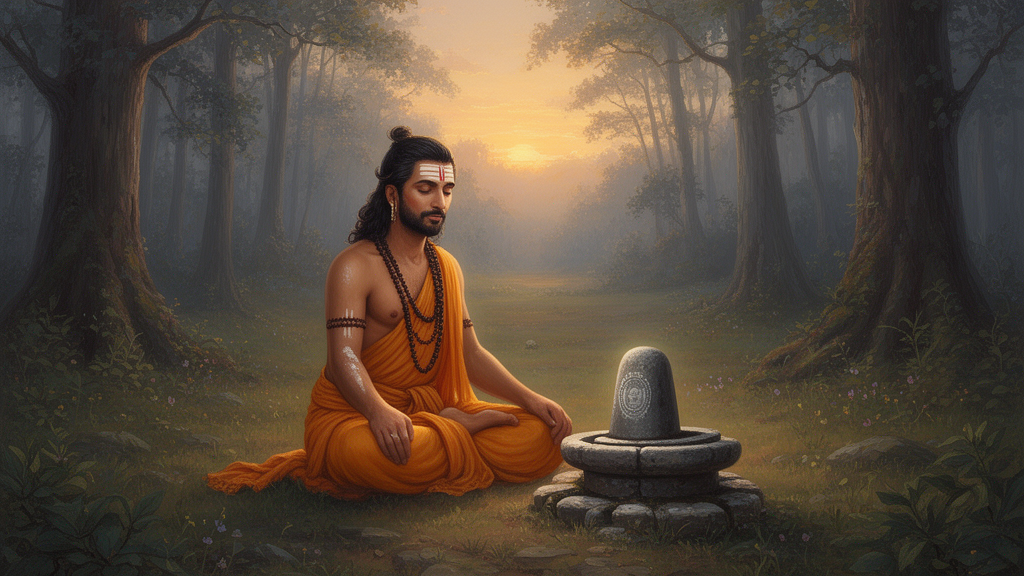
The first stage, according to the same summary, asks the aspirant to live near a Shiva temple, to wear the marks of a Pashupata ascetic, including ashes with which he bathes three times a day, and to worship with song, dance, laughter, and the repetition of mantras. The summary also lists virtues the aspirant should develop, such as not stealing, celibacy, and not harming living beings. These details describe the sutra’s own expectations for a particular class of ascetic.
Understanding the Qualifications as Tradition-Specific
The qualification rules are one of the most sensitive parts of the Pasupata Sutra for modern readers. The sutra restricts this path to a specific social group, and it makes exclusion of women and people from lower castes part of the discipline. A responsible account should describe these rules as what the text prescribes for its ascetic path, not as a general statement about Hindu practice or about the worth of any person. Hindu traditions have many paths, and most devotees do not follow the strict ascetic rules of a sect like this one.
Modern readers also need to recognize that these rules belong to the historical and textual record. Presenting them honestly is a matter of accuracy and respect. Writers can explain the rules without endorsing them and without treating them as universal. The aim is to help readers understand what the text says and where it sits within the history of Indian religion.
Ash, Worship, and Devotional Expression
Ash, or bhasma, is a recurring feature of Shaiva life. The Pashupata summary connects ash with the aspirant’s mark and daily bathing. Ash is widely used in Shaiva practice, but the specific meanings and uses vary from one group to another. Within this text, the ash is a sign of the ascetic’s identity and discipline. Outside the Pashupata context, the same material may carry different symbolic meanings, so readers should not assume one universal explanation.
The emphasis on song, dance, laughter, and mantra in worship is also notable. It shows that the sect’s worship was not limited to silent ritual. Whether these practices were common across all Pashupata communities or limited to certain groups is a question the available sources do not settle. The honest answer is that the text describes them, and that other evidence would be needed to show how widely they were practised.
Pashupata Shaivism in Its Wider Context
The sutra is the foundation text for Pashupata Shaivism, which the Wikipedia article describes as the oldest of the major Shaivite Hindu schools. Shaivism is a broad family of traditions centred on Shiva, and it includes many schools, such as Shaiva Siddhanta, Kashmir Shaivism, the Lingayat tradition, and the Nath and Siddha movements. Pashupata Shaivism is one of the earliest of these branches, and it had a particular influence in South India in the period the sources identify as the 7th to 14th centuries.
It helps to picture Shaivism as a set of related traditions rather than a single church. Each school has its own texts, teachers, practices, and understanding of Shiva and the soul. The Pashupata school stands out for its ascetic rules and for its distinct vocabulary of bondage and liberation. Other Shaiva schools built on, criticised, or reinterpreted some of these ideas over time. Because the sources are uneven, it is best to describe these connections in general terms unless a specific link is documented.
Related Shaiva Scriptures and Texts
The Wikipedia navigation for Shaivism lists many related scriptures, including the Shvetashvatara Upanishad, the Shiva Purana, the Tirumurai, the Shivasutras, and the Tantraloka. Readers who want to explore the wider Shaiva textual world can start there. Each of these texts has its own origin, language, and reception history, so they should not be treated as one body of teaching. A reader who moves from the Pasupata Sutra to the Shiva Purana, for example, is moving from a sectarian aphoristic text to a large narrative collection. The purposes and authority of the two are different.
For readers interested in devotion more broadly, HindusGod.com has a related draft on the Bhakti Sutra, which explores devotion as a theme in religious literature. Devotion is also present in Shaiva life, but the Pasupata Sutra focuses more on disciplined ascetic practice than on the emotional devotion associated with some other traditions. Comparing the two can help readers see how different Hindu paths balance discipline and love of God.
Textual Editions and How to Read the Text
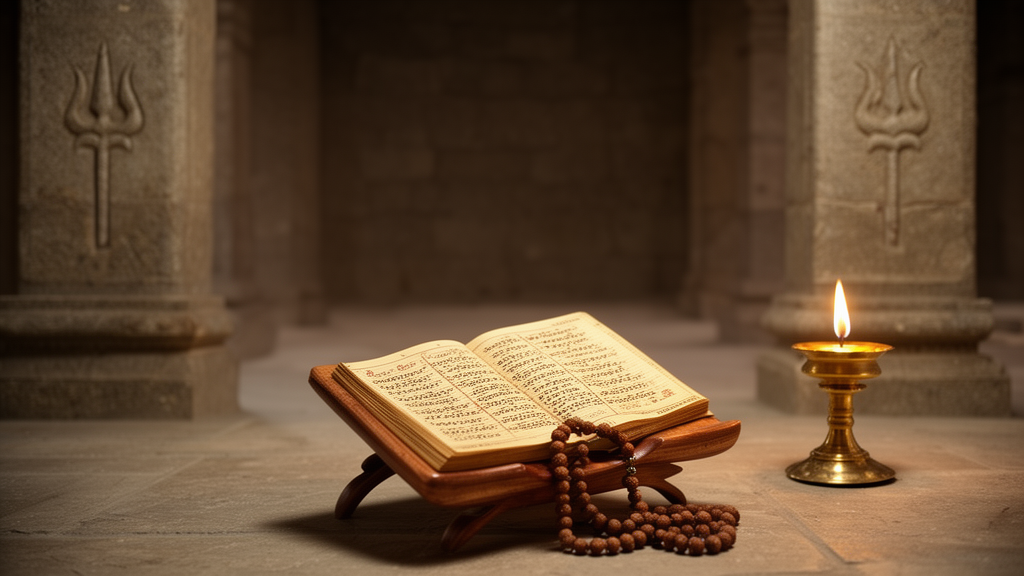
Anyone who wants to study the Pasupata Sutra should begin with a critical edition or a reliable scholarly translation, since popular summaries can simplify or mistake details. The Internet Archive holds a digitised copy of the Kaundinya text edited as Pashupata Sutra Bhagavatpad Shri Kaundinya, and another digitised edition titled Trivandrum Sanskrit Series No.143, Pasupata Sutras, edited by R. Ananthakrishna Sastri. These catalogue entries show that the text has been published in Sanskrit editions, but the catalogue pages used for this research did not provide the full text to verify specific readings, so this article does not quote from them.
When you read an edition, check three things. First, identify whether you are reading the root sutra or the commentary. Second, look for the editor’s notes on manuscript variants, since early texts often survive in multiple versions. Third, check whether a translation is complete or partial. A translation that offers only a few passages may leave out the context needed to understand the discipline.
Common Misunderstandings to Avoid
The name Pashupata can cause confusion. The Wikipedia disambiguation notes for the sect point to a different subject, the Pashupatastra, which is a weapon in Hindu mythology described as one of the most destructive. The weapon and the sect share a root word, but they are not the same subject. A reader searching for the Pasupata Sutra should not expect a discussion of mythic weapons in the sutra itself.
A second misunderstanding is to treat Pashupata Shaivism as identical with all of Shaivism, or with Shiva worship in general. Shiva is worshipped in many forms and communities across India. The Pashupata school is one path among many, and its rules and doctrines do not represent all Shiva devotees.
A third misunderstanding is to read the text as a manual for everyday worship. The sutra is written for a specific ascetic discipline. Ordinary devotees may visit Shiva temples, offer prayers, or use mantras without following the Pashupata ascetic rules. Explaining this difference helps readers avoid confusion.
Belief, Text, Tradition, and Scholarship
Writing about a sacred text requires keeping several categories distinct. The following list is a practical way to read claims about the Pasupata Sutra.
- Scriptural content: What the sutra itself says, such as the story of Shiva entering the Brahmana’s body or the rule that the ascetic must be a Brahmana male. These claims should be checked against an edition or a reliable summary of the text.
- Traditional belief: What Pashupata practitioners believe about Shiva, the soul, liberation, and the authority of the teaching. These are central to the tradition, but they are not historical findings.
- Community practice: How groups in different places have lived out the teaching. The sources do not provide enough evidence to describe modern Pashupata communities in detail, so claims about present-day practice should be avoided unless supported by fieldwork or current reports.
- Historical evidence: Dates, manuscripts, inscriptions, and records of the sect’s influence. The dates given in summaries vary, and the evidence for the earliest period is limited.
- Scholarly interpretation: Academic analysis of how the sutra fits into the development of Shaivism and Indian philosophy. Scholars may disagree, and their conclusions should be attributed to them.
This structure matters because a single sentence can mix several categories. For example, the statement that the Pasupata Sutra is the earliest surviving text of the sect is a historical claim supported by a reference work, while the statement that Shiva is the supreme lord within the text is a claim about scriptural content and tradition. Keeping them separate prevents overstatement.
Frequently Asked Questions
Is the Pasupata Sutra the same as the Shiva Purana?
No. The Pasupata Sutra is a short sectarian text of the Pashupata school. The Shiva Purana is a much larger collection of narratives associated with Shiva. Both belong to the wider world of Shaiva literature, but they have different forms, purposes, and histories.
Can a non-Brahmana follow the Pashupata path?
The Wikipedia summary of the sutra says the text restricts the ascetic discipline to a Brahmana male. Within Hindu traditions, many devotees practise Shiva worship without following that ascetic path. Readers should not read the sutra’s rules as a description of all Shiva devotion or of all Hindu practice.
Where should I start if I want to read the text?
Start with a scholarly translation or a critical edition that includes both the sutra and its commentary. Compare it with a reliable academic introduction to Pashupata Shaivism. Popular summaries can help with orientation, but they should not be your only source for specific claims.
Summary and Takeaway
The Pasupata Sutra is a Sanskrit text of the Pashupata Shaivite sect and is generally regarded as its earliest surviving scripture. It presents Shiva as the source of teaching, tells the story of Lakulisha, and describes a demanding ascetic discipline for Brahmana males. Its dating is commonly given as roughly 400 to 550 CE, while the wider sect may be older, and the sources disagree on some details. Kauṇḍinya’s Pañcārtha-bhāṣya is the key commentary, and the rediscovery of the main texts in the twentieth century shaped how modern scholars study the sect.
The most useful way to approach this text is with patience and precision. Distinguish what the sutra says from what the tradition believes and what historians can prove. Read editions and academic studies rather than relying on summaries alone. When you encounter a claim about dates, five principles, or modern practice, check the source before repeating it.
Sources and Further Reading
- Pashupata-sutra, Wikipedia: used for the sutra’s dating range, its status as the earliest surviving text of the Pashupatas, the commentary by Kauṇḍinya, the Lakulisha origin story, and the summary of qualification and first-stage observances. Treat as a secondary overview, not a critical edition.
- Pashupata Shaivism, Wikipedia: used for the description of the sect as an early major Shaivite school, its influence in South India, the texts Gaṇakārikā and Ratnaṭīkā, the twentieth-century discovery of the main texts, and the role of the Sarvadarśanasaṅgraha. Treat as a secondary overview.
- Pashupata Sutra Bhagavatpad Shri Kaundinya, Internet Archive: a digitised edition catalogue entry, cited for the existence of this edition. Full text was not verified for this article.
- Trivandrum Sanskrit Series No.143, Pasupata Sutras, Internet Archive: a digitised edition catalogue entry naming R. Ananthakrishna Sastri as editor, cited for the existence of this edition. Full text was not verified for this article.
- Pashupata Sutras – Content – Importance, Hindu Blog: a devotional secondary source cited only for the five-part list of principles and a differing dating claim. Its quotations from other texts were not verified and are not used here.
Readers who want to go further should look for academic studies of Pashupata Shaivism and critical editions of the sutra and its commentary, and should check each claim against those primary and scholarly sources.