The Vajrasuchi Upanishad is a short Sanskrit text, classed among the minor Upanishads and linked to the Samaveda, that argues against defining a person’s spiritual worth by birth, body, or external status. Its title means “diamond-pointed needle,” and the text presents itself as a tool that pierces ignorance. Its answer to the question of who is a brahmana is that the true brahmana is the person who has directly realized the Atman, the non-dual self that is identical with Brahman.
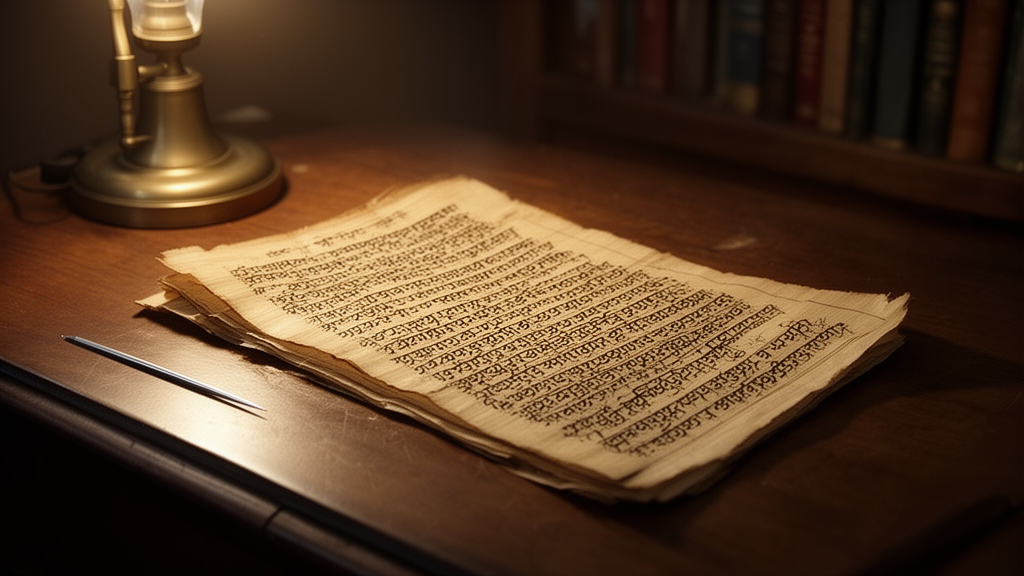
This article explains what the text says, how it is structured, why its authorship and date are disputed, and how readers can approach its translations. It separates what the text itself says from later traditions, scholarly debates, and modern interpretations. Where sources disagree or do not settle a question, this article says so.
What the Vajrasuchi Upanishad Is
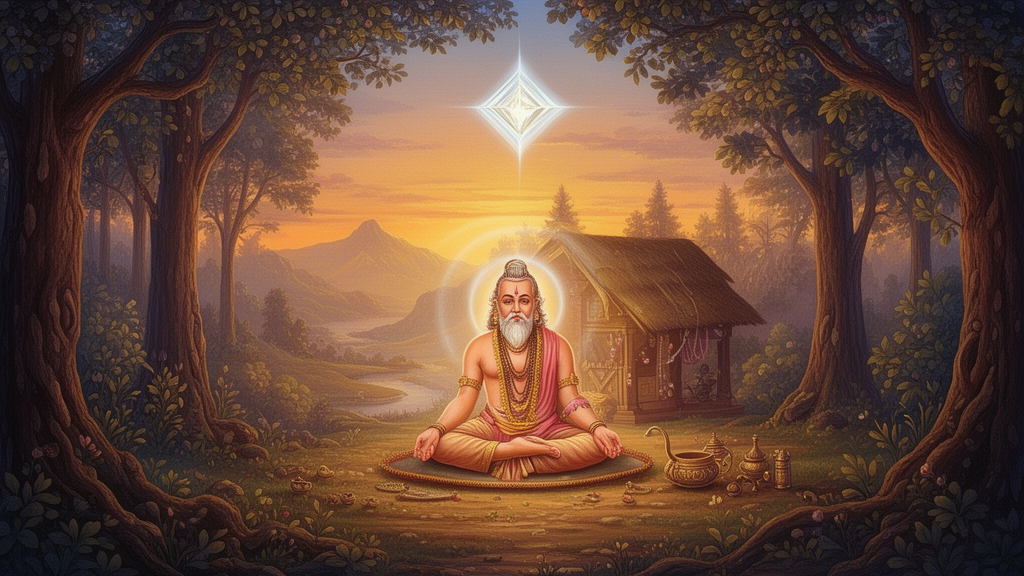
The Vajrasuchi Upanishad belongs to the group of works traditionally called Upanishads, which Hindu tradition treats as the concluding, knowledge-focused portion of the Vedas. The Vyasa Mahabharata resource describes it as a medieval Sanskrit text and a minor Upanishad, classified among the 22 Samanya Upanishads and identified as a Vedanta text attached to the Samaveda.[4] Wikipedia’s article lists the same main categories: type Samanya, linked Veda Samaveda, and philosophy Vedanta. Its infobox also gives a count of nine verses.[1]
The verse count should be read with care. Editions and translations can divide the text differently, and the Vyasa resource notes that the surviving manuscripts differ in details even though their focus and central message are the same.[4] For that reason, readers comparing editions should check the verse numbering in the specific edition they are using.
The text is not long. Its main value is its focused argument. It works through a series of possible answers to the question “Who is a brahmana?” and rejects each candidate in turn before offering its own definition.
The Meaning of the Title
The Sanskrit word vajra is commonly rendered as “diamond” or “thunderbolt,” and suci means “needle.” Wikipedia gives the title meaning as “diamond-pointed needle.”[1] The Vyasa resource gives the same sense.[4] The Sanskrit Documents translation by Madras Giridhar renders the opening lines as a declaration of the vajrasuchi, “the weapon that is the destroyer of ignorance,” which condemns the ignorant and praises the person of divine vision.[3]
The image of a needle that pierces a hard surface fits the text’s method. It attacks inherited assumptions one by one, looking for the point where they break down. Readers should note that this is the text’s own imagery, not a claim that the text is literally a weapon or a ritual instrument.
The Opening Question: Who Is a Brahmana?
The Sanskrit text opens by affirming a traditional view that among the four varnas, the brahmana is held to be the foremost. The Vedic and smriti authorities are cited in support of this principle.[3] The Vedanta Spiritual Library translation renders the same point: the Smritis affirm, following the Vedas, that the brahmana is the most important of the four castes.[5]
The text then asks a direct question. What is a brahmana? Is it the individual soul, the body, birth, knowledge, action, or religious practice? The Sanskrit text lists these possibilities in sequence, and each candidate receives its own response. The Vyasa resource quotes the same sequence in abridged form as Verse 2, and asks whether the brahmana is the self, body, birth, knowledge, deeds, or rites.[4]
This structure is one of the most useful features for a first-time reader. The text does not simply declare a conclusion. It tests each common assumption against reasoning and examples.
Testing the Candidates
Is the Soul the Brahmana?
The first candidate is the individual soul, or jiva. The Sanskrit text rejects this because the soul is the same across many past and future bodies, and a single being can take many bodies according to karma. Since the soul is one in all bodies, the soul alone cannot mark out a brahmana.[3]
Is the Body the Brahmana?
The second candidate is the body. The text argues that all human bodies, from the outcaste (chandala) upward, are made of the same five elements and share the same marks of aging and death. It also points out that there is no fixed bodily colour that matches each varna: the text describes a traditional scheme in which the brahmana is white, the kshatriya red, the vaishya yellow, and the shudra black, then notes that this pattern is not observed in fact.[3] The Vedanta Spiritual Library translation makes the same point in English, saying there is no fixity of colour that would separate the varnas.[5]
The text adds a practical argument. If a father’s body is cremated, sons may be held responsible for a serious offence such as killing a brahmana. A body cannot therefore be what makes someone a brahmana, because the same body-based logic would produce absurd results.[3]
Is Birth the Brahmana?
The third candidate, and the most socially charged, is birth (jati). The text responds with examples from tradition. It names sages whose origins are described in unusual ways: Rishyasringa from a deer, Kausika from reed, Jambuka from a jackal, Valmiki from an anthill, Vyasa from a fisher-girl, Gautama from a hare’s back, Vasistha from Urvasi, and Agastya from a pot.[3] The Vyasa resource gives the same list and says these figures are regarded as brahmanas through their knowledge rather than their birth.[4]
The argument is that many revered seers attained knowledge without the birth status that the claim would require, so birth cannot be the defining feature. The text uses this to conclude that birth is not the brahmana.[3]
Readers should understand what kind of claim is being made. The text is making a philosophical argument within a tradition that values sages and scripture. It is not a historical report about the biographies of these figures. Traditional accounts of these sages vary across sources, and the examples are used here as illustrations.
Is Knowledge the Brahmana?
The fourth candidate is knowledge (jnana). The text answers that people of other varnas, including kshatriyas, also possess knowledge and have realized the highest truth. Knowledge alone therefore does not define the brahmana.[3]
Is Action the Brahmana?
The fifth candidate is action (karma). The text argues that all living beings act under the influence of past and present karma, so action is common to all beings. Action therefore cannot be the special mark of a brahmana.[3]
Is Religious Merit the Brahmana?
The sixth candidate is religious practice or virtue (dharmika). The text observes that kshatriyas and others have also been generous givers of gold and performed meritorious acts. Virtue, in this argument, is not limited to one varna.[3]
The Positive Definition
After rejecting these candidates, the text gives its own answer. The brahmana is the one who realizes the Atman as the second-less, free from class, quality, and action, free from defects, of the nature of truth, knowledge, and bliss, and immanent in all beings. The text describes this realization as direct, like a berry held in the palm, and says it is attained beyond ordinary knowledge.[3]
The person who has this realization is described as free from desire and hatred, endowed with calm and self-restraint, without greed, envy, craving, or hope, and not defiled by pride or hypocrisy.[3] The Vedanta Spiritual Library translation gives a similar account, adding that this is the intention of the Veda and that the nature of a brahmana cannot be achieved otherwise.[5]
The concluding instruction is that one should contemplate oneself as the spirit without a second, truth, knowledge, and bliss. The Sanskrit text names this as the teaching of the Upanishad.[3]
A Note on Interpretation
The positive definition can be read in more than one way. In the text’s own logic, the brahmana is defined by inner realization, not by social category. Some readers take this as a rejection of hereditary status as a basis for spiritual authority. Others read it more narrowly, as a claim about the ultimate meaning of the term brahmana while leaving social practice to other texts and institutions. Both readings engage the same words, and the text does not explicitly resolve how social life should be organized. That point should be kept separate from what the text states.
How the Text Connects to Vedanta
The text is classed as Vedanta by Wikipedia and the Vyasa resource.[1][4] Its central concepts, the Atman and Brahman, the non-dual self, and the claim that the Atman is identical with Brahman, belong to the Vedanta vocabulary. The Vyasa resource describes Upanishads as knowledge texts within the Vedanta literature, presenting philosophical concepts considered the highest purpose of the Vedas.[4]
Readers who want to understand the vocabulary should compare the text with other Upanishads in the same broad family. Some related pages on HindusGod.com offer general orientation: Meaning of Upanishad explains the term, and 10 Upanishad and 108 Upanishad cover broader groupings. These are WordPress target drafts that may not yet be public, so their links should be checked before publication.
For readers interested in closely related teachings on self-knowledge, Advaita Upanishad, Adhyatma Upanishad, and Atmabodha Upanishad address the self and its realization in different ways. Ashtavakra Upanishad is another teaching centred on self-knowledge.
Textual History and Manuscripts
The Vyasa resource says the date and author of the Vajrasuchi Upanishad are unclear. Manuscripts were collected during the colonial period, and by the early nineteenth century eight copies from North India and five from South India were known. Most were in Sanskrit in Devanagari script, and two were in Telugu, in palm-leaf form, some of them damaged.[4] The resource states that differences exist among these manuscripts, but the focus and central message remain the same.[4]
This situation is typical for many Sanskrit texts. Manuscripts are copied by hand, and small differences in wording, division, and script accumulate over time. A reader who compares two printed versions may find variations that do not change the argument. Anyone quoting the text should identify the edition or translation used.
The Attribution to Adi Shankara
The Vyasa resource states that the Upanishad is attributed to Sankaracharya in the manuscripts discovered by the early 1800s. It also notes that Adi Shankara was an Advaita Vedanta scholar, and that Indian tradition often attaches texts to revered historical figures.[4] The resource therefore treats the attribution as uncertain rather than as proof of authorship.[4]
Readers should distinguish three things here. The first is the manuscript tradition, which records the attribution. The second is traditional belief about who composed the text. The third is historical scholarship, which asks whether the attribution can be supported by evidence. The Vyasa resource does not claim that the attribution is false; it says the question is uncertain.[4] Grokipedia-style summaries that state the attribution is definitively disproved were not used here because the reviewed material did not establish that conclusion.
The Buddhist Vajrasuchi
The Vyasa resource reports that after the palm-leaf manuscripts of the Vajrasuchi Upanishad were discovered, a Buddhist text titled Vajrasuchi, attributed to the second-century CE figure Asvaghosa, was published from Nepal in 1835. Its message is similar to that of the Upanishad. The resource adds that the authenticity of the Buddhist text, and whether Asvaghosa wrote it, is considered seriously doubtful by many scholars.[4]
This relationship is one of the most debated parts of the text’s history. A shared title and a similar argument against birth-based status might suggest mutual influence, borrowing, or a common debate. However, the sources reviewed here do not establish the direction of influence or settle the dating of either text. Any claim that one text derived from the other should be treated as a scholarly hypothesis unless supported by specific primary-source analysis.
Reading the Text in Translation
Several translations and editions are accessible online, and they are useful for different purposes.
- Sanskrit with English translation: The Sanskrit Documents page provides the Sanskrit text in Devanagari and a translation by Madras Giridhar. The translation is taken from the book Thirty Minor Upanishads, translated by Narayanasvami Aiyar and published by the Adyar Press, Madras.[3]
- English translation by A. G. Krishna Warrier: The Vedanta Spiritual Library presents a translation attributed to Dr. A. G. Krishna Warrier, published by the Theosophical Publishing House, Chennai.[5]
- Summary and background: Wikipedia offers an overview of the text, its title, classification, and related debates, but it is a secondary source and should be checked against primary texts.[1]
Translations differ in word choice. For example, the Giridhar rendering and the Warrier rendering express the same argument with different phrasing. When you cite a sentence, name the translator and the source. Do not present a translator’s wording as the Sanskrit original.
Example: A Short Reading Method
For readers who want to study the text carefully, the following steps can help:
- Read the Sanskrit opening and identify the question: who is a brahmana?
- Read one English translation alongside the Sanskrit, noting where the translator chooses different words for the same term.
- List each candidate the text considers, such as soul, body, birth, knowledge, action, and virtue.
- For each candidate, note the reason the text gives for rejecting it.
- Find the positive definition and identify its key terms: Atman, Brahman, realization, freedom from defects, and inner qualities.
- Compare your reading with a commentary or scholarly introduction before drawing conclusions about social practice.
This method keeps the text’s argument separate from later interpretation, which is important for a text whose subject touches on caste.
Caste, Birth, and Modern Readings
The Vajrasuchi Upanishad is often discussed in relation to caste because its subject is the varna system and the question of what makes a person a brahmana. The Vyasa resource describes it as a sustained philosophical challenge to the division of human beings and as an assertion that any human being can achieve the highest spiritual state.[4] The Vedanta Spiritual Library translation and the Sanskrit text both show the same argumentative pattern.[3][5]
The text itself does not provide a detailed programme for social reform. It argues that inherited status does not establish the true brahmana. Modern readers have drawn different conclusions from that claim. Some see it as a clear critique of birth-based hierarchy. Others emphasize that its main concern is spiritual realization, and that its arguments should be read within the Vedanta tradition rather than as a manifesto.
Because Hindu communities differ in practice, belief, and interpretation, it would be inaccurate to present one reading as the only view held by Hindus. Some traditions, teachers, and families emphasize the text’s spiritual teaching; others focus on the social implications of its argument; still others have approached it through devotional, academic, or regional frameworks. Readers should treat these as different perspectives rather than a single consensus.
Scripture, Tradition, and Scholarship
It helps to separate four layers when studying the Vajrasuchi Upanishad.
- Scripture: The Sanskrit text and its translations, which state the arguments and definitions discussed above.
- Tradition: Traditional attributions, such as the link to Adi Shankara in the manuscripts, and the Upanishad’s place in Vedanta.
- Scholarship: Historical questions about date, authorship, manuscript relationships, and the relationship to the Buddhist Vajrasuchi.
- Modern interpretation: Contemporary readings of the text’s relevance to caste, equality, and spiritual practice.
When these layers are mixed, a reader can mistake an interpretation for the text itself or treat an uncertain historical attribution as settled fact. Keeping them distinct allows a more accurate reading.
Frequently Asked Questions
Is the Vajrasuchi Upanishad a major Upanishad?
It is generally classed among the minor or Samanya Upanishads, according to the sources reviewed.[1][4] Its importance lies in its focused argument about the brahmana rather than in its length.
Does the text say that birth never matters?
The text argues that birth cannot be the defining mark of a brahmana, because the spiritual qualities it describes are not established by birth alone.[3] Its exact implications for social life are open to interpretation, and different traditions have engaged with the question differently.
Who wrote the Vajrasuchi Upanishad?
The author is uncertain. Some manuscripts attribute it to Adi Shankara, but the Vyasa resource says this attribution is not settled and the date and authorship remain unclear.[4]
Summary
The Vajrasuchi Upanishad is a short, focused Sanskrit text attached to the Samaveda and classed as Vedanta. It tests six common candidates for the meaning of brahmana, including soul, body, birth, knowledge, action, and virtue, and rejects each as a sufficient definition. Its positive answer is that the true brahmana is the one who directly realizes the Atman as non-dual, free from defects, and of the nature of truth, knowledge, and bliss.[3][4]
Its date and authorship are uncertain, its manuscripts vary, and its relationship to a Buddhist text with the same title remains a subject of scholarly debate.[4] Readers who approach it through a reliable translation, while keeping scripture, tradition, and scholarship distinct, will get the most from it. For background on the Upanishadic corpus, the related HindusGod.com pages linked above offer useful starting points once they are confirmed as published.
Sources and Further Reading
- Vajrasuchi Upanishad, Wikipedia: overview, classification as Samanya, Samaveda link, Vedanta philosophy, and the reported nine-verse count.
- vajrasUchika (with trans), Sanskrit Documents: Sanskrit text and the Madras Giridhar translation taken from Narayanasvami Aiyar’s Thirty Minor Upanishads.
- Vajrasuchi Upanishad, Vyasa Mahabharata: classification, manuscript history, attribution to Shankara, and the Buddhist Vajrasuchi.
- Vajrasuchika Upanishad, Vedanta Spiritual Library: English translation by Dr. A. G. Krishna Warrier, published by the Theosophical Publishing House, Chennai.