There is no single holy book that all of humanity accepts as the true one. Each religious tradition regards its own scriptures as authoritative, and the choice of which text is “true” depends on faith commitments, cultural background, and the criteria a person uses to judge a claim. Historians and scholars can describe how sacred texts were composed, preserved, and used, but they cannot settle the question of which text is divinely revealed. This article explains why, and how to approach the question with clarity and respect.

Direct answer: no universally accepted true holy book
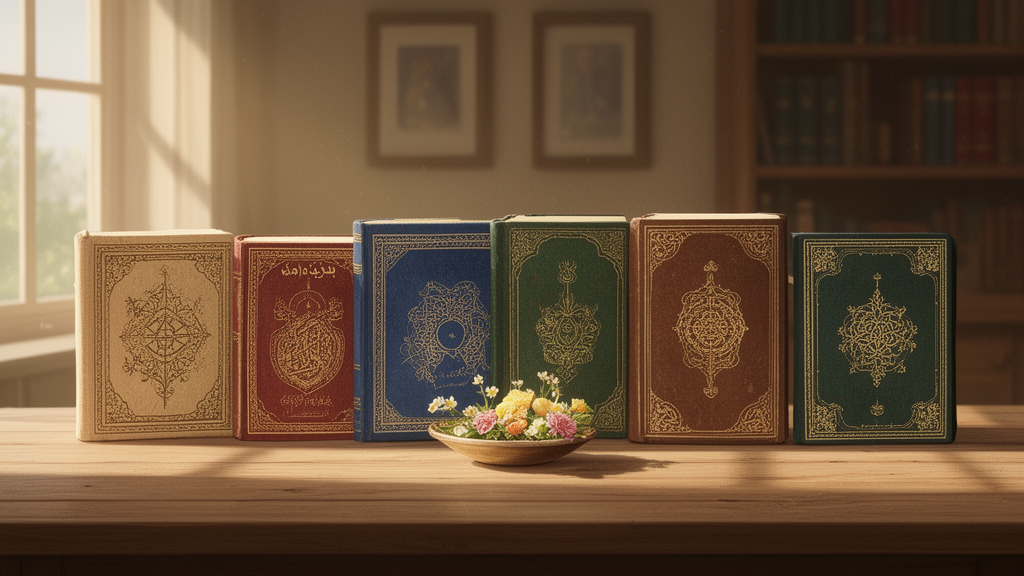
When people ask which is the true holy book in the world, they are usually asking one of three things: which text came directly from God or the highest reality, which text is most reliable, or which text should guide their own life. Each question has a different kind of answer. A believer may answer the first question with their own scripture. A historian may answer the second with evidence about manuscripts, dates, and transmission. The third question belongs to personal conviction and community practice.
The source material supports this framing. A Gloomba essay on the topic argues that there is no single, universally acknowledged “true” holy book, and that different religions consider their own sacred texts divinely inspired, authoritative, and foundational to their practices [2]. A Christian Website article makes a similar observation: while many religions believe their sacred texts come directly from God, there is no consensus on one single text that is an unchanged original [3]. Both sources are written from particular viewpoints, so they are best read as summaries of the debate rather than final authorities.
Why the question has no single answer
Sacred texts are not all the same kind of book. Some are collections of hymns, some are law codes, some are narrative epics, some are letters, and some are ritual manuals. Their authority also works differently. In one tradition a text may be treated as the direct speech of God. In another, it may be a human record of revelation, a teaching of an enlightened teacher, or a collection of communal wisdom. These differences make a direct ranking difficult.
The Wikipedia list of religious texts illustrates the variety. It catalogs texts across Bronze Age religions, classical antiquity, East Asian traditions, Iranian religions, Indian religions, Abrahamic faiths, Pre-Columbian Americas, ethnic religions, and new religious movements [1]. Including all these traditions in one list shows that sacred writing is a widespread human practice, but it does not show that any one text holds a unique status recognized outside its own community.
Belief, text, tradition, and scholarship
Discussions about holy books often mix four different categories. Keeping them separate makes the conversation clearer.
- Belief: A community’s conviction that a text is divinely inspired, revealed, or authoritative. This is a matter of faith and cannot be proven or disproven by historical methods alone.
- Text: The actual words in a manuscript, edition, or translation. Scholars compare manuscripts, editions, and translations to establish what the text says.
- Tradition: How a community reads, recites, memorizes, interprets, and applies the text. Traditions also include commentaries, rituals, and teachers who explain the text.
- Scholarship: Historical, linguistic, and literary analysis that asks when, where, and how a text was composed and transmitted. Scholarly findings may be uncertain or disputed.
A claim such as “this book is the word of God” belongs mainly to belief and tradition. A claim such as “this manuscript dates from a certain century” belongs to scholarship and needs evidence. Problems arise when these categories are blurred, for example when a historical argument is used to prove a religious claim, or when a devotional conviction is presented as an established fact.
How traditions define scripture
Different traditions define their scriptures in different ways. The Bible offers a useful example because it is shared by Jews and Christians in part, but the collections are not identical. WorldAtlas notes that the Old Testament, also known as the Torah to Jews and the Hebrew Bible, is sacred to both Jews and Christians, while the New Testament is specifically Christian [6]. It also reports that the Old Testament contains 39 books in the Protestant Bible, 46 in the Catholic Bible, and up to 49 in the Orthodox Bible, and that the New Testament contains 27 books shared across Christian denominations [6].
Language is another factor. According to WorldAtlas, the Old Testament is primarily in Hebrew with some portions in Aramaic, and the New Testament was written in Koine Greek [6]. Readers therefore encounter translations, and translations involve interpretation. WorldAtlas notes that translation differences, cultural context, and interpretation have produced variations among translations [6].
The Quran offers a different model of authority. The Christian Website article reports that Muslims believe the Quran was verbally revealed to the prophet Muhammad through the angel Gabriel, that it is written in classical Arabic, and that most Muslims treat it as the direct word of God [3]. The same article also notes that variations in recitation and rare alternate readings are known to exist [3]. This is a statement of Muslim belief, and the historical questions it touches on are separate from that belief.
The Hindu perspective: the Vedas and later texts
Hinduism does not have a single book that functions as a universal scripture in the way some other traditions treat their texts. Instead, it recognizes a body of texts with different levels of authority. The most commonly cited category is śruti, a Sanskrit term meaning “that which is heard.” The Ocean Library article describes the Vedas as revered as śruti, divine revelation transmitted through generations of sages [5]. It also describes the four Vedas: the Rig Veda, Sama Veda, Yajur Veda, and Atharva Veda [5].
The Vedas contain hymns to various deities, ritual instructions, and philosophical speculation, according to the same source [5]. Many people encounter the Vedas through the lens of later traditions, and the Upanishads, which the Ocean Library article describes as reflections on ultimate reality and the nature of the self, play a major role in Hindu philosophy [5]. The Christian Website article adds that many schools of Hinduism focus on later texts such as the Upanishads and the Bhagavad Gita, which reduces how central the Vedas are in everyday practice for many communities [3].
Dating and oral transmission
The age of the Vedas is an area where sources differ in emphasis and where precise dates should be treated cautiously. The Christian Website article states that the Vedas are dated from as early as 1500 BC and that they were passed down orally for generations before being written down [3]. The Ocean Library article describes the Vedas as dating back over 3,500 years [5]. These descriptions are broadly consistent in suggesting great antiquity, but they are not a precise chronology. Scholars debate dates for the composition of different Vedic layers, and the transition from oral to written transmission is not documented in a single moment.
Oral transmission is itself a major part of the Hindu textual tradition. Memorization methods were developed to preserve sound and sequence with great care. For believers, this preservation is part of why the text is trusted. For historians, oral transmission raises questions about how texts changed over time and how earlier layers can be reconstructed. Both perspectives can be held at once: a community may value exact recitation while historians study how language and practice developed across centuries.
Scripture, commentary, and practice
When a reader encounters a Hindu teaching, it helps to ask which layer it comes from. A verse in the Vedas, a passage in the Upanishads, a commentary by a later teacher, and a family custom each have a different status. Readers should not treat them as interchangeable. A devotional explanation may be meaningful to a community without being a direct scriptural statement, and a regional practice may differ from what a text describes. The explanation of a Hindu text should therefore identify the text, the tradition, and whether the claim is scriptural, commentarial, or devotional.
A Christian argument for the Bible as the only true holy book
Some writers argue for one book as uniquely true. The Answers in Genesis article by Nat Weeks is an example. Weeks describes a personal journey in which he concluded that there was only one holy book, the Bible, which he argued never makes a claim in the spiritual or supernatural realm that is contradicted by facts in the physical or natural realm [4]. He describes a method of elimination in which he examined the validity of spiritual claims by comparing them with physical and historical evidence, and he states that every religion and cult claims theirs is the true one [4].
This is a clear example of an argument from a particular religious perspective. It is a Christian apologetic position, and readers should identify it as such. Other scholars, religious leaders, and readers would evaluate the argument differently, especially the claim that scientific, historical, and spiritual claims can be assessed by the same method. A balanced reader can understand the argument’s logic while recognizing that it is not a neutral conclusion accepted by all traditions.
Criteria people use to judge a holy book
People who want to compare sacred texts often use criteria. Each criterion can be useful, but none settles the question alone.
- Age: Older texts can be important for understanding a religion’s history. However, age does not establish divine origin, and dating is often uncertain.
- Claimed origin: Many traditions claim divine or sacred origin for their texts. This is a religious claim and cannot be verified by historical method alone.
- Manuscript evidence: Surviving manuscripts help scholars reconstruct texts. The quality and quantity of evidence varies widely across traditions.
- Internal consistency: Readers may examine whether a text is internally coherent. Interpretation of consistency depends on the reader’s method and the tradition’s reading.
- Moral and spiritual influence: A text’s influence on communities, ethics, art, and law is historically observable, though its value is judged differently by different people.
- Community practice: How a text is recited, taught, and applied shows its role in living religion.
These criteria show that “true” can mean several things. A text may be historically significant, morally influential, and deeply sacred to a community, without being accepted as true by people outside that community.
Why texts change and why translations matter
Many readers are surprised to learn that sacred texts have histories of transmission, copying, editing, and translation. The Christian Website article argues that most mainstream religious scholars agree that ancient religious texts have changed to some degree over time, and that there is no consensus on one unchanged original [3]. This is a summary claim from a general article, so it should be read as an overview rather than a precise scholarly survey. Its broader point, that transmission and change are part of textual history, is widely discussed in religious studies.
WorldAtlas makes a related point. It notes that the original texts themselves have undergone changes over time due to scribal processes, and that translations can change meaning through language differences and cultural context [6]. For a reader, this means that comparing holy books usually involves comparing translations, and that a translation is an interpretation shaped by a translator’s choices.
How to read a translation responsibly
- Identify the translation, edition, and publisher you are reading.
- Check whether the translation is made from the original language, or from another translation.
- Look for a translator’s note or introduction that explains the method and audience.
- Compare key passages with at least one other translation, especially where a word carries theological weight.
- Read commentary from the tradition itself, and separately read scholarly commentary, keeping the two labeled.
Examples of how the question is answered in practice
In practice, most communities answer the question through their own tradition. A Jewish reader may point to the Hebrew Bible and rabbinic interpretation. A Christian reader may point to the Bible in one of its canonical forms. A Muslim reader may point to the Quran as the verbal revelation recited in Arabic. A Hindu reader may point to the Vedas as śruti, while also turning to the Upanishads, the Bhagavad Gita, and other texts depending on school and practice. A Buddhist reader may point to the Pali Canon, as the Gloomba article describes in its example of a Buddhist scholar speaking about its wisdom [2].
Each answer is sincere within its framework. The difficulty arises when one framework is used as a universal test for all others. A more useful approach is to ask what each tradition claims, why it makes that claim, and what evidence can be examined without requiring every reader to share the same faith.
Hinduism and the question of a single holy book
For Hindus, the question “which is the true holy book?” may be answered in several ways, depending on tradition, region, and personal practice. Some communities give the Vedas primary authority as śruti, while others emphasize texts such as the Bhagavad Gita, the Puranas, or devotional literature in regional languages. Hindu traditions also include multiple philosophical schools that read the same texts in different ways.
This plurality is central to Hindu thought rather than a weakness in it. Hindu scripture is often described as a family of texts and interpretations rather than one closed book. Readers who want to understand Hinduism should therefore avoid presenting one text as the only Hindu scripture. For background on how Hindu texts relate to other traditions, the Wikipedia list is useful because it places Hinduism within a broader map of religious writing [1].
Readers interested in specific religious texts can also explore related HindusGod.com topics. The page on the holy book in the world provides a broader orientation to the subject, while the discussion of the holy book concept covers the general category. For readers comparing traditions, the articles on the meaning of holy book and the best holy book question address related search interests from different angles. These links are included as internal references and are target drafts that may not yet be publicly visible.
Comparing texts without ranking faiths
Comparison can be useful when it is done carefully. A good comparison asks questions that different traditions can answer on their own terms. For example, a reader might ask how each tradition understands revelation, how it preserves its texts, what role commentary plays, and how the text guides ritual and ethics. These questions allow respectful comparison without declaring one text superior by default.
Articles that rank holy books by power, greatness, or age often blend religious claims with simplified evidence. A title such as “most powerful holy book” may suggest a measurable quality that does not exist in a scholarly sense. Similarly, claims about the “greatest” or “oldest” text depend on definitions. Oldest surviving text, earliest recorded tradition, and most widely read scripture are different measures. Readers should ask which measure is being used.
HindusGod.com’s own series on other traditions shows how this can be done. Articles on Buddhist holy books, Confucianism, Daoism, and the Druze and Bahá’í traditions each focus on a specific community rather than presenting a single universal ranking. Readers who want to see how different religions organize their sacred writing can also consult the Avesta and African holy book pages, which are target drafts.
Common misunderstandings
- “One book is the only true book, so the others must be false.” This is a faith claim. It may be held sincerely, but it is not a conclusion that historical scholarship can settle.
- “Ancient means authoritative.” Age can make a text historically important, but it does not establish divine origin.
- “Translations are the same as the original.” Translations interpret the source. Important passages should be compared across translations.
- “All Hindus believe the same text is supreme.” Hindu traditions vary by region, school, community, and practice.
- “Scripture and commentary are the same thing.” Commentaries are important, but readers should label them separately.
A practical method for studying holy books
If you want to understand a holy book rather than rank it, use a structured approach.
- Identify the tradition that regards the text as sacred and the community that uses it.
- Read the text in a reliable translation, and note the translator and edition.
- Learn the text’s historical context, including language, date range, and transmission where scholarship supports it.
- Read the tradition’s own commentaries and interpretations, and label them as commentary.
- Consult academic or institutional sources for historical questions, and note where scholars disagree.
- Separate your personal beliefs from the claims you are evaluating.
This method allows a reader to learn from a text without requiring agreement with its claims. It also prevents a common error: treating one kind of evidence as if it answers a different kind of question.
Practical guidance for readers
If you are asking this question for personal reasons, begin with the tradition that already matters to you or your family. If you are asking for academic reasons, define the criteria before comparing texts. If you are asking because you encountered a claim online, check whether the source is a religious apologetic, a neutral reference, a scholarly work, or a commercial article. The Gloomba and Christian Website articles, for example, are general discussions, while the Answers in Genesis article is an explicitly Christian argument [2][3][4].
Reliable reference works can also help you frame the question. The Wikipedia list is a starting point for mapping religious texts, but readers should follow its citations and check specialized sources for details [1]. WorldAtlas is useful for basic comparisons of major religions, but its general overviews should be checked against scholarly editions for precise claims [6].
Frequently asked questions
Is there one true holy book recognized by everyone?
No. Religious communities do not agree on a single holy book. Each tradition has its own authoritative texts, and recognition of a text as sacred depends on faith, community, and historical identity.
Which is the oldest holy book?
The answer depends on what is meant by holy book and how dates are established. The Vedas are often described as among the oldest religious texts, with sources dating them to as early as 1500 BC or over 3,500 years ago, though exact dating is debated [3][5]. Other ancient texts also have long histories, so the oldest claim should be stated with its criteria.
Why do Hindus not have one holy book like some religions do?
Hindu tradition includes a range of texts, including the Vedas as śruti and later texts such as the Upanishads and the Bhagavad Gita, which are important in many schools [3][5]. Hindu practice also varies by region, community, and sampradaya, so there is no single universal scripture recognized in exactly the same way by every Hindu.
Can holy books be compared objectively?
Some aspects can be compared objectively, such as manuscript history, language, structure, and historical influence. Questions about divine origin or ultimate truth are matters of faith and cannot be settled by historical method alone.
Summary and next step
The question of the true holy book in the world does not have one answer that all traditions accept. Religious communities regard their own texts as authoritative for different reasons, and scholars can study how those texts were composed, preserved, translated, and used. For Hindus, the Vedas as śruti, along with later texts and commentaries, form part of a diverse tradition. For Christians, Jews, Muslims, Buddhists, and others, sacred texts have their own histories and claims. A respectful reader can learn from each tradition by separating belief, text, practice, and scholarship.
If you are researching a specific tradition, start with the text that community treats as central, compare reliable translations, and consult both the tradition’s own teachers and academic sources. Then return to your original question with a clearer sense of what kind of answer it requires.
Sources and further reading
- List of religious texts, Wikipedia: used for the range of religious texts across traditions and the placement of Hinduism among Indian religions.
- Which is the True Holy Book in the World? Exploring Sacred Texts and Their Significance, Gloomba: used for the observation that there is no single universally accepted true holy book and that sacred texts are authoritative within their own traditions.
- Is There A True Original Book From God That Hasn’T Changed?, Christian Website: used for the description of the Vedas as śruti, their dating claim, oral transmission, and the Quran’s Muslim belief about verbal revelation. This is a general article, so its historical summaries should be checked against scholarly sources.
- The Search for the True Holy Book of all “Holy” Books, Answers in Genesis: used as an example of a Christian apologetic argument for the Bible as the only true holy book. It is an advocacy text, not a neutral reference.
- Sacred Texts Unveiled: A Comprehensive Guide to the World’s Holy Books, Ocean Library: used for the description of the Vedas as śruti, the four Vedas, and the role of the Upanishads.
- Sacred Texts Of Major World Religions, WorldAtlas: used for the book counts of the Old and New Testaments, their original languages, and the effects of translation and transmission.