The Holy Book of Women’s Mysteries is a book by Zsuzsanna Emese Budapest, a writer associated with feminist witchcraft and the Women’s Spirituality Movement. It is not a Hindu scripture. Its subject is Dianic witchcraft, goddess-centered ritual, spellcasting, and women’s spiritual practice in a modern Western setting. Readers who arrive at this page from a search for a “holy book” often want to know whether the text belongs to a religious canon, what it teaches, and how it compares with the sacred books of Hinduism. The short answer is that it is a modern, self-described spiritual handbook from a specific movement, and it has no place in the Hindu scriptural canon.

This article explains what the book is, what its publishers and library records say about it, how it differs from scriptures such as the Vedas, the Bhagavad Gita, and the Puranas, and why the word “holy” can mean different things in different traditions. It does not evaluate the book’s spells or rituals as religious truth or falsehood. It describes them as the text presents them.
Direct answer: what The Holy Book of Women’s Mysteries is
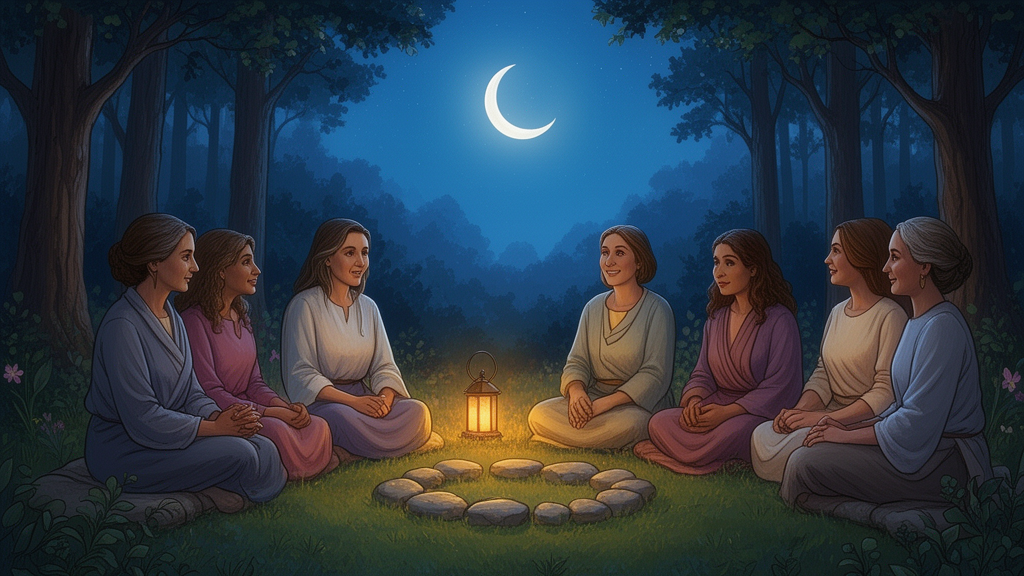
According to the publisher and bookseller listings that were reviewed for this article, The Holy Book of Women’s Mysteries is a book by Zsuzsanna Budapest, with Maria Szilagyi named as a co-author on at least one print-on-demand listing. The Lulu listing describes it as “the seminal book of Women’s Spirituality” that “launched the Dianic tradition and started the Women’s Spirituality Movement as a force in modern society.” The Amazon listing for a one-volume edition gives the subtitle “Feminist Witchcraft, Goddess Rituals, Spellcasting and Other Womanly Arts.” A Google Books description says the text includes information on Dianic witchcraft and spells, everyday magick, sabbat rituals, divination methods, and a discussion of goddesses and the feminine.
Put plainly, the book is a practical and philosophical guide for women working within a feminist, goddess-centered witchcraft tradition. Its authority comes from that movement, from the author’s teaching, and from the community of readers who use it. It is not a text that Hindus, Jews, Christians, Muslims, Buddhists, or members of other religions treat as scripture, and it should not be read as one.
Why the word “holy” needs context
In English, “holy book” is a broad term. It can refer to a canonical scripture that a community regards as revealed or authoritative. It can also describe a devotional manual, a ritual guide, or a book that a particular movement treats as sacred to its own practice. The Holy Book of Women’s Mysteries uses the word “holy” in the second sense. Its title signals that the author regards its contents as spiritually significant to her readers, but that is different from claiming a shared canon with a world religion.
This distinction matters for anyone comparing holy books across traditions. Hinduism does not have a single book equivalent to the Bible or the Quran. Its sacred literature is layered and varied. Some texts are classed as shruti, meaning heard or revealed, while others are smriti, meaning remembered or traditionally transmitted. Within that framework, the Vedas, the Upanishads, the Bhagavad Gita, the Ramayana, the Mahabharata, and the Puranas each have different roles in different communities. Many Hindus also keep devotional texts, hymn collections, and family ritual manuals that are sacred in practice but are not part of the same authoritative category. The Holy Book of Women’s Mysteries belongs to a different family of texts altogether.
The author and the Dianic tradition
The reviewed sources identify Zsuzsanna Budapest as the author and connect the book to the Dianic tradition. Dianic witchcraft is a feminist form of modern witchcraft that emphasizes goddess worship, women-only ritual spaces in many of its branches, and a critique of patriarchal religion. The name is drawn from Diana, a figure in Roman religion, but the tradition is a modern movement, not an ancient religion carried forward unchanged.
The Lulu listing presents the book as foundational to what it calls the Women’s Spirituality Movement. That is the publisher’s description, and it reflects how the movement presents its own history. Historians of religion would describe the movement’s development through published books, organized covens, feminist publishing, and public debate in the late twentieth century. The claim that this one book “launched” the tradition is a community narrative and should be read as such. Scholars of modern paganism and witchcraft generally treat the origins of these movements as complex, involving many authors, groups, and shifting definitions.
Belief, text, tradition, and scholarship
When writing about a book like this one, it helps to separate four kinds of statement:
- What the text says: the instructions, chapter topics, and spells that appear on its pages, which a reader can check directly in a copy of the book.
- What the tradition believes: the devotional and philosophical commitments of practitioners, such as the sacredness of the goddess or the value of women-centered ritual.
- What the community says about its history: claims about origins, influence, and the book’s place in a movement, often drawn from publishers, practitioners, and personal testimony.
- What scholars can document: publication details, dates, editions, reception, and the broader social history of modern witchcraft, supported by independent sources.
The sources reviewed for this article mostly belong to the first and third categories. They are catalog records, bookseller descriptions, and a library record. They are useful for identifying the book, but they do not establish the book’s historical influence in independent academic terms. For that, readers would need peer-reviewed studies of modern witchcraft and women’s spirituality, which were not part of the verified source set for this post.
Editions and where to find them
The sources identify at least two listings that matter to readers. The first is a Lulu ebook listing titled The Holy Book of Women’s Mysteries: Aquarian Rituals and Spells for Present and Future Witches, which lists Zsuzsanna Budapest and Maria Szilagyi as authors and describes the book as seminal to the Women’s Spirituality Movement. The page also notes that the ebook may not meet all accessibility standards, which is worth knowing before purchase.
The second is an Amazon listing for a one-volume edition with the subtitle Feminist Witchcraft, Goddess Rituals, Spellcasting and Other Womanly Arts, credited to Zsuzsanna Budapest with a different ISBN from the earlier Amazon listing. The Amazon page for the earlier edition, identified by ISBN 157863413X, lists Zsuzsanna Emese Budapest as author. Editions differ in title, subtitle, format, and publisher, so readers should check the edition they are using before quoting or comparing it.
The Internet Archive also holds a catalog entry for The holy book of women’s mysteries, which identifies the author as “Budapest, Zsuzsanna Emese, 1940-“. That record is useful for confirming the author’s name and birth year as cataloged by the archive. It is a library-style record, not a review of the book’s contents.
A note on editions and quotations
Because the editions have different subtitles and publishing details, this article does not quote passages from the book. Quotations from copyrighted translations or modern devotional texts should be checked against a specific edition. Where this article describes the book’s contents, it does so at the level of its publisher’s and bookseller’s summaries.
How it differs from Hindu scripture
Readers coming from a Hindu background or studying Hinduism often ask how this book compares with texts they already know. The differences are useful to understand, even though the two traditions are very different.
Authority and origin
Hindu scriptures are understood within a long, layered tradition of transmission, commentary, and ritual use. The Vedas are regarded as shruti in most orthodox Hindu frameworks, and their authority is linked to a tradition of oral recitation and priestly preservation. The Bhagavad Gita is part of the Mahabharata and has been studied through many commentaries, including those of Adi Shankaracharya, Ramanuja, and Madhva, each representing a different philosophical school. The Holy Book of Women’s Mysteries, by contrast, is a modern book by a named author, published in the late twentieth century for a movement that she helped shape. Its authority rests on the author’s teaching and on the community that adopts it.
Deity and symbolism
Both traditions feature goddess-centered thought, but the figures and frameworks differ. Within Hindu traditions, the Goddess appears as Devi, Shakti, Durga, Lakshmi, Saraswati, Kali, and many other forms, often within a larger theology in which the divine is one reality expressed in many names and forms. Devi-centered texts such as the Devi Mahatmya, which is part of the Markandeya Purana, present the Goddess in a specific devotional and narrative context. Dianic witchcraft draws on goddess imagery that is shaped by feminist and modern pagan thought, and it does not aim to reproduce Hindu theology. Readers should not assume that goddess imagery in one tradition carries the same meaning in another.
Ritual form
Hindu puja, homa, and temple worship follow codified procedures in many traditions, often with variation by region, family, and sampradaya. Dianic and other modern witchcraft practices are generally described in more flexible terms, with rituals often created or adapted by groups and individuals. The Lulu listing refers to “rituals and spells,” and the Google Books description refers to sabbat rituals and divination methods. These are different kinds of ritual systems, and comparing them requires care about what each tradition claims for its own practices.
Why readers search for this book
People search for “the holy book of women’s mysteries” for several reasons. Some are researching modern women’s spirituality. Some are exploring goddess-centered practice. Some are students comparing feminist religious movements with older traditions. Others have encountered the title in a bookshop, library, or online discussion and want to know whether it is connected to a religion they follow.
For HindusGod.com readers, the most useful answer is that this book belongs to a different religious and cultural category. A reader interested in Hindu goddess traditions may find more relevant material in texts and articles on Devi, Shakti, and the Devi Mahatmya. A reader interested in women’s voices within Hinduism may want to look at devotional poets, household ritual, and the study of women’s religious roles in specific regions. Those are different subjects from Dianic witchcraft, and the two should not be merged.
Examples of related reading on this site
The following HindusGod.com drafts address related questions about holy books, sacred texts, and religious traditions. Their links are included because they help readers compare categories of sacred literature. These pages are WordPress drafts and may not be public at the time you read this. If a link does not open, the page has not yet been published.
- For a general introduction to the term, see Holy Book.
- For the meaning of the phrase and how it is used, see Holy Book Meaning.
- For a related discussion of hidden or spiritual teachings, see The Holy Mysteries.
- For Hindu scripture, see Geeta Holy Book and Gita Holy Book.
- For a Hindi-language perspective on sacred books, see Hindi Holy Book.
- For comparisons with other religious traditions, see Buddhist Holy Book, Avesta Holy Book, Bahai Holy Book, Confucianism Holy Book, and Daoism Holy Book.
Reading it respectfully
A respectful reader keeps several questions separate. The first is what the book itself says. The second is what its community believes and practices. The third is how scholars and outside observers describe the book’s place in history. Mixing these up leads to errors in both directions: treating a modern movement’s self-description as settled history, or dismissing a sincere practice because it is not part of one’s own tradition.
Respect also means not presenting the book as a Hindu text, not attributing Hindu authority to it, and not using Hindu deity names or practices to make it sound more ancient or more authentic. Equally, Hindus should not be described as sharing its beliefs. Hinduism is internally diverse, and no single text or practice is universal across Hindu communities.
Common misunderstandings
“It is an ancient women’s scripture.”
The sources reviewed describe the book as a modern work associated with a late twentieth-century movement. Calling it ancient or a lost women’s scripture is not supported by the catalog, publisher, or bookseller information reviewed here.
“It belongs to the Hindu tradition.”
Nothing in the reviewed sources connects the book to Hinduism. Its subject is Dianic witchcraft and women’s spirituality. Any link to Hindu goddess traditions should be made by readers only as a comparison, not as a claim of shared origin.
“Every spell and ritual in it is a guaranteed method.”
Practices described in religious and magical texts are part of a tradition’s own framework. This article does not assess whether any spell or ritual produces a material result. Within religious contexts, ritual is commonly understood as expressing devotion, community, or meaning rather than as a guaranteed mechanical outcome, though practitioners’ views vary. Readers should be wary of any text or teacher that promises health, wealth, protection, or supernatural results without qualification.
How to explore the topic further
If your interest is in modern goddess spirituality, start with the publisher listings and then look for independent academic studies of modern witchcraft and women’s spirituality in university libraries or scholarly databases. If your interest is in the Hindu goddess, the Devi Mahatmya and the wider Shakta traditions are a better starting point, along with trusted introductions written by scholars or by recognized teachers within the tradition. If your interest is in comparing sacred literatures, look at how each tradition defines its authoritative texts, who transmits them, and how they are used in worship.
When you compare books, check the edition, the author, the publisher, and the date. Note whether a claim comes from the book, from a publisher’s description, from a practitioner, or from an independent scholar. That habit will make your reading clearer whether the subject is Hindu or not.
Frequently asked questions
Is The Holy Book of Women’s Mysteries a Hindu scripture?
No. The reviewed sources identify it as a book by Zsuzsanna Budapest associated with feminist witchcraft and the Dianic tradition. It is not part of the Hindu scriptural canon and is not a Hindu text.
Who wrote it?
The Amazon and Internet Archive records list Zsuzsanna Budapest, also given as Zsuzsanna Emese Budapest. The Lulu listing names Zsuzsanna Budapest and Maria Szilagyi as authors on that edition.
What is the Dianic tradition?
The Dianic tradition is a feminist form of modern witchcraft that emphasizes goddess worship and women-centered spirituality. Its practices and organization vary among groups, and its origins are described differently by practitioners and by scholars.
Does the book have chapters or verses like a scripture?
The reviewed sources do not provide a verified chapter or verse structure. Because edition details differ, readers should consult the specific edition they own before citing sections.
Should Hindus read this book?
Readers are free to explore any text, but this book should not be treated as a source for Hindu belief or practice. Those seeking Hindu teaching should consult Hindu scriptures and trusted commentaries from within the tradition.
Summary and next step
The Holy Book of Women’s Mysteries is a modern book by Zsuzsanna Budapest, associated with feminist witchcraft, goddess-centered ritual, and the Dianic tradition. Its title uses “holy” in the sense of spiritually important to its own community, not in the sense of a canonical scripture shared by a world religion. For HindusGod.com readers, its main value is as an example of how a modern spiritual text differs from the layered, varied sacred literature of Hinduism. The next step is to check the edition you are reading, identify the source of each claim, and compare it carefully with the sacred texts of the tradition you are studying.
Sources and further reading
- Amazon listing for The Holy Book of Women’s Mysteries (ISBN 157863413X): used to confirm the title and author name as listed by the bookseller.
- Amazon listing for The Holy Book of Women’s Mysteries: Feminist Witchcraft, Goddess Rituals, Spellcasting and Other Womanly Arts: used to confirm the one-volume edition’s subtitle and author listing.
- Internet Archive catalog record for The holy book of women’s mysteries: used to confirm the author’s name and birth year as cataloged.
- Lulu ebook listing for The Holy Book of Women’s Mysteries: used for the publisher’s description of the book’s place in the Women’s Spirituality Movement and the Dianic tradition, presented as the publisher’s claim.
- Google Books description of The Holy Book of Women’s Mysteries: used for the summary of topics such as Dianic witchcraft, sabbat rituals, divination, and goddess material.