The phrase surya sutra events does not point to one verified event series on HindusGod.com. Readers searching it may be looking for one of several different things. The two sources reviewed for this draft describe a Sanskrit astronomy treatise called the Surya Siddhanta and a Phoenix-based classical dance collective called Suryasutra. Neither source lists upcoming events, and this post does not confirm any specific event date, venue, or ticket.

Quick answer
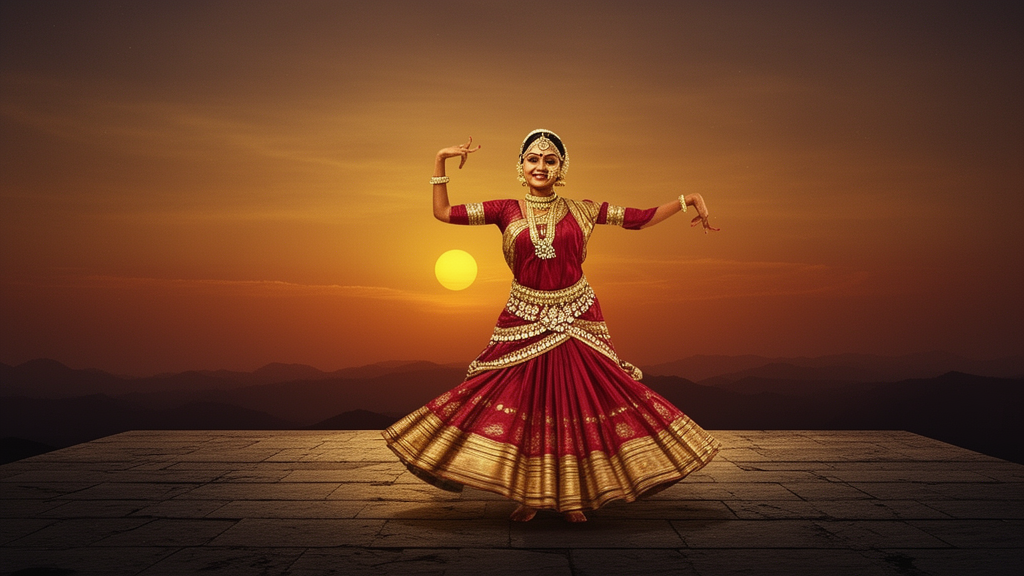
If you are looking for the ancient text, the term is usually written Surya Siddhanta, meaning roughly ‘Sun Treatise’. It is a Sanskrit work on Indian astronomy, attributed to Latadeva and dated by most modern scholars to somewhere between the end of the 4th and the 5th century, according to the Wikipedia article on the text. If you are looking for a performance group, Suryasutra is a collaboration of classical dancers based in Phoenix, Arizona. Any event listing should be checked against the organizer’s current publication before you plan to attend.
What the Surya Siddhanta is
The Surya Siddhanta is a text of mathematical astronomy, not a book of worship instructions or a festival calendar. The Wikipedia article describes it as a treatise of fourteen chapters that sets out rules for calculating the motions of the Sun, Moon, and the five classical planets within a geocentric model. It also gives estimates of the planets’ diameters and of the circumference of their assumed circular orbits around the Earth.
Text, attribution, and tradition
The article reports that the text is attributed to Latadeva, described as a student of Aryabhata I. Within the work, the second verse of the first chapter presents its teaching as coming from an emissary of the solar deity Surya, recounted to an asura named Maya at the end of the Satya Yuga. This is a textual claim within the scripture’s own framing. It is not a historical report that can be checked independently.
For readers of Hindu tradition, this distinction matters. The text presents itself as a revealed teaching connected to Surya, while modern scholars study it as an astronomical work with a date and a manuscript history.
Dating and manuscript evidence
Sources disagree on the dating. The Wikipedia article states that most modern scholars date the text to the end of the 4th or 5th century. It also notes that the text is known from a 15th-century palm-leaf manuscript and several newer manuscripts, and that it was composed or revised probably around 800 CE from an earlier text also called the Surya Siddhanta. Readers should treat these as scholarly positions that the article reports, not as settled facts.
What the text says about astronomy
The article notes several features that show how the text approaches the sky:
- Geocentric model: The Earth is treated as a stationary globe around which the classical planets orbit.
- Spherical Earth: According to Markanday and Srivatsava, as cited in the article, the text asserts that the Earth is spherical.
- Units: Distances are expressed in the yojana, which the article estimates at between 8 and 15 km, a range that reflects uncertainty in the unit.
- Comparison with Greek astronomy: The article notes that Greek astronomers such as Aristarchus and Eratosthenes had earlier estimated astronomical dimensions with greater accuracy.
These points show why the text is studied in the history of science. They should not be read as a claim that the work is an accurate modern model of the cosmos.
Suryasutra, the dance collective
A separate online source, the Suryasutra Dance Company artists page, describes a creative collaboration of six Phoenix-based classical dancers. The page names dancers who train in Kathak, Bharatanatyam, Kuchipudi, and Odissi, and says they explore one another’s interpretations of the Natya Shastra while staying grounded in their own styles.
This is a performance and artistic group. It is not a Hindu scripture, and its name does not mean that its work is connected to the astronomical treatise. Readers who want to attend a show should look for current announcements from the company, not rely on this name alone.
Why the names overlap
Both names use the words Surya and Sutra in a similar way. Searchers can therefore be led to different subjects. A reader interested in Indian astronomy may be surprised to find dance news, and a reader looking for a dance performance may not expect a text on planetary motion.
How to check an event before relying on it
Because this draft could not verify any upcoming event, readers should use the following steps before making plans:
- Identify which Surya Sutra you mean: the Sanskrit text, the dance company, or another organizer.
- Open the organizer’s own website or official social media account, and confirm the date, city, venue, and ticket details there.
- Check that the listing is current. Event pages and social profiles can be out of date.
- Contact the organizer directly if a listing is unclear, especially for religious or cultural programs where timing and rituals may vary by community.
Social media profiles that share similar names are not automatically connected. Several accounts in search results use the words events, Surya, or Sutra without any clear link to each other. Their listings were not inspected for this draft, and they should not be treated as confirmation of a Surya Sutra event.
Related HindusGod.com reading
For readers who want to explore the word sutra in Hindu and Buddhist contexts, these HindusGod.com pages may help. Their publication status should be checked before you rely on them, because they are currently WordPress drafts and may not be public:
- For an overview of the Surya Sutra topic on this site, see Surya Sutra.
- For an English-language version, see Surya Sutra English.
- For the broader meaning of the word sutra, see Meaning Sutra.
- For a devotional text that uses the sutra form in a different tradition, see Bhakti Sutra.
Frequently asked questions
Is Surya Sutra a religious festival?
Not based on the sources reviewed. The Surya Siddhanta is an astronomical treatise, and the Suryasutra page describes a dance collective. Neither source identifies a festival by this name.
Where can I find verified dates for a Surya Sutra event?
Use the organizer’s official channels. This draft did not verify any scheduled event, so no date or venue is given here.
Summary
Surya Sutra is an ambiguous search term. In the sources reviewed, it refers either to the Sanskrit astronomy treatise Surya Siddhanta or to the Phoenix dance collective Suryasutra. Readers looking for events should identify the subject they mean and confirm details with the official organizer. Readers interested in the text can study its astronomy, attribution, and manuscript history, while keeping the textual claims, traditional framing, and modern scholarly dating distinct.
Sources and further reading
- Surya Siddhanta, Wikipedia: used for the description of the text, its attribution to Latadeva, its dating debate, its fourteen chapters, its geocentric model, and its manuscript history. Secondary source; scholarly primary editions should be consulted for detailed study.
- Surya Sutra Dance Company: Artists: used only for the description of the Phoenix dance collective and its dancers. Organizer’s self-description.