The Prajnaparamita Hridaya Sutra, usually called the Heart Sutra, is a short Mahayana Buddhist text on emptiness (sunyata) and the perfection of wisdom (prajnaparamita). Its central message is that the five skandhas (form, feeling, perception, mental formations, and consciousness) are empty of a fixed, independent nature, and that wisdom frees the mind from attachment. In English it runs to only about sixteen sentences, which is why many readers treat it as a compact summary of a much larger body of Prajnaparamita literature.

This article explains what the sutra says, how its title and names vary, where its text and dating are debated, and how it is used in Buddhist traditions. The Heart Sutra is a Buddhist scripture. It is not a Hindu text, and this guide does not present it as one. Readers coming from Hindu devotional or Sanskrit studies will find useful common vocabulary, but the sutra’s doctrines belong to Mahayana Buddhism.
What the Prajnaparamita Hridaya Sutra Is
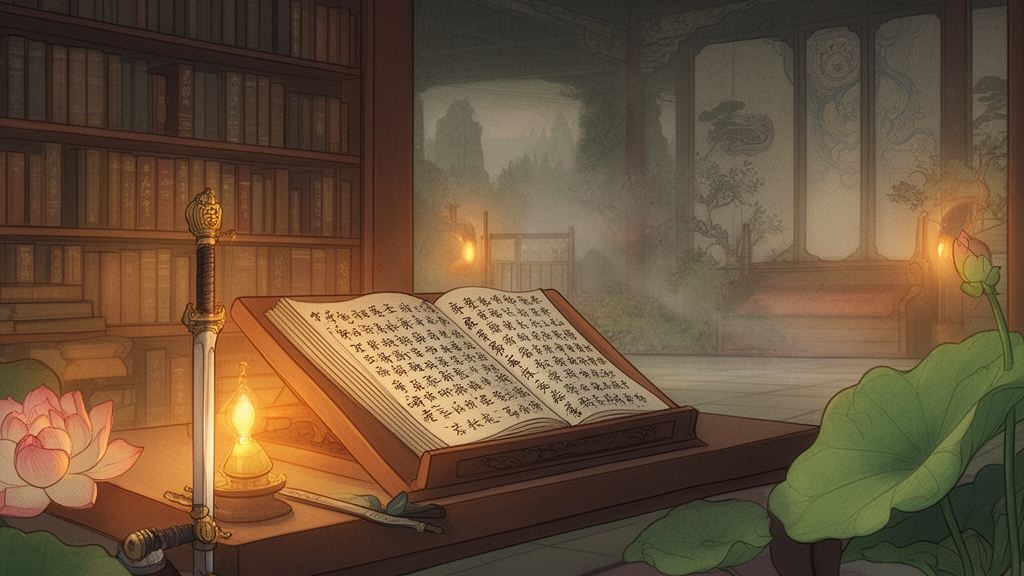
The text belongs to the Prajnaparamita (“Perfection of Wisdom”) family of Mahayana sutras. A reference article on Prajnaparamita describes it as a principle in Buddhism and the texts associated with it, and notes that Prajnaparamita is also personified as a female figure, Prajnaparamita Devi, representing Transcendent Wisdom [3]. The Heart Sutra is the most widely known short member of this group. Wikipedia’s article describes it as a popular sutra in Mahayana Buddhism, listing the Sanskrit language and a period of the 7th century CE, with an early version possibly existing in the 3rd century [1][2].
Buddhist sources place the sutra within Mahayana, the branch of Buddhism that emphasizes the bodhisattva ideal, the aspiration to attain awakening for the benefit of all beings. The sutra’s opening figure is a bodhisattva, and its teaching is framed as the insight of a bodhisattva practicing deep wisdom [4][6].
Common titles and spellings
Readers will meet several forms of the name, and they refer to the same text. Transliteration varies by source and by diacritics:
- Prajnaparamita Hridaya Sutra: the common English form, with diacritics omitted.
- Prajñāpāramitā-hṛdayam Sūtra: the fuller Sanskrit form with diacritics, as used in scholarly and calligraphic presentations [4].
- Heart Sutra or Heart Sūtra: the English translation of hṛdaya (heart, essence) that appears in many references [1][2].
- Maha Prajna Paramita Hridaya Sutra: a form used in a Zen monastery’s sutra book, which renders the opening with the honorific “Maha” [6].
Wikipedia’s article on the sutra also lists the Chinese form, which is closely related to the Japanese, Korean, and Vietnamese traditions that chant the text [2]. Because spellings differ, it is useful to search for both the Sanskrit and the English forms when comparing translations.
The Opening: Avalokiteshvara and the Five Skandhas
The sutra begins by naming Avalokiteshvara, the bodhisattva of compassion, who is described as practicing deep Prajnaparamita and seeing that the five skandhas are empty in their own nature. One English-language summary in a Zen sutra book states that Avalokiteshvara, practicing deeply, perceived that all five skandhas in their own being are empty and was thereby freed from all suffering [6]. The Sanskrit text, as transliterated on the Visible Mantra site, opens with the bodhisattva Avalokiteshvara looking upon the profound practice of Prajnaparamita and seeing the five skandhas and their own-nature as empty [4].
This opening sets the frame for everything that follows. The sutra is presented as an insight gained in meditation and practice, not as a list of rules. It then addresses Shariputra, a disciple of the Buddha who is often portrayed as a figure of wisdom in early Buddhist literature. The dialogue style is typical of many Buddhist sutras.
Why the skandhas matter
The five skandhas are the basic constituents of experience in Buddhist analysis: form, feeling, perception, mental formations, and consciousness. The sutra does not reject them. Instead, it teaches that each is empty of an independent, fixed essence. Readers should note that this is a doctrinal claim within Buddhist thought. Other traditions, including many Hindu schools, analyze the self and the world in different terms, and this difference is a matter of philosophy, not a judgment about devotion.
The Core Teaching: Form Is Emptiness
The most quoted line of the sutra is that “form is emptiness, emptiness is form.” The Visible Mantra transliteration of the Sanskrit reads, in part, rūpaṃ śūnyatā śūnyataiva rūpaṃ, which is commonly rendered as “form is emptiness, emptiness is just form” [4]. The same passage continues with the other skandhas: feeling, perception, mental formations, and consciousness are said to be similarly empty.
Wikipedia’s article organizes the content of the sutra under headings such as “Opening,” “Form is emptiness,” “Reliance on the prajnaparamita,” “Unsurpassed knowledge,” and “Conclusion” [1][2]. Those section headings reflect the usual scholarly division of the text, though readers should consult a full translation to see the wording of each passage.
Emptiness as non-attachment
The Huntington Archive’s study PDF describes the sutra as distilling the teaching of non-attachment, which it identifies with the doctrine of emptiness [5]. This is an interpretive summary by the authors of that work. It is useful for understanding how many Buddhist teachers present the sutra: emptiness is not nothingness, but the lack of fixed, self-existing essence, and seeing this lack loosens grasping and fear.
The sutra’s language also includes negations, such as the repeated “no” lists that deny the traditional categories of Buddhist teaching, including the senses, their objects, and several levels of consciousness, as well as the Four Noble Truths and wisdom itself. The Visible Mantra transliteration includes these lists, which many commentators read as a method for dismantling conceptual attachment rather than a literal denial of experience [4]. Translators differ in how they render these negations, so comparing editions helps readers avoid a single reading.
Reliance on prajnaparamita
The sutra also states that bodhisattvas, relying on Prajnaparamita, dwell without mental obstruction, and that buddhas of the three times attain supreme awakening by relying on it [4]. This passage links the individual practitioner to the wider Buddhist claim that wisdom is the path to awakening. As with all statements about awakening, this is a religious claim within Buddhist belief. It is not a promise of a material or worldly result.
The Short and Long Forms
The Heart Sutra exists in a longer and a shorter form. The Visible Mantra page notes that the sutra is known in both forms and that its calligraphy presents the shorter version [4]. The longer form is related to the Prajnaparamita literature as a whole and includes additional material, such as a larger introduction and dialogue. Scholars and translators usually work from named editions, and the choice of edition affects which text a reader is comparing.
For most English-speaking readers, the short form is the text they encounter in chanting books, temple handouts, and study editions. When you compare translations, check whether the edition is the short or long form and whether it follows a named Sanskrit edition. The Visible Mantra page states that its Sanskrit follows Edward Conze’s edition as it appears in his book Buddhist Wisdom Books [4].
How to check which version you are reading
- Look for the title. A short-form edition is usually titled as the Heart Sutra alone.
- Check the translator’s note on the source text. A reputable translation names its base edition.
- Compare the opening. Long and short forms differ in their introductions and the dialogue that follows.
Dating and Origins: Where Scholars Disagree
The date and place of composition are among the most debated questions about the sutra, and readers should understand that the evidence does not settle them fully. Several points are reasonably well documented, while others remain open.
The oldest manuscript
Wikipedia’s article describes a palm-leaf manuscript in Siddham script, originally held at Horyu-ji Temple in Japan and now in the Tokyo National Museum. The article states that this may be the earliest extant Sanskrit manuscript of the sutra, dated to the 7th to 8th century CE [1][2]. This is a manuscript date, not the date of composition. A text can be older than the oldest surviving copy, and the article itself notes that an early version may have existed in the 3rd century.
The Chinese translation and the composition question
The Visible Mantra page states that it is now generally believed by scholars that the Heart Sutra was composed in China. It also notes that the part of the text from the first “iha Shariputra” passage down to “Na jnanam, na praptir na-aprapti” was extracted from the Chinese translation of the Sanskrit Pancavimsatisahasrika Prajnaparamita Sutra [4]. These statements suggest that the sutra draws on an existing Prajnaparamita text and that scholars have compared the Chinese and Sanskrit sources. The Visible Mantra page is a devotional and artistic site run by an individual, so its scholarly claims should be checked against academic work where possible.
Wikipedia’s article contains sections on the earliest Chinese translation, the earliest extant versions, and the authorship of the sutra, including a hypothesis associated with the scholar Jan Nattier and later criticism of that hypothesis [1][2]. The section headings show that authorship is an active debate. Readers who want the arguments should consult the cited scholarship in the article’s references.
What the debate means for readers
Authorship and dating do not decide the sutra’s religious value. In Buddhist traditions, the sutra is often regarded as the words of the Buddha, transmitted through the Prajnaparamita tradition. Historical scholarship asks different questions: when the text took its present form, where it was composed, and how it spread. Keep these categories separate. Devotional belief, traditional attribution, and historical evidence can each be meaningful without being the same thing.
The Prajnaparamita Literature Around the Sutra
The Heart Sutra is one short text within a large family. The Prajnaparamita sutras are extensive, and the Chinese Buddhist canon, as organized in the Taisho Tripitaka, contains a numbered section for them. Wikipedia’s glossary-based listing shows the Prajnaparamita group as items 220 to 261 in that canon [3]. This shows the breadth of the literature, not a single text. For readers who want the wider context, the sutra is best read alongside other Prajnaparamita works such as the Ashtasahasrika Prajnaparamita.
Prajnaparamita as a figure
In Buddhist art and devotion, Prajnaparamita is also depicted as a personification of Transcendent Wisdom. The Wikipedia article on Prajnaparamita describes a Tibetan painting in which Prajnaparamita appears as a figure of wisdom, and it notes that Manjushri, the bodhisattva of wisdom, is commonly shown with a sword of wisdom and a sutra manuscript, both recognized symbols of Prajnaparamita in Buddhist art [3]. These images are artistic and devotional conventions. They help practitioners visualize wisdom, but they are not historical portraits.
Core themes across the literature
The broader Prajnaparamita literature addresses themes such as the bodhisattva’s qualities, tathata (suchness), negation, emptiness, and maya (illusion) [3]. The Heart Sutra condenses many of these themes into a few lines. Readers who want a fuller treatment should look at the Prajnaparamita pages on this site and in standard reference works.
How the Sutra Is Used Today
The Heart Sutra is one of the most widely chanted texts in Mahayana Buddhism. Versions are known in most of the important languages of Mahayana Buddhism, and the article on the sutra lists translations in dozens of languages [1][2]. The Visible Mantra page notes that many standard commentaries on the sutra look at it from a range of traditional viewpoints [4]. That variety matters. The sutra is not used in one way by all Buddhists.
Chanting and recitation
In many East Asian Buddhist communities, the sutra is recited in temple services and personal practice. Chanting practices differ by school, country, and monastery. Some communities chant in Chinese, Japanese, Korean, or Vietnamese, while others use Sanskrit or local translations. Where a temple has a specific chanting form, follow its teacher or community guidance rather than a general rule.
Study and commentary
Monastic and lay study of the sutra often involves commentaries, which explain the text within a particular school’s doctrine. Commentaries are interpretation, not scripture. A reader should identify which commentary they are using and recognize that different schools read the same lines in different ways.
Esoteric and Shingon readings
The Visible Mantra page reports that the Shingon tradition of Japan regards a particular seed syllable, dhih-mam, as the essence of the Heart Sutra, and it describes the sutra as the essence of the Perfection of Wisdom tradition in that setting [4]. This is a tradition-specific view. It should not be presented as the sutra’s universal meaning.
The Final Mantra
The sutra ends with a mantra. The Visible Mantra transliteration reads gate gate paragate parasamgate bodhi svaha, presented in the text as a mantra of Prajnaparamita [4]. Translators and commentators read the words in different ways, often as “gone, gone, gone beyond, gone completely beyond, awakening, hail.” Readers should treat such renderings as interpretations and check them against a named translation.
Many devotees recite the mantra as part of chanting. Buddhist teaching frames such recitation as a support for concentration and the wisdom the sutra describes. It is not a guarantee of any worldly outcome, and this article makes no promise of protection, health, or success.
How Hindu Readers Might Approach the Text
HindusGod.com readers often come to Buddhist scriptures through interest in Sanskrit, comparative religion, or the wider history of South Asian religious ideas. The Heart Sutra is useful for that purpose, provided its boundaries are clear. Its language is Sanskrit, its concepts such as skandhas and emptiness come from Buddhist philosophy, and its authority is recognized within Buddhist communities.
Hindu and Buddhist traditions share some vocabulary and historical roots in India, but they hold different doctrines about the self, liberation, and the nature of reality. The Heart Sutra should not be read as a Hindu text or as a synthesis of the two. Comparisons should be made carefully, identifying the tradition and source for each claim.
Practical Reading Tips
- Start with a reputable translation that names its source edition.
- Read the opening about Avalokiteshvara and the five skandhas before the negation passages.
- Read one or two commentaries from a named tradition, and note where they differ.
- Look up unfamiliar Sanskrit terms, such as sunyata (emptiness), skandha (aggregate), and prajna (wisdom), in a glossary.
- Distinguish what the sutra says, what a tradition teaches about it, and what modern scholars say about its history.
For further context on related texts, readers may also explore the site’s pages on Hridaya Sutra, Prajnaparamita Meaning, and Prajnaparamita. These pages are WordPress drafts and may not yet be public; confirm their status before relying on the links.
Frequently Asked Questions
Is the Heart Sutra a Hindu scripture?
No. It is a Mahayana Buddhist sutra, written in Sanskrit and known in many Buddhist languages. Its teachings and authority belong to Buddhist traditions.
What is the main teaching of the Heart Sutra?
The sutra teaches that the five skandhas are empty of fixed, independent nature, and that wisdom (prajna) frees the mind from attachment. The phrase “form is emptiness” is its most cited line [4][5].
Why does the text exist in different versions?
It exists in longer and shorter forms, and translators work from different Sanskrit editions and sometimes from Chinese sources. Check the translator’s notes to see which edition is being used [4].
Summary
The Prajnaparamita Hridaya Sutra, or Heart Sutra, is a short Mahayana Buddhist text that teaches emptiness through the perfection of wisdom. It opens with the bodhisattva Avalokiteshvara, presents the five skandhas as empty, and closes with a mantra. Its date and composition are debated, with the oldest surviving manuscript dated to the 7th to 8th century CE and scholars generally believing it was composed in China. Readers should separate scriptural teaching, Buddhist tradition, devotional use, and historical scholarship, and should compare named translations before drawing conclusions.
Sources and Further Reading
- Heart Sutra, Wikipedia (redirect page): summary, manuscript information, and article structure. Supports the description of the sutra, the manuscript date, and the section topics.
- Heart Sutra, Wikipedia: dating, versions, Chinese translation, authorship debate, and translations. Use for orientation; check the cited references in the article.
- Prajnaparamita, Wikipedia: the Prajnaparamita literature, the personification of wisdom, Manjushri symbolism, and Taisho numbering.
- Heart Sutra, Visible Mantra: Sanskrit transliteration following Edward Conze’s edition, notes on Chinese composition, and Shingon interpretation. A personal project; compare with academic editions.
- The Heart of Prajna Paramita Sutra, Huntington Archive PDF: a summary of the sutra’s teaching of non-attachment and emptiness.
- Prajna Paramita Hridaya Sutra, Tahoma Zen Monastery sutra book: an English rendering of the opening lines, from a Zen community’s sutra book.