Parad Shastra refers to the body of knowledge in Indian tradition concerned with parad, the Sanskrit and Hindi word for mercury. Within Hinduism, parad is viewed in two broad ways: as a sacred substance connected with Lord Shiva and devotional worship, and as a material studied in the medieval Indian science of Rasa Shastra, which dealt with the purification and processing of metals and minerals for medicinal use. The two strands overlap in some communities, but they are not the same thing. This article explains what the term means, where the tradition appears in the sources, how devotional and medical uses differ, and why readers should approach mercury-based practices with caution.

The short answer: what Parad Shastra means
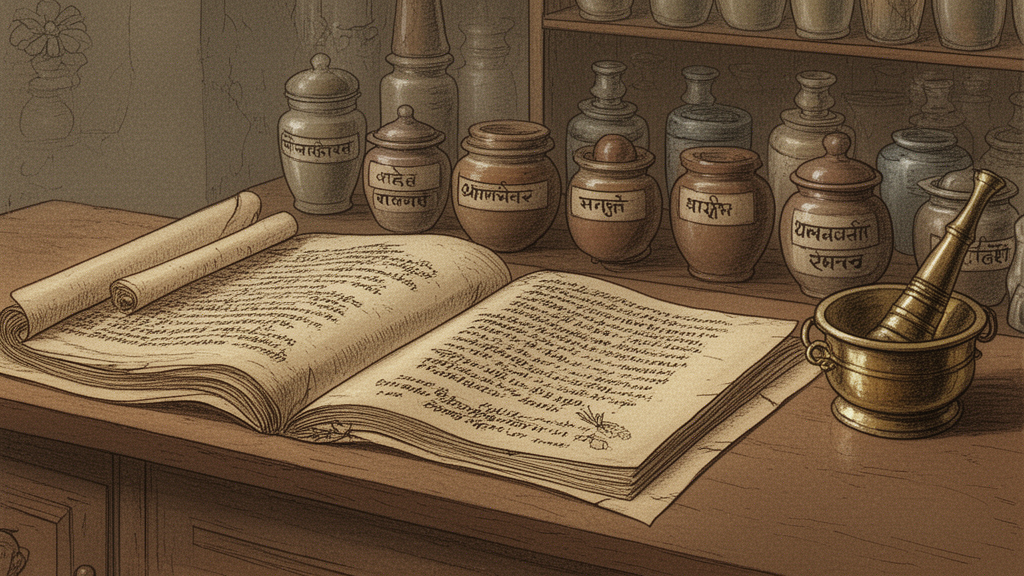
The phrase is best understood as a loose label rather than the title of a single scripture. It points to the knowledge surrounding parad: how it is understood, prepared, worshipped, and used. A reader searching for this term may be looking for one of three things: the devotional meaning of parad in Shiva worship, the historical study of mercury in Rasa Shastra and Ayurvedic pharmacology, or commercial pages that sell parad objects. Each of these has a different evidence base, and this article keeps them separate.
In brief, parad is a dense, liquid metal in its natural state. In Indian sources it is treated as a substance of unusual purity and power, and it has been central to a specialised medieval tradition of processing mercury for medicine. In devotional settings, some people regard parad as sacred to Shiva and use it in worship, most often in the form of a Shivling or a yantra-related object. Those beliefs are part of living devotion and are not established facts that can be tested in a laboratory.
Parad as a word and a substance
The Sanskrit word pārada is commonly rendered as mercury, and in modern Hindi usage the form parad is standard. Readers may also encounter spellings such as paarad or parada in online material. These variant spellings refer to the same substance in most contexts. The English word mercury is used in scientific and medical writing, while the Indian term carries the religious and traditional associations discussed below.
Mercury is a naturally occurring element that is liquid at ordinary room temperature. Its vapour is toxic, and mercury compounds are hazardous to the nervous system and kidneys. This physical reality matters for any discussion of parad, because the substance that devotional traditions honour is the same substance that requires careful handling in a modern setting.
Rasa Shastra: the medieval science of mercury
The most documented historical context for parad is Rasa Shastra, a tradition of Indian natural philosophy and medicine that developed mainly in the medieval period. Rasa Shastra practitioners studied mercury, sulphur, and other minerals and metals, and they described procedures for purifying (shodhana) and transforming (marana, often translated as calcination or incineration) these materials so that they could be used in medicine. Scholars commonly describe this as part of the broader Indian pharmaceutical tradition, which is closely linked to Ayurveda.
It is important to separate what the historical texts describe from what later writers claim. Rasa Shastra literature includes technical procedures, classifications of substances, and claims about therapeutic effects. Historians of science generally treat these as the record of past medical thought and practice, not as proof that the preparations were safe or effective. Modern research has raised serious concerns about mercury-containing preparations, and regulatory bodies in several countries have restricted or warned against them. Any discussion of Rasa Shastra on a devotional website should therefore make clear that the material is historical and that modern use is a matter for qualified medical professionals.
What scholars distinguish
- Historical texts: medieval rasa literature describing how mercury and minerals were handled and classified.
- Ayurvedic practice: later clinical traditions that used processed mercury preparations, with varying standards across regions and practitioners.
- Modern scholarship: historians and chemists who study these texts and the preparations they describe, often with attention to contamination and toxicity.
Readers should not assume that the whole tradition is uniform. Practices differed between schools, regions, and teachers, and many texts were transmitted orally and in manuscript form before modern editions appeared.
Parad in Hindu devotion and Shiva worship
Separate from the medical literature, parad has a devotional life. A commercial article that serves as one of the sources for this post describes parad as sacred to Lord Shiva and says that Parad is used in Vedic rituals and considered one of the purest metals. The same page makes further claims about sins, past lives, and liberation. These are devotional and doctrinal assertions made by a seller. They are not statements found in a named scripture, and this article does not present them as established textual teaching.
What can be said more carefully is that Shiva is closely associated with sacred substances and forms of worship in many Hindu communities, and that Shivlings made from different materials, including stone, metal, crystal, and other substances, are common across India. Mercury-based Shivlings and parad-related objects appear within some devotional circles. Their significance is tradition-specific. A devotee may regard the object as an aid to concentration, a form of reverence, or a sacred material with particular purity. Others, including many Shaiva practitioners, may not use parad at all.
Devotional belief versus scriptural statement
When reading claims about parad, it helps to ask four questions:
- Does a named scripture or commentary say this, and in which text?
- Is this a tradition, lineage, or teacher’s explanation?
- Is this a regional or community custom?
- Is this a commercial or marketing claim?
Many popular statements about parad, including claims about wealth, protection, health, or spiritual results, fall into the last category or into the second. They should be read as expressions of belief. They are not guaranteed outcomes, and devotional practice should not be presented as a substitute for medical care or financial advice.
Ritual handling and why caution matters
Mercury is hazardous. Vapour can be inhaled, liquid mercury can spill and be difficult to clean up, and broken devices can release contaminants. Responsible devotional practice therefore does not involve heating mercury, grinding it, or exposing it to open air. Where an object made of parad is kept in a home or temple, it should be sealed, stored securely, and handled as little as possible. Children, pregnant people, and anyone with kidney or neurological conditions should be especially careful.
Traditions also differ on how such objects should be cared for, consecrated, or used in puja. Some communities worship parad objects only at a distance and do not touch them with bare hands. Others have specific procedures recorded in local manuals. Because these instructions vary, this article does not give a step-by-step ritual procedure. Readers who wish to use a parad object should ask a qualified priest or teacher from their own lineage and should also follow basic safety guidance from a reliable public health source.
Parad in commerce and online claims
Parad is widely sold online as jewellery, idols, yantras, pendants, and Shivlings. Some sellers describe these items in strong terms: they promise success, prosperity, healing, or protection. A careful reader should treat such promises with scepticism. There is no reliable evidence that possessing a parad object produces material results, and mercury objects can pose physical hazards if they are damaged or opened.
Before buying any parad product, readers may wish to check the following:
- Whether the seller identifies the material clearly and avoids vague terms such as “pure energy” without explanation.
- Whether the product is sealed and labelled with safety information.
- Whether the seller separates scriptural references from marketing language.
- Whether the object is offered as a devotional item rather than as a medical product.
HindusGod.com does not endorse particular vendors or claims about parad products in this article. Readers who want information about devotional objects in general can explore related content through the links below.
How parad differs from other Shastra topics
The word shastra means a treatise, teaching, or body of knowledge, and Hindu tradition uses it in many contexts: Dharma Shastra for law and conduct, Agama Shastra for ritual and temple worship, and Bhakti Shastra for devotional teaching, for example. Parad Shastra is less standardised than these. It is better understood as a field of practical and devotional knowledge about a single substance, drawn from Rasa Shastra, Ayurveda, local devotional practice, and modern commercial discourse.
For readers exploring the broader landscape, the following draft pages on HindusGod.com may help place parad within wider traditions of ritual and devotion. Note that these are target drafts and may not yet be public:
- For the ritual and temple framework that shapes many image-worship practices, see Agama Shastra (target draft; URL to confirm before publication).
- For the devotional emphasis that many Shiva worshippers bring to their practice, see Bhakti Shastra (target draft; URL to confirm before publication).
Other shastra-titled drafts in the target list, such as Garuda Shastra or Brahmastra Shastra, cover topics that are not directly about mercury and have not been linked here.
Common questions about parad
Is parad the same as Parad Shastra?
Not exactly. Parad is the substance, mercury. Parad Shastra is a way of referring to the knowledge and traditions around that substance. The term does not identify one text with one author, and different communities may use it in different senses.
Is parad used in Hindu worship?
Some devotional communities use parad objects, particularly Shivlings and related items, in worship. Many other Hindus do not, and worship of Shiva is common using stone, metal, clay, and other materials. Whether to use parad is a matter of family, lineage, and personal choice.
Is it safe to keep a parad object at home?
Only if it is sealed and undamaged, and only after following basic safety advice. Mercury vapour and spilled liquid mercury are hazardous. If an object breaks or leaks, avoid direct contact and contact local emergency or public health services for guidance on cleanup.
Is parad used in medicine today?
Mercury-containing preparations appear in historical Ayurvedic and Rasa Shastra literature. Modern regulators and medical bodies have raised serious safety concerns about them. Anyone considering such a preparation should consult a qualified physician and check current regulatory guidance in their own country before using it.
Closing thoughts
Parad Shastra is best approached as a layered subject. At one level it is the history of mercury in Indian medicine and chemical practice, documented in medieval texts and studied by scholars. At another level it is a devotional idea in which parad is connected with Lord Shiva and used in worship by some communities. At a third level it is a commercial category in which claims often outrun the evidence. Clear distinctions between these levels help readers respect the tradition without accepting unsupported promises. For devotional guidance, speak with a teacher from your own lineage. For health questions, speak with a qualified medical professional.
Sources and Further Reading
- Rudraksha Ratna, “Parad or Mercury”: a commercial article used only to show how parad is marketed and described in devotional commerce. Its statements about Shiva, sins, and liberation are the vendor’s devotional claims, not verified scriptural quotations.
Further academic and scriptural sources on Rasa Shastra, Ayurvedic pharmacology, and the history of mercury in India should be added after verification before this post is published.